90 books match the query 'Civil' and 13 start with s
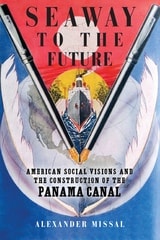
cover of Seaway to the Future: American Social Visions and the Construction of the Panama Canal

Seaway to the Future

American Social Visions and the Construction of the Panama Canal

Alexander Missal

University of Wisconsin Press, 2008

Realizing the century-old dream of a passage to India, the building of the Panama Canal was an engineering feat of colossal dimensions, a construction site filled not only with mud and water but with interpretations, meanings, and social visions. Alexander Missal’s Seaway to the Future unfolds a cultural history of the Panama Canal project, revealed in the texts and images of the era’s policymakers and commentators. Observing its creation, journalists, travel writers, and officials interpreted the Canal and its environs as a perfect society under an efficient, authoritarian management featuring innovations in technology, work, health, and consumption. For their middle-class audience in the United States, the writers depicted a foreign yet familiar place, a showcase for the future—images reinforced in the exhibits of the 1915 Panama-Pacific International Exposition that celebrated the Canal’s completion. Through these depictions, the building of the Panama Canal became a powerful symbol in a broader search for order as Americans looked to the modern age with both anxiety and anticipation.
            Like most utopian visions, this one aspired to perfection at the price of exclusion. Overlooking the West Indian laborers who built the Canal, its admirers praised the white elite that supervised and administered it. Inspired by the masculine ideal personified by President Theodore Roosevelt, writers depicted the Canal Zone as an emphatically male enterprise and Chief Engineer George W. Goethals as the emblem of a new type of social leader, the engineer-soldier, the benevolent despot. Examining these and other images of the Panama Canal project, Seaway to the Future shows how they reflected popular attitudes toward an evolving modern world and, no less important, helped shape those perceptions.

Best Books for Regional Special Interests, selected by the American Association of School Librarians, and Best Books for General Audiences, selected by the Public Library Association

“Provide[s] a useful vantage on the world bequeathed to us by the forces that set out to put America astride the globe nearly a century ago.”—Chris Rasmussen, Bookforum
[more]
cover of Shared Mobility and Automated Vehicles: Responding to socio-technical changes and pandemics

Shared Mobility and Automated Vehicles

Responding to socio-technical changes and pandemics

Ata M. Khan

The Institution of Engineering and Technology, 2022

Shared vehicles are a key part of any future intelligent and clean transport system, as they can allow for the sharing and potentially more efficient use of transport resources and fuel. Shared mobility has been gaining attention in the private and public sectors as a possible strategy for taming auto ownership, vehicle miles/kilometers travelled, and emissions.
[more]
cover of Sliding Mode Control of Vehicle Dynamics

Sliding Mode Control of Vehicle Dynamics

Antonella Ferrara

The Institution of Engineering and Technology, 2017
The control of the longitudinal, lateral and vertical dynamics of two and four-wheeled vehicles, both of conventional type as well as fully-electric, is important not only for general safety of vehicular traffic in general, but also for future automated driving.
[more]
cover of Smart Road Infrastructure: Innovative technologies

Smart Road Infrastructure

Innovative technologies

Runhua Guo

The Institution of Engineering and Technology, 2022
Smart roads are road infrastructures with integrated structural materials, sensors, information centres, and energy systems. They are intended to extend the road's service life and performance, reduce safety risks, and improve service quality. Several smart road pilot projects have been initiated, such as precast pavements with integrated optical fibres, self-healing asphalt material, self-snow-melting systems and solar pavements.
[more]
cover of Smart Sensing for Traffic Monitoring

Smart Sensing for Traffic Monitoring

Nobuyuki Ozaki

The Institution of Engineering and Technology, 2021
Growth in urbanisation, particularly in emerging economies, is causing increased traffic congestion and affecting environmental conditions in cities. Cities need to manage this growth in traffic in an efficient way. Intelligent infrastructure for traffic monitoring and sensing offers a potential solution, and so this book explores the prospective role of this approach in managing congestion, the established and emerging related technologies, and routes to effective implementation.
[more]
cover of States at War, Volume 1: A Reference Guide for Connecticut, Maine, Massachusetts, New Hampshire, Rhode Island, and Vermont in the Civil War

States at War, Volume 1

A Reference Guide for Connecticut, Maine, Massachusetts, New Hampshire, Rhode Island, and Vermont in the Civil War

Edited by Richard F. Miller

University Press of New England, 2013
While many Civil War reference books exist, there is no single compendium that contains important details about the combatant states (and territories) that Civil War researchers can readily access for their work. People looking for information about the organization, activities, economies, demographics, and prominent personalities of Civil War states and state governments must assemble data from a variety of sources, and many key sources remain unavailable online. This volume, the first of six, provides a crucial reference book for Civil War scholars and historians, professional or amateur, seeking information about individual states or groups of states. Its principal sources include the Official Records, state adjutant-general reports, legislative journals, state and federal legislation, federal and state executive speeches and proclamations, and the general and special orders issued by the military authorities of both governments. Designed and organized for easy use, this book can be read in two ways: by individual state, with each chapter offering a stand-alone skeletal history of an individual state’s war years, or across states, comparing reactions to the same event or solutions to the same problems.
[more]
cover of States at War, Volume 2: A Reference Guide for New York in the Civil War

States at War, Volume 2

A Reference Guide for New York in the Civil War

Edited by Richard F. Miller

University Press of New England, 2014
While many Civil War reference books exist, there is no single compendium that contains important details about the combatant states (and territories) that Civil War researchers can readily access for their work. People looking for information about the organizations, activities, economies, demographics, and prominent personalities of Civil War states and state governments must assemble data from a variety of sources, with many key sources remaining unavailable online. This volume provides a crucial reference book for Civil War scholars and historians, professional or amateur, seeking information about New York during the war. Its principal sources include the Official Records, state adjutant general reports, legislative journals, state and federal legislation, executive speeches and proclamations on the federal and state levels, and the general and special orders issued by the military authorities of both governments, North and South. Designed and organized for easy use, this book can be read in two ways: by individual state, with each chapter offering a stand-alone history of an individual state’s war years; or across states, comparing reactions to the same event or solutions to the same problems.
[more]
cover of States at War, Volume 3: A Reference Guide for Pennsylvania in the Civil War

States at War, Volume 3

A Reference Guide for Pennsylvania in the Civil War

Edited by Richard F. Miller

University Press of New England, 2014
While many Civil War reference books exist, there is no single compendium that contains important details about the combatant states (and territories) that Civil War researchers can readily access for their work. People looking for information about the organizations, activities, economies, demographics, and prominent personalities of Civil War states and state governments must assemble data from a variety of sources, with many key sources remaining unavailable online. This volume provides a crucial reference book for Civil War scholars and historians, professional or amateur, seeking information about Pennsylvania during the war. Its principal sources include the Official Records, state adjutant general reports, legislative journals, state and federal legislation, executive speeches and proclamations on the federal and state levels, and the general and special orders issued by the military authorities of both governments, North and South. Designed and organized for easy use, this book can be read in two ways: by individual state, with each chapter offering a stand-alone history of an individual state’s war years; or across states, comparing reactions to the same event or solutions to the same problems.
[more]
cover of States at War, Volume 4: A Reference Guide for Delaware, Maryland, and New Jersey in the Civil War

States at War, Volume 4

A Reference Guide for Delaware, Maryland, and New Jersey in the Civil War

Edited by Richard F. Miller

University Press of New England, 2015
While many Civil War reference books exist, there is no single compendium that contains important details about the combatant states (and territories) that Civil War researchers can readily access for their work. People looking for information about the organizations, activities, economies, demographics, and prominent personalities of Civil War States and state governments must assemble data from a variety of sources, with many key sources remaining unavailable online. This crucial reference book, the fourth in the States at War series, provides vital information on the organization, activities, economies, demographics, and prominent personalities of Delaware, Maryland, and New Jersey during the Civil War. Its principal sources include the Official Records, state adjutant-general reports, legislative journals, state and federal legislation, federal and state executive speeches and proclamations, and the general and special orders issued by the military authorities of both governments, North and South. Designed and organized for easy use by professional historians and amateurs, this book can be read in two ways: by individual state, with each chapter offering a stand-alone history of an individual state’s war years; or across states, comparing reactions to the same event or solutions to the same problems.
[more]
cover of States at War, Volume 5: A Reference Guide for Ohio in the Civil War

States at War, Volume 5

A Reference Guide for Ohio in the Civil War

Edited by Richard F. Miller

University Press of New England, 2015
While many Civil War reference books exist, there is no single compendium that contains important details about the combatant states (and territories) that Civil War researchers can readily access for their work. People looking for information about the organizations, activities, economies, demographics, and prominent personalities of Civil War States and state governments must assemble data from a variety of sources, with many key sources remaining unavailable online. This crucial reference book, the fifth in the States at War series, provides vital information on the organization, activities, economies, demographics, and prominent personalities of Ohio during the Civil War. Its principal sources include the Official Records, state adjutant-general reports, legislative journals, state and federal legislation, federal and state executive speeches and proclamations, and the general and special orders issued by the military authorities of both governments, North and South. Designed and organized for easy use by professional historians and amateurs, this book can be read in two ways: by individual state, with each chapter offering a stand-alone history of an individual state’s war years; or across states, comparing reactions to the same event or solutions to the same problems.
[more]
cover of States at War, Volume 6: The Confederate States Chronology and a Reference Guide for South Carolina in the Civil War

States at War, Volume 6

The Confederate States Chronology and a Reference Guide for South Carolina in the Civil War

Edited by Richard F. Miller

University Press of New England, 2018
Although many Civil War reference books exist, Civil War researchers have until now had no single compendium to consult on important details about the combatant states (and territories). This crucial reference work, the sixth in the States at War series, provides vital information on the organization, activities, economies, demographics, and laws of Civil War South Carolina. This volume also includes the Confederate States Chronology. Miller enlists multiple sources, including the statutes, Journals of Congress, departmental reports, general orders from Richmond and state legislatures, and others, to illustrate the rise and fall of the Confederacy. In chronological order, he presents the national laws intended to harness its manpower and resources for war, the harsh realities of foreign diplomacy, the blockade, and the costs of states’ rights governance, along with mounting dissent; the effects of massive debt financing, inflation, and loss of credit; and a growing raggedness within the ranks of its army. The chronology provides a factual framework for one of history’s greatest ironies: in the end, the war to preserve slavery could not be won while 35 percent of the population was enslaved.
[more]
cover of States at War: A Reference Guide for Michigan in the Civil War

States at War

A Reference Guide for Michigan in the Civil War

Richard F. Miller

University of Michigan Press, 2020

Unlike most books about the Civil War, which address individual battles or the war at the national level, States at War: A Reference Guide for Michigan in the Civil War chronicles the actions of an individual state government and its citizenry coping with the War and its ramifications, from transformed race relations and gender roles, to the suspension of habeas corpus, to the deaths of over 10,000 Michigan fathers, husbands, sons, and brothers who had been in action. The book compiles primary source material—including official reports, legislative journals, executive speeches, special orders, and regional newspapers—to provide an exhaustive record of the important roles Michigan and Michiganders had in the War. Though not burdened by marching armies or military occupation like some states to the southeast, Michigan nevertheless had a fascinating Civil War experience that was filled with acute economic anxieties, intense political divisions, and vital contributions on the battlefield. This comprehensive volume will be the essential starting point for all future research into Michigan’s Civil War-era history.
 

[more]
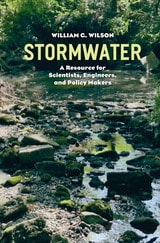
cover of Stormwater: A Resource for Scientists, Engineers, and Policy Makers

Stormwater

A Resource for Scientists, Engineers, and Policy Makers

William G. Wilson

University of Chicago Press, 2016

As cities grow and climates change, precipitation increases, and with every great storm—from record-breaking Boston blizzards to floods in Houston—come buckets of stormwater and a deluge of problems. In Stormwater, William G. Wilson brings us the first expansive guide to stormwater science and management in urban environments, where rising runoff threatens both human and environmental health.

As Wilson shows, rivers of runoff flowing from manmade surfaces—such as roads, sidewalks, and industrial sites—carry a glut of sediments and pollutants. Unlike soil, pavement does not filter or biodegrade these contaminants. Oil, pesticides, road salts, metals, automobile chemicals, and bacteria all pour into stormwater systems. Often this runoff discharges directly into waterways, uncontrolled and untreated, damaging valuable ecosystems. Detailing the harm that can be caused by this urban runoff, Wilson also outlines methods of control, from restored watersheds to green roofs and rain gardens, and, in so doing, gives hope in the face of an omnipresent threat. Illustrated throughout, Stormwater will be an essential resource for urban planners and scientists, policy makers, citizen activists, and environmental educators in the stormy decades to come.
[more]