Results by title
145 books match the query 'Classical' and 11 start with s
Sacred Music from the Cathedral at Trent
Trent, Museo Provinciale d'Arte, Codex 1375 (olim 88)Edited by Rebecca L. Gerber
University of Chicago Press, 2007
Often called the musical equivalent of the Dead Sea Scrolls, the Trent codices have dramatically broadened our understanding of Renaissance music. Much has been written about this collection of fifteenth-century music manuscripts, most of which were discovered in the Cathedral at Trent, but none of the seven codices--generally called Trent 87 through Trent 93--has ever been published in its entirety. Thus Rebecca Gerber’s edition of Trent 88, which took more than a decade to prepare, will be the first to appear. As such, this volume is a landmark in the publication of early music.
Trent 88 comprises an extensive anthology of 145 compositions tailored to the ceremonial and daily religious services of the period. The international scope of the collection is both impressive and significant: early English, French, German, and Spanish mass cycles appear alongside simple hymns and Magnificats. Music by renowned composers—including Guillaume Du Fay, Johannes Ockeghem, Johannes Cornago, and John Bedingham—is joined here by an even larger repertory of anonymous compositions with great aesthetic and historical value. Edited to accommodate both scholars and performers, and augmented with Gerber’s expert introduction, this volume will significantly deepen existing knowledge of a crucial period in the history of music.
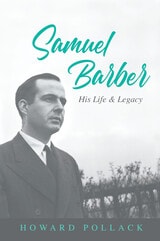
Samuel Barber
His Life and LegacyHoward Pollack
University of Illinois Press, 2023
Acclaimed biographer Howard Pollack (Aaron Copland, George Gershwin) offers a multifaceted account of Barber’s life and music while placing the artist in his social and cultural milieu. Born into a musical family, Barber pursued his artistic ambitions from childhood. Pollack follows Barber’s path from his precocious youth through a career where, from the start, the composer consistently received prizes, fellowships, and other recognition. Stylistic analyses of works like the Adagio for Strings, the Violin Concerto, Knoxville: Summer of 1915 for voice and orchestra, the Piano Concerto, and the operas Vanessa and Antony and Cleopatra, stand alongside revealing accounts of the music’s commissioning, performance, reception, and legacy. Throughout, Pollack weaves in accounts of Barber’s encounters with colleagues like Aaron Copland and Francis Poulenc, performers from Eleanor Steber and Leontyne Price to Vladimir Horowitz and Van Cliburn, patrons, admirers, and a wide circle of eminent friends and acquaintances. He also provides an eloquent portrait of the composer’s decades-long relationship with the renowned opera composer Gian Carlo Menotti.
Informed by new interviews and immense archival research, Samuel Barber is a long-awaited critical and personal biography of a monumental figure in twentieth-century American music.
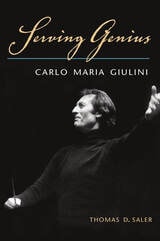
Serving Genius
Carlo Maria GiuliniThomas D. Saler
University of Illinois Press, 2020
Serving Genius tells the life story of Carlo Maria Giulini, one of the most renowned and beloved conductors of the twentieth century. Detailing Giulini's extraordinary professional career, Thomas D. Saler also chronicles Giulini's personal life, including his musical awakening while growing up amid the spectacular beauty of the Dolomite mountains, his years as a student in Rome's Academy of St. Cecilia, his conscription into the Italian army during World War II, his nine months in hiding for his anti-fascist and pacifist beliefs, and his selfless devotion to his wife, Marcella.
A humble master who shunned the limelight, Giulini took a deeply emotional and subjective approach to making music. Saler provides uniquely detailed analysis of Giulini's nuanced musicianship and the way he conveyed that musicianship to the orchestra through physical gestures. Meditating on the very art of conducting at which Giulini excelled, Saler discusses each of the conductor's major musical appointments, including stints with the Chicago Symphony Orchestra, Philharmonia Orchestra, Vienna Symphony, and Los Angeles Philharmonic. The book also addresses his repertoire of choice, leadership style, and moral framework.
Drawing on extensive interviews with Giulini's family, music critics, arts administrators, orchestra members, and collaborating soloists, Serving Genius draws out the personal amid the professional life of this giant among twentieth-century conductors.
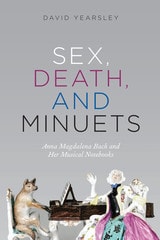
Sex, Death, and Minuets
Anna Magdalena Bach and Her Musical NotebooksDavid Yearsley
University of Chicago Press, 2019
Sex, Death, and Minuets offers the first in-depth study of these notebooks and their owner, reanimating Anna Magdalena as a multifaceted historical subject—at once pious and bawdy, spirited and tragic. In these pages, we follow Magdalena from young and flamboyant performer to bereft and impoverished widow—and visit along the way the coffee house, the raucous wedding feast, and the family home. David Yearsley explores the notebooks’ more idiosyncratic entries—like its charming ditties on illicit love and searching ruminations on mortality—against the backdrop of the social practices and concerns that women shared in eighteenth-century Lutheran Germany, from status in marriage and widowhood, to fulfilling professional and domestic roles, money, fashion, intimacy and sex, and the ever-present sickness and death of children and spouses. What emerges is a humane portrait of a musician who embraced the sensuality of song and the uplift of the keyboard, a sometimes ribald wife and oft-bereaved mother who used her cherished musical notebooks for piety and play, humor and devotion—for living and for dying.
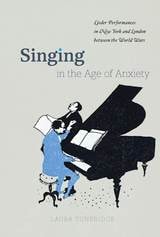
Singing in the Age of Anxiety
Lieder Performances in New York and London between the World WarsLaura Tunbridge
University of Chicago Press, 2018
Laura Tunbridge explores the renewed vitality of this refugee musical form between the world wars, offering a fresh perspective on a period that was pervaded by anxieties of displacement. Through richly varied case studies, Singing in the Age of Anxiety traces how lieder were circulated, presented, and consumed in metropolitan contexts, shedding new light on how music facilitated unlikely crossings of nationalist and internationalist ideologies during the interwar period.
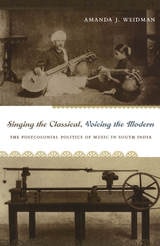
Singing the Classical, Voicing the Modern
The Postcolonial Politics of Music in South IndiaAmanda J. Weidman
Duke University Press, 2006
Combining ethnographic observation derived from her experience as a student and performer of South Indian music with close readings of archival materials, Weidman traces the emergence of this politics of voice through compelling analyses of the relationship between vocal sound and instrumental imitation, conventions of performance and staging, the status of women as performers, debates about language and music, and the relationship between oral tradition and technologies of printing and sound reproduction. Through her sustained exploration of the way “voice” is elaborated as a trope of modern subjectivity, national identity, and cultural authenticity, Weidman provides a model for thinking about the voice in anthropological and historical terms. In so doing, she shows that modernity is characterized as much by particular ideas about orality, aurality, and the voice as it is by regimes of visuality.
Sound Pedagogy
Radical Care in MusicEdited by Colleen Renihan, John Spilker, and Trudi Wright. Foreword by William Cheng
University of Illinois Press, 2024
Contributors: Molly M. Breckling, William A. Everett, Kate Galloway, Sara Haefeli, Eric Hung, Stephanie Jensen-Moulton, Mark Katz, Nathan A. Langfitt, Matteo Magarotto, Mary Natvig, Frederick A. Peterbark, Laura Moore Pruett, Colleen Renihan, Amanda Christina Soto, John Spilker, Reba A. Wissner, and Trudi Wright
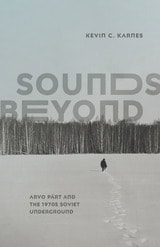
Sounds Beyond
Arvo Pärt and the 1970s Soviet UndergroundKevin C. Karnes
University of Chicago Press, 2021
In Sounds Beyond, Kevin C. Karnes studies the interconnected alternative music and art scenes in the USSR during the second half of the 1970s, revealing the audacious origins of some of Estonian composer Arvo Pärt’s most famous music. Karnes shows how Pärt’s work was created within a vital yet forgotten culture of collective experimentation, the Soviet underground.
Mining archives and oral history from across the former USSR, Sounds Beyond carefully situates modes of creative experimentation within their late socialist contexts. In documenting Pärt’s work, Karnes reveals the rich creative culture that thrived covertly in the USSR and the network of figures that made underground performances possible: students, audio engineers, sympathetic administrators, star performers, and aspiring DJs. Sounds Beyond advances a new understanding of Pärt’s music as an expression of the aesthetic and religious commitments shared, nurtured, and celebrated by many in Soviet underground circles. At the same time, this story attests to the lasting power of Pärt’s music. Dislodging the mythology of the solitary creative genius, Karnes shows that Pärt’s work would be impossible without community.
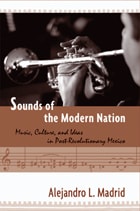
Sounds of the Modern Nation
Music, Culture, and Ideas in Post-Revolutionary MexicoAlejandro L. Madrid
Temple University Press, 2008
Sounds of the Modern Nation explores the development of modernist and avant-garde art music styles and aesthetics in Mexico in relation to the social and cultural changes that affected the country after the 1910-1920 revolution. Alejandro Madrid argues that these modernist works provide insight into the construction of individual and collective identities based on new ideas about modernity and nationality. Instead of depicting a dichotomy between modernity and nationalism, Madrid reflects on the multiple intersections between these two ideas and the dialogic ways through which these notions acquired meaning.
Madrid challenges the view that Latin American modernist music and other art were mere imitations of European trends, advancing instead the argument that Latin American artists resignified European ideas according to their specific historical and cultural circumstances. His work shows how microtonal and futurist music, modernist and avant-garde aesthetics, as well as indigenist and indianist ideas, entered a process of negotiation that ultimately shaped the ideological framework of twentieth-century Mexico.
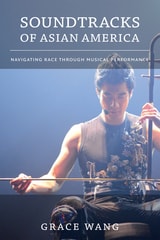
Soundtracks of Asian America
Navigating Race through Musical PerformanceGrace Wang
Duke University Press, 2015
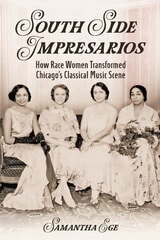
South Side Impresarios
How Race Women Transformed Chicago's Classical Music SceneSamantha Ege
University of Illinois Press, 2024
Ege focuses on composers like Florence Price, Nora Holt, and Margaret Bonds not as anomalies but as artists within an expansive cultural flowering. Overcoming racism and sexism, Black women practitioners instilled others with the skill and passion to make classical music while Race women like Maude Roberts George, Estella Bonds, Neota McCurdy Dyett, and Beulah Mitchell Hill built and fostered institutions central to the community. Ege takes readers inside the backgrounds, social lives, and female-led networks of the participants while shining a light on the scene’s audiences, supporters, and training grounds. What emerges is a history of Black women and classical music in Chicago and the still-vital influence of the world they created.
A riveting counter to a history of silence, South Side Impresarios gives voice to an overlooked facet of the Black Chicago Renaissance.