Results by title
122 books match the query 'Climatic changes' and 8 start with s
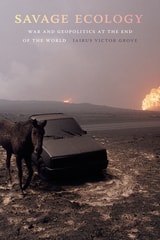
Savage Ecology
War and Geopolitics at the End of the WorldJairus Victor Grove
Duke University Press, 2019
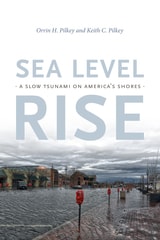
Sea Level Rise
A Slow Tsunami on America's ShoresOrrin H. Pilkey and Keith C. Pilkey
Duke University Press, 2019
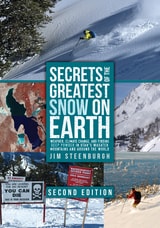
Secrets of the Greatest Snow on Earth, Second Edition
Weather, Climate Change, and Finding Deep Powder in Utah's Wasatch Mountains and Around the WorldJim Steenburgh
Utah State University Press, 2023
Utah has long claimed to have the greatest snow on Earth—the state itself has even trademarked the phrase. In Secrets of the Greatest Snow on Earth, Jim Steenburgh investigates Wasatch weather, exposing the myths, explaining the reality, and revealing how and why Utah’s powder lives up to its reputation. Steenburgh also examines ski and snowboard regions beyond Utah, providing a meteorological guide to mountain weather and snow climates around the world.
Chapters explore mountain weather, avalanches and snow safety, historical accounts of weather events and snow conditions, and the basics of climate and weather forecasting. In this second edition, Steenburgh explains what creates the best snow for skiing and snowboarding using accurate and accessible language and 150 color photographs and illustrations, making Secrets of the Greatest Snow on Earth a helpful tool for planning vacations and staying safe during mountain adventures.
This edition is updated with two new chapters covering microclimates and climate change in greater depth. Steenburgh addresses the declining snowpack and the future of snow across the western United States, as well as the declining snow and ice in several regions of the world—the European Alps in particular. Snowriders, weather enthusiasts, meteorologists, students of snow science, and anyone who dreams of deep powder and bluebird skies will want to get their gloves on this new edition of Secrets of the Greatest Snow on Earth.
Praise for the first edition:
“Everything you always wanted to know about how snow forms and how to follow forecasts so you see
how much an”d where is in the book. It’s a must-have for any fan of snow, sure to get you excited about
winter, and give you a bevy of conversation topics for the chairlift ride.”
—Utah Adventure Journal
“For backcountry enthusiasts that find themselves infatuated with weather patterns, snow-water
equivalents, microclimates, and Utah, this book is a dream come true.”
—The Backcountry Skiing Blog
“Steenburgh shares a career’s worth of knowledge in this book. His love of both snow science and skiing
is obvious, and he adds humor and personality to the scientific discussion.”
—First Tracks!! Online Skiing Magazine
“When it comes to snow, the details—both small- and large-scale—do matter. If we all observed our
surroundings with as much curiosity and enthusiasm as Steenburgh, the world could be a much better-
tended place.”
—American Scientist
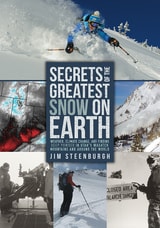
Secrets of the Greatest Snow on Earth
Weather, Climate Change, and Finding Deep Powder in Utah's Wasatch Mountains and around the WorldJim Steenburgh
Utah State University Press, 2014
Chapters explore mountain weather, avalanches and snow safety, historical accounts of weather events and snow conditions, and the basics of climate and weather forecasting. Steenburgh explains what creates the best snow for skiing and snowboarding in accurate and accessible language and illustrates his points with 150 color photographs, making Secrets of the Greatest Snow on Earth a helpful tool for planning vacations and staying safe during mountain adventures. Snowriders, weather enthusiasts, meteorologists, students of snow science, and anyone who dreams of deep powder and bluebird skies will want to get their gloves on Secrets of the Greatest Snow on Earth.
Watch Book Trailer!(Special thanks to Ski Utah)
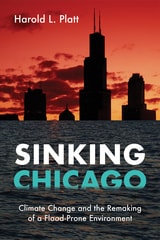
Sinking Chicago
Climate Change and the Remaking of a Flood-Prone EnvironmentHarold L. Platt
Temple University Press, 2018
In Sinking Chicago, Harold Platt shows how people responded to climate change in one American city over a hundred-and-fifty-year period. During a long dry spell before 1945, city residents lost sight of the connections between land use, flood control, and water quality. Then, a combination of suburban sprawl and a wet period of extreme weather events created damaging runoff surges that sank Chicago and contaminated drinking supplies with raw sewage.
Chicagoans had to learn how to remake a city built on a prairie wetland. They organized a grassroots movement to protect the six river watersheds in the semi-sacred forest preserves from being turned into open sewers, like the Chicago River. The politics of outdoor recreation clashed with the politics of water management. Platt charts a growing constituency of citizens who fought a corrupt political machine to reclaim the region’s waterways and Lake Michigan as a single eco-system. Environmentalists contested policymakers’ heroic, big-technology approaches with small-scale solutions for a flood-prone environment. Sinking Chicago lays out a roadmap to future planning outcomes.

Supremely Tiny Acts
A Memoir of a DaySonya Huber
The Ohio State University Press, 2021
“I think we have to get to the real, to catch the facts we have, to hold on to what we see. . . .in this time where lies are currency,” Sonya Huber writes in her book-length essay Supremely Tiny Acts: A Memoir of a Day. On the theory that naming the truths of quotidian experience can counter the dangerous power of lies, she carefully recounts two anxiety-fueled days one fall. On the first, she is arrested as part of a climate protest in Times Square. On the other, she must make it to her court appearance while also finding time to take her son to get his learner's permit. Paying equal attention to minor details, passing thoughts, and larger political concerns around activism and parenting in the Trump-era United States, Huber asks: How can one simultaneously be a good mother, a good worker, and a good citizen? As she reflects on the meaning of protest and on whiteness and other forms of privilege within political activism, Huber offers a wry, self-aware, and stirring testament to the everyday as a seedbed for meaningful change.

Surviving Climate Change
The Struggle to Avert Global CatastropheEdited by David Cromwell and Mark Levene
Pluto Press, 2007
Governments and business keep reassuring the public they are going to fix the problem. This book brings together some leading activists who disagree. They expose the inertia, denial, deception -- even threats to our civil liberties -- which comprise mainstream responses from civil and military policy makers, and from opinion formers in the media, corporations and academia.
An epochal change is called for in the way we all engage with the climate crisis. Key to that change is Aubrey Meyer's proposed Contraction and Convergence framework for limiting global carbon emissions. This book, which also includes contributions by Mayer Hillman and George Marshall, is a powerful and vital guide to how mass mobilisation can avert the looming catastrophe.
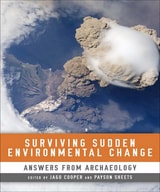
Surviving Sudden Environmental Change
Answers From ArchaeologyJago Cooper
University Press of Colorado, 2012