231 books match the query 'Colonies' and 10 start with s
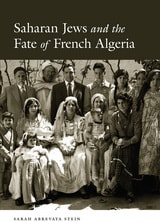
cover of Saharan Jews and the Fate of French Algeria

Saharan Jews and the Fate of French Algeria

Sarah Abrevaya Stein

University of Chicago Press, 2014

The history of Algerian Jews has thus far been viewed from the perspective of communities on the northern coast, who became, to some extent, beneficiaries of colonialism.  But to the south, in the Sahara, Jews faced a harsher colonial treatment. In Saharan Jews and the Fate of French Algeria, Sarah Abrevaya Stein asks why the Jews of Algeria’s south were marginalized by French authorities, how they negotiated the sometimes brutal results, and what the reverberations have been in the postcolonial era.
           
Drawing on materials from thirty archives across six countries, Stein tells the story of colonial imposition on a desert community that had lived and traveled in the Sahara for centuries. She paints an intriguing historical picture—of an ancient community, trans-Saharan commerce, desert labor camps during World War II, anthropologist spies, battles over oil, and the struggle for Algerian sovereignty. Writing colonialism and decolonization into Jewish history and Jews into the French Saharan one, Saharan Jews and the Fate of French Algeria is a fascinating exploration not of Jewish exceptionalism but of colonial power and its religious and cultural differentiations, which have indelibly shaped the modern world. 
[more]
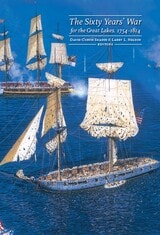
cover of Sixty Years' War for the Great Lakes, 1754-1814

Sixty Years' War for the Great Lakes, 1754-1814

David Curtis Skaggs

Michigan State University Press, 2001

The Sixty Years' War for the Great Lakes contains twenty essays concerning not only military and naval operations, but also the political, economic, social, and cultural interactions of individuals and groups during the struggle to control the great freshwater lakes and rivers between the Ohio Valley and the Canadian Shield. Contributing scholars represent a wide variety of disciplines and institutional affiliations from the United States, Canada, and Great Britain.
Collectively, these important essays delineate the common thread, weaving together the series of wars for the North American heartland that stretched from 1754 to 1814. The war for the Great Lakes was not merely a sideshow in a broader, worldwide struggle for empire, independence, self-determination, and territory. Rather, it was a single war, a regional conflict waged to establish hegemony within the area, forcing interactions that divided the Great Lakes nationally and ethnically for the two centuries that followed.
[more]
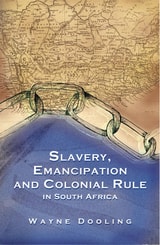
cover of Slavery, Emancipation and Colonial Rule in South Africa

Slavery, Emancipation and Colonial Rule in South Africa

Wayne Dooling

Ohio University Press, 2008
Slavery, Emancipation and Colonial Rule in South Africa examines the rural Cape Colony from the earliest days of Dutch colonial rule in the mid-seventeenth century to the outbreak of the South African War in 1899. For slaves and slave owners alike, incorporation into the British Empire at the beginning of the nineteenth century brought fruits that were bittersweet. The gentry had initially done well by accepting British rule, but were ultimately faced with the legislated ending of servile labor. To slaves and Khoisan servants, British rule brought freedom, but a freedom that remained limited. The gentry accomplished this feat only with great difficulty. Increasingly, their dominance of the countryside was threatened by English-speaking merchants and money-lenders, a challenge that stimulated early Afrikaner nationalism. The alliances that ensured nineteenth-century colonial stability all but fell apart as the descendants of slaves and Khoisan turned on their erstwhile masters during the South African War of 1899–1902.
[more]
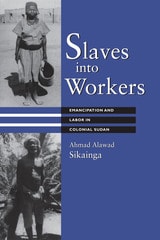
cover of Slaves into Workers: Emancipation and Labor in Colonial Sudan

Slaves into Workers

Emancipation and Labor in Colonial Sudan

By Ahmad Alawad Sikainga

University of Texas Press, 1996

Unlike African slavery in Europe and the Americas, slavery in the Sudan and other parts of Africa persisted well into the twentieth century. Sudanese slaves served Sudanese masters until the region was conquered by the Turks, who practiced slavery on a larger, institutional scale. When the British took over the Sudan in 1898, they officially emancipated the slaves, yet found it impossible to replace their labor in the country’s economy.

This pathfinding study explores the process of emancipation and the development of wage labor in the Sudan under British colonial rule. Ahmad Sikainga focuses on the fate of ex-slaves in Khartoum and on the efforts of the colonial government to transform them into wage laborers. He probes into what colonial rule and city life meant for slaves and ex-slaves and what the city and its people meant for colonial officials.

This investigation sheds new light on the legacy of slavery and the status of former slaves and their descendants. It also reveals how the legacy of slavery underlies the current ethnic and regional conflicts in the Sudan. It will be vital reading for students of race relations and slavery, colonialism and postcolonialism, urbanization, and labor history in Africa and the Middle East.
[more]
cover of Soldiers, Cities, and Civilians in Roman Syria

Soldiers, Cities, and Civilians in Roman Syria

Nigel Pollard

University of Michigan Press, 2000

When one mentions "empire," one place probably comes to mind: Rome. The Romans conquered an empire that covered almost the complete extent of their known world. With a territory that large, there was, of course, a huge cultural diversity between the different corners of the empire. How could the central authority in Rome bring together all the different cultures, religions and customs under one administrative umbrella? Soldiers, Cities and Civilians in Roman Syria explores some of the interactions between the imperial authority and the subjected peoples in the territory of Syria. It looks at how the imperial power controlled its subjects, how the agents of the imperial power (administrators, soldiers, etc.) interacted with those subjects, and what impact the imperial power had on the culture of ruled territories. The Roman empire had few civilian administrators, so soldiers were the representatives of imperial government to be encountered by many provincial civilians. Soldiers, Cities and Civilians in Roman Syria employs the evidence of Roman texts and documents and modern archaeological excavation as well as "alternative" sources, such as the literature of the subject peoples and informal texts such as graffiti, to examine the relationship between soldiers and civilians in the important frontier province of Syria.
Nigel Pollard is currently a Research Assistant at the Institute of Archaeology, University of Oxford.
[more]
cover of Sowing Empire: Landscape And Colonization

Sowing Empire

Landscape And Colonization

Jill H. Casid

University of Minnesota Press, 2005
Planting and transplanting, seeding and reshaping—landscaping practices that emerged in the eighteenth century—are inextricable from the contested terrain of empire within which they operated. From the plantations of the “nabobs” to the island gardens of narrative fiction, from William Beckford’s estate at Fonthill to Marie Antoinette’s ornamented farm, Sowing Empire considers imperial relandscaping—its patriarchal organization, heterosexual reproduction, and slavery—and how it contributed to the construction of imperial power. At the same time, the book shows how these picturesque landscapes and sugar plantations contained within them the seeds of resistance—how, for instance, slave gardens and the Afro-Caribbean practice of Vodou threatened authority and created new possibilities for once again transforming the landscape.In an ambitious work of wide-ranging literary, visual, and historical allusion, Jill H. Casid examines how landscaping functioned in an imperial mode that defined and remade the “heartlands” of nations as well as the contact zones and colonial peripheries in the West and East Indies. Revealing the colonial landscape as far more than an agricultural system—as a means of regulating national, sexual, and gender identities—Casid also traces how the circulation of plants and hybridity influenced agriculture and landscaping on European soil and how colonial contacts materially shaped what we take as “European.”Utilizing a wide range of both visual and written sources—maps, literature, and travel writing—this book is interdisciplinary in its methodology and in its scope. Sowing Empire explores how postcolonial and queer studies can alter art history and visual studies and, in turn, what close attention to the visual may offer to both postcolonial theorizing and historically and materially based colonial cultural studies.Jill H. Casid is assistant professor of art history and part of the developing transdisciplinary program in visual culture studies at the University of Wisconsin, Madison.
[more]
cover of Space-Time Perspectives on Early Colonial Moquegua

Space-Time Perspectives on Early Colonial Moquegua

Prudence M. Rice

University Press of Colorado, 2024

In this rich study of the construction and reconstruction of a colonized landscape, Prudence M. Rice takes an implicit political ecology approach in exploring encounters of colonization in Moquegua, a small valley of southern Peru. Building on theories of spatiality, spatialization, and place, she examines how politically mediated human interaction transformed the physical landscape, the people who inhabited it, and the resources and goods produced in this poorly known area.

Space-Time Perspectives on Early Colonial Moquegua looks at the encounters between existing populations and newcomers from successive waves of colonization, from indigenous expansion states (Wari, Tiwanaku, and Inka) to the foreign Spaniards, and the way each group “re-spatialized” the landscape according to its own political and economic ends. Viewing these spatializations from political, economic, and religious perspectives, Rice considers both the ideological and material occurrences.

Concluding with a special focus on the multiple space-time considerations involved in Spanish-inspired ceramics from the region, Space-Time Perspectives on Early Colonial Moquegua integrates the local and rural with the global and urban in analyzing the events and processes of colonialism. It is a vital contribution to the literature of Andean studies and will appeal to students and scholars of archaeology, historical archaeology, history, ethnohistory, and globalization.

[more]
cover of Spain and Portugal in the New World, 1492-1700

Spain and Portugal in the New World, 1492-1700

Lyle N. McAlister

University of Minnesota Press, 1984

Spain and Portugal in the New World, 1492-1700 was first published in 1984. Minnesota Archive Editions uses digital technology to make long-unavailable books once again accessible, and are published unaltered from the original University of Minnesota Press editions.

Spanish and Portuguese expansion substantially altered the social, political, and economic contours of the modern world. In his book, Lyle McAlister provides a narrative and interpretive history of the exploration and settlement of the Americas by Spain and Portugal.

McAlister divides this period (and the book) into three parts. First, he describes the formation of Old World societies with particular attention to those features that influenced the directions and forms of overseas expansion. Second, he traces the dynamic processes of conquest and colonization that between 1492 and about 1570 firmly established Spanish and Portuguese dominion in the New World. The third part deals with colonial growth and consolidation down to about 1700. McAlister's main themes are: the post-conquest territorial expansion that established the limits of what later came to be called Latin America, the emergence of distinctively Spanish and Portuguese American societies and economies, the formation of systems of imperial control and exploitation, and the ways in which conflicts between imperial and American interests were reconciled.

This comprehensive history, with its extensive bibliographic essay and attention to historiographic issues, will be a standard reference for students and scholars of the period.
[more]
cover of Stages of Capital: Law, Culture, and Market Governance in Late Colonial India

Stages of Capital

Law, Culture, and Market Governance in Late Colonial India

Ritu Birla

Duke University Press, 2009

In Stages of Capital, Ritu Birla brings research on nonwestern capitalisms into conversation with postcolonial studies to illuminate the historical roots of India’s market society. Between 1870 and 1930, the British regime in India implemented a barrage of commercial and contract laws directed at the “free” circulation of capital, including measures regulating companies, income tax, charitable gifting, and pension funds, and procedures distinguishing gambling from speculation and futures trading. Birla argues that this understudied legal infrastructure institutionalized a new object of sovereign management, the market, and along with it, a colonial concept of the public. In jurisprudence, case law, and statutes, colonial market governance enforced an abstract vision of modern society as a public of exchanging, contracting actors free from the anachronistic constraints of indigenous culture.

Birla reveals how the categories of public and private infiltrated colonial commercial law, establishing distinct worlds for economic and cultural practice. This bifurcation was especially apparent in legal dilemmas concerning indigenous or “vernacular” capitalists, crucial engines of credit and production that operated through networks of extended kinship. Focusing on the story of the Marwaris, a powerful business group renowned as a key sector of India’s capitalist class, Birla demonstrates how colonial law governed vernacular capitalists as rarefied cultural actors, so rendering them illegitimate as economic agents. Birla’s innovative attention to the negotiations between vernacular and colonial systems of valuation illustrates how kinship-based commercial groups asserted their legitimacy by challenging and inhabiting the public/private mapping. Highlighting the cultural politics of market governance, Stages of Capital is an unprecedented history of colonial commercial law, its legal fictions, and the formation of the modern economic subject in India.
[more]
cover of Strolling in the Ruins: The Caribbean's Non-sovereign Modern in the Early Twentieth Century

Strolling in the Ruins

The Caribbean's Non-sovereign Modern in the Early Twentieth Century

Faith Smith

Duke University Press, 2023

In Strolling in the Ruins Faith Smith engages with a period in the history of the Anglophone Caribbean often overlooked as nondescript, quiet, and embarrassingly pro-imperial within the larger narrative of Jamaican and Trinidadian nationalism. Between the 1865 Morant Bay Rebellion and World War I, British imperialism was taken for granted among both elites and ordinary people, while nationalist discourses would not begin to shape political imagination in the West Indies for decades. Smith argues that this moment, far from being uneventful, disrupts the inevitability of nationhood in the mid-twentieth century and anticipates the Caribbean’s present-day relationship to global power. Smith assembles and analyzes a diverse set of texts, from Carnival songs, poems, and novels to newspapers, photographs, and gardens, to examine theoretical and literary-historiographic questions concerning time and temporality, empire and diaspora, immigration and indigeneity, gender and the politics of desire, Africa’s place within Caribbeanist discourse, and the idea of the Caribbean itself. Closely examining these cultural expressions of apparent quiescence, Smith locates the quiet violence of colonial rule and the insistence of colonial subjects on making meaningful lives.
[more]