Results by title
65 books match the query 'Comedy' and 2 start with s
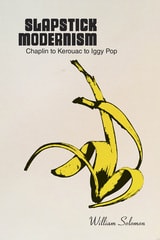
Slapstick Modernism
Chaplin to Kerouac to Iggy PopWilliam Solomon
University of Illinois Press, 2018
William Solomon charts the origins and evolution of what he calls slapstick modernism--a merging of artistic experimentation with the socially disruptive lunacy made by the likes of Charlie Chaplin. Romping through texts, films, and theory, Solomon embarks on an intellectual odyssey from the high modernism of Dos Passos and Williams to the late modernism of the Beats and Burroughs before a head-on crash into the raw power of punk rock. Throughout, he shows the links between the experimental writers and silent screen performers of the early century, and explores the potent cultural undertaking that drew inspiration from anarchical comedy after World War II.
Stand-up Comedy in Theory, or, Abjection in America
John Limon
Duke University Press, 2000
Limon begins with stand-up comics in the 1950s and 1960s—Lenny Bruce, Carl Reiner, Mel Brooks, Mike Nichols, Elaine May—when the norm of the profession was the Jewish, male, heterosexual comedian. He then moves toward the present with analyses of David Letterman, Richard Pryor, Ellen DeGeneres, and Paula Poundstone. Limon incorporates feminist, race, and queer theories to argue that the “comedification” of America—stand-up comedy’s escape from its narrow origins—involves the repossession by black, female, queer, and Protestant comedians of what was black, female, queer, yet suburbanizing in Jewish, male, heterosexual comedy. Limon’s formal definition of stand-up as abject art thus hinges on his claim that the great American comedians of the 1950s and 1960s located their comedy at the place (which would have been conceived in 1960 as a location between New York City or Chicago and their suburbs) where body is thrown off for the mind and materiality is thrown off for abstraction—at the place, that is, where American abjection has always found its home.