Results by title
198 books match the query 'Community' and 13 start with s
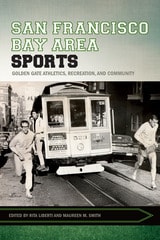
San Francisco Bay Area Sports
Golden Gate Athletics, Recreation, and CommunityRita Liberti
University of Arkansas Press, 2017
San Francisco Bay Area Sports brings together fifteen essays covering the issues, controversies, and personalities that have emerged as northern Californians recreated and competed over the last 150 years. The area’s diversity, anti-establishment leanings, and unique and beautiful natural surroundings are explored in the context of a dynamic sporting past that includes events broadcast to millions or activities engaged in by just a few.
Professional and college events are covered along with lesser-known entities such as Oakland’s public parks, tennis player and Bay Area native Rosie Casals, environmentalism and hiking in Marin County, and the origins of the Gay Games. Taken as a whole, this book clarifies how sport is connected to identities based on sexuality, gender, race, and ethnicity. Just as crucial, the stories here illuminate how sport and recreation can potentially create transgressive spaces, particularity in a place known for its nonconformity.

Science, Community, and the Transformation of American Philosophy, 1860-1930
Daniel J. Wilson
University of Chicago Press, 1990
The author situates the emergence of professional philosophy in the context of the professionalization of American higher education and articulates, in the case of philosophy, the structures and values of a professional discipline. One of the most important consequences of this transformation was a new emphasis on communal theories of truth. Peirce, Dewey, and Royce all developed sophisticated and important theories of community as they were engaged in reshaping and redefining the limits of philosophy. This book will be of great importance for those interested in the history of philosophy, the rise of professions, and American intellectual and educational history, and to all those seeking to understand the contemporary revival of pragmatic thought and theories of community.
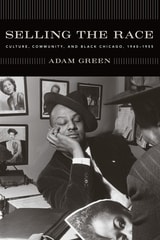
Selling the Race
Culture, Community, and Black Chicago, 1940-1955Adam Green
University of Chicago Press, 2006
In Selling the Race, Adam Green tells the story of how black Chicagoans were at the center of a national movement in the 1940s and ’50s, a time when African Americans across the country first started to see themselves as part of a single culture. Along the way, he offers fascinating reinterpretations of such events as the 1940 American Negro Exposition, the rise of black music and the culture industry that emerged around it, the development of the Associated Negro Press and the founding of Johnson Publishing, and the outcry over the 1955 lynching of Emmett Till.
By presenting African Americans as agents, rather than casualties, of modernity, Green ultimately reenvisions urban existence in a way that will resonate with anyone interested in race, culture, or the life of cities.
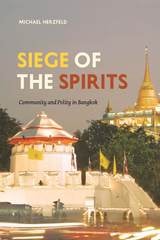
Siege of the Spirits
Community and Polity in BangkokMichael Herzfeld
University of Chicago Press, 2016
Herzfeld argues that even though the residents of Pom Mahakan have lost every legal battle the city government has dragged them into, they have won every public relations contest, highlighting their struggle as one against bureaucrats who do not respect the age-old values of Thai/Siamese social and cultural order. Such values include compassion for the poor and an understanding of urban space as deeply embedded in social and ritual relations. In a gripping account of their standoff, Herzfeld—who simultaneously argues for the importance of activism in scholarship—traces the agile political tactics and styles of the community’s leadership, using their struggle to illuminate the larger difficulties, tensions, and unresolved debates that continue to roil Thai society to this day.
Singing the Self
Guitar Poetry, Community, and Identity in the Post-Stalin PeriodRachel S. Platonov
Northwestern University Press, 2012
This book is a study of a Soviet cultural phenomenon of the 1950s through the 1980s known as guitar poetry—songs accompanied by guitar and considered poetry in much the same way as those of, for example, Bob Dylan. Platonov’s is the most comprehensive book in English to date to analyze guitar poetry, which has rarely received scholarly attention outside of Russia. Going well beyond the conventional, text-centered view of guitar poetry as a form of political or artistic dissent, largely a function of the Cold War climate in which it began, Platonov argues for a more complex understanding of guitar poetry as a means of self-invention and community formation. Although grounded in literary studies, the book effectively brings historical, anthropological, and musicological perspectives to bear on an understudied phenomenon of the post-Stalin period.
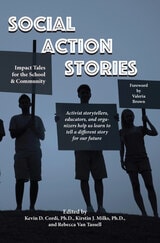
Social Action Stories
Impact Tales for the School and CommunityKevin D. Cordi, Ph.D., Kirstin J. Milks, PhD., Rebecca Van Tassell
Parkhurst Brothers, Inc., 2022
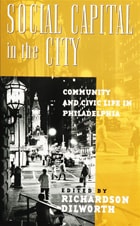
Social Capital in the City
Community and Civic Life in Philadelphiaedited by Richardson Dilworth
Temple University Press, 2006
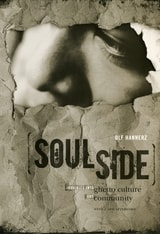
Soulside
Inquiries into Ghetto Culture and CommunityUlf Hannerz
University of Chicago Press, 2004
Originally published 35 years ago, Soulside became an urban anthropological classic. The book helped to dispel many false impressions about ghetto life and questioned the idea, precipitated in the influential Moynihan Report and in notions of a "culture of poverty," that the poor had chosen to lead the lives they do. Raising central moral and political questions about American society in a turbulent period, Soulside became an example of public engagement in anthropology. In a new afterword, Ulf Hannerz discusses the book's place in the debates of the time and its relevance to current arguments in anthropology.
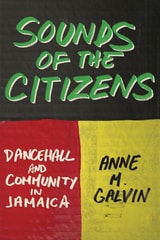
Sounds of the Citizens
Dancehall and Community in JamaicaAnne M. Galvin
Vanderbilt University Press, 2014
Galvin highlights the unique alliance between the dancehall industry and community development efforts. As the central role of the state in supporting communities has diminished, the rise of private efforts such as dancehall becomes all the more crucial. The tension, however, between those involved in the industry and those within the neighborhoods is palpable and often dangerous. Amidst all this, individual Jamaicans interact with the dancehall industry and its culture to find their own paths of employment, social identity, and sexual mores.
As Sounds of the Citizens illustrates, the world of entertainment in Jamaica is serious business and uniquely positioned as a powerful force within the community.
Spreading the Word
Poetry and the Survival of Community in AmericaRoss Talarico
Duke University Press, 1995
Drawing on his workshops in Rochester, Talarico describes a unique approach for eliciting poetry from people of many ages and backgrounds—particularly underpriviledged urban kids and the elderly. The process—from dialogue to self-expression to publication to public event—illuminates the urgency and meaning of releasing the spirit captured in each man and woman and child’s experience. "Some people say that Ross Talarico has done the impossible," the Today Show remarked of his success in Rochester; and with this book Talarico offers the same opportunity to others. Teachers, community leaders, parents, and children will be able to follow his practical, hands-on approach to encouraging self-expression in diverse, even unlikely, settings. They will see here how poetry is indeed relevant, ever more crucial to our identity as the culture evolves—how it is, finally, the place where the inarticulate can come to speak for themselves.
Story Of Reo Joe
Work, Kin, And CommunityLisa M. Fine
Temple University Press, 2004
Streets of Glory
Church and Community in a Black Urban NeighborhoodOmar M. McRoberts
University of Chicago Press, 2003
McRoberts finds, for example, that most of the churches in Four Corners are attended and run by people who do not live in the neighborhood but who worship there because of the low overhead. These churches, McRoberts argues, are communities in and of themselves, with little or no attachment to the surrounding area. This disconnect makes the churches less inclined to cooperate with neighborhood revitalization campaigns and less likely to respond to the immediate needs of neighborhood residents. Thus, the faith invested in inner-city churches as beacons of local renewal might be misplaced, and the decision to count on them to administer welfare definitely should be revisited.
As the federal government increasingly moves toward delivering social services through faith-based organizations, Streets of Glory must be read for its trenchant revisionist view of how churches actually work in depressed urban areas.
Sustaining Wildlands
Integrating Science and Community in Prince William SoundEdited by Aaron J. Poe and Randy Gimblett
University of Arizona Press, 2017
Nearly three decades later, changes in recreation use run counter to what was initially expected. Instead of avoiding Prince William Sound, tourists and visitors flock there. Economic revitalization efforts have resulted in increased wilderness access as new commercial enterprises offer nature tourism in remote bays and fjords. This increased visitation has caused concerns that the wilderness may again be threatened—not by oil but rather by the very humans seeking those wilderness experiences.
In Sustaining Wildlands, scientists and managers, along with local community residents, address what has come to be a central paradox in public lands management: the need to accommodate increasing human use while reducing the environmental impact of those activities. This volume draws on diverse efforts and perspectives to dissect this paradox, offering an alternative approach where human use is central to sustaining wildlands and recovering a damaged ecosystem like Prince William Sound.
Contributors:
Brad A. Andres, Chris Beck, Nancy Bird, Dale J. Blahna, Harold Blehm, Sara Boario, Bridget A. Brown, Courtney Brown, Greg Brown, Milo Burcham, Kristin Carpenter, Ted Cooney, Patience Andersen Faulkner, Maryann Smith Fidel, Jessica B. Fraver, Jennifer Gessert, Randy Gimblett, Michael I. Goldstein, Samantha Greenwood, Lynn Highland, Marybeth Holleman, Shay Howlin, Tanya Iden, Robert M. Itami, Lisa Jaeger, Laura A. Kennedy, Spencer Lace, Nancy Lethcoe, Kate McLaughlin, Rosa H. Meehan, Christopher Monz, Karen A. Murphy, Lisa Oakley, Aaron J. Poe, Chandra B. Poe, Karin Preston, Jeremy Robida, Clare M. Ryan, Gerry Sanger, Bill Sherwonit, Lowell H. Suring, Paul Twardock, Sarah Warnock, and Sadie Youngstrom