75 books match the query 'Construction' and 4 start with s
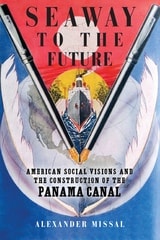
cover of Seaway to the Future: American Social Visions and the Construction of the Panama Canal

Seaway to the Future

American Social Visions and the Construction of the Panama Canal

Alexander Missal

University of Wisconsin Press, 2008

Realizing the century-old dream of a passage to India, the building of the Panama Canal was an engineering feat of colossal dimensions, a construction site filled not only with mud and water but with interpretations, meanings, and social visions. Alexander Missal’s Seaway to the Future unfolds a cultural history of the Panama Canal project, revealed in the texts and images of the era’s policymakers and commentators. Observing its creation, journalists, travel writers, and officials interpreted the Canal and its environs as a perfect society under an efficient, authoritarian management featuring innovations in technology, work, health, and consumption. For their middle-class audience in the United States, the writers depicted a foreign yet familiar place, a showcase for the future—images reinforced in the exhibits of the 1915 Panama-Pacific International Exposition that celebrated the Canal’s completion. Through these depictions, the building of the Panama Canal became a powerful symbol in a broader search for order as Americans looked to the modern age with both anxiety and anticipation.
            Like most utopian visions, this one aspired to perfection at the price of exclusion. Overlooking the West Indian laborers who built the Canal, its admirers praised the white elite that supervised and administered it. Inspired by the masculine ideal personified by President Theodore Roosevelt, writers depicted the Canal Zone as an emphatically male enterprise and Chief Engineer George W. Goethals as the emblem of a new type of social leader, the engineer-soldier, the benevolent despot. Examining these and other images of the Panama Canal project, Seaway to the Future shows how they reflected popular attitudes toward an evolving modern world and, no less important, helped shape those perceptions.

Best Books for Regional Special Interests, selected by the American Association of School Librarians, and Best Books for General Audiences, selected by the Public Library Association

“Provide[s] a useful vantage on the world bequeathed to us by the forces that set out to put America astride the globe nearly a century ago.”—Chris Rasmussen, Bookforum
[more]
cover of Selective Remembrances: Archaeology in the Construction, Commemoration, and Consecration of National Pasts

Selective Remembrances

Archaeology in the Construction, Commemoration, and Consecration of National Pasts

Edited by Philip L. Kohl, Mara Kozelsky, and Nachman Ben-Yehuda

University of Chicago Press, 2008

When political geography changes, how do reorganized or newly formed states justify their rule and create a sense of shared history for their people? Often, the essays in Selective Remembrances reveal, they turn to archaeology, employing the field and its findings to develop nationalistic feelings and forge legitimate distinctive national identities.

Examining such relatively new or reconfigured nation-states as Iran, Iraq, Turkey, Israel, Russia, Ukraine, India, and Thailand, Selective Remembrances shows how states invoke the remote past to extol the glories of specific peoples or prove claims to ancestral homelands. Religion has long played a key role in such efforts, and the contributors take care to demonstrate the tendency of many people, including archaeologists themselves, to view the world through a religious lens—which can be exploited by new regimes to suppress objective study of the past and justify contemporary political actions.

The wide geographic and intellectual range of the essays in Selective Remembrances will make it a seminal text for archaeologists and historians.
[more]
cover of Sexual Cultures and the Construction of Adolescent Identities

Sexual Cultures and the Construction of Adolescent Identities

edited by Janice M. Irvine

Temple University Press, 1994

This rich collection of essays presents a new vision of adolescent sexuality shaped by a variety of social factors: race and ethnicity, gender, sexual identity, physical ability, and cultural messages propagated in films, books, and within families. The contributors consider the full range of cultural influences that form a teenager's sexual identity and argue that education must include more than its current overriding message of denial hinged on warnings of HIV and AIDS infection and teenage pregnancy. Examining the sexual experiences, feelings, and development of Asians, Latinos, African Americans, gay man and lesbians, and disabled women, this book provides a new understanding of adolescent sexuality that goes beyond the biological approach all too often simplified as "surging hormones."


In the series Health, Society, and Policy, edited by Sheryl Ruzek and Irving Kenneth Zola.
 

[more]
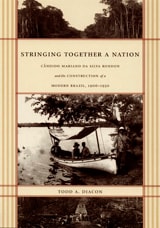
cover of Stringing Together a Nation: Cândido Mariano da Silva Rondon and the Construction of a Modern Brazil, 1906–1930

Stringing Together a Nation

Cândido Mariano da Silva Rondon and the Construction of a Modern Brazil, 1906–1930

Todd A. Diacon

Duke University Press, 2004

Focusing on one of the most fascinating and debated figures in the history of modern Brazil, Stringing Together a Nation is the first full-length study of the life and career of Cândido Mariano da Silva Rondon (1865–1958) to be published in English. In the early twentieth century, Rondon, a military engineer, led what became known as the Rondon Commission in a massive undertaking: the building of telegraph lines and roads connecting Brazil’s vast interior with its coast. Todd A. Diacon describes how, in stringing together a nation with telegraph wire, Rondon attempted to create a unified community of “Brazilians” from a population whose loyalties and identities were much more local and regional in scope. He reveals the work of the Rondon Commission as a crucial exemplar of the issues and intricacies involved in the expansion of central state authority in Brazil and in the construction of a particular kind of Brazilian nation.

Using an impressive array of archival and documentary sources, Diacon chronicles the Rondon Commission’s arduous construction of telegraph lines across more than eight hundred miles of the Amazon Basin; its exploration, surveying, and mapping of vast areas of northwest Brazil; and its implementation of policies governing relations between the Brazilian state and indigenous groups. He considers the importance of Positivist philosophy to Rondon’s thought, and he highlights the Rondon Commission’s significant public relations work on behalf of nation-building efforts. He reflects on the discussions—both contemporaneous and historiographical—that have made Rondon such a fundamental and controversial figure in Brazilian cultural history.

[more]