Results by title
62 books match the query 'Consumption (Economics)' and 7 start with s
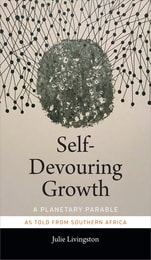
Self-Devouring Growth
A Planetary Parable as Told from Southern AfricaJulie Livingston
Duke University Press, 2019

Selling Modernity
Advertising in Twentieth-Century GermanyPamela E. Swett, S. Jonathan Wiesen, and Jonathan R. Zatlin, eds.
Duke University Press, 2007
While the essays are informed by the burgeoning literature on consumer society, Selling Modernity focuses on the actors who had the greatest stake in successful merchandising: company managers, advertising executives, copywriters, graphic artists, market researchers, and salespeople, all of whom helped shape the depiction of a company’s products, reputation, and visions of modern life. The contributors consider topics ranging from critiques of capitalism triggered by the growth of advertising in the 1890s to the racial politics of Coca-Cola’s marketing strategies during the Nazi era, and from the post-1945 career of an erotica entrepreneur to a federal anti-drug campaign in West Germany. Whether analyzing the growing fascination with racialized discourse reflected in early-twentieth-century professional advertising journals or the postwar efforts of Lufthansa to lure holiday and business travelers back to a country associated with mass murder, the contributors reveal advertising’s central role in debates about German culture, business, politics, and society.
Contributors. Shelley Baranowski, Greg Castillo, Victoria de Grazia, Guillaume de Syon, Holm Friebe, Rainer Gries, Elizabeth Heineman, Michael Imort, Anne Kaminsky, Kevin Repp , Corey Ross, Jeff Schutts, Robert P. Stephens, Pamela E. Swett, S. Jonathan Wiesen, Jonathan R. Zatlin

Shopping Our Way to Safety
How We Changed from Protecting the Environment to Protecting OurselvesAndrew Szasz
University of Minnesota Press, 2007
“Not long ago, people did not worry about the food they ate. They did not worry about the water they drank or the air they breathed. It never occurred to them that eating, drinking water, satisfying basic, mundane bodily needs might be a dangerous thing to do. Parents thought it was good for their kids to go outside, get some sun.
“That’s all changed now.” —from the Introduction
Many Americans today rightly fear that they are constantly exposed to dangerous toxins in their immediate environment: tap water is contaminated with chemicals; foods contain pesticide residues, hormones, and antibiotics; even the air we breathe, outside and indoors, carries invisible poisons. Yet we have responded not by pushing for governmental regulation, but instead by shopping. What accounts for this swift and dramatic response? And what are its unintended consequences?
Andrew Szasz examines this phenomenon in Shopping Our Way to Safety. Within a couple of decades, he reveals, bottled water and water filters, organic food, “green” household cleaners and personal hygiene products, and “natural” bedding and clothing have gone from being marginal, niche commodities to becoming mass consumer items. Szasz sees these fatalistic, individual responses to collective environmental threats as an inverted form of quarantine, aiming to shut the healthy individual in and the threatening world out.
Sharply critiquing these products’ effectiveness as well as the unforeseen political consequences of relying on them to keep us safe from harm, Szasz argues that when consumers believe that they are indeed buying a defense from environmental hazards, they feel less urgency to actually do something to fix them. To achieve real protection, real security, he concludes, we must give up the illusion of individual solutions and together seek substantive reform.
Andrew Szasz is professor and chair of the department of sociology at the University of California at Santa Cruz and author of the award-winning EcoPopulism (Minnesota, 1994).

Shoveling Smoke
Advertising and Globalization in Contemporary IndiaWilliam Mazzarella
Duke University Press, 2003
An examination of the complex cultural politics of mass consumerism in a globalized marketplace, Shoveling Smoke is a pathbreaking and detailed ethnography of the contemporary Indian advertising industry. It is also a critical and innovative intervention into current theoretical debates on the intersection of consumerist globalization, aesthetic politics, and visual culture. William Mazzarella traces the rise in India during the 1980s of mass consumption as a self-consciously sensuous challenge to the austerities of state-led developmentalism. He shows how the decisive opening of Indian markets to foreign brands in the 1990s refigured established models of the relationship between the local and the global and, ironically, turned advertising professionals into custodians of cultural integrity.

Social Reproduction Theory and the Socialist Horizon
Work, Power and Political StrategyAaron Jaffe
Pluto Press, 2020
Sowing the American Dream
How Consumer Culture Took Root in the Rural MidwestDavid Blanke
Ohio University Press, 2000
From 1840 to 1900, midwestern Americans experienced firsthand the profound economic, cultural, and structural changes that transformed the nation from a premodern, agrarian state to one that was urban, industrial, and economically interdependent. Midwestern commercial farmers found themselves at the heart of these changes. Their actions and reactions led to the formation of a distinctive and particularly democratic consumer ethos, which is still being played out today.
By focusing on the consumer behavior of midwestern farmers, Sowing the American Dream provides illustrative examples of how Americans came to terms with the economic and ideological changes that swirled around them. From the formation of the Grange to the advent of mail-order catalogs, the buying patterns of rural midwesterners set the stage for the coming century.
Carefully documenting the rise and fall of the powerful purchasing cooperatives, David Blanke explains the shifting trends in collective consumerism, which ultimately resulted in a significant change in the way that midwestern consumers pursued their own regional identity, community, and independence.
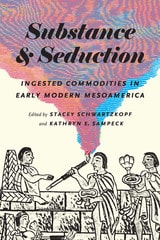
Substance and Seduction
Ingested Commodities in Early Modern MesoamericaEdited by Stacey Schwartzkopf and Kathryn E. Sampeck
University of Texas Press, 2017
Chocolate and sugar, alcohol and tobacco, peyote and hallucinogenic mushrooms—these seductive substances have been a nexus of desire for both pleasure and profit in Mesoamerica since colonial times. But how did these substances seduce? And when and how did they come to be desired and then demanded, even by those who had never encountered them before? The contributors to this volume explore these questions across a range of times, places, and peoples to discover how the individual pleasures of consumption were shaped by social, cultural, economic, and political forces.
Focusing on ingestible substances as a group, which has not been done before in the scholarly literature, the chapters in Substance and Seduction trace three key links between colonization and commodification. First, as substances that were taken into the bodies of both colonizers and colonized, these foods and drugs participated in unexpected connections among sites of production and consumption; racial and ethnic categories; and free, forced, and enslaved labor regimes. Second, as commodities developed in the long transition from mercantile to modern capitalism, each substance in some way drew its enduring power from its ability to seduce: to stimulate bodies; to alter minds; to mark class, social, and ethnic boundaries; and to generate wealth. Finally, as objects of scholarly inquiry, each substance rewards interdisciplinary approaches that balance the considerations of pleasure and profit, materiality and morality, and culture and political economy.