Results by title
434 books match the query 'Criticism & Theory' and 28 start with s
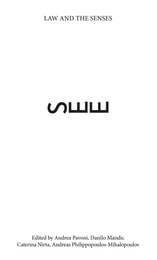
SEE
Andrea Pavoni, Danilo Mandic, Caterina Nirta and Andreas Philippopoulos-Mihalopoulos
University of Westminster Press, 2018
Vision traditionally occupies the height of the sensorial hierarchy. The sense of clarity and purity conveyed by vision, allows it to be explicitly associated with truth and knowledge. The law has always relied on vision and representation, from eye-witnesses to photography, to imagery and emblems. The law and its normative gaze can be understood as that which decrees what is permitted to be and become visible and what is not. Indeed, even if law’s perspectival view is bound to be betrayed by the realities of perception, it is nonetheless productive of real effects on the world.
This first title in the interdisciplinary series ‘Law and the Senses’ asks how we can develop new theoretical approaches to law and seeing that go beyond a simple critique of the legal pretension to truth. This volume aims to understand how law might see and unsee, and how in its turn is seen and unseen. It explores devices and practices of visibility, the evolution of iconology and iconography, and the relation between the gaze of the law and the blindness of justice. The contributions, all radically interdisciplinary, are drawn from photography, legal theory, philosophy, and poetry.

Safety Orange
Anna Watkins Fisher
University of Minnesota Press, 2021
How fluorescent orange symbolizes the uneven distribution of safety and risk in the neoliberal United States
Safety Orange first emerged in the 1950s as a bureaucratic color standard in technical manuals and federal regulations in the United States. Today it is most visible in the contexts of terror, pandemic, and environmental alarm systems; traffic control; work safety; and mass incarceration. In recent decades, the color has become ubiquitous in American public life—a marker of the extreme poles of state oversight and abandonment, of capitalist excess and dereliction. Its unprecedented saturation encodes the tracking of those bodies, neighborhoods, and infrastructures judged as worthy of care—and those deemed dangerous and expendable.
Here, Anna Watkins Fisher uses Safety Orange as an interpretive key for theorizing the uneven distribution of safety and care in twenty-first-century U.S. public life and for pondering what the color tells us about neoliberalism’s intensifying impact often hiding in plain sight in ordinary and commonplace phenomena.
Forerunners: Ideas First is a thought-in-process series of breakthrough digital publications. Written between fresh ideas and finished books, Forerunners draws on scholarly work initiated in notable blogs, social media, conference plenaries, journal articles, and the synergy of academic exchange. This is gray literature publishing: where intense thinking, change, and speculation take place in scholarship.

Salted Earth
Poetics of Place and Migration through Four Journeys in Search of SaltKaty Beinart
Intellect Books, 2026
While histories of salt have long emphasized its central role in trade, power, and capitalism, is that the only way to understand this everyday substance? In Salted Earth, artist and researcher Katy Beinart offers a fresh perspective, exploring the poetics of salt. Through a series of journeys to South Africa, Lithuania and Russia, Portugal, and Haiti, Beinart and her collaborators investigate the everyday rituals and cultural meanings of salt in diverse contexts. In her work, salt becomes a medium through which large-scale histories of migration, trade, empire, slavery, and colonialism—as well as deeply personal relationships, emotional geographies, memory, and intercultural connections—are symbolized and reimagined.
Drawing on fiction, poetry, and visual art, alongside family history, travel writing, trade archives, and artistic process, Beinart builds a rich, interdisciplinary portrait of salt as both a material and a cultural symbol. These journeys and embodied artistic practices open a sensorial and situated way of understanding material entanglements, where knowledge emerges through movement, encounter, and acts of making. Salted Earth offers valuable insights for students and researchers in art, creative writing, cultural history and geography, memory studies, and across the wider fields of aesthetics and the humanities.
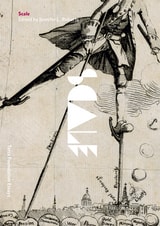
Scale
Edited by Jennifer L. Roberts
Terra Foundation for American Art, 2016
Scale is the second volume in the Terra Foundation Essays series. With eighty color illustrations and a wealth of new research from Glenn Adamson, Wendy Bellion, Wouter Davidts, Darcy Grimaldo Grigsby, Christopher P. Heuer, Joshua G. Stein, and Jason Weems, it explores viewers’ physical relationship to Barnett Newman’s abstract canvases, the arduous engineering behind the creation of Mount Rushmore, and the charged significance of liberty poles in the landscape of eighteenth-century New York, among other topics that range from studies of specific works of art to significant conceptual and theoretical concerns.
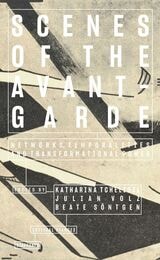
Scenes of the Avant-Garde
Networks, Temporalities and Transformational PowerEdited by Katharina Tchelidze, Julian Volz, and Beate Söntgen
Diaphanes, 2026
The history of the avant-garde, told in a series of non-linear tableaus.
This volume understands “avant-garde” as a constellation of moments, emphasizing its plural developments and its crucial interventionist role in culture and politics. Challenging the narrative of a linear avant-garde, the book sheds light on local scenes shaped by their distance from artistic practices and sociocultural conditions of their time. Scenes of the Avant-Garde brings together papers from a conference held in Tbilisi on the occasion of the centenary of the Futurist and Dadaist group H2SO4 (1924).
The contributions explore networks, relationships, and collaborations in artistic interventions. What transformational power lies in these practices? What are the gendered, social, and spatial structures, within which artistic groups test and create forms of community? And what can we learn from these overlooked or differently read stories?
The book offers new insights into avant-garde histories, drawing on case studies from countries such as Georgia, Algeria, India, Poland, Czechoslovakia, France, and the United Kingdom.
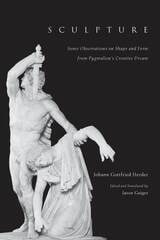
Sculpture
Some Observations on Shape and Form from Pygmalion's Creative DreamJohann Gottfried Herder
University of Chicago Press, 2002
Long recognized as one of the most important eighteenth-century works on aesthetics and the visual arts, Johann Gottfried Herder's Plastik (Sculpture, 1778) has never before appeared in a complete English translation. In this landmark essay, Herder combines rationalist and empiricist thought with a wide range of sources—from the classics to Norse legend, Shakespeare to the Bible—to illuminate the ways we experience sculpture.
Standing on the fault line between classicism and romanticism, Herder draws most of his examples from classical sculpture, while nevertheless insisting on the historicity of art and of the senses themselves. Through a detailed analysis of the differences between painting and sculpture, he develops a powerful critique of the dominance of vision both in the appreciation of art and in our everyday apprehension of the world around us. One of the key articulations of the aesthetics of Sturm und Drang, Sculpture is also important as an anticipation of subsequent developments in art theory.
Jason Gaiger's translation of Sculpture includes an extensive introduction to Herder's thought, explanatory notes, and illustrations of all the sculptures discussed in the text.
Seeing Silence
Mark C. Taylor
University of Chicago Press, 2020
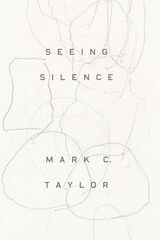
“To hear silence is to find stillness in the midst of the restlessness that makes creative life possible and the inescapability of death acceptable.” So writes Mark C. Taylor in his latest book, a philosophy of silence for our nervous, chattering age. How do we find silence—and more importantly, how do we understand it—amid the incessant buzz of the networks that enmesh us? Have we forgotten how to listen to each other, to recognize the virtues of modesty and reticence, and to appreciate the resonance of silence? Are we less prepared than ever for the ultimate silence that awaits us all?
Taylor wants us to pause long enough to hear what is not said and to attend to what remains unsayable. In his account, our way to hearing silence is, paradoxically, to see it. He explores the many variations of silence by considering the work of leading modern and postmodern visual artists, including Barnett Newman, Ad Reinhardt, James Turrell, and Anish Kapoor. Developing the insights of philosophers, theologians, writers, and composers, Taylor weaves a rich narrative modeled on the Stations of the Cross. His chapter titles suggest our positions toward silence: Without. Before. From. Beyond. Against. Within. Between. Toward. Around. With. In. Recasting Hegel’s phenomenology of spirit and Kierkegaard’s stages on life’s way, Taylor translates the traditional Via Dolorosa into a Nietzschean Via Jubilosa that affirms light in the midst of darkness.
Seeing Silence is a thoughtful meditation that invites readers to linger long enough to see silence, and, in this way, perhaps to hear once again the wordless Word that once was named “God.”

Seeing Witness
Visuality and the Ethics of TestimonyJane Blocker
University of Minnesota Press, 2009
Unearthing the meaning of witnessing in contemporary art and politics
The act of bearing witness can reveal much, but what about the figure of the witness itself? As contemporary culture is increasingly dominated by surveillance, the witness—whether artist, historian, scientist, government official, or ordinary citizen—has become empowered in realms from art to politics.
In Seeing Witness, Jane Blocker challenges the implicit authority of witnessing through the examination of a series of contemporary artworks, all of which make the act of witnessing visible, open to inspection and critique. Considering such artists as Marina Abramović, James Luna, Felix Gonzalez-Torres, Eduardo Kac, and Ann Hamilton, Blocker investigates the artists and spectators who look, the technologies they look with, and the forms of power and moral authority that permit their viewing. Going beyond particular traumatic or sensational events, Blocker contemplates the politics of witnessing and argues that the witness represents a morally unique—and even problematic—position of privilege. Separating Seeing Witness from previous literature on the subject, she finds that the visual is inherent in witnessing and asserts that contemporary art is integral to questioning and understanding how witnessing is mobilized in culture today.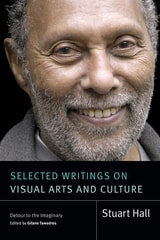
Selected Writings on Visual Arts and Culture
Detour to the ImaginaryStuart Hall. Edited by Gilane Tawadros
Duke University Press, 2024
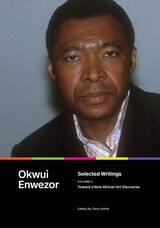
Selected Writings, Volume 1
Toward a New African Art DiscourseOkwui Enwezor. Edited by Terry Smith.
Duke University Press, 2025
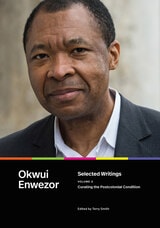
Selected Writings, Volume 2
Curating the Postcolonial Condition, Volume 2Okwui Enwezor. Edited by Terry Smith.
Duke University Press, 2025
Sewn in the Sweatshops of Marx
Beuys, Warhol, Klein, DuchampThierry de Duve
University of Chicago Press, 2012
Shape of Things
A Philosophy of DesignVilém Flusser
Reaktion Books, 1999
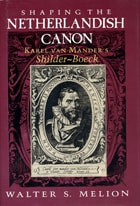
Shaping the Netherlandish Canon
Karel Van Mander's Schilder-BoeckWalter S. Melion
University of Chicago Press, 1992
of Italian art, Karel van Mander's Schilder-Boeck (or
Book on Picturing) has long been recognized for its critical
and historical influence—and yet, until now, no
comprehensive account of the book's conception, aims, and
impact has been available. In this in-depth analysis of the
content and context of Van Mander's work, Walter S. Melion
reveals the Schilder-Boeck's central importance to an
understanding of northern Renaissance and Baroque art.
By interpreting the terminology employed in the
Schilder-Boeck, Melion establishes the text's
relationship to past and contemporary art theory. Van Mander
is seen here developing his critical categories and then
applying them to Ancient, Italian, and Netherlandish artists
in order to mark changes within a culture and to characterize
excellence for each region. Thus Melion demonstrates how Van
Mander revised both the structure and critical language of
Vasari's Lives to refute the Italian's claims for the
superiority of the Tuscan style, and to clarify northern
artistic traditions and the concerns of Netherlandish
artists. A much needed corrective to the view that Dutch art
of the period was lacking in theory, Melion's work offers a
compelling account of a sixteenth- and seventeenth-century
theoretical and critical perspective and shows how this
perspective suggests a rereading of northern art.
Walter S. Melion is assistant professor of art history
at The Johns Hopkins University.
Signs and Images
Writings on Art, Cinema and PhotographyRoland Barthes
Seagull Books, 2016
Roland Barthes was a restless, protean thinker. A constant innovator—often as a daring smuggler of ideas from one discipline to another—he first gained an audience with his pithy essays on mass culture and then went on to produce some of the most suggestive and stimulating cultural criticism of the late twentieth century, including Empire of Signs, The Pleasure of the Text, and Camera Lucida. In 1976, this one-time structuralist outsider was elected to a chair at France’s preeminent Collège de France, where he chose to style himself as a professor of literary semiology until his death in 1980.
The greater part of Barthes’s published writings has been available to a French audience since 2002, but now, translator Chris Turner presents a collection of essays, interviews, prefaces, book reviews, and other journalistic material for the first time in English and divided into five themed volumes. Volume four, Signs and Images, gathers pieces related to his central concerns—semiotics, visual culture, art, cinema, and photography—and features essays on Marthe Arnould, Lucien Clergue, Daniel Boudinet, Richard Avedon, Bernard Faucon, and many more.
Sleeping Beauty
A One-Artist DictionaryJohn Sparagana and Mieke Bal
University of Chicago Press, 2008
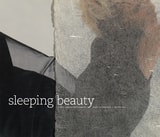
Bal contributes twenty-six essays, one for each letter of the alphabet, which borrow their organizing principle from the dictionary but reach far beyond the utilitarian purpose of a reference volume. Each one enters deeply into Sparagana’s work, illuminating concepts from Abstract to Zestful that inform, underlie, and lend meaning to the exquisitely ruined images he creates by crinkling glossy images from fashion magazines until their sheen disappears and they become soft and elastic. Unmooring the magazine page from its familiar context, these beautiful rags are rendered poetic by Sparagana’s unique art of subtraction, which physically rubs away not only ink and material, but also transience and commercial usefulness.
Just as Sparagana’s work intervenes in existing images, so, too, do Bal’s explorations qualify existing concepts. But together, in this inaugural volume in the new series Project Tango: Artists and Writers Together, they have given rise to something wholly new: a prophetic one-artist dictionary that simultaneously reenvisions the untapped interactions of images with words and the potential forms of the book itself.
Sonic Flux
Sound, Art, and MetaphysicsChristoph Cox
University of Chicago Press, 2018
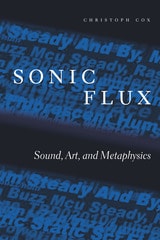
Through the philosophical analysis of works by John Cage, Maryanne Amacher, Max Neuhaus, Christian Marclay, and many others, Sonic Flux contributes to the development of a materialist metaphysics and poses a challenge to the prevailing positions in cultural theory, proposing a realist and materialist aesthetics able to account not only for sonic art but for artistic production in general.
Sound Writing
Experimental Modernism and the Poetics of ArticulationTobias Wilke
University of Chicago Press, 2022
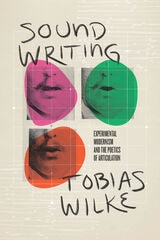
Avant-garde writers and artists of the twentieth century radically reconceived poetic language, appropriating scientific theories and techniques as they turned their attention to the physical process of spoken language. This modernist “sound writing” focused on the bodily production of speech, which it rendered in poetic, legible, graphic form.
Modernist sound writing aims to capture the acoustic phenomenon of vocal articulation by graphic means. Tobias Wilke considers sound writing from its inception in nineteenth-century disciplines like physiology and experimental phonetics, following its role in the aesthetic practices of the interwar avant-garde and through to its reemergence in the postwar period. These projects work with the possibility of crossing over from the audible to the visible, from speech to notation, from body to trace. Employing various techniques and concepts, this search for new possibilities played a central role in the transformation of poetry into a site of radical linguistic experimentation. Considering the works of writers and artists—including Raoul Hausmann, Kurt Schwitters, Viktor Shklovsky, Hugo Ball, Charles Olson, and Marshall McLuhan—Wilke offers a fresh look at the history of the twentieth-century avant-garde.
Sowing Empire
Landscape And ColonizationJill H. Casid
University of Minnesota Press, 2005

Still Dangerous!
The Harmony Hammond ReaderHarmony Hammond. Edited by Tirza True Latimer.
Duke University Press, 2026
Strange Tastes
Aesthetics and the Public in Latin American and Latinx FeminismsMonique Roelofs
Duke University Press, 2026
Studiolo
Giorgio Agamben
Seagull Books, 2022
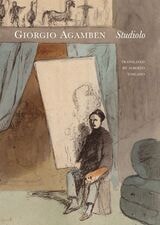
In Renaissance palaces, the studiolo was a small room to which the prince withdrew to meditate or read, surrounded by paintings he particularly loved. This book is a kind of studiolo for its author, Giorgio Agamben, as he turns his philosophical lens on the world of Western art.
Studiolo is a fascinating take on a selection of artworks created over millennia; some are easily identifiable, others rarer. Though they were produced over an arc of time stretching from 5000 BCE to the present, only now have they achieved their true legibility. Agamben contends that we must understand that the images bequeathed by the past are really addressed to us, here and now; otherwise, our historical awareness is broken. Notwithstanding the attention to detail and the critical precautions that characterize the author’s method—they provoke us with a force, even a violence, that we cannot escape. When we understand why Dostoevsky feared losing his faith before Holbein’s Body of the Dead Christ, when Chardin’s Still Life with Hare is suddenly revealed to our gaze as a crucifixion or Twombly’s sculpture shows that beauty must ultimately fall, the artwork is torn from its museological context and restored to its almost prehistoric emergence. These artworks are beautifully reproduced in color throughout Agamben’s short but significant addition to his scholarly oeuvre in English translation.
Subversive Affirmation
Critique of Critique RevisitedSylvia Sasse
Diaphanes, 2025
Since the 1960s, theory, the arts, and political activism have increasingly rejected the notion of resistance through negation, raising such arguments as: Doesn’t a critique based on negation make itself dependent on the very system it wants to overcome? Does it not remain trapped in a thinking of oppositions? Although coming from radically different angles, the formulation of concepts like subversive affirmation, hyperaffirmation, overidentification, paradoxical intervention, revolution of the yes, and affirmative sabotage all reflect the emergence of an affirmative critique that overcomes this negation while also making us aware of the difference between conscious consent and conformity, capitulation, indifference, or pragmatism. In her new book, Sylvia Sasse explores and analyzes subversive affirmation as a critical practice in different political systems. She examines the effectiveness of such criticism and its relevance at a time when various political actors have begun appropriating subversive affirmation and are no longer using it as a method of criticism.
Surface Encounters
Thinking with Animals and ArtRon Broglio
University of Minnesota Press, 2011
What it is like to be an animal? Ron Broglio wants to know from the inside, from underneath the fur and feathers. In examining this question, he bypasses the perspectives of biology or natural history to explore how one can construct an animal phenomenology, to think and feel as an animal other—or any other.
Until now phenomenology has grappled with how humans are embedded in their world. According to philosophical tradition, animals do not practice the self-reflexive thought that provides humans with depth of being. Without human interiority, philosophers have believed, animals live on the surface of things. But, Broglio argues, the surface can be a site of productive engagement with the world of animals, and as such he turns to humans who work with surfaces: contemporary artists.
Taking on the negative claim of animals living only on the surface and turning the premise into a positive set of possibilities for human–animal engagement, Broglio considers artists—including Damien Hirst, Carolee Schneemann, Olly and Suzi, and Marcus Coates—who take seriously the world of the animal on its own terms. In doing so, these artists develop languages of interspecies expression that both challenge philosophy and fashion new concepts for animal studies.
Surface
Matters of Aesthetics, Materiality, and MediaGiuliana Bruno
University of Chicago Press, 2014
Arguing that materiality is not a question of the materials themselves but rather the substance of material relations, Bruno investigates the space of those relations, examining how they appear on the surface of different media—on film and video screens, in gallery installations, or on the skins of buildings and people. The object of visual studies, she contends, goes well beyond the image and engages the surface as a place of contact between people and art objects. As Bruno threads through these surface encounters, she unveils the fabrics of the visual—the textural qualities of works of art, whether manifested on canvas, wall, or screen. Illuminating the modern surface condition, she notes how façades are becoming virtual screens and the art of projection is reinvented on gallery walls. She traverses the light spaces of artists Robert Irwin, James Turrell, Tacita Dean, and Anthony McCall; touches on the textured surfaces of Isaac Julien’s and Wong Kar-wai’s filmic screens; and travels across the surface materiality in the architectural practices of Diller Scofidio + Renfro and Herzog & de Meuron to the art of Doris Salcedo and Rachel Whiteread, where the surface tension of media becomes concrete. In performing these critical operations on the surface, she articulates it as a site in which different forms of mediation, memory, and transformation can take place.
Surveying object relations across art, architecture, fashion, design, film, and new media, Surface is a magisterial account of contemporary visual culture.
Sweet Dreams
Contemporary Art and ComplicityJohanna Drucker
University of Chicago Press, 2005
Drucker shows that artists today are aware of working within the ideologies of mainstream culture and have replaced avant-garde defiance with eager complicity. Finding their materials at flea markets or exploring celebrity culture, contemporary artists have created a vibrantly participatory movement that exudes enthusiasm and affirmation—all while critics continue to cling to an outmoded vocabulary of opposition and radical negativity that defined modernism's avant-garde. At the cutting edge of new media research, Drucker surveys a wide range of exciting contemporary artists, demonstrating their clear departure from the past and petitioning viewers and critics to shift their terms and sensibilities as well. Sweet Dreams is a testament to the creative processes and self-conscious heterogeneity of art today as well as a revolutionary effort to solicit collaboration that will encourage the production of imaginative thought and contribute to contemporary life.
Switching Codes
Thinking Through Digital Technology in the Humanities and the ArtsEdited by Thomas Bartscherer and Roderick Coover
University of Chicago Press, 2011
Half a century into the digital era, the profound impact of information technology on intellectual and cultural life is universally acknowledged but still poorly understood. The sheer complexity of the technology coupled with the rapid pace of change makes it increasingly difficult to establish common ground and to promote thoughtful discussion.
Responding to this challenge, Switching Codes brings together leading American and European scholars, scientists, and artists—including Charles Bernstein, Ian Foster, Bruno Latour, Alan Liu, and Richard Powers—to consider how the precipitous growth of digital information and its associated technologies are transforming the ways we think and act. Employing a wide range of forms, including essay, dialogue, short fiction, and game design, this book aims to model and foster discussion between IT specialists, who typically have scant training in the humanities or traditional arts, and scholars and artists, who often understand little about the technologies that are so radically transforming their fields. Switching Codes will be an indispensable volume for anyone seeking to understand the impact of digital technology on contemporary culture, including scientists, educators, policymakers, and artists, alike.
Systems We Have Loved
Conceptual Art, Affect, and the Antihumanist TurnEve Meltzer
University of Chicago Press, 2013