Results by title
170 books match the query 'Death, Grief, Loss' and 13 start with s
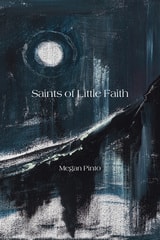
Saints of Little Faith
Megan Pinto
Four Way Books, 2024
The energies animating Saints of Little Faith, Megan Pinto’s electrifying debut in poetry, are a forceful quiet, a loud stillness, the caesura between a lightning strike and the sound of thunder. Everywhere, the speaker sees the numinous power of language, the incipience of things to come, even a kind of catastrophic grace in desolation and destruction — as if within the terrain of her own obsession, she recognizes the familiar, ever-changing seasons. Fierce and intimate, this poet’s meditative transformations engage with South Asian experiences of addiction, domestic violence, and mental illness, refusing to ignore narratives treated as unspeakable and overlooked by the English canon. Mapping the collision of abuse, psychosis, and rage, Pinto sees beyond them, buoyed by an inscrutable but abiding faith in the holiness of life itself, in a cold God nevertheless capable of gentleness. Once, “desire was an arrow, but now desire / is the field.” Pinto presides over this expanse, deciding, “I have three choices: to drift through life / anesthetized, to soften. . .” In that unspoken “or,” the merciful lacuna of that ellipsis, reside the lyrical mystery and medicine that feed this astonishing collection and strengthen resolve, both ours and the speaker’s: “The lake looks frozen, but it is not.”
Saints of Little Faith
Megan Pinto
Four Way Books, 2024
The energies animating Saints of Little Faith, Megan Pinto’s electrifying debut in poetry, are a forceful quiet, a loud stillness, the caesura between a lightning strike and the sound of thunder. Everywhere, the speaker sees the numinous power of language, the incipience of things to come, even a kind of catastrophic grace in desolation and destruction — as if within the terrain of her own obsession, she recognizes the familiar, ever-changing seasons. Fierce and intimate, this poet’s meditative transformations engage with South Asian experiences of addiction, domestic violence, and mental illness, refusing to ignore narratives treated as unspeakable and overlooked by the English canon. Mapping the collision of abuse, psychosis, and rage, Pinto sees beyond them, buoyed by an inscrutable but abiding faith in the holiness of life itself, in a cold God nevertheless capable of gentleness. Once, “desire was an arrow, but now desire / is the field.” Pinto presides over this expanse, deciding, “I have three choices: to drift through life / anesthetized, to soften. . .” In that unspoken “or,” the merciful lacuna of that ellipsis, reside the lyrical mystery and medicine that feed this astonishing collection and strengthen resolve, both ours and the speaker’s: “The lake looks frozen, but it is not.”
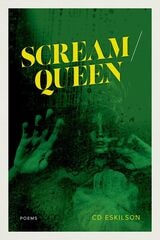
Scream / Queen
PoemsCD Eskilson
Acre Books, 2025
Scream / Queen, CD Eskilson’s debut poetry collection, examines queerness, mental illness, and transgender identity through the lens of thrillers and B movies. The Creature from the Black Lagoon, Michael Myers, and the Headless Horseman are just a few of the fright-film villains and monsters that populate this book.
Eskilson’s formally innovative poems document how a body—a nonbinary transgender body, a chronically ill body, a body carrying trauma—can be understood, accepted, and healed even in a violent sociopolitical climate. Drawing on the language and images of horror cinema, the poems’ speakers find strength and the means to survive both family legacy and the pain inflicted on them: “I want to behemoth, be the biggest / violence in the galaxy,” says one who thinks about Godzilla and dreams of “learning how to roar.”
Though an atmosphere of trans panic and state legislation against trans bodies pervades the book, Scream / Queen ultimately conjures a world of hope and tenderness through connection and care. It celebrates all the body’s possibilities: the glorious and the monstrous. As a werewolf in the book says, “I kiss the moon; it took so long / to get here.”
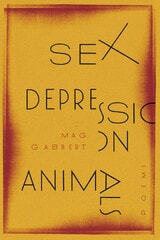
Sex Depression Animals
PoemsMag Gabbert
The Ohio State University Press, 2023
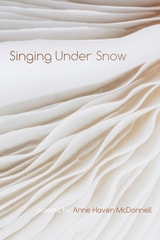
Singing Under Snow
Anne Haven McDonnell
Michigan State University Press, 2026
These are poems of queer ecology—poetry that “exults in the grit and texture of the natural world, in the unassuming and overlooked wonders beneath our feet and beyond our doors—in lichen and snow, in martens and mushrooms.” In reckoning with a mother’s aging, a breakup, or grief and disorientation in the face of the climate crisis, these poems seek a spiritual meaning in ecological belonging. Central to the collection is a series of poems exploring science, ceremony, and personal encounters with fungi. Fungi and lichen blur what we consider biological, what we think of as an individual, and how we understand death, and these poems reflect this complexity through imagery, juxtaposition, leaps of imagination, and sonic spells.
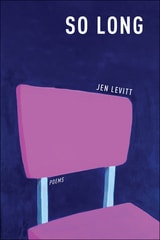
So Long
Jen Levitt
Four Way Books, 2023
Anticipating and then grieving the death of her father, Jen Levitt’s So Long fleshes out a full elegiac register, sitting with the mourning of farewell while holding onto gratitude, remembrance, and a permeating love. “Soon,” she says, “we’ll have to find another way to meet, as moonlight / makes the river glow.” In the contrails of bittersweet loss, Levitt’s speaker observes all that surrounds her, and the self, too, as a phenomenon in loneliness. In the suburbs, she notes high- school athletes circling “in their sweat-resistant fabrics,” “so natural in their tank tops, those dutiful kids trying to beat time”; upstate, she finds herself in temple where Broadway music has replaced prayer and discovers “no promises, / but, like hearing a rustle in deep woods & turning to locate its source, the chance for something rare.” It is this humanistic faith that inverts the title’s idiomatic goodbye into a statement of permanence, the truth of our enduring, improbable lives: look at this, she seems to command herself, “& look at how lucky I’ve been, for so long.”
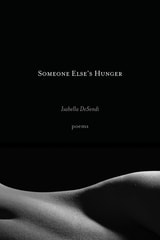
Someone Else's Hunger
Isabella DeSendi
Four Way Books, 2025
The expansive mercy of DeSendi's breath-taking images is never more apparent than the moment they turn, as when she heralds the avian frenzy "in the moment right after a purge": "always the miracle of birds arriving," "a messy flurry…curious if any piece of me could be salvaged, was still good enough to be taken home to the other starlings to eat." This speaker's ability to see the tenacious tenderness that drives the scavenger, to recognize its creative intelligence for nourishment, belies the resuscitative artistry that never abandons her as she turns carrion into continuance, coming alive again. Someone Else's Hunger subverts the revenge to recovery plot, arguing that the truest testament to the speaker's inner strength is the resilience it took to survive. DeSendi formally moves between restraint and excess, illustrating the great courage required to relinquish the control she won back when she became the master of her suffering. But the reward of risking exposure, daring to open herself to the world and let herself feed off it? Abundance. The arrival of spring and "with it the audacious dirt," this realization that "sometimes / in the breaking I am bettering / and in the bettering I am free."
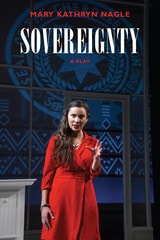
Sovereignty
A PlayMary Kathryn Nagle
Northwestern University Press, 2020
A powerful meditation of the echoes of history and the never-ending struggle for sovereignty
Sovereignty unfolds over two parallel timelines. In present-day Oklahoma, a young Cherokee lawyer, Sarah Ridge Polson, and her colleague Jim Ross defend the inherent jurisdiction of Cherokee Nation in the U.S. Supreme Court when a non-Indian defendant challenges the Nation’s authority to prosecute non-Indian perpetrators of domestic violence. Their collaboration is juxtaposed with scenes from 1835, when Cherokee Nation was eight hundred miles to the east in the southern Appalachians. That year, Sarah’s and Jim’s ancestors, historic Cherokee rivals, were bitterly divided over a proposed treaty with the administration of Andrew Jackson, the Treaty of New Echota, which led to the nation’s removal to Oklahoma on the infamous Trail of Tears.
A direct descendant of nineteenth-century Cherokee leaders John Ridge and Major Ridge, Mary Kathryn Nagle has penned a play that twists and turns from violent outbursts to healing monologues, illuminating a provocative double meaning for the sovereignty of both tribal territory and women’s bodies. Taking as its point of departure the story of one lawyer’s passionate defense of the rights of her people to prosecute non-natives who commit crimes on reservations, Sovereignty opens up into an expansive exploration of the circular continuity of history, human memory, and the power of human relationships.
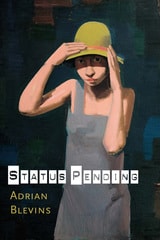
Status Pending
Adrian Blevins
Four Way Books, 0

Strange Hymn
PoemsCarlene Kucharczyk
University of Massachusetts Press, 2025
Winner of the 2025 Vermont Book Award for Poetry!
“I’ll tell you everything I know. Though there might not be much to tell,” confesses the speaker in Strange Hymn by Carlene Kucharczyk, in a meticulously crafted lyrical journey exploring morality and humanity. The poems here grapple with understanding physical loss: “I wanted / to know at once and definitively our animal bodies / were not all we were. It is shameful to be this fragile.” They also engage with the more abstract slipping away of memory and time: “Since I was born, I have been forgetting. Forgetting what I have wanted to remember.” Kucharczyk’s insightful poems blur the lines between history and myth, love and grief, song and silence.
Caught between lamenting the passage of time and rejoicing in small beauties, she writes, “I tell you, I wish we could stay here longer / in this hotel of lost grandeur, this palace of interesting disarray, / and stay here with these pieces of the impersonal past / that have somehow not yet outlasted their small lights.” Each moment reflects on our ephemeral lives from musings on art and nature to reflections on the self, asking “Is a mirror a sort of glass house? / And, is there a way to see ourselves besides through the glass?”
As readers traverse this collection, they learn how the body sings, the many iterations of Mary, what sirens truly think of Odysseus, how a Morning Glory unfurls, and lessons in orthodontics, but most importantly, how to live with absence. Kucharczyk is a master of manipulating time and space through her dynamic use of form, creating a narrative that begs, “After I’m gone, don’t bury my body— / Burn it, and turn it into song.”
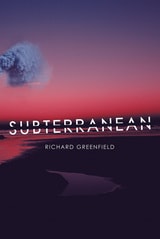
Subterranean
Richard Greenfield
Omnidawn, 2018
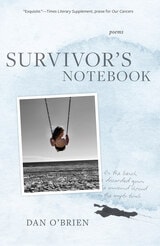
Survivor's Notebook
PoemsDan O'Brien
Acre Books, 2023
Dan O’Brien’s powerful companion to Our Cancers catalogs the recovery of a cancer survivor, whose wife has recently survived her own cancer, as he returns to his daily life while raising a young daughter. This prose-poem sequence is a true survivor’s notebook, using photos and the tools of memoir to evoke how disaster can constellate our past, present, and future.
In his poems, plays, and nonfiction, Dan O’Brien has explored, as he says in a 2023 interview, “how trauma shatters identity, and in its aftermath we reconfigure and rewrite, as it were, the story of who we were and are and maybe will be.” In highly personal poems reminiscent of dramatic monologues, as well as shorter lyric fragments, the protagonist reconsiders the people and places he knew before his illness, including his estranged family and others with cancer. While looking back he moves forward again, resuming his career as a writer and teacher, revisiting Ireland, and making a kind of pilgrimage to the Holy Land. There is a confiding and at times comical tone in these poems as O’Brien awakens to the delights, absurdities, and wonders of existence, and as he and his wife work through the aftershocks of their trauma toward a deeper love.
With text and image, Survivor’s Notebook shows how we go on, with resilience, gratitude, and joy, when “the emergency’s elsewhere” now.
Survivor's Notebook
PoemsDan O’Brien
Acre Books, 2023
In his poems, plays, and nonfiction, Dan O’Brien has explored, as he says in a 2023 interview, “how trauma shatters identity, and in its aftermath we reconfigure and rewrite, as it were, the story of who we were and are and maybe will be.” In highly personal poems reminiscent of dramatic monologues, as well as shorter lyric fragments, the protagonist reconsiders the people and places he knew before his illness, including his estranged family and others with cancer. While looking back he moves forward again, revisiting Ireland, resuming his career as a writer and teacher, and making a kind of pilgrimage to the Holy Land. There is a confiding and at times comical tone in these poems, as he awakens to the delights, absurdities, and wonders of existence, and as he and his wife work through the aftershocks of their trauma toward a deeper love.
Survivor’s Notebook shows how we go on, with resilience, gratitude, and joy, when “the emergency’s elsewhere” now.