Results by title
345 books match the query 'Design' and 20 start with s
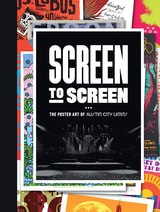
Screen to Screen
The Poster Art of Austin City LimitsAustin City Limits
University of Texas Press, 2025
From Billie Eilish to Cassandra Wilson, Elvis Costello to Pearl Jam, many of the world’s most beloved musicians have entertained us on Austin City Limits. And for the past couple of decades, each performance recorded on the ACL stage has inspired a special bonus: an original, eye-catching screen-printed poster, commissioned by the show’s producer, Austin PBS, and designed by some of their favorite graphic artists from all over the world.
Screen to Screen celebrates the 50th anniversary of Austin’s premier gig, presenting every poster in brilliant full color alongside dazzling ACL concert photography and reminiscences from Neko Case, Leon Bridges, and other luminaries. Exciting, evocative, and always unique, the posters are accompanied by insightful creative discussion from several designers, including Mark Pedini and Diana Sudyka, and the book itself is designed by the award-winning, Austin-based firm Preacher Co. Introduced by long-time ACL producer Terry Lickona and with a foreword from Willie Nelson—whom you might remember from the pilot episode, taped half a century ago—this collection brings a piece of Austin and music history to life in vivid color.

Seamlessness
Making and (Un)Knowing in Fashion PracticeYeseung Lee
Intellect Books, 2016
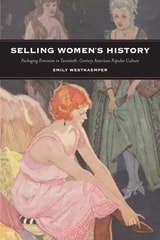
Selling Women's History
Packaging Feminism in Twentieth-Century American Popular CultureWestkaemper, Emily
Rutgers University Press, 2017

Sensory Design
Joy Monice Malnar
University of Minnesota Press, 2004
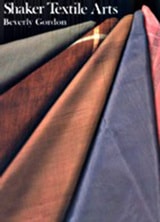
Shaker Textile Arts
Beverly Gordon
University Press of New England, 1982

Shape of Things
A Philosophy of DesignVilém Flusser
Reaktion Books, 1999

Shapely Bodies
The Image of Porcelain in Eighteenth-Century FranceChristine A. Jones
University of Delaware Press, 2013
Shapely Bodies: The Image of Porcelain in Eighteenth-Century France constructs the first cultural history of porcelain making in France. It takes its title from two types of “bodies” treated in this study: the craft of porcelain making shaped clods of earth into a clay body to produce high-end commodities and the French elite shaped human bodies into social subjects with the help of makeup, stylish patterns, and accessories. These practices crossed paths in the work of artisans, whose luxury objects reflected and also influenced the curves of fashion in the eighteenth century.
French artisans began trials to reproduce fine Chinese porcelain in the 1660s. The challenge proved impossible until they found an essential ingredient, kaolin, in French soil in the 1760s. Shapely Bodies differs from other studies of French porcelain in that it does not begin in the 1760s at the Sèvres manufactory when it became technically possible to produce fine porcelain in France, but instead ends there. Without the secret of Chinese porcelain, artisans in France turned to radical forms of experimentation. Over the first half of the eighteenth century, they invented artificial alternatives to Chinese porcelain, decorated them with French style, and, with equal determination, shaped an identity for their new trade that distanced it from traditional guild-crafts and aligned it with scientific invention. The back story of porcelain making before kaolin provides a fascinating glimpse into the world of artisanal innovation and cultural mythmaking.
To write artificial porcelain into a history of “real” porcelain dominated by China, Japan, and Meissen in Saxony, French porcelainiers learned to describe their new commodity in language that tapped into national pride and the mythic power of French savoir faire. Artificial porcelain cut such a fashionable image that by the mid-eighteenth century, Louis XV appropriated it for the glory of the crown. When the monarchy ended, revolutionaries reclaimed French porcelain, the fruit of a century of artisanal labor, for the Republic. Tracking how the porcelain arts were depicted in documents and visual arts during one hundred years of experimentation, Shapely Bodies reveals the politics behind the making of French porcelain’s image.
Published by University of Delaware Press. Distributed worldwide by Rutgers University Press.
Shopping
Material Culture PerspectivesDeborah C. Andrews
University of Delaware Press, 2015
Published by University of Delaware Press. Distributed worldwide by Rutgers University Press.

Showing Out
Fashion in HarlemPeter "Souleo" Wright
Rutgers University Press, 2027
Showing Out: Fashion in Harlem explores the unprecedented and enduring impact of the Harlem Institute of Fashion (HIF) on American culture and style. Founded in 1966 by Lois K. Alexander-Lane, HIF produced legendary fashion shows for the annual HARLEM WEEK festival. With their eye-catching costumes, dramatic runway presentations, and embrace of the local community, the shows became one of HIF’s most popular and successful initiatives, spotlighting the underrepresented talents of Black fashion designers, models, and administrators. Tracing HIF’s legacy within the larger narrative of fashion history, Showing Out uses fashion shows as a portal, showcasing previously unpublished archival photos; first-hand accounts from HIF alumni, and contemporary collectives that continue to celebrate the Black contribution to fashion. In the wake of Black Lives Matter, anti-DEI policies, and ongoing political and racial turmoil, Showing Out is the much-needed voice of inspiration to reshape the narrative around fashion.

Singular Sensations
A Cultural History of One-Panel Comics in the United StatesMichelle Ann Abate
Rutgers University Press, 2024
Shortlisted for the 2024 Eisner Award for Best Academic/Scholarly Book
What do The Family Circus, Ziggy, and The Far Side have in common? They are all single-panel comics, a seemingly simple form that cartoonists have used in vastly different ways.
Singular Sensations is the first book-length critical study to examine this important but long-neglected mode of cartoon art. Michelle Ann Abate provides an overview of how the American single-panel comic evolved, starting with Thomas Nast’s political cartoons and R.F. Outcault’s groundbreaking Yellow Kid series in the nineteenth century. In subsequent chapters, she explores everything from wry New Yorker cartoons to zany twenty-first-century comics like Bizarro. Offering an important corrective to the canonical definition of comics as “sequential art,” Abate reveals the complexity, artistry, and influence of the single-panel art form.
Engaging with a wide range of historical time periods, sociopolitical subjects, and aesthetic styles, Singular Sensations demonstrates how comics as we know and love them would not be the same without single-panel titles. Abate’s book brings the single-panel comic out of the margins and into the foreground.

Slotted Waveguide Array Antennas
Theory, analysis and designLars Josefsson
The Institution of Engineering and Technology, 2018

Soft Robots for Healthcare Applications
Design, modelling, and controlShane Xie
The Institution of Engineering and Technology, 2017

Speaking of Furniture
Conversations with 14 American MastersWarren Eames Johnson
The Artist Book Foundation, 2013
Speaking of Furniture: Conversations with 14 American Masters is a fresh, stimulating, and in-depth examination of the modus operandi of 14 accomplished—and diverse—furniture makers. An engaging history of studio furniture, this colorful, informative study includes engaging conversations with James Krenov, Wendell Castle, Jere Osgood, Judy Kensley McKie, David Ebner, Richard Scott Newman, Hank Gilpin, Alphonse Mattia, John Dunnigan, Wendy Maruyama, James Schriber, Timothy S. Philbrick, Michael Hurwitz, and Thomas Hucker. The insightful interviews illuminate how these creative and gifted craftspeople arrived professionally and what their craft means to them individually.
In his enlightening foreword, Edward S. Cook, Jr. maps out the background of the studio furniture movement. Author and furniture maker Roger Holmes offers an insider's perspective on the art and craft of producing exquisite contemporary furniture in his conversational introduction and maintains, "Art or craft, this is very personal work." This elegant presentation skillfully sheds light on the thought processes and techniques of a celebrated and exceptional gathering of studio furniture makers who are as unique as they are stellar. As sculptor and furniture designer Wendell Castle remarks, "What I admired was that... fine art and craft were the same thing."
Spellbound
Rethinking the AlphabetCraig McDaniel and Jean Robertson
Intellect Books, 2016

Sprawl and Suburbia
A Harvard Design Magazine ReaderWilliam Saunders
University of Minnesota Press, 2005
Sprawl and Suburbia brings together some of the foremost thinkers in the field to present in-depth diagnosis and critical analysis of the physical and social realities of exurban sprawl. Along with an introduction by Robert Fishman, these essays call for architects, urban planners, and landscape designers to work at mitigating the impact of sprawl on land and resources and improving the residential and commercial built environment as a whole. In place of vast residential exurbs, these writers offer visions of a fresh urbanism—appealing and persuasive models of life at greater density, with greater diversity, and within genuine communities.
With sprawl losing the support of suburban citizens themselves as economic, environmental, and social costs are being paid, Sprawl and Suburbia appears at a moment when design might achieve some critical influence over development—if architects and planners accept the challenge.
Contributors: Mike Davis, Ellen Dunham-Jones, Peter Hall, David Harvey, Jerold S. Kayden, Matthew J. Kiefer, Alex Krieger, Andrew Ross, James S. Russell, Mitchell Schwarzer.
William S. Saunders is editor of Harvard Design Magazine and assistant dean for external relations at the Harvard Design School. He is the author of Modern Architecture: Photographs by Ezra Stoller.
Robert Fishman is professor of architecture and urban planning at the Taubman College of Architecture, University of Michigan. He is author of Bourgeois Utopias: The Rise and Fall of Suburbia and editor of The American Planning Tradition: Culture and Policy.
Street Fashion Moscow
Elena Siemens
Intellect Books, 2017

Style and Seduction
Jewish Patrons, Architecture, and Design in Fin de Siècle ViennaElana Shapira
Brandeis University Press, 2016

Superhumanity
Design of the SelfNick Axel
University of Minnesota Press, 2018
A wide-ranging and challenging exploration of design and how it engages with the self
The field of design has radically expanded. As a practice, design is no longer limited to the world of material objects but rather extends from carefully crafted individual styles and online identities to the surrounding galaxies of personal devices, new materials, interfaces, networks, systems, infrastructures, data, chemicals, organisms, and genetic codes.
Superhumanity seeks to explore and challenge our understanding of “design” by engaging with and departing from the concept of the “self.” This volume brings together more than fifty essays by leading scientists, artists, architects, designers, philosophers, historians, archaeologists, and anthropologists, originally disseminated online via e-flux Architecture between September 2016 and February 2017 on the invitation of the Third Istanbul Design Biennial. Probing the idea that we are and always have been continuously reshaped by the artifacts we shape, this book asks: Who designed the lives we live today? What are the forms of life we inhabit, and what new forms are currently being designed? Where are the sites, and what are the techniques, to design others?
This vital and far-reaching collection of essays and images seeks to explore and reflect on the ways in which both the concept and practice of design are operative well beyond tangible objects, expanding into the depths of self and forms of life.
Contributors: Zeynep Çelik Alexander, Lucia Allais, Shumon Basar, Ruha Benjamin, Franco “Bifo” Berardi, Daniel Birnbaum, Ina Blom, Benjamin H. Bratton, Giuliana Bruno, Tony Chakar, Mark Cousins, Simon Denny, Keller Easterling, Hu Fang, Rubén Gallo, Liam Gillick, Boris Groys, Rupali Gupte, Andrew Herscher, Tom Holert, Brooke Holmes, Francesca Hughes, Andrés Jaque, Lydia Kallipoliti, Thomas Keenan, Sylvia Lavin, Yongwoo Lee, Lesley Lokko, MAP Office, Chus Martínez, Ingo Niermann, Ahmet Ögüt, Trevor Paglen, Spyros Papapetros, Raqs Media Collective, Juliane Rebentisch, Sophia Roosth, Felicity D. Scott, Jack Self, Prasad Shetty, Hito Steyerl, Kali Stull, Pelin Tan, Alexander Tarakhovsky, Paulo Tavares, Stephan Trüby, Etienne Turpin, Sven-Olov Wallenstein, Eyal Weizman, Mabel O. Wilson, Brian Kuan Wood, Liam Young, and Arseny Zhilyaev.

Sustainable High-Rise Buildings
Design, technology, and innovationKheir Al-Kodmany
The Institution of Engineering and Technology, 2022

Symbolic Methods in Control System Analysis and Design
Neil Munro
The Institution of Engineering and Technology, 1999