Results by title
87 books match the query 'Developing & Emerging Countries' and 9 start with s

Scammer's Yard
The Crime of Black Repair in JamaicaJovan Scott Lewis
University of Minnesota Press, 2020
Tells the story of Jamaican “scammers” who use crime to gain autonomy, opportunity, and repair
There is romance in stealing from the rich to give to the poor, but how does that change when those perceived rich are elderly white North Americans and the poor are young Black Jamaicans? In this innovative ethnography, Jovan Scott Lewis tells the story of Omar, Junior, and Dwayne. Young and poor, they strive to make a living in Montego Bay, where call centers and tourism are the two main industries in the struggling economy. Their experience of grinding poverty and drastically limited opportunity leads them to conclude that scamming is the best means of gaining wealth and advancement. Otherwise, they are doomed to live in “sufferation”—an inescapable poverty that breeds misery, frustration, and vexation.
In the Jamaican lottery scam run by these men, targets are told they have qualified for a large loan or award if they pay taxes or transfer fees. When the fees are paid, the award never arrives, netting the scammers tens of thousands of U.S. dollars. Through interviews, historical sources, song lyrics, and court testimonies, Lewis examines how these scammers justify their deceit, discovering an ethical narrative that reformulates ideas of crime and transgression and their relationship to race, justice, and debt.
Scammer’s Yard describes how these young men, seeking to overcome inequality and achieve autonomy, come to view crime as a form of liberation. Their logic raises unsettling questions about a world economy that relegates postcolonial populations to deprivation even while expecting them to follow the rules of capitalism that exacerbate their dispossession. In this groundbreaking account, Lewis asks whether true reparation for the legacy of colonialism is to be found only through radical—even criminal—means.

Seasons of Hunger
Fighting Cycles of Starvation Among the World's Rural PoorStephen Devereux, Samuel Hauenstein Swan, and Bapu Vaitla
Pluto Press, 2008
Every year, millions of the rural poor suffer from predictable and preventable seasonal hunger. This hunger is less dramatic but no less damaging than the starvation associated with famines, wars and natural disasters. Seasons of Hunger explores why the world does not react to a crisis that we know will continue year after year.
Seasonal hunger is caused by annual cycles of shrinking food stocks, rising prices, and lack of income. This hidden hunger pushes millions of children to the brink of starvation every year, permanently stunting their physical and cognitive development, weakening their immune systems and opening the door for killer diseases. Action Against Hunger argue that ending seasonal hunger could save millions of young lives and is key to achieving the Millennium Development Goals. This book documents seasonal hunger in four countries - India, Malawi, Mali and Myanmar - including personal stories and country-wide data which shows the magnitude of the problem.
The authors also find encouraging examples of interventions designed to address seasonality - initiatives led by governments, donors and NGOs, and poor people themselves - and propose a package of advocacy messages that could contribute to the global eradication of seasonal hunger. This book will be a valuable resource for journalists, policy makers, NGO members and students of development studies.
Service-Learning as a New Paradigm in Higher Education of China
Carol Ma Hok-ka
Michigan State University Press, 2018
Sex in Development
Science, Sexuality, and Morality in Global PerspectiveVincanne Adams and Stacy Leigh Pigg, eds.
Duke University Press, 2005
Sex in Development combines the cultural analysis of sexuality, critiques of global development, and science and technology studies. Whether considering the resistance encountered by representatives of an American pharmaceutical company attempting to teach Russian doctors a “value free” way to offer patients birth control or the tension between Tibetan Buddhist ideas of fertility and the modernization schemes of the Chinese government, these essays show that attempts to make sex a universal moral object to be managed and controlled leave a host of moral ambiguities in their wake as they are engaged, resisted, and reinvented in different ways throughout the world.
Contributors. Vincanne Adams, Leslie Butt, Lawrence Cohen, Heather Dell, Vinh-Kim Nguyen, Shanti Parikh, Heather Paxson, Stacy Leigh Pigg, Michele Rivkin-Fish
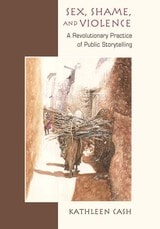
Sex, Shame, and Violence
A Revolutionary Practice of Public Storytelling in Poor CommunitiesKathleen Cash
Vanderbilt University Press, 2016
For more than three decades, Kathleen Cash has lived and worked with impoverished people, learning about their lives. Listening to them talk about their feelings of shame, Cash heard how people suffered from being unable to change what was happening to them--HIV infection, sexual and domestic violence, violence toward children, and environmental degradation. She saw that many interventions lacked emotional and cultural integrity and thus did little to alleviate these hardships. So Cash went outside the conventional approaches to health promotion and social justice and devised a community narrative practice, a strategy for engaging people through storytelling. From numerous ethnographic interviews, she pieced together cultural stories in a way that resonated with community people and revealed the paradoxes in their suffering. Cash recruited local artists to illustrate the stories in a form resembling a graphic novel and distributed these booklets for community discussion. (This book includes excerpts from these illustrated stories.)
In Thailand, Bangladesh, Haiti, Uganda, and the United States, people learned to talk about forbidden subjects and say what they could never say before. They stood up to each other, reconciled, and made health-seeking decisions. By helping others, they repaired themselves. In cathartic conversations they acknowledged shame, which led to acts of courage and generosity.

Some Other Amazonians
Perspectives on Modern AmazoniaEdited by Mark Harris and Stephen Nugent
University of London Press, 2004
Contributors include Rosa Elizabeth Acevedo Marin, Edna De Castro, and David McGrath (Nucleo de Altos Estudos Amazonicos, Federal University of Para, Brazil), Scott Anderson (Tide-Energy Project in the Amazon), Neide Esterci (Federal University of Rio de Janeiro), Deborah Lima (Fluminense Federal University), Raymundo Heraldo Maues (Federal University of Para, Brazil), and Gregory Prang (Wayne State University).
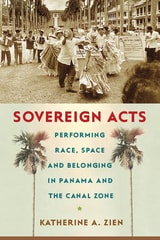
Sovereign Acts
Performing Race, Space, and Belonging in Panama and the Canal ZoneZien, Katherine A.
Rutgers University Press, 2017
Winner of the 2017 Annual Book Prize from the Canadian Association of Latin American and Caribbean Studies (CALACS)
Sovereign Acts explores how artists, activists, and audiences performed and interpreted sovereignty struggles in the Panama Canal Zone, from the Canal Zone’s inception in 1903 to its dissolution in 1999. In popular entertainments and patriotic pageants, opera concerts and national theatre, white U.S. citizens, West Indian laborers, and Panamanian artists and activists used performance as a way to assert their right to the Canal Zone and challenge the Zone’s sovereignty, laying claim to the Zone’s physical space and imagined terrain.
By demonstrating the place of performance in the U.S. Empire’s legal landscape, Katherine A. Zien transforms our understanding of U.S. imperialism and its aftermath in the Panama Canal Zone and the larger U.S.-Caribbean world.

Sovereignty and Survival
Power, Conflict and Climate Change in BurmaAshley South
National University of Singapore Press, 2027
Evaluates Burma at a pivotal tipping point after the 2021 military coup.
The 2021 military coup in Burma/Myanmar triggered popular resistance and a spreading civil war, reigniting long-standing struggles for ethnic self-determination. The chaos has enabled a huge rise in transnational criminal activities, including drug trafficking and the emergence of scam centers. The country's geopolitical importance, not least as a source of rare earths, is also heightening the struggle for power. At the same time, accelerating climate change is destabilizing local ecologies and livelihoods, driving food production, socio-economic systems, and civil society towards collapse or massive change. Together, these forces have undermined the coherence of Burma as a centralized state. However, new forms of resistance and political organization have emerged in liberated areas across the country. At this critical juncture, rather than “state failure,” Burma demonstrates novel forms of complex, asymmetrical, and sometimes messy state-building, a “bottom-up” federalism based on the agency and resilience of Indigenous communities and anti-junta forces.
Structured Luck
Downstream Effects of the U.S. Diversity Visa ProgramOnoso Imoagene
Russell Sage Foundation, 2024
Combining ethnographic observation in Africa and interviews with immigrants, their family members, and friends from Ghana and Nigeria, Imoagene demonstrates that the visa program is a process of “structured luck,” from how people hear about the lottery, who registers for it, and who participates in it to the application requirements for the visa. In Ghana and Nigeria, people often learn about the lottery through friends, colleagues, or relatives who persuade them to enter for the perceived benefits of receiving a visa: opportunities for upward mobility, permanent legal status, and the ability to bring along family members. Though anyone can enter the lottery, not everyone who wins obtains a visa. The visa application process requires proof of a high school diploma or artisan skills, a medical exam, a criminal background check, an interview with U.S. consular officers, and payment of fees. Such requirements have led to the growth of visa entrepreneurs, who often charge exorbitant fees to steer immigrants through the process. Visa recipients who were on track to obtain university degrees at home often leave in the middle of their studies for the United States but struggle to continue their education due to high U.S. tuition costs. And though their legal status allows them to escape the demoralizing situations that face the undocumented, these immigrants lack the social support that the government sometimes provides for refugees and other migrants. Ultimately, Imoagene notes, the real winner of the visa lottery is not the immigrants themselves but the United States, which benefits from their relatively higher levels of education. Consequently, she argues, the U.S. must do more to minimize the visa program’s negative consequences.
Structured Luck illuminates the trauma, resilience, and determination of immigrants who come to the United States through the Diversity Visa Program and calls for the United States to develop policies that will better integrate them into society.