Results by title
108 books match the query 'Diseases & Conditions' and 8 start with s
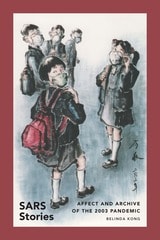
SARS Stories
Affect and Archive of the 2003 PandemicBelinda Kong
Duke University Press, 2024
In SARS Stories, Belinda Kong delves into the cultural archive of the 2003 SARS pandemic, examining Chinese-language creative works and social practices at the epicenters of the outbreak in China and Hong Kong. As the COVID-19 pandemic has highlighted issues of anti-Asian racism and sinophobia, Kong traces how Chinese people navigated the SARS pandemic and created meaning amid crisis through cultures of epidemic expression. From sentimental romances and Cantopop songs to raunchy sex comedies and crowdsourced ghost tales, unexpected and minor genres and creators of Chinese popular culture highlight the resilience and humanity of those living through the pandemic. Rather than narrating pandemic life in terms of crisis and catastrophe, Kong argues that these works highlight Chinese practices of community, care, and love amid disease. She also highlights the persistence of orientalism in anglophone accounts of SARS index patients and global reporting on COVID-era China. Kong shows how the Chinese experiences of living with SARS can reshape global feelings toward pandemic social life and foster greater fellowship in the face of pandemics.
[more]
Self-Defense
A Myth-Busting Guide to Immune HealthDaniel M. Davis
University of Chicago Press, 2025
“Utterly absorbing. Nearly every paragraph brings a revelation.”—Bill Bryson • “Wise, and beautifully written. . . . It will change the way you think about your body and live your life.”—Chris van Tulleken • “This great book from a world expert offers practical tips and dispels many myths.”—Tim Spector
A world-renowned scientist offers a much-needed analysis of what it takes to have good immune health—helping readers navigate what can really help, what is a complete myth, and why.
Does orange juice help ward off colds? And how does our age affect our ability to recover from one? When it comes to immunity, are we really what we eat? Or how much we eat? We are surrounded by big questions and big claims about enhancing our immune systems, so how do we tell the fiction from the facts? And, ultimately, what can we do to reduce our chances of getting sick?
World-leading immunologist Daniel M. Davis offers answers in this authoritative, highly accessible, myth-busting guide to the effects of stress, age, exercise, weight, nutrition, sleep, vaccines, and mental health on our immune health. Taking us to the cutting edge of immunology research and explaining both what we know and how we know it, Self-Defense helps readers spot phony claims and make informed choices. Davis shows us that everyone’s immune system is entirely unique, and that’s why we should be wary of one-size-fits-all “cures.” We learn how exercise, for example, has all sorts of different, even opposing, short- and long-term effects on our immune health. And while our gut microbes are vitally important, it’s unlikely that yogurt drinks can really boost your immune system to stop you getting ill.
An eye-opening window into some of the astonishing possibilities for the future, when it comes to distinguishing bogus and beneficial health claims about everything from vitamin D to inflammation and cancer therapies, Davis’s book may be your best self-defense.
[more]
Self-Defense
A Myth-Busting Guide to Immune HealthDaniel M. Davis
University of Chicago Press, 2025
“Utterly absorbing. Nearly every paragraph brings a revelation.”—Bill Bryson • “Wise, and beautifully written. . . . It will change the way you think about your body and live your life.”—Chris van Tulleken • “This great book from a world expert offers practical tips and dispels many myths.”—Tim Spector
A world-renowned scientist offers a much-needed analysis of what it takes to have good immune health—helping readers navigate what can really help, what is a complete myth, and why.
Does orange juice help ward off colds? And how does our age affect our ability to recover from one? When it comes to immunity, are we really what we eat? Or how much we eat? We are surrounded by big questions and big claims about enhancing our immune systems, so how do we tell the fiction from the facts? And, ultimately, what can we do to reduce our chances of getting sick?
World-leading immunologist Daniel M. Davis offers answers in this authoritative, highly accessible, myth-busting guide to the effects of stress, age, exercise, weight, nutrition, sleep, vaccines, and mental health on our immune health. Taking us to the cutting edge of immunology research and explaining both what we know and how we know it, Self-Defense helps readers spot phony claims and make informed choices. Davis shows us that everyone’s immune system is entirely unique, and that’s why we should be wary of one-size-fits-all “cures.” We learn how exercise, for example, has all sorts of different, even opposing, short- and long-term effects on our immune health. And while our gut microbes are vitally important, it’s unlikely that yogurt drinks can really boost your immune system to stop you getting ill.
An eye-opening window into some of the astonishing possibilities for the future, when it comes to distinguishing bogus and beneficial health claims about everything from vitamin D to inflammation and cancer therapies, Davis’s book may be your best self-defense.
A world-renowned scientist offers a much-needed analysis of what it takes to have good immune health—helping readers navigate what can really help, what is a complete myth, and why.
Does orange juice help ward off colds? And how does our age affect our ability to recover from one? When it comes to immunity, are we really what we eat? Or how much we eat? We are surrounded by big questions and big claims about enhancing our immune systems, so how do we tell the fiction from the facts? And, ultimately, what can we do to reduce our chances of getting sick?
World-leading immunologist Daniel M. Davis offers answers in this authoritative, highly accessible, myth-busting guide to the effects of stress, age, exercise, weight, nutrition, sleep, vaccines, and mental health on our immune health. Taking us to the cutting edge of immunology research and explaining both what we know and how we know it, Self-Defense helps readers spot phony claims and make informed choices. Davis shows us that everyone’s immune system is entirely unique, and that’s why we should be wary of one-size-fits-all “cures.” We learn how exercise, for example, has all sorts of different, even opposing, short- and long-term effects on our immune health. And while our gut microbes are vitally important, it’s unlikely that yogurt drinks can really boost your immune system to stop you getting ill.
An eye-opening window into some of the astonishing possibilities for the future, when it comes to distinguishing bogus and beneficial health claims about everything from vitamin D to inflammation and cancer therapies, Davis’s book may be your best self-defense.
[more]
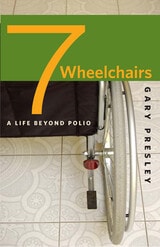
Seven Wheelchairs
A Life beyond PolioGary Presley
University of Iowa Press, 2008
In 1959, seventeen-year-old Gary Presley was standing in line, wearing his favorite cowboy boots and waiting for his final inoculation of Salk vaccine. Seven days later, a bad headache caused him to skip basketball practice, tell his dad that he was too ill to feed the calves, and walk from barn to bed with shaky, dizzying steps. He never walked again. By the next day, burning with the fever of polio, he was fastened into the claustrophobic cocoon of the iron lung that would be his home for the next three months. Set among the hardscrabble world of the Missouri Ozarks, sizzling with sarcasm and acerbic wit, his memoir tells the story of his journey from the iron lung to life in a wheelchair.
Presley is no wheelchair hero, no inspiring figure preaching patience and gratitude. An army brat turned farm kid, newly arrived in a conservative rural community, he was immobilized before he could take the next step toward adulthood. Prevented, literally, from taking that next step, he became cranky and crabby, anxious and alienated, a rolling responsibility crippled not just by polio but by anger and depression, “a crip all over, starting with the brain.” Slowly, however, despite the limitations of navigating in a world before the Americans with Disabilities Act, he builds an independent life.
Now, almost fifty years later, having worn out wheelchair after wheelchair, survived post-polio syndrome, and married the woman of his dreams, Gary has redefined himself as Gimp, more ready to act out than to speak up, ironic, perceptive, still cranky and intolerant but more accepting, more able to find joy in his family and his newfound religion. Despite the fact that he detests pity, can spot condescension from miles away, and refuses to play the role of noble victim, he writes in a way that elicits sympathy and understanding and laughter. By giving his readers the unromantic truth about life in a wheelchair, he escapes stereotypes about people with disabilities and moves toward a place where every individual is irreplaceable.
[more]
Sick Work
Exhaustion, Labor, and Invisible IllnessEmily Lim Rogers
Duke University Press, 2026
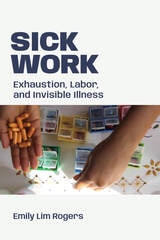
In Sick Work, Emily Lim Rogers shows the unpaid labor it takes to be recognized as sick in the United States. Through a historical and ethnographic account of myalgic encephalomyelitis / chronic fatigue syndrome (ME/CFS)—a disease defined by disproportionate exhaustion after any form of exertion, which has no cure or treatment—she reveals how changing formations of labor decide what counts as disability and what does not. Sickness, she writes, is not work’s opposite. Rather, the frequent dismissal of their disease leaves people with ME/CFS to do their own labor of disease advocacy, or “sick work,” even as their symptoms prevent many from working paid jobs. Rogers presents a history of the discursive construction of chronic fatigue and demonstrates its development alongside capitalism since the dawn of industrial management science in the late nineteenth century. These histories, she argues, echo through to the present day, shaping the denial of me/cfs and the stigma that surrounds it. Examining the everyday lives of people with ME/CFS and their activist movements, Sick Work describes how they swim upstream against strong tides of disbelief and demands a radical transformation of how work is defined and valued.
[more]
Social Aspects of Applied Human Genetics
James R. Sorenson
Russell Sage Foundation, 1971
This report explores the complex ethical, political, psychological, and economic questions that arise from developments in medical genetics. It reviews research in applied genetics at the interface of the social and bio-medical fields, including the counseling and study of birth control, as well as the active treatment and selection of individual genetic attributes.
[more]
Stories from the Sandbox
Reflections from children, teens and young adults living with Cancer and Blood DisordersJennifer Gretzema
Michigan Publishing Services, 2015
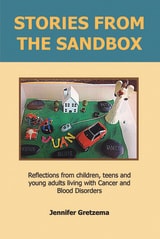
The images and stories in this book were created by patients and families living with Cancer and Blood Disorders. Their expressions, created in the sand and conveyed through the written word, provide insight into what it is like to live with health challenges. Sand tray therapy is a recognized therapeutic modality used with children and adults, providing a sacred space to process experiences using symbols instead of language. Sometimes meaning is further revealed through talking about a sand tray. Other times, it can remain a private expression that holds significance only to its creator. It is a helpful way for youth to process their past and present medical experience, help them set goals, and to teach others about their needs. Sand tray is a window into the thoughts, feelings, and coping styles of youth struggling with illness and hospitalization. Importantly, as youth with chronic medical illnesses often experience pain and discomfort as part of their treatment, the ability to have positive tactile experiences can be a very healing process. This collection of photos and personal stories, facilitated by the Child and Family Life Department, C.S. Mott Children’s Hospital at the University of Michigan, was compiled so that other patients, their families, and their friends can share the authors’ journeys as we all continue to battle these difficult diseases.
[more]
Sugar and Tension
Diabetes and Gender in Modern IndiaWeaver, Lesley Jo
Rutgers University Press, 2019
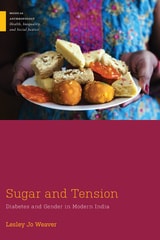
Women in North India are socialized to care for others, so what do they do when they get a disease like diabetes that requires intensive self-care? In Sugar and Tension, Lesley Jo Weaver uses women’s experiences with diabetes in New Delhi as a lens to explore how gendered roles and expectations are taking shape in contemporary India. Weaver argues that although women’s domestic care of others may be at odds with the self-care mandates of biomedically-managed diabetes, these roles nevertheless do important cultural work that may buffer women’s mental and physical health by fostering social belonging. Weaver describes how women negotiate the many responsibilities in their lives when chronic disease is at stake. As women weigh their options, the choices they make raise questions about whose priorities should count in domestic, health, and family worlds. The varied experiences of women illustrate that there are many routes to living well or poorly with diabetes, and these are not always the ones canonized in biomedical models of diabetes management.
[more]