Results by title
728 books match the query 'Economic aspects' and 56 start with s
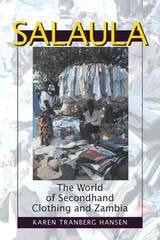
Salaula
The World of Secondhand Clothing and ZambiaKaren Tranberg Hansen
University of Chicago Press, 2000
Essential for the African economy, the secondhand clothing business is wildly popular, to the point of threatening the indigenous textile industry. But, Hansen shows, wearing secondhand clothes is about much more than imitating Western styles. It is about taking a garment and altering it to something entirely local, something that adheres to current cultural norms of etiquette. By unraveling how these garments becomes entangled in the economic, political, and cultural processes of contemporary Zambia, Hansen also raises provocative questions about environmentalism, charity, recycling, and thrift.

Scenarios for a Future Electricity Supply
Cost-optimised variations on supplying Europe and its neighbours with electricity from renewable energiesGregor Czisch
The Institution of Engineering and Technology, 2011

Science 3.0
Real Science, Real KnowledgeFrank Miedema
Amsterdam University Press, 2013

Science Bought and Sold
Essays in the Economics of ScienceEdited by Philip Mirowski and Esther-Mirjam Sent
University of Chicago Press, 2001
Bringing together central themes in this emerging discipline, the editors have assembled important articles that provide a wider context and background against which the economics of science can be evaluated. Roughly one-third of the essays presented here are original papers, and the rest are critical articles previously published in the field. From essays examining economic welfare to the idea of scientists as agents to the digital aspects of higher education,Science Bought and Sold presents a comprehensive overview of the new directions of this expanding area.
Contributors:
Kenneth J. Arrow
Mario Biagioli
William A. Brock
Michel Callon
Partha Dasgupta
Paul A. David
Steven N. Durlauf
Paul Forman
Steve Fuller
D. Wade Hands
Shaun P. Hargreaves Heap
Philip Kitcher
Sharon G. Levin
Richard R. Nelson
David F. Noble
Michael Polanyi
Gary Rhoades
Charles Sanders Peirce
Sheila Slaughter
Paula E. Stephan
Stephen Turner
James R. Wible
John Ziman

Science for Sale
The Perils, Rewards, and Delusions of Campus CapitalismDaniel S. Greenberg
University of Chicago Press, 2007
With Science for Sale, acclaimed journalist Daniel S. Greenberg reveals that campus capitalism is more complicated—and less profitable—than media reports would suggest. While universities seek out corporate funding, news stories rarely note that those industry dollars are dwarfed by government support and other funds. Also, while many universities have set up technology transfer offices to pursue profits through patents, many of those offices have been financial busts. Meanwhile, science is showing signs of providing its own solutions, as highly publicized misdeeds in pursuit of profits have provoked promising countermeasures within the field.
But just because the threat is overhyped, Greenberg argues, doesn’t mean that there’s no danger. From research that has shifted overseas so corporations can avoid regulations to conflicts of interest in scientific publishing, the temptations of money will always be a threat, and they can only be countered through the vigilance of scientists, the press, and the public.
Based on extensive, candid interviews with scientists and administrators, Science for Sale will be indispensable to anyone who cares about the future of scientific research.

Scripted Affects, Branded Selves
Television, Subjectivity, and Capitalism in 1990s JapanGabriella Lukács
Duke University Press, 2010
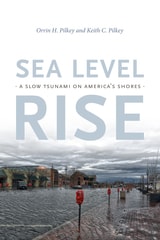
Sea Level Rise
A Slow Tsunami on America's ShoresOrrin H. Pilkey and Keith C. Pilkey
Duke University Press, 2019
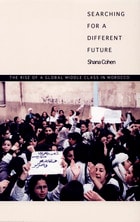
Searching for a Different Future
The Rise of a Global Middle Class in MoroccoShana Cohen
Duke University Press, 2004
Cohen delves into the rupture that has occurred between the middle class, the individual, and the nation in Morocco and elsewhere around the world. Combining institutional economic analysis with cultural theory and ethnographic observation including interviews with seventy young adults in Casablanca and Rabat, she reveals how young, urban, educated Moroccans conceive of their material, social, and political conditions. She finds that, for the most part, they perceive improvement in their economic and social welfare apart from the types of civic participation commonly connected with nationalism and national identity. In answering classic sociological questions about how the evolution of capitalism influences identity, Cohen sheds new light on the measurable social and economic consequences of globalization and on its less tangible effects on individuals’ perception of their place in society and prospects in life.

Seeds of Power
Environmental Injustice and Genetically Modified Soybeans in ArgentinaAmalia Leguizamón
Duke University Press, 2020

Selling Jerusalem
Relics, Replicas, Theme ParksAnnabel Jane Wharton
University of Chicago Press, 2006
From relics of the True Cross and Templar replicas of the Holy Sepulchre to Franciscan recreations of the Passion to nineteenth-century mass-produced prints and contemporary theme parks, Wharton describes the evolving forms by which the city has been possessed in the West. She also maps those changing embodiments of the Holy City against shifts in the western market. From the gift-and-barter economy of the early Middle Ages to contemporary globalization, both money and the representations of Jerusalem have become progressively incorporeal, abstract, illusionistic, and virtual.
Selling Jerusalem offers a penetrating introduction to the explosive combination of piety and capital at work in religious objects and global politics. It is sure to interest students and scholars of art history, economic history, popular culture, religion, and architecture, as well as those who want to better understand Jerusalem’s problematic place in history.

Selling Science
Polio and the Promise of Gamma GlobulinMawdsley, Stephen E
Rutgers University Press, 2016
Drawing on oral history interviews, medical journals, newspapers, meeting minutes, and private institutional records, Selling Science sheds light on the ethics of scientific conduct, and on the power of marketing to shape public opinion about medical experimentation.

Selling The Five Rings
The IOC and the Rise of the Olympic CommercialismRobert K Barney
University of Utah Press, 2004
The original scheme for the modern Olympic Games was hatched at an international sports conference at the Sorbonne in June 1894. At the time, few provisions were made for the financial underwriting of the project—providence and the beneficence of host cities would somehow take care of the costs. For much of the first century of modern Olympic history, this was the case, until the advent of television and corporate sponsorship transformed that idealism.
Now, linking with the five-ring logo is good business. Advertising during the Olympic Games guarantees a global audience unmatched in size by any other sports audience in the world. However, if the image begins to tarnish and the corporate sector loses interest, television companies can’t sell advertising to business interests. This was the greatest threat posed by the scandal surrounding Salt Lake City’s bid.
Selling the Five Rings outlines the rise of the Olympic movement from an envisioned instrument of peace and brotherhood, to a transnational commercial giant of imposing power and influence. Using primary source documents such as minutes of the IOC General Sessions, minutes and reports of various IOC sub-committees and commissions concerned with finance, reports of key marketing agencies, and the letters and memoranda written to and by the major figures in Olympic history, the authors track the history of a fascinating global institution.

Settling the Boom
The Sites and Subjects of Bakken OilMary E. Thomas
University of Minnesota Press, 2023
Examines how settler colonial and sexist infrastructures and narratives order a resource boom
Over the past decade, new oil plays have unsettled U.S. energy landscapes and imaginaries. Settling the Boom studies how the disruptive forces of an oil boom in the northern Great Plains are contained through the extension of settler temporalities, reassertions of heteropatriarchy, and the tethering of life to the volatility of oil and its cruel optimisms.
This collection reveals the results of sustained research in Williston, North Dakota, the epicenter of the “Bakken Boom.” While the boom brought a rapid influx of capital and workers, the book questions simple timelines of before and after. Instead, Settling the Boom demonstrates how the unsettling forces of an oil play resolve through normative narratives and material and affective infrastructures that support settler colonialism’s violent extension and its gendered orders of time and space. Considering a wide range of evidence, from urban and regional policy, interviews with city officials, media, photography, and film, these essays analyze the ongoing material, aesthetic, and narrative ways of life and land in the Bakken.
Contributors: Morgan Adamson, Macalester College; Kai Bosworth, Virginia Commonwealth U; Thomas S. Davis, Ohio State U; Jessica Lehman, Durham U.
Sex And Money
Feminism and Political Economy in the MediaEileen R. Meehan
University of Minnesota Press, 2001
A revelatory look at the ways that gender, power, and the media are intertwined.
It all comes down to sex and money: how the media are organized, how they work, what they say, who gets to say it and to whom. That is the message this book delivers—and then parses for its meaning to society and culture. Forcefully and persuasively, this groundbreaking volume uses the media to show how questions of gender and economics are inextricably linked to issues of power in Western capitalist societies. Integrating political economy and feminism, it offers a new understanding of communication at the personal, experiential, institutional, and structural levels-and exposes all the subtle and complex ways in which sex and money are sutured into individuals’ daily lives.
Contributors: Robin Andersen, Fordham U; Ellen Balka, Simon Fraser U; Amy Beer; Carolyn M. Byerly, Ithaca College; Ramona Curry, U of Illinois; Fred Fejes, Florida Atlantic U; Nancy Hauserman, U of Iowa; Michèle Martin, Carleton U, Canada; Stana Martin, Central Missouri State U; Lisa McLaughlin, Miami U, Ohio; Roopali Mukherjee, Indiana U; Angela R. Record; Karen Ross, Coventry U; H. Leslie Steeves, U of Oregon; Angharad N. Valdivia, U of Illinois; Janet Wasko, U of Oregon; and Justin Wyatt.
Shaping the Future of African American Film
Color-Coded Economics and the Story Behind the NumbersMonica White Ndounou
Rutgers University Press, 2014
In Hollywood, we hear, it’s all about the money. It’s a ready explanation for why so few black films get made—no crossover appeal, no promise of a big payoff. But what if the money itself is color-coded? What if the economics that governs film production is so skewed that no film by, about, or for people of color will ever look like a worthy investment unless it follows specific racial or gender patterns? This, Monica Ndounou shows us, is precisely the case. In a work as revealing about the culture of filmmaking as it is about the distorted economics of African American film, Ndounou clearly traces the insidious connections between history, content, and cash in black films.
How does history come into it? Hollywood’s reliance on past performance as a measure of potential success virtually guarantees that historically underrepresented, underfunded, and undersold African American films devalue the future prospects of black films. So the cycle continues as it has for nearly a century. Behind the scenes, the numbers are far from neutral. Analyzing the onscreen narratives and off-screen circumstances behind nearly two thousand films featuring African Americans in leading and supporting roles, including such recent productions as Bamboozled, Beloved, and Tyler Perry’s Diary of a Mad Black Woman, Ndounou exposes the cultural and racial constraints that limit not just the production but also the expression and creative freedom of black films. Her wide-ranging analysis reaches into questions of literature, language, speech and dialect, film images and narrative, acting, theater and film business practices, production history and financing, and organizational history.
By uncovering the ideology behind profit-driven industry practices that reshape narratives by, about, and for people of color, this provocative work brings to light existing limitations—and possibilities for reworking stories and business practices in theater, literature, and film.

Shattering
Food, Politics, and the Loss of Genetic DiversityCary Fowler and Pat Mooney
University of Arizona Press, 1990
Large-scale agriculture has come to favor uniformity in food crops. More than 7,000 U.S. apple varieties once grew in American orchards; 6,000 of them are no longer available. Every broccoli variety offered through seed catalogs in 1900 has now disappeared. As the international genetics supply industry absorbs seed companies—with nearly one thousand takeovers since 1970—this trend toward uniformity seems likely to continue; and as third world agriculture is brought in line with international business interests, the gene pools of humanity's most basic foods are threatened.
The consequences are more than culinary. Without the genetic diversity from which farmers traditionally breed for resistance to diseases, crops are more susceptible to the spread of pestilence. Tragedies like the Irish Potato Famine may be thought of today as ancient history; yet the U.S. corn blight of 1970 shows that technologically based agribusiness is a breeding ground for disaster.
Shattering reviews the development of genetic diversity over 10,000 years of human agriculture, then exposes its loss in our lifetime at the hands of political and economic forces. The possibility of crisis is real; this book shows that it may not be too late to avert it.

Shoveling Smoke
Advertising and Globalization in Contemporary IndiaWilliam Mazzarella
Duke University Press, 2003
An examination of the complex cultural politics of mass consumerism in a globalized marketplace, Shoveling Smoke is a pathbreaking and detailed ethnography of the contemporary Indian advertising industry. It is also a critical and innovative intervention into current theoretical debates on the intersection of consumerist globalization, aesthetic politics, and visual culture. William Mazzarella traces the rise in India during the 1980s of mass consumption as a self-consciously sensuous challenge to the austerities of state-led developmentalism. He shows how the decisive opening of Indian markets to foreign brands in the 1990s refigured established models of the relationship between the local and the global and, ironically, turned advertising professionals into custodians of cultural integrity.
Side Effects and Complications
The Economic Consequences of Health-Care ReformCasey B. Mulligan
University of Chicago Press, 2015
Looking specifically at the labor market, Mulligan reveals how the costs of health care under the ACA actually create implicit taxes on individuals, and how increased costs to employers will be passed on to their employees. Mulligan shows how, as a result, millions of workers will find themselves in a situation in which full-time work, adjusted for the expense of health care, will actually pay less than part-time work or even not working at all. Analyzing the incentives—or lack thereof—for people to earn more by working more, Mulligan offers projections on how many hours people will work and how productively they will work, as well as how much they will spend in general. Using the powerful tools of economics, he then illustrates the detrimental consequences on overall employment in the near future.
Drawing on extensive knowledge of the labor market and the economic theories at its foundation, Side Effects and Complications offers a crucial wake-up call about the risks the ACA poses for the economy. Plainly laying out the true costs of the ACA, Mulligan’s grounded and thorough predictions are something that workers and policy makers cannot afford to ignore.
Slavery and Abolition in Pennsylvania
Beverly C. Tomek
Temple University Press, 2021
In her concise history Slavery and Abolition in Pennsylvania, Beverly Tomek corrects the long-held notion that slavery in the North was “not so bad” as, or somehow “more humane” than, in the South due to the presence of abolitionists. While the Quaker presence focused on moral and practical opposition to bondage, slavery was ubiquitous. Nevertheless, Pennsylvania was the first state to pass an abolition law in the United States.
Slavery and Abolition in Pennsylvania traces this movement from its beginning to the years immediately following the American Civil War. Discussions of the complexities of the state’s antislavery movement illustrate how different groups of Pennsylvanians followed different paths in an effort to achieve their goal. Tomek also examines the backlash abolitionists and Black Americans faced. In addition, she considers the civil rights movement from the period of state reconstruction through the national reconstruction that occurred after the Civil War.
While the past few decades have shed light on enslavement and slavery in the South, much of the story of northern slavery remains hidden. Slavery and Abolition in Pennsylvania tells the full and inclusive story of this history, bringing the realities of slavery, abolition, and Pennsylvania's attempt to reconstruct its post-emancipation society.

Slavery and the Invention of Dutch Art
Caroline Fowler
Duke University Press, 2025

Slavery and the Numbers Game
A CRITIQUE OF TIME ON THE CROSSHerbert G. Gutman
University of Illinois Press, 1975
This detailed analysis of slavery in the antebellum South was written in 1975 in response to the prior year's publication of Robert Fogel and Stanley Engerman's controversial Time on the Cross, which argued that slavery was an efficient and dynamic engine for the southern economy and that its success was due largely to the willing cooperation of the slaves themselves.
Noted labor historian Herbert G. Gutman was unconvinced, even outraged, by Fogel and Engerman's arguments. In this book he offers a systematic dissection of Time on the Cross, drawing on a wealth of data to contest that book's most fundamental assertions. A benchmark work of historical inquiry, Gutman's critique sheds light on a range of crucial aspects of slavery and its economic effectiveness.
Gutman emphasizes the slaves' responses to their treatment at the hands of slaveowners. He shows that slaves labored, not because they shared values and goals with their masters, but because of the omnipresent threat of 'negative incentives,' primarily physical violence.
In his introduction to this new edition, Bruce Levine provides a historical analysis of the debate over Time on the Cross. Levine reminds us of the continuing influence of the latter book, demonstrated by Robert W. Fogel's 1993 Nobel Prize in Economic Sciences, and hence the importance and timeliness of Gutman's critique.
Slavery, Emancipation and Colonial Rule in South Africa
Wayne Dooling
Ohio University Press, 2008

Slices and Lumps
Division and Aggregation in Law and LifeLee Anne Fennell
University of Chicago Press, 2019
Lee Anne Fennell explores how both types of challenges—carving out useful slices and assembling useful lumps—surface in myriad contexts, from hot button issues like conservation and eminent domain to developments in the sharing economy to personal struggles over work, money, time, diet, and exercise. Yet the significance of configuration is often overlooked, leading to missed opportunities for improving our lives. With a technology-fueled entrepreneurial explosion underway that is dividing goods, services, and jobs in novel ways, and as urbanization and environmental threats raise the stakes for assembling resources and cooperation, this is an especially exciting and crucial time to confront questions of slicing and lumping. The future of the city, the workplace, the marketplace, and the environment all turn on matters of configuration, as do the prospects for more effective legal doctrines, for better management of finances and health, and more. This book reveals configuration’s power and potential—as a unifying concept and as a focus of public and private innovation.
Small and Medium-Sized Enterprises in the Global Economy
Zoltan J. Acs and Bernard Yeung, Editors
University of Michigan Press, 1999
Social Exchange
Barter as Economic and Cultural Activism in Medellín, ColombiaBrian J. Burke
Rutgers University Press, 2022
Social Science Knowledge and Economic Development
An Institutional Design PerspectiveVernon W. Ruttan
University of Michigan Press, 2003
With its emphasis on interdisciplinarity, Social Science Knowledge and Economics Developmentis important reading for social scientists, development economists, and in the development studies classroom.
Vernon W. Ruttan is Regents Professor Emeritus in the Department of Applied Economics at the University of Minnesota.
Social Security Programs and Retirement around the World
Fiscal Implications of ReformEdited by Jonathan Gruber and David A. Wise
University of Chicago Press, 2007
Drawing on the work of an international group of noted economists, the editors argue that social security programs provide strong incentives for workers to leave the labor force by retiring and taking the benefits to which they are entitled. By penalizing work, social security systems magnify the increased financial burden caused by aging populations, thus contributing to the insolvency of the system. This book is a model of comparative analysis that evaluates the effects of illustrative policies for countries facing the impending rapid growth of social security benefits. Its insights will help inform one of the most pressing debates.

Social Security Programs and Retirement around the World
Historical Trends in Mortality and Health, Employment, and Disability Insurance Participation and ReformsEdited by David A. Wise
University of Chicago Press, 2012
In nearly every industrialized country, large aging populations and increased life expectancy have placed enormous pressure on social security programs—and, until recently, the pressure has been compounded by a trend toward retirement at an earlier age. With a larger fraction of the population receiving benefits, in coming decades social security in many countries may have to be reformed in order to remain financially viable.
This volume offers a cross-country analysis of the effects of disability insurance programs on labor force participation by older workers. Drawing on measures of health that are comparable across countries, the authors explore the extent to which differences in the labor force are determined by disability insurance programs and to what extent disability insurance reforms are prompted by the circumstances of a country’s elderly population.
Social Security Programs and Retirement around the World
Micro-EstimationEdited by Jonathan Gruber and David A. Wise
University of Chicago Press, 2003
In this volume, the authors turn to a country-by-country analysis of retirement behavior based on micro-data. The result of research compiled by teams in twelve countries, the volume shows an almost uniform correlation between levels of social security incentives and retirement behavior in each country. The estimates also show that the effect is strikingly uniform in countries with very different cultural histories, labor market institutions, and other social characteristics.
Social Security Programs and Retirement around the World
The Effects of Reforms on Retirement BehaviorEdited by Axel Börsch-Supan and Courtney C. Coile
University of Chicago Press, 2025
A global analysis of the effects of social security reforms on the retirement incentives and labor force trends of older workers.
Employment among older men and women has increased dramatically in recent years, reversing a downward trend in the closing decades of the twentieth century. Social Security Programs and Retirement around the World examines how changing retirement incentives have reshaped labor force participation trends among older workers. The chapters feature country-specific analyses for Belgium, Canada, Denmark, France, Germany, Italy, Japan, Netherlands, Spain, Sweden, the United Kingdom, and the United States. They find that while there is significant heterogeneity across countries, the reforms of recent decades have generally reduced the implicit tax on work at older ages. These changes correlate positively with labor force participation. The studies exploit the variation in the timing and extent of reforms of retirement incentives and employ microeconometric methods to investigate whether this correlation reflects a causal relationship. Policy changes appear to have contributed to rising labor force activity, but other factors like the role of women in the labor force, improved health, and changes in private pensions likely also play important roles.

Sounds of Vacation
Political Economies of Caribbean TourismJocelyne Guilbault and Timothy Rommen, editors
Duke University Press, 2019
Contributors. Jerome Camal, Steven Feld, Francio Guadeloupe, Jocelyne Guilbault, Jordi Halfman, Susan Harewood, Percy C. Hintzen, Timothy Rommen

Sovereignty and Extortion
A New State Form in MexicoClaudio Lomnitz
Duke University Press, 2024

Special Care
Medical Decisions at the Beginning of LifeFred M. Frohock
University of Chicago Press, 1986
But there is a dark underside to the exercise of these skills. A growing number of babies live only to be tethered to life-support systems, unconscious or suffering incessant pain for years and sometimes for the duration of their lives. The ethical issues raised by these children are among the most difficult in our society. Should life be maintained no matter what its quality? Or is there a point at which treatment should be stopped on humane grounds? Who is to make decisions on continuing or ending therapy for damaged children? Is the law a suitable instrument for regulating medical decisions in intensive care nurseries? Should the growing cost of intensive care influence therapy decisions?
Special Care explores the moral and legal issues in neonatal intensive care. Fred M. Frohock spent four months in a special care nursery, observing the daily actions of doctors and nurses and interviewing staff and parents of patients. This engaging, human drama is told through the author's own journal entries interspersed with generous excerpts from taped interviews that display the practical reasoning of staff and parents as they address the moral problems raised by intensive care medicine. Several case studies of infants highlight the often contradictory directions in which medical staffs are pulled and the painful decisions that doctors and parents together are often called upon to make. The result is a book that reconstructs the ordinary life of a neonatal nursery and presents the moral views of those who are most intimately involved in therapy decisions.
This book is an urgently needed entry in the current discussions of treatment for badly damaged babies. Frohock argues that our tradition of rights language, which rests on the premise that we know what a human being is, is inappropriate when dealing with the paradoxes of decision making in neonatal nurseries. Calling for a new moral vocabulary better adapted to the world of medicine, he introduces the notion of harm in place of rights, a concept drawn from medicine's Hippocratic oath that pledges to "do no harm," as a way to begin framing questions and making decisions. Special Care will interest anyone who wants to understand medical decisions at the margins of human life.

Species at Risk
Using Economic Incentives to Shelter Endangered Species on Private LandsEdited by Jason F. Shogren
University of Texas Press, 2005
Protecting endangered species of animals and plants is a goal that almost everyone supports in principle—but in practice private landowners have often opposed the regulations of the Endangered Species Act, which, they argue, unfairly limits their right to profit from their property. To encourage private landowners to cooperate voluntarily in species conservation and to mitigate the economic burden of doing so, the government and nonprofit land trusts have created a number of incentive programs, including conservation easements, leases, habitat banking, habitat conservation planning, safe harbors, candidate conservation agreements, and the "no surprise" policy.
In this book, lawyers, economists, political scientists, historians, and zoologists come together to assess the challenges and opportunities for using economic incentives as compensation for protecting species at risk on private property. They examine current programs to see how well they are working and also offer ideas for how these programs could be more successful. Their ultimate goal is to better understand how economic incentive schemes can be made both more cost-effective and more socially acceptable, while respecting a wide range of views regarding opportunity costs, legal standing, biological effectiveness, moral appropriateness, and social context.

Spectropolis
The Enchantment of Capital in SingaporeJoshua Comaroff
University of Minnesota Press, 2025
How economic transformation and the spirit world collide in hypermodern Singapore
In Singapore, the financial center of Southeast Asia, hyperurbanization and commercial development exist alongside enduring belief in the economic power of ghosts: in their ability to control the flows of money and value and to determine the outcome of investments and wagers. Spectropolis explores the unlikely collusion of these two systems, demonstrating both the productive role of popular beliefs in the modern world and the surprising correlations between “late” capitalism and the workings of the spirit realm.
Detailing the logic and practices of Singapore’s ghost economy—from performing exorcisms on real estate development sites to offering money and commodities to the dead as a hedge against precarious real-world transactions—Joshua Comaroff shows how speculative finance, largely governed by chance and volatility, is understood via its inherently spectral qualities. Through the influence of Chinese Buddhist-Taoist thought, the movement of capital is placed under the sway of cosmology and geomancy, resulting in a built environment that is both technologically advanced and quite literally enchanted.
Based on detailed case studies and years of extensive fieldwork, Spectropolis argues for the power of popular belief systems to theorize contemporary socioeconomic conditions and to give form to collective affect as well as shared aspirations and anxieties. As Comaroff demonstrates, the uniquely all-consuming nature of Singapore’s tightly compressed urban economy is such that it may subsume even that which lies beyond the threshold of life itself.
Retail e-book files for this title are screen-reader friendly with images accompanied by short alt text and/or extended descriptions.
Spent behind the Wheel
Drivers' Labor in the Uber EconomyJulietta Hua
University of Minnesota Press, 2021
Exploring professional passenger driving and the gig economy through feminist theories of labor
Are taxi drivers in today’s era of the ride-hail app performing care work akin to domestic and household labor? So argue the authors of Spent behind the Wheel. Bringing together sociological and legal perspectives with feminist theoretical insights, Julietta Hua and Kasturi Ray examine the case study of contemporary professional passenger driving in the United States. On the one hand, they show, the rise of the gig economy has brought new attention to the industry of professional passenger driving. On the other hand, the vulnerabilities that professional drivers experience remain hidden.
Drawing on interviews with drivers, labor organizers, and members of licensing commissions, as well as case law and other published resources, Hua and Ray argue that working for ride-hail companies like Uber and Lyft shares similarities with driving for taxi companies in the impact on driver lives. Lyft and Uber sell the idea of industry disruption, but in fact they entrench long-standing modes of extracting the reproductive labor of their drivers for the benefit of consumer lives. Reproductive labor—conventionally understood as feminized labor—is extracted, but masked, behind the masculinized, racialized bodies of drivers. Professional driving is thus best understood alongside domestic and other gendered service work as reproductive labors devalued and often demonetized to benefit the national economy.
Spent behind the Wheel is a must for readers interested in critical studies of technological change and the gig economy, showing how drivers’ capacities are drained for the benefit of riders, corporations, and the maintenance of the racial state.

Sponsored Identities
Cultural Politics in Puerto RicoArlene Davila
Temple University Press, 1997
Author Arlene Davila focuses on the Institute for Puerto Rican Culture, the government institution charged with defining authenticated views of national identity since the 1950s, and on popular festival organizers to illuminate contestations over appropriate representations of culture in the increasingly mass-mediated context of contemporary Puerto Rico. She examines the creation of an essentialist view of nationhood based on a peasant culture and a "unifying" Hispanic heritage, and the ways in which grassroots organizations challenge and reconfigure definitions of national identity through their own activities and representations.
Davila pays particular attention to the increasing prominence of corporate sponsorship in determining what is distinguished as authentic "Puerto Rican culture" and discusses the politicization of culture as a discourse to debate and legitimize conflicting claims from selling commercial product to advocating divergent status options for the island. In so doing, Davila illuminates the prospects for cultural identities in an increasingly transnational context by showing the growth of cultural nationalism to be intrinsically connected to forms of political action directed to the realm of culture and cultural politics. This in-depth examination also makes clear that despite contemporary concerns with "authenticity," commercialism is an inescapable aspect of all cultural expression on the island.
Sport and the Neoliberal University
Profit, Politics, and PedagogyKing-White, Ryan
Rutgers University Press, 2018
The contributors to Sport and the Neoliberal University examine how intercollegiate athletics became a contested terrain of public/private interests. They look at college sports from economic, social, legal, and cultural perspectives to cut through popular mythologies regarding intercollegiate athletics and to advocate for increased clarity about what is going on at a variety of campuses with regard to athletics. Focusing on current issues, including the NCAA, Title IX, recruitment of high school athletes, and the Penn State scandal, among others, Sport and the Neoliberal University shows the different ways institutions, individuals, and corporations are interacting with university athletics in ways that are profoundly shaped by neoliberal ideologies.

Start-Up Poland
The People Who Transformed an EconomyJan Cienski
University of Chicago Press, 2018
As the Warsaw bureau chief for the Financial Times, Jan Cienski spent more than a decade talking with the people who did something that had never been done before: recreating a market economy out of a socialist one. Poland had always lagged behind wealthier Western Europe, but in the 1980s the gap had grown to its widest in centuries. But the corrupt Polish version of communism also created the conditions for its eventual revitalization, bringing forth a remarkably resilient and entrepreneurial people prepared to brave red tape and limited access to capital. In the 1990s, more than a million Polish people opened their own businesses, selling everything from bicycles to leather jackets, Japanese VCRs, and romance novels. The most business-savvy turned those primitive operations into complex corporations that now have global reach.
Well researched and accessibly and entertainingly written, Start-Up Poland tells the story of the opening bell in the East, painting lively portraits of the men and women who built successful businesses there, what their lives were like, and what they did to catapult their ideas to incredible success. At a time when Poland’s new right-wing government plays on past grievances and forms part of the populist and nationalist revolution sweeping the Western world, Cienski’s book also serves as a reminder that the past century has been the most successful in Poland’s history.
Stature, Living Standards, and Economic Development
Essays in Anthropometric HistoryEdited by John Komlos
University of Chicago Press, 1994
Analyzing the differences in physical stature by social group, gender, age, provenance, and date and place of birth, these essays illuminate urban and rural differences in well-being, explore the effects of market integration on previously agricultural societies, contrast the experiences of several segments of society, and explain the proximate causes of downturns and upswings in well-being. Particularly intriguing is the researchers' conclusion that the environment of the New World during this period was far more propitious than that of Europe, based on data showing that European aristocrats were in worse health than even the poorest members of American society.

Steam-Powered Knowledge
William Chambers and the Business of Publishing, 1820-1860Aileen Fyfe
University of Chicago Press, 2012
With the overwhelming amount of new information that bombards us each day, it is perhaps difficult to imagine a time when the widespread availability of the printed word was a novelty. In early nineteenth-century Britain, print was not novel—Gutenberg’s printing press had been around for nearly four centuries—but printed matter was still a rare and relatively expensive luxury. All this changed, however, as publishers began employing new technologies to astounding effect, mass-producing instructive and educational books and magazines and revolutionizing how knowledge was disseminated to the general public.

Stones of Contention
A History of Africa’s DiamondsTodd Cleveland
Ohio University Press, 2014
Africa supplies the majority of the world’s diamonds, yet consumers generally know little about the origins and history of these precious stones beyond sensationalized media accounts of so-called blood diamonds.
Stones of Contention explores the major developments in the remarkable history of Africa’s diamonds, from the earliest stirrings of international interest in the continent’s mineral wealth in the first millennium A.D. to the present day. In the European colonial period, the discovery of diamonds in South Africa ushered in an era of unprecedented greed during which monopolistic enterprises exploited both the mineral resources and the indigenous workforce. In the aftermath of World War II, the governments of newly independent African states, both democratic and despotic, joined industry giant De Beers and other corporations to oversee and profit from mining activity on the continent.
The book also considers the experiences of a wide array of Africans—from informal artisanal miners, company mineworkers, and indigenous authorities to armed rebels, mining executives, and premiers of mineral-rich states—and their relationships to the stones that have the power to bring both wealth and misery. With photos and maps, Stones of Contention illustrates the scope and complexity of the African diamond trade as well as its impact on individuals and societies.

Storytelling Globalization from the Chaco and Beyond
Mario Blaser
Duke University Press, 2010

Struggle For Control Of Public Education
Michael Engel
Temple University Press, 2000
Seduced by the language of the market economy, those making decisions about education today argue that market strategies promote democratic educational reform, when really they promote market reform of education. Michael Engel argues against this tendency, siding with democratic values -- which encourage openness, creativity, social awareness, and idealism, whereas market values uphold individual achievement, competition, economic growth, and national security.
Behind the facade of progressive rhetoric, advocates of these corporate models have succeeded in imposing their definition of school reform through federal and state policy makers. As a result, communities lose control of their schools, teachers lose control of their work, and students lose control of their schools, teachers lose control of their work, and students lose control of their futures. Engel attacks the increasing dominance of market ideology in educational policy and extends his critique beyond such trends in school reform as vouchers, charter schools, and "contracting out" to include issues such as decentralization, computer technology, and standards.
The debate over privatization amounts to ideological warfare between democratic and market values. The question is not so much about "school choice" as it is about the values Americans want at the root of their society. Unprecedented in its value-based challenge to the threat of market ideology to educational policy, The Struggle for Control of Public Education is a sophisticated call for a return to community-controlled schools and democratic values. This argument offers theoretical and practical models crafted in the contemporary feminist and social reconstructionist tradition. Readers interested in the study of educational policies, philosophy, and policy will find this book engaging.

Stuck in Place
Urban Neighborhoods and the End of Progress toward Racial EqualityPatrick Sharkey
University of Chicago Press, 2013
In the 1960s, many believed that the civil rights movement’s successes would foster a new era of racial equality in America. Four decades later, the degree of racial inequality has barely changed. To understand what went wrong, Patrick Sharkey argues that we have to understand what has happened to African American communities over the last several decades. In Stuck in Place, Sharkey describes how political decisions and social policies have led to severe disinvestment from black neighborhoods, persistent segregation, declining economic opportunities, and a growing link between African American communities and the criminal justice system.

Studies in the Economics of Aging
Edited by David A. Wise
University of Chicago Press, 1994

Studies of Supply and Demand in Higher Education
Edited by Charles T. Clotfelter and Michael Rothschild
University of Chicago Press, 1993
In higher education, supply refers to such issues as government support for public colleges and universities, the means by which graduate programs allocate financial support to students, and the criteria that universities use for investing endowments. Demand pertains to patterns of student enrollment and to the government, business, and individual market for the service and research activities of higher education.
Why are tuitions nearly the same among schools despite differences in prestige? How are institutions with small endowments able to compete successfully with institutions that have huge endowments? How are race and ethnicity reflected in enrollment trends? Where do the best students go? What choices among colleges do young people from low-income backgrounds face? This volume addresses these questions and suggests subjects for further study of the economics of higher education.
Stunted Lives, Stagnant Economies
Poverty, Disease, and UnderdevelopmentStillwaggon, Eileen
Rutgers University Press, 1998
This is a fascinating, lively, and well-written book. The author has a clear message which she states at the beginning, namely, that health is primarily an economic, not a medical problem, and she follows that to the end.Keith Griffin, University of California, Riverside
Houses made of rags and flattened soda cans, filthy water that breeds disease, counterfeit medicines, no access to decent medical care how can children growing up in such an environment become productive workers contributing to a developing economy?
Stunted Lives, Stagnant Economies describes in vivid detail the living conditions of the poor in developing countries and the diseases and injuries that result from this environment of need. Most of the diseases that affect the poor cholera, summer diarrhea, tuberculosis, lice, worms, leprosy result from the poverty of their environment. Poverty also determines the availability and effectiveness of the medical response. Using Argentina as a case study, Eileen Stillwaggon argues that making good health available to everyone is not a scientific problem but an economic one.
The debt crisis of the 1980s and the subsequent structural adjustment policies adopted by most developing countries exacerbated the problems faced by the poor. What kind of future can a nation build when the health of the majority of the population its workforceÑis at risk or compromised because social services have been reduced? Without adequate health care and social services, people cannot live up to their potential, and the spiral of poverty continues. But there are ways to fight this cycle of poverty.
Suing for Medical Malpractice
Frank A. Sloan, Penny B. Githens, Ellen Wright Clayton, Gerald B. Hickson, Dougl
University of Chicago Press, 1993
The authors survey claims filed in Florida between 1986 and 1989 by people who suffered permanent injury or death during birth or during treatment in an emergency room. How often did illegitimate claims result in financial awards? What was the relation between the injury and the amount the patient lost economically? How much did the plaintiffs actually recover? How did the claimants choose their lawyers and what kind of relationship did they have?
Contrary to common perceptions, in the majority of cases the claims were merited, and the authors found that claimants were on average substantially undercompensated—only about one-fifth of plaintiffs recovered more than their economic loss caused by injury or death. The evidence in this book suggests that placing dollar limits on malpractice cases is unjustified and that our tort system is not so faulty after all.
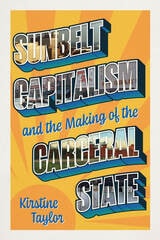
Sunbelt Capitalism and the Making of the Carceral State
Kirstine Taylor
University of Chicago Press, 2025
The story of how the American South became the most incarcerated region in the world’s most incarcerated nation.
Sunbelt Capitalism and the Making of the Carceral State examines the evolution of southern criminal punishment from Jim Crow to the dawn of mass incarceration, charting this definitive era of carceral transformation and expansion in the southern United States. The demise of the county chain gang, the professionalization of police, and the construction of large-scale prisons were among the sweeping changes that forever altered the southern landscape and bolstered the region’s capacity to punish. What prompted this southern revolution in criminal punishment?
Kirstine Taylor argues that the crisis in the cotton fields and the arrival of Sunbelt capitalism in the south’s rising metropolises prompted lawmakers to build expansive, modern criminal punishment systems in response to Brown v. Board of Education and the Black freedom movements of the 1960s and ‘70s. Taking us inside industry-hunting expeditions, school desegregation battles, the sit-in movement, prisoners’ labor unions, and policy commissions, Taylor tells the story of how a modernizing south became the most incarcerated region in the globe’s most incarcerated nation.