Results by title
76 books match the query 'Educational change' and 5 start with s
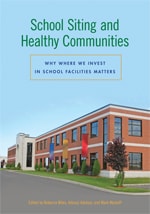
School Siting and Healthy Communities
Why Where We Invest in School Facilities MattersRebecca Miles
Michigan State University Press, 2012
In recent decades, many metropolitan areas in the United States have experienced a decline in the population of urban centers and rapid growth in the suburbs, with new schools being built outside of cities and existing urban schools facing closure. These new schools are increasingly larger and farther from residences; in contrast, urban school facilities are often in closer proximity to homes but are also in dire need of upgrading or modernization. This eye-opening book explores the compelling health and economic rationales for new approaches to school siting, including economic savings to school districts, transportation infrastructure needs, and improved child health. An essential examination of public policy issues associated with school siting, this compiled volume will assist policy makers and help the public understand why it is important for government and school districts to work together on school siting and capital expenditures and how these new outlooks will improve local and regional outcomes.
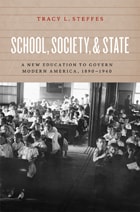
School, Society, and State
A New Education to Govern Modern America, 1890-1940Tracy L. Steffes
University of Chicago Press, 2012
“Democracy has to be born anew every generation, and education is its midwife,” wrote John Dewey in his classic work The School and Society. In School, Society, and State, Tracy Steffes places that idea at the center of her exploration of the connections between public school reform in the early twentieth century and American political development from 1890 to 1940.
American public schooling, Steffes shows, was not merely another reform project of the Progressive Era, but a central one. She addresses why Americans invested in public education and explains how an array of reformers subtly transformed schooling into a tool of social governance to address the consequences of industrialization and urbanization. By extending the reach of schools, broadening their mandate, and expanding their authority over the well-being of children, the state assumed a defining role in the education—and in the lives—of American families.
In School, Society, and State, Steffes returns the state to the study of the history of education and brings the schools back into our discussion of state power during a pivotal moment in American political development.
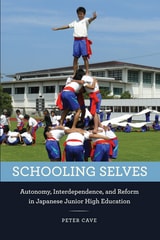
Schooling Selves
Autonomy, Interdependence, and Reform in Japanese Junior High EducationPeter Cave
University of Chicago Press, 2016
Cave examines the implementation of “relaxed education” reforms that attempted to promote individual autonomy and free thinking in Japanese classrooms. As he shows, however, these policies were eventually transformed by educators and school administrators into curricula and approaches that actually promoted social integration over individuality, an effect opposite to the reforms’ intended purpose. With vivid detail, he offers the voices of teachers, students, and parents to show what happens when national education policies run up against long-held beliefs and practices, and what their complex and conflicted interactions say about the production of self and community in education. The result is a fascinating analysis of a turbulent era in Japanese education that offers lessons for educational practitioners in any country.

Skeptical Visionary
A Seymour Sarason Educational ReaderRobert Fried
Temple University Press, 2002
Special Education in the 21st Century
Margret A. Winzer
Gallaudet University Press, 2000
In the late 20th century, a tidal wave of calls for reform and inclusion of special needs students swept over public special education. The current debates over implementing these themes today are authoritatively addressed by 19 distinguished scholars in this thorough volume. Organized into three cohesive sections, it begins with the issues of educational reform and the emerging discourses of disability and integration in the inclusion movement. Respective chapters appraise specific arguments for inclusion and the federal legislation and litigation surrounding and supporting special education.
The second part features the thorny issue of assessment, the technological revolution in special education, and the disposition of teacher training. The third section scrutinizes the inclusion of various populations of students with exceptional needs, particularly how teachers can make an easy transition from ideology to educational practice.
Special Education in the 21st Century sets the standard for extrapolating future directions by wisely weighing classroom practices for different groups and the technical problems of resources, management, social groupings, instructional design, and the supposition that teachers will automatically change to accommodate an even greater diversity of learners.