240 books match the query 'English as a Second Language' and 14 start with s
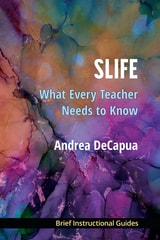
cover of SLIFE: What Every Teacher Needs to Know

SLIFE

What Every Teacher Needs to Know

Andrea DeCapua

University of Michigan Press, 2019
SLIFE: What Every Teacher Needs to Know helps readers deepen their understanding of Students with Limited or Interrupted Formal Education (SLIFE). Because of their limited, greatly interrupted, or sometimes nonexistent participation in formal education, SLIFE face challenges in the classroom that go beyond language and content. Often SLIFE need to develop basic literacy skills and foundational subject-area knowledge, as well as to learn how to engage in the discourse and practices of formal educational settings. So what can teachers do to help these students succeed and to recognize and honor their knowledge, skills, and cultural capital? SLIFE: What Every Teacher Needs to Know centers around four guidelines for teaching SLIFE: question assumptions, foster two-way communication, explicitly teach school tasks and academic ways of thinking, and promote project-based learning. Discussion of the Mutually Adaptive Learning Paradigm (MALP), is also included.
[more]
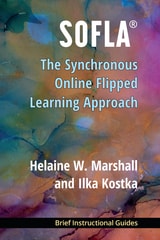
cover of SOFLA®: The Synchronous Online Flipped Learning Approach

SOFLA®

The Synchronous Online Flipped Learning Approach

Helaine W. Marshall and Ilka Kostka

University of Michigan Press, 2026
SOFLA® provides instructors with a template for learner-centered online instruction that allows for creativity and freedom within each structured step of a learning cycle. Drawing from principles of flipped learning pedagogy and best practices in online learning, this approach offers a robust framework for technology-based instruction that includes both synchronous and asynchronous components. This book begins by defining flipped learning and then rethinking it in terms of the online instructional context, with the goal of identifying the factors that contribute to a perfect blend of the two. Then, the book describes the eight steps of SOFLA® with details and caveats to aid implementation. Next, the authors provide sample lessons to illustrate SOFLA® in action and describe modifications and enhancements to show how this model can be adjusted to include various student populations, learning contexts, and methodologies. Finally, the conclusion discusses what this flexible and transparent approach offers educators and their students. As online learning becomes increasingly universal, SOFLA® will offer teachers a valuable instructional option for fostering interactive and student-centered learning.
[more]
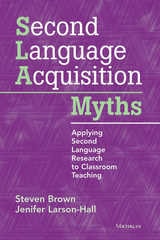
cover of Second Language Acquisition Myths: Applying Second Language Research to Classroom Teaching

Second Language Acquisition Myths

Applying Second Language Research to Classroom Teaching

Steven Brown and Jenifer Larson-Hall

University of Michigan Press, 2012

This volume was conceived as a first book in SLA for advanced undergraduate or introductory master’s courses that include education majors, foreign language education majors, and English majors. It’s also an excellent resource for practicing teachers. 

Both the research and pedagogy in this book are based on the newest research in the field of second language acquisition.  It is not the goal of this book to address every SLA theory or teach research methodology.  It does however address the myths and questions that non-specialist teacher candidates have about language learning.

Steven Brown is the co-author of the introductory applied linguistics textbook Understanding Language Structure, Interaction, and Variation  textbook (and workbook).

The myths challenged in this book are:
 

§  Children learn languages quickly and easily while adults are ineffective in comparison.

§  A true bilingual is someone who speaks two languages perfectly.

§  You can acquire a language simply through listening or reading.

§  Practice makes perfect.

§  Language students learn (and retain) what they are taught.

§  Language learners always benefit from correction.

§  Individual differences are a major, perhaps the major, factor in SLA.

§  Language acquisition is the individual acquisition of grammar.
[more]
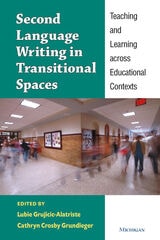
cover of Second Language Writing in Transitional Spaces: Teaching and Learning across Educational Contexts

Second Language Writing in Transitional Spaces

Teaching and Learning across Educational Contexts

Lubie Grujicic-Alatriste and Cathryn Crosby Grundleger

University of Michigan Press, 2020

This collection has been written to address the fact that there seems to be little concerted, systematic effort to understand what type of writing is taught across elementary, secondary, and college second language (L2) writing contexts and to understand how it is being taught on this long educational continuum (K–16). This book sets out to contribute to what is perceived as a lack of the full picture on the teaching of L2 writing from K–16. The impetus to look across educational settings, particularly at the places of transitions, stemmed in part from the recent state-wide educational reforms. Given the gap in the L2 research that straddles all educational settings, this volume addresses the need for a closer teacher collaboration and deeper, clearer understanding of writing goals in each of the educational settings and across them on the K–16 continuum.
 
The chapters examine the writing that English learners are producing because of the Common Core and the writing they are required to do once they reach the college or university, and then consider where the intersections exist—that is, what do educators think English learners ought to be writing across educational levels?
 
Each chapter describes the educational setting where the researchers were engaged, examines specific issues related to transitions, and offers—where relevant—recommendations for classroom practices, teaching strategies, and instructional materials that may be useful for practicing teachers and all others professionally engaged in educating writers across K–16.
 
 
[more]
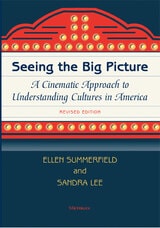
cover of Seeing the Big Picture, Revised Edition: A Cinematic Approach to Understanding Cultures in America

Seeing the Big Picture, Revised Edition

A Cinematic Approach to Understanding Cultures in America

Ellen Summerfield and Sandra Lee

University of Michigan Press, 2006

Seeing the Big Picture, Revised Edition, is designed to broaden students' awareness, understanding, and appreciation of the many cultures and subcultures in the United States. The authors have chosen popular films as tools for exposing students to aspects of cultures, including those of African Americans, Chinese Americans, Mexican Americans, and Muslim Americans. Writing and discussion activities will help students explore the cultural points of view portrayed in each of the films. Students are also advised to keep a film journal that will allow them to observe how their reactions and observations develop through the course of the class.

In addition to increasing students' knowledge and understanding of cultural differences, Seeingthe Big Picture will help students develop strong critical-thinking and analytic abilities as they learn to recognize and question messages inherent in the films' portrayals of different populations. A unique feature of the text are the Points of View segments from directors, insiders, and students that appear throughout the text, provoking perspectives students might not otherwise encounter.

This text is the ideal coursebook for undergraduate diversity electives and other multicultural awareness courses.
[more]
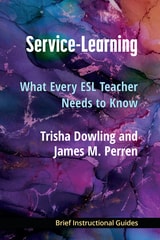
cover of Service-Learning: What Every ESL Teacher Needs to Know

Service-Learning

What Every ESL Teacher Needs to Know

Trisha Dowling and James M. Perren

University of Michigan Press, 2021
Service-Learning: What Every ESL Teacher Needs to Know gives practical information on implementing service-learning in the field of TESOL. Service-learning⁠—"the accomplishment of tasks that meet genuine human needs in combination with conscious educational growth"⁠—has developed into a pedagogical approach that incorporates student learning and reflection with curricular concepts while partnering with community organizations. Following an overview of service-learning in the field of TESOL, this text includes sections on incorporating service-learning in an ESL course, finding appropriate community partnerships, making decisions about culture- and language-based lessons, assessing students, and making the experience meaningful. Also included are four specific strategies to help readers make the case for service-learning to administrators. 
[more]
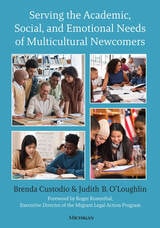
cover of Serving the Academic, Social, and Emotional Needs of Multicultural Newcomers

Serving the Academic, Social, and Emotional Needs of Multicultural Newcomers

Brenda Custodio and Judith B. O’Loughlin

University of Michigan Press, 2025

As newcomers—immigrant students who have been in the U.S. less than two years—arrive in record numbers, many school districts are looking for ways to best support these new arrivals. Serving the Academic, Social, and Emotional Needs of Multicultural Newcomers offers a research-based overview of newcomer students across the nation and provides specific strategies for helping them integrate into U.S. schools in a variety of settings (ESL, bilingual, mainstream/content classrooms). In addition to a brief overview of how newcomer programs can provide academic and social-emotional services for recently arrived English learners, the authors draw on their experience to offer five best practices for serving newcomers. Readers will learn how to:
  • Collaborate with school professionals to create a program specifically to meet the unique needs of new arrivals.
  • Provide intensive literacy, numeracy, and content area support, especially for students with interrupted schooling.
  • Develop the classroom supports necessary for students to achieve academic success.
  • Provide supports that address the physical, social, and emotional challenges of newcomers.
  • Work with families and communities to support students outside of a school environment.
With reflective questions at the end of each chapter, this book is designed to be used as a textbook with study groups or as a self-study resource for professional development.
[more]
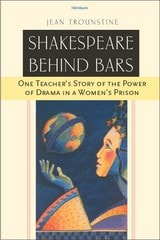
cover of Shakespeare Behind Bars: One Teacher's Story of the Power of Drama in a Women's Prison

Shakespeare Behind Bars

One Teacher's Story of the Power of Drama in a Women's Prison

Jean Trounstine

University of Michigan Press, 2004

In this deeply stirring account, Jean Trounstine, who spent 10 years teaching at Framingham (MA) Women's Prison, focuses on six inmates who, each in her own way, discover in the power of Shakespeare a way to transcend the painful constraints of incarceration. Shakespeare Behind Bars is a powerful story about the redemptive power of art and education.
Originally published in cloth in 2001, the paperback includes a new foreword that will inspire all teachers who work with students others have deemed unteachable. A new afterword updates readers on the prison art's program -- and the author herself -- since 2001.
[more]
cover of Social-Emotional Learning in English Language Teaching

Social-Emotional Learning in English Language Teaching

Luis Javier Pentón Herrera and Janine J. Darragh

University of Michigan Press, 2024
In an era where the world feels increasingly interconnected yet divided, Social-Emotional Learning in English Language Teaching unveils the profound impact of incorporating social-emotional learning (SEL) into language education. With compelling narratives and relatable examples, the authors showcase how emotional intelligence, empathy, and well-being are not just buzzwords, but essential elements for thriving in today’s global community. Through the lens of language education, they introduce the concept of affective communicative competence and advocate for a practice of responsible well-being that aims to support the holistic well-being of educators and learners. Blending meticulously researched theory with practical applications, the book is structured to facilitate both comprehension and application through practical SEL activities or reflective questions. As a critical resource for educators, researchers, and policymakers aiming to enrich the language-learning landscape, Social-Emotional Learning in English Language Teaching equips practitioners with the tools to foster environments where social-emotional and linguistic growth can flourish in tandem.
[more]
cover of Speaking in Social Contexts: Communication for Life and Study in the U.S.

Speaking in Social Contexts

Communication for Life and Study in the U.S.

Robyn Brinks Lockwood

University of Michigan Press, 2018

This text was written for students who want to live, study, and/or work in an English-speaking setting or are already doing so. Its goal is to help students survive interactional English in a variety of social, academic, and professional settings—for example, how to make small talk with recruiters at a job fair or when invited to dinner at their advisor’s house.

The text provides language to use for a variety of functions as they might related to life on a university campus: offering greetings and goodbyes, making introductions, giving opinions, agreeing and disagreeing, using the phone, offering assistance, asking for advice, accepting and declining invitations, giving and receiving compliments, complaining, giving congratulations, expressing condolences, and making small talk.  Users are also taught to think beyond the words and to interpret intonation and stress (how things sound).

Each of the 10 units includes discussion prompts, language lessons, practice activities, get acquainted tasks (interacting with native speakers), and analysis opportunities (what did they discover and what can they apply?).
[more]
cover of Speechcraft: Discourse Pronunciation for Academic Communication

Speechcraft

Discourse Pronunciation for Academic Communication

Wayne B. Dickerson and Laura D. Hahn

University of Michigan Press, 2027

The second edition of Speechcraft: Discourse Pronunciation for Advanced Learners is designed to address the needs of advanced non-native speakers of English, specifically university-level students on North American campuses, who expect to interact with native speakers in academic and professional settings. These students need especially clear, intelligible speech to pursue their studies in their chosen discipline, to serve as international teaching assistants, and to interact well in their chosen professions.

A number of significant improvements make this edition better suited to meet the needs of this audience than even before. In particular, the model of English rhythm taught is now closer to that used by native speakers in their everyday interactions. Also, advances in linguistic research on English rhythm have been brought to bear on the lessons. An exploration of the pedagogical implications of these findings has led us to redirect the focus of Speechcraft, to reorganize lesson sequences, to clarify and simplify important regularities, and to develop new lessons to present important, missing content.
[more]
cover of Step It Up: A Multilevel Reading-Writing Book for Learners of English

Step It Up

A Multilevel Reading-Writing Book for Learners of English

M. E. Sokolik

University of Michigan Press, 2005

Step It Up recognizes the unique opportunities that mixed-level classes provide for students to challenge themselves, to learn to communicate with a wide variety of speakers, and to fill in the gaps in their learning, regardless of their individual proficiencies. Step It Up is a time-saver for teachers of multilevel classes.

Each chapter focuses on a different academic discipline (education, art, history, business, geology, ecology, nutrition, language and culture, and literature). Chapters include three readings at three fluency levels-called the First Step (intermediate), Second Step (high-intermediate to low-advanced), and Third Step (advanced). Corresponding vocabulary development exercises, comprehension questions, group discussion questions, and wrap-up activities encourage students to work at their own learning levels even as they are asked to interact with the group and share the expertise that they have gained from the material.

Step It Up can also address the needs of learners who don't fall into the traditional categories and who will benefit from activities at different levels to help fill in gaps of their knowledge of English.

[more]
cover of Strategies for Legal Case Reading and Vocabulary Development

Strategies for Legal Case Reading and Vocabulary Development

Susan M. Reinhart

University of Michigan Press, 2007

Many law students feel that they are learning a new language during their first year of law school. For those students who are not native English speakers this process can be even more overwhelming. Strategies for Legal Case Reading and Vocabulary Development was written for just these students. The goal of the text is to help students develop the case reading and vocabulary strategies they will need to compete and succeed in an American law school.


Strategies for Legal Case Reading and Vocabulary Development begins with an overview of the American legal system and relevant research and guidelines relating to case reading. The book is divided into sections on common law, statutory law, and constitutional law. Approximately twenty cases (some abridged) and eight readings are included in the text. Questions for Discussion follow each case to help students prepare to actively participate in class case discussions. Additional features include hypotheticals (often posed by law professors), vocabulary tasks, and short writing assignments.
[more]
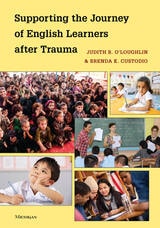
cover of Supporting the Journey of English Learners after Trauma

Supporting the Journey of English Learners after Trauma

Judith B. O'Loughlin and Brenda K. Custodio

University of Michigan Press, 2021

One of the hottest topics in education today is trauma-informed pedagogy. Much of what has been written in this area comes from counselors, therapists, and other experts in this field, but there is very little written specifically about the effects of trauma on English learners. This book has been written to address this need. The authors have sifted through the literature on trauma and social-emotional learning (SEL) to provide the material that applies directly to English learners. This book was written mainly for teachers of students with immigrant backgrounds and for the building administrators who support them, including counselors, paraprofessionals, and social workers.
 
This book is designed to provide a practical resource to help educators better understand the possible traumatic backgrounds of their students and how that could be affecting their academic, social, and emotional lives. It also focuses on how school personnel can create a safe environment in schools and classrooms to help students recognize, nurture, and expand the internal resilience that has enabled them to weather past situations and that will allow them to continue the healing process.
 
One chapter is devoted to the topic of self-care for educators who are working so hard to help students be resilient. An appendix features a list of recommended books on the topics of personal migration and resilience.


[more]