Results by title
99 books match the query 'Environment' and 6 start with s
Socialist States and the Environment
Lessons for Eco-Socialist FuturesSalvatore Engel-Di Mauro
Pluto Press, 2021
More than thirty years after the collapse of the USSR, the critique of state socialism is still used to deny alternatives to capitalism, irrespective of global capitalist ecological and social devastation. There is seemingly nothing worthwhile salvaging from decades of state socialist experiences.
As the climate crisis deepens, Engel-Di Mauro argues that we need to re-evaluate the environmental practices and policies of state socialism, especially as they had more environmentally beneficial than destructive effects. Rather than dismissing state socialism’s heritage out of hand, we should reclaim it for contemporary eco-socialist ends.
By means of a comparative and multiple-scaled approach, Engel-Di Mauro points to highly diverse and environmentally constructive state socialist experiences. Taking the reader from the USSR to China and Cuba, this is a fiery and contentious look at what worked, what didn’t, and how we can move towards an eco-socialist future.

Sourcebook on the Environment
A Guide to the LiteratureKenneth A. Hammond, George Macinko, and Wilma B. Fairchild
University of Chicago Press, 1978
Beginning with an introduction to various philosophies and perspectives, the Sourcebook examines major elements of the environment and selected case studies of human alteration of our surroundings. The essential references in each field are carefully presented, and directions are given for examining more advanced and specialized works. Appendixes on selected periodicals, the latest relevant federal legislation, and environmental organizations point to further areas of investigation. To maintain its value in this volatile area, this indispensable work will be periodically revised and updated.
States of Nature
Science, Agriculture, and Environment in the Spanish Caribbean, 1760-1940By Stuart George McCook
University of Texas Press, 2002
The process of nation-building in Latin America transformed the relations between the state, the economy, and nature. Between 1760 and 1940, the economies of most countries in the Spanish Caribbean came to depend heavily on the export of plant products, such as coffee, tobacco, and sugar. After the mid-nineteenth century, this model of export-led economic growth also became a central tenet of liberal projects of nation-building. As international competition grew and commodity prices fell over this period, Latin American growers strove to remain competitive by increasing agricultural production. By the turn of the twentieth century, their pursuit of export-led growth had generated severe environmental problems, including soil exhaustion, erosion, and epidemic outbreaks of crop diseases and pests.
This book traces the history of the intersections between nature, economy, and nation in the Spanish Caribbean through a history of the agricultural and botanical sciences. Growers and governments in Venezuela, Puerto Rico, Cuba, Colombia, and Costa Rica turned to scientists to help them establish practical and ideological control over nature. They hoped to use science to alleviate the pressing environmental and economic stresses, without having to give up their commitment to export-led growth. Starting from an overview of the relationship among science, nature, and development throughout the export boom of 1760 to 1930, Stuart McCook examines such topics as the relationship between scientific plant surveys and nation-building, the development of a "creole science" to address the problems of tropical agriculture, the ecological rationalization of the sugar industry, and the growth of technocratic ideologies of science and progress. He concludes with a look at how the Great Depression of the 1930s changed the paradigms of economic and political development and the role of science and nature in these paradigms.
Steinbeck and the Environment
Interdisciplinary ApproachesSusan F. Beegel
University of Alabama Press, 2007
This interdisciplinary collection of essays explores in-depth a topic previously neglected by scholars: John Steinbeck's early continuing preoccupation with ecology and marine biology and the effect of that interest on his writings. Written by scholars from various disciplines, the essays offer a dynamic contribution to the study of John Steinbeck by considering his writings from an environmental perspective. They reveal Steinbeck as a prophet that was ahead of his time and supremely relevant to our own.
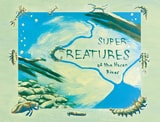
Super Creatures of the Huron River
Sara Adlerstein-Gonzalez
Michigan Publishing Services, 2021
Super Creatures of the Huron River aims to teach children about stream ecology, with a focus on the fascinating “bugs” that can be found in the Huron River. State and national inventories record one hundred dams on the Huron River system, which is typical of rivers and tributaries in the Great Lakes Basin. What was once a free-flowing system is now interrupted by dams on both the river’s main stem and its tributaries. Although dams can provide some benefits, they produce severe negative impacts on the rivers they harness. Dams alter a river’s chemical, physical, and biological processes, including fragmenting and blocking the natural movement of fish and other aquatic species. Although these negative impacts have become more obvious over the past two decades, the environmental costs of dams have only recently captured scientific attention.
Super Creatures of the Huron River is a project conducted by a team of University of Michigan (UM) faculty and students, in collaboration with Huron River Watershed Council (HRWC) researchers. Sara Adlerstein developed the project. Working closely with her were Carolyn Berge, Jeffrey Evans, and Mike Wiley from UM and Paul Steen and Pam Labadie from HRWC. Illustrations for the book were created by master of science student Jennifer Fuller. The picture book will be used as a tool to support streamside activities led by the HRWC.