Results by title
314 books match the query 'Environmental aspects' and 29 start with s
Savage Ecology
War and Geopolitics at the End of the WorldJairus Victor Grove
Duke University Press, 2019
Saving Wyoming's Hoback
The Grassroots Movement that Stopped Natural Gas DevelopmentFlorence R. Shepard and Susan L. Marsh
University of Utah Press, 2016
Winner of the Wallace Stegner Prize in Environmental Humanities
In late 2012, more than one hundred people gathered to hear a long-awaited announcement: the Trust for Public Land had succeeded in preventing natural gas development in the remote Hoback Basin of Wyoming. This landmark agreement—purchasing leases from Plains Exploration Company—would not have come to pass without the extraordinary will and expertise of local citizens. Unchallenged, the proposed natural gas development in the national forest near the hamlet of Bondurant, Wyoming, would have brought roads, pipelines, water and air pollution, and a complete change in the character of the landscape and its communities.
Saving Wyoming's Hoback tells the story of the Hoback and Noble Basins in northwestern Wyoming and of the citizens who worked together to protect the land that they loved. Retired schoolteachers, mine workers, big game hunting outfitters, and other stakeholders brought together their knowledge of the area to achieve a single goal: to prevent the industrialization of the wild country that was their home. While some disagreed about specifics, their work as individuals and as coalitions is an inspiring example of how determined citizens can make a difference.

Seeds of Power
Environmental Injustice and Genetically Modified Soybeans in ArgentinaAmalia Leguizamón
Duke University Press, 2020
Self-Devouring Growth
A Planetary Parable as Told from Southern AfricaJulie Livingston
Duke University Press, 2019
Shock Cities
The Environmental Transformation and Reform of Manchester and ChicagoHarold L. Platt
University of Chicago Press, 2005
Shock Cities also recasts the age of industry within a larger frame of nature. Frightening epidemics and unnatural "natural disasters" forced the city dwellers onto the path of environmental reform. Crusaders for social justice such as Chicago's Jane Addams and Manchester's Charles Rowley led class-bridging campaigns to clean up the slums. Women activists and other "municipal housekeepers" promoted regulations to reduce air pollution. Public health experts directed efforts to improve sanitation.
Out of these reform movements, the Progressives formulated new concepts of environmental conservation and regional planning. Comparing the two cities, Platt highlights the ways in which political culture and institutions act to turn social geography into physical shapes on the ground. This focus on the political formation of urban space helps illuminate questions of social and environmental justice. Shock Cities will be of enormous value to students of ecology, technology, urban planning, and public health in the Western world.

Sick Planet
Corporate Food and MedicineStan Cox
Pluto Press, 2008
Neoliberals often point to improvements in public health and nutrition as examples of globalisation's success, but this book argues that the corporate food and medicine industries are destroying environments and ruining living conditions across the world.
Scientist Stan Cox expertly draws out the strong link between Western big business and environmental destruction. This is a shocking account of the huge damage that drug manufacturers and large food corporations are inflicting on the health of people and crops worldwide. Companies discussed include Wal-Mart, GlaxoSmithKline, Tyson Foods and Monsanto. On issues ranging from the poisoning of water supplies in South Asia to natural gas depletion and how it threatens global food supplies, Cox shows how the demand for profits is always put above the public interest.
While individual efforts to "shop for a better world" and conserve energy are laudable, Cox explains that they need to be accompanied by an economic system that is grounded in ecological sustainability if we are to find a cure for our Sick Planet.

Signs Of Danger
Waste, Trauma, and Nuclear ThreatPeter C. Van Wyck
University of Minnesota Press, 2004
Questions the literal burying of the nuclear threat and how it relates to expectations for our future
A rising ocean. A falling building. A toxic river. Species extinguished. A nuclear landscape. In a world so configured, the state of contemporary ecological thought and practice is woefully—and perilously—inadequate. Focusing on the government’s nuclear waste burial program in Carlsbad, New Mexico, Signs of Danger begins the urgent work of finding a new way of thinking about ecological threat in our time.
The Waste Isolation Pilot Plant in Carlsbad began receiving shipments in 1999. With a proposed closing date of 2030, this repository for nuclear waste must be secured with a sign, the purpose of which will be to keep people away for three hundred generations. In the official documents uncovered by Peter van Wyck, we encounter a government bureaucracy approaching the issue of nuclear waste as a technical problem only to find itself confronting a host of intractable philosophical issues concerning language, culture, and history. Signs of Danger plumbs these depths as it shows us how the problem raised in the desert of New Mexico is actually the problem of a culture grappling with ecological threats and with questions of the limits of meaning and representation in the deep future. The reflections at the center of this book—on memory, trauma, disaster, representation, and the virtual—are aimed at defining the uniquely modern status of environmental and nuclear threats. They offer invaluable insights into the interface of where culture ends and nature begins, and how such a juncture is closely linked with questions of risk, concepts of history, and the cultural experience of time.Winner of the 2005 Gertrude J. Robinson Book Prize of the Canadian Communication Association
Singaporean Creatures
Histories of Humans and Other Animals in the Garden CityEdited by Timothy Barnard
National University of Singapore Press, 2024
Modern Singapore is the Garden City, a biophilic urban space that includes a variety of animals, from mosquitoes to humans, even polar bears. Singaporean Creatures brings together historians to contemplate this human-animal relationship and how it has shaped society—socially, economically, politically, and environmentally. It is a work of historical and ecological analysis, in which various institutions, perspectives, and events involving animals provide insight into how the larger society has been formed and developed over the last half-century. The interaction of all Singaporean creatures thus provides a lens through which we can understand the creation of a modern and urban nation-state, shaped by the forces of the Anthropocene.
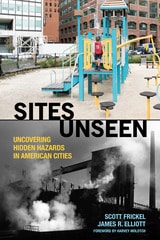
Sites Unseen
Uncovering Hidden Hazards in American CitiesScott Frickel
Russell Sage Foundation, 2018
From a dive bar in New Orleans to a leafy residential street in Minneapolis, many establishments and homes in cities across the nation share a troubling and largely invisible past: they were once sites of industrial manufacturers, such as plastics factories or machine shops, that likely left behind carcinogens and other hazardous industrial byproducts. In Sites Unseen, sociologists Scott Frickel and James Elliott uncover the hidden histories of these sites to show how they are regularly produced and reincorporated into urban landscapes with limited or no regulatory oversight. By revealing this legacy of our industrial past, Sites Unseen spotlights how city-making has become an ongoing process of social and environmental transformation and risk containment.
To demonstrate these dynamics, Frickel and Elliott investigate four very different cities—New Orleans, Minneapolis, Philadelphia, and Portland, Oregon. Using original data assembled and mapped for thousands of former manufacturers’ locations dating back to the 1950s, they find that more than 90 percent of such sites have now been converted to urban amenities such as parks, homes, and storefronts with almost no environmental review. And because manufacturers tend to open plants on new, non-industrial lots rather than on lots previously occupied by other manufacturers, associated hazards continue to spread relatively unabated. As they do, residential turnover driven by gentrification and the rising costs of urban living further obscure these sites from residents and regulatory agencies alike.
Frickel and Elliott show that these hidden processes have serious consequences for city-dwellers. While minority and working class neighborhoods are still more likely to attract hazardous manufacturers, rapid turnover in cities means that whites and middle-income groups also face increased risk. Since government agencies prioritize managing polluted sites that are highly visible or politically expedient, many former manufacturing sites that now have other uses remain invisible. To address these oversights, the authors advocate creating new municipal databases that identify previously undocumented manufacturing sites as potential environmental hazards. They also suggest that legislation limiting urban sprawl might reduce the flow of hazardous materials beyond certain boundaries.
A wide-ranging synthesis of urban and environmental scholarship, Sites Unseen shows that creating sustainable cities requires deep engagement with industrial history as well as with the social and regulatory processes that continue to remake urban areas through time.
A Volume in the American Sociological Association's Rose Series in Sociology.
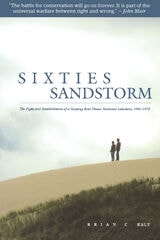
Sixties Sandstorm
The Fight over Establishment of a Sleeping Bear Dunes National Lakeshore, 1961-1970Brian C. Kalt
Michigan State University Press, 2001
Sixties Sandstorm is not a book about dunes as much as it is a book about people and their government. It chronicles the public meetings, bills, protests, and congressional interactions that led to the signing of the Sleeping Bear Sand Dunes Act in 1970. The Dunes park fight is a case study of the politics, the legislative process, citizen response to the expanded role of government in the 1960s, and the rise of the environmental movement in America during that decade. Since Hart's legislation was made law, millions of Americans have traveled to the Sleeping Bear Sand Dunes National Lakeshore. Few imagine what the area would look like today if not for the efforts of people like Senator Hart. On the other hand, few appreciate the sacrifice of the landowners who-not always willingly-gave up their property in this place where, as one resident put it, "stars are closer to the earth than anywhere else in the world."
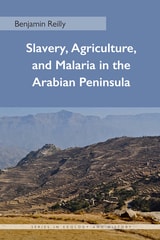
Slavery, Agriculture, and Malaria in the Arabian Peninsula
Benjamin Reilly
Ohio University Press, 2015
In Slavery, Agriculture, and Malaria in the Arabian Peninsula, Benjamin Reilly illuminates a previously unstudied phenomenon: the large-scale employment of people of African ancestry as slaves in agricultural oases within the Arabian Peninsula. The key to understanding this unusual system, Reilly argues, is the prevalence of malaria within Arabian Peninsula oases and drainage basins, which rendered agricultural lands in Arabia extremely unhealthy for people without genetic or acquired resistance to malarial fevers. In this way, Arabian slave agriculture had unexpected similarities to slavery as practiced in the Caribbean and Brazil.
This book synthesizes for the first time a body of historical and ethnographic data about slave-based agriculture in the Arabian Peninsula. Reilly uses an innovative methodology to analyze the limited historical record and a multidisciplinary approach to complicate our understandings of the nature of work in an area that is popularly thought of solely as desert. This work makes significant contributions both to the global literature on slavery and to the environmental history of the Middle East—an area that has thus far received little attention from scholars.
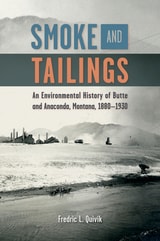
Smoke and Tailings
An Environmental History of Butte and Anaconda, Montana, 1880–1930Fredric L. Quivik
University of Nevada Press, 2026
Butte’s history, a long-standing subject of historical inquiry, gains new depth as Quivik examines the technological developments pioneered by local mining companies. He challenges the simplistic narrative of a powerful corporation imposing its will on helpless agricultural communities. Local communities mounted strong opposition to the industry’s polluting methods; Quivik acknowledges this dynamic while also revealing efforts by the Anaconda Copper Mining Company to address environmental issues. The company developed and implemented technical solutions to minimize resource waste and mitigate damage, driven by both economic interests and litigation pressures. While these advancements lessened some of the environmental harm, they were insufficient to prevent long-term consequences. The operations in Butte and Anaconda ultimately created the largest Superfund complex in the United States, requiring billions of dollars in remediation.
Quivik’s nuanced approach opens the “black box” of technology, showing how innovations both alleviated and exacerbated the environmental challenges of mining, milling, and smelting. In addition to contributing to the rich literature on smelter smoke, this book breaks new ground by examining the underexplored environmental impacts of tailings, offering a fresh perspective on the intersection of industry, technology, and environmental change. The cultural landscapes of Butte and Anaconda retain many features of the region’s history of both environmental degradation and remediation. Smoke and Tailings is an essential addition to the study of Butte’s industrial and ecological history.
Social Causes of Environmental Destruction in Latin America
Michael Painter and William H. Durham, Editors
University of Michigan Press, 1995

Social History and African Environments
William Beinart
Ohio University Press, 2003
The explosion of interest in African environmental history has stimulated research and writing on a wide range of issues facing many African nations.
This collection represents some of the finest studies to date. The general topics include African environmental ideas and practices; colonial science, the state and African responses; and settlers and Africans' culture and nature. The contributors are Emmanuel Kreike, Karen Middleton, Innocent Pikirayi, Terence Ranger, JoAnn McGregor, Helen Tilley, Grace Garswell, John McCracken, Ingrid Yngstrom, David Bunn, Sandra Swart, Robert J. Gordon, and Jane Carruthers.

Soil Erosion in a Coastal River Basin
A Case Study from the PhilippinesRandom DuBois
University of Chicago Press, 1990

Solar Adobe
Energy, Ecology, and Earthen ArchitectureAlbert Narath
University of Minnesota Press, 2024
How a centuries-old architectural tradition reemerged as a potential solution to the political and environmental crises of the 1970s
Against the backdrop of a global energy crisis, a widespread movement embracing the use of raw earth materials for building construction emerged in the 1970s. Solar Adobe examines this new wave of architectural experimentation taking place in the United States, detailing how an ancient tradition became a point of convergence for issues of environmentalism, architecture, technology, and Indigenous resistance.
Utilized for centuries by the Pueblo people of the American Southwest and by Spanish colonialists, adobe construction found renewed interest as various groups contended with the troubled legacies of modern architecture and an increasingly urgent need for sustainable design practices. In this period of critical experimentation, design networks that included architects, historians, counterculture communities, government weapons labs, and Indigenous activists all looked to adobe as a means to address pressing environmental and political issues.
Albert Narath charts the unique capacities of adobe construction across a wide range of contexts, consistently troubling simple distinctions between traditional and modern technologies, high design and vernacular architecture. Drawing insightful parallels between architecture, environmentalism, and movements for Indigenous sovereignty, Solar Adobe stresses the importance of considering the history of the built environment in conjunction with architecture’s larger impact on the natural world.

Spaceship in the Desert
Energy, Climate Change, and Urban Design in Abu DhabiGökçe Günel
Duke University Press, 2019
Sparing Nature
The Conflict between Human Population Growth and Earth's BiodiversityMcKee, Jeffrey K.
Rutgers University Press, 2005
Are humans too good at adapting to the earth’s natural environment? Every day, there is a net gain of more than 200,000 people on the planet—that’s 146 a minute. Has our explosive population growth led to the mass extinction of countless species in the earth’s plant and animal communities?
Jeffrey K. McKee contends yes. The more people there are, the more we push aside wild plants and animals. In Sparing Nature, he explores the cause-and-effect relationship between these two trends, demonstrating that nature is too sparing to accommodate both a richly diverse living world and a rapidly expanding number of people. The author probes the past to find that humans and their ancestors have had negative impacts on species biodiversity for nearly two million years, and that extinction rates have accelerated since the origins of agriculture. Today entire ecosystems are in peril due to the relentless growth of the human population. McKee gives a guided tour of the interconnections within the living world to reveal the meaning and value of biodiversity, making the maze of technical research and scientific debates accessible to the general reader. Because it is clear that conservation cannot be left to the whims of changing human priorities, McKee takes the unabashedly neo-Malthusian position that the most effective measure to save earth’s biodiversity is to slow the growth of human populations. By conscientiously becoming more responsible about our reproductive habits and our impact on other living beings, we can ensure that nature’s services will make our lives not only supportable, but also sustainable for this century and beyond.
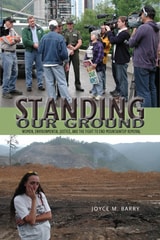
Standing Our Ground
Women, Environmental Justice, and the Fight to End Mountaintop RemovalJoyce M. Barry
Ohio University Press, 2012
Standing Our Ground: Women, Environmental Justice, and the Fight to End Mountaintop Removal examines women’s efforts to end mountaintop removal coal mining in West Virginia. Mountaintop removal coal mining, which involves demolishing the tops of hills and mountains to provide access to coal seams, is one of the most significant environmental threats in Appalachia, where it is most commonly practiced.
The Appalachian women featured in Barry’s book have firsthand experience with the negative impacts of Big Coal in West Virginia. Through their work in organizations such as the Coal River Mountain Watch and the Ohio Valley Environmental Coalition, they fight to save their mountain communities by promoting the development of alternative energy resources. Barry’s engaging and original work reveals how women’s tireless organizing efforts have made mountaintop removal a global political and environmental issue and laid the groundwork for a robust environmental justice movement in central Appalachia.
States of Nature
Science, Agriculture, and Environment in the Spanish Caribbean, 1760-1940By Stuart George McCook
University of Texas Press, 2002
The process of nation-building in Latin America transformed the relations between the state, the economy, and nature. Between 1760 and 1940, the economies of most countries in the Spanish Caribbean came to depend heavily on the export of plant products, such as coffee, tobacco, and sugar. After the mid-nineteenth century, this model of export-led economic growth also became a central tenet of liberal projects of nation-building. As international competition grew and commodity prices fell over this period, Latin American growers strove to remain competitive by increasing agricultural production. By the turn of the twentieth century, their pursuit of export-led growth had generated severe environmental problems, including soil exhaustion, erosion, and epidemic outbreaks of crop diseases and pests.
This book traces the history of the intersections between nature, economy, and nation in the Spanish Caribbean through a history of the agricultural and botanical sciences. Growers and governments in Venezuela, Puerto Rico, Cuba, Colombia, and Costa Rica turned to scientists to help them establish practical and ideological control over nature. They hoped to use science to alleviate the pressing environmental and economic stresses, without having to give up their commitment to export-led growth. Starting from an overview of the relationship among science, nature, and development throughout the export boom of 1760 to 1930, Stuart McCook examines such topics as the relationship between scientific plant surveys and nation-building, the development of a "creole science" to address the problems of tropical agriculture, the ecological rationalization of the sugar industry, and the growth of technocratic ideologies of science and progress. He concludes with a look at how the Great Depression of the 1930s changed the paradigms of economic and political development and the role of science and nature in these paradigms.
Stature, Living Standards, and Economic Development
Essays in Anthropometric HistoryEdited by John Komlos
University of Chicago Press, 1994
Analyzing the differences in physical stature by social group, gender, age, provenance, and date and place of birth, these essays illuminate urban and rural differences in well-being, explore the effects of market integration on previously agricultural societies, contrast the experiences of several segments of society, and explain the proximate causes of downturns and upswings in well-being. Particularly intriguing is the researchers' conclusion that the environment of the New World during this period was far more propitious than that of Europe, based on data showing that European aristocrats were in worse health than even the poorest members of American society.
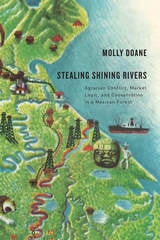
Stealing Shining Rivers
Agrarian Conflict, Market Logic, and Conservation in a Mexican ForestMolly Doane
University of Arizona Press, 2012
What happens to indigenous people when their homelands are declared by well-intentioned outsiders to be precious environmental habitats? In this revelatory book, Molly Doane describes how a rain forest in Mexico’s southern state of Oaxaca was appropriated and redefined by environmentalists who initially wanted to conserve its biodiversity. Her case study approach shows that good intentions are not always enough to produce results that benefit both a habitat and its many different types of inhabitants.
Doane begins by showing how Chimalapas—translated as “shining rivers”—has been “produced” in various ways over time, from a worthless wasteland to a priceless asset. Focusing on a series of environmental projects that operated between 1990 and 2008, she reveals that environmentalists attempted to recast agrarian disputes—which actually stemmed from government-supported corporate incursions into community lands and from unequal land redistribution—as environmental problems.
Doane focuses in particular on the attempt throughout the 1990s to establish a “Campesino Ecological Reserve” in Chimalapas. Supported by major grants from the World Wildlife Foundation (WWF), this effort to foster and merge agrarian and environmental interests was ultimately unsuccessful because it was seen as politically threatening by the state. By 2000, the Mexican government had convinced the WWF to redirect its conservation monies to the state government and its agencies.
The WWF eventually abandoned attempts to establish an “enclosure” nature reserve in the region or to gain community acceptance for conservation. Instead, working from a new market-based model of conservation, the WWF began paying cash to individuals for “environmental services” such as reforestation and environmental monitoring.
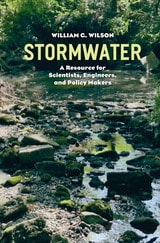
Stormwater
A Resource for Scientists, Engineers, and Policy MakersWilliam G. Wilson
University of Chicago Press, 2016
As Wilson shows, rivers of runoff flowing from manmade surfaces—such as roads, sidewalks, and industrial sites—carry a glut of sediments and pollutants. Unlike soil, pavement does not filter or biodegrade these contaminants. Oil, pesticides, road salts, metals, automobile chemicals, and bacteria all pour into stormwater systems. Often this runoff discharges directly into waterways, uncontrolled and untreated, damaging valuable ecosystems. Detailing the harm that can be caused by this urban runoff, Wilson also outlines methods of control, from restored watersheds to green roofs and rain gardens, and, in so doing, gives hope in the face of an omnipresent threat. Illustrated throughout, Stormwater will be an essential resource for urban planners and scientists, policy makers, citizen activists, and environmental educators in the stormy decades to come.
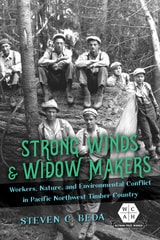
Strong Winds and Widow Makers
Workers, Nature, and Environmental Conflict in Pacific Northwest Timber CountrySteven C. Beda
University of Illinois Press, 2023
Often cast as villains in the Northwest's environmental battles, timber workers in fact have a connection to the forest that goes far beyond jobs and economic issues. Steven C. Beda explores the complex true story of how and why timber-working communities have concerned themselves with the health and future of the woods surrounding them. Life experiences like hunting, fishing, foraging, and hiking imbued timber country with meanings and values that nurtured a deep sense of place in workers, their families, and their communities. This sense of place in turn shaped ideas about protection that sometimes clashed with the views of environmentalists--or the desires of employers. Beda's sympathetic, in-depth look at the human beings whose lives are embedded in the woods helps us understand that timber communities fought not just to protect their livelihood, but because they saw the forest as a vital part of themselves.
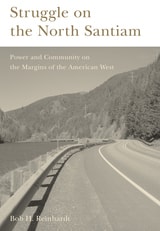
Struggle on the North Santiam
Power and Community on the Margins of the American WestBob H Reinhardt
Oregon State University Press, 2020
In this deeply researched account, historian Bob H. Reinhardt connects the North Santiam Canyon’s history to that of the Pacific Northwest and the United States more broadly. Readers will learn about specific events that illuminate themes in the region’s history: railroad development as seen through the failed dreams of the Oregon Pacific Railroad, federal land scams in the Oregon land fraud trials of the early twentieth century, the causes and consequences of mid-century river development projects like Detroit Dam, the post-war booms and busts of the timber industry, the spotted owl/ancient forest debate in the 1980s and 1990s, and the promises and perils of Oregon’s recreational tourism economy.
From nineteenth-century interactions between Native and non-Native peoples to the changing fortunes of the timber industry and questions about economic and environmental sustainability in the twenty-first century, the book offers important insights into power dynamics in small communities and marginal places. Struggle on the North Santiam will be of interest to scholars of the American West and thoughtful readers interested in Oregon and Pacific Northwest history.
Sustainable Failures
Environmental Policy and Democracy in a Petro-dependent WorldSherry Cable
Temple University Press, 2012
Environmental policies fail in conspicuous and egregious ways to sustain the natural resource base and protect citizens from production-generated risky exposures. In her engaging study, Sustainable Failures, Sherry Cable asks, why does environmental policy seem to be a contributing cause rather than a partial solution to environmental problems?
Melding a biophysical science perspective of environmental processes with sociological insights into human behavior, Cable examines the people, policies, and issues of petrochemical dependence and broader environment questions. She insists that our present policies around the manufacture and use of petroleum products violate rudimentary ecological principles—and do so in complicated ways.
Sustainable Failures is a blistering wake-up call to what is at stake not only regarding the failure of policy outcomes and grievous natural resource depletion and pollution, but also concerning democracy and ecological survival, and eventually, potentially, the existence of our species.

Sustainable Thinking
Ensuring Your Library's Future in an Uncertain WorldRebekkah Smith Aldrich
American Library Association, 2018
Sustaining Cities
Urban Policies, Practices, and PerceptionsKrause, Linda
Rutgers University Press, 2012
What has happened to cities after the global economic recession? Sustaining Cities answers this question by explaining how failed governmental policies contributed to urban problems and offering best practices for solving them.
From social scientists and urban planners to architects and literary and film critics, the authors of this unique collection suggest real responses to this crisis. Could the drastic declines in housing markets have been avoided? Yes, if we reframe our housing values. Do you want to attract corporate investment to your town? You might want to think twice about doing so. The extinction of the “Celtic Tiger” may be charted in statistics, but the response in popular Irish mystery novels is much more compelling. China, while not immune to market vicissitudes, still booms, but at a considerable cost to its urban identities.
Whether constructing a sustainable social framework for Mexican mega-cities or a neighborhood in London, these nine essays consider some strikingly similar strategies. And perhaps, as the contributors suggest, it’s time to look beyond the usual boundaries of urban, suburban, and exurban to forge new links among these communities that will benefit all citizens. Accessible to anyone with an interest in how cities cope today, Sustaining Cities presents a cautionary tale with a hopeful ending.
Sustaining the Borderlands in the Age of NAFTA
Development, Politics, and Participation on the US-Mexico BorderSuzanne Simon
Vanderbilt University Press, 2014
Although the key to the side accords' anticipated success lay in their ostensibly generous encouragement of a participatory politics and sustainable development opportunities, Sustaining the Borderlands reveals that the Mexican border populations for which they were largely created are effectively excluded from participating due to the ongoing online, territorial, class, and cultural barriers that shape the borderlands. Rather than experiencing the side accords and their companion institutions as transparent and accessible, residents experienced them as opaque and indecipherable. Simon concludes that the side accords have failed to deliver on their promise of bringing democracy to Mexico because practical mechanisms that would ensure their effective implementation were never put in place.
NAFTA took effect at a time when Mexico was undergoing a democratic transition. The treaty was supposed to encourage this transition and improve environmental and labor conditions on the US-Mexico border. This book demonstrates that, twenty years later, the promises of NAFTA have not come to pass.