Results by title
425 books match the query 'Ethics' and 20 start with s
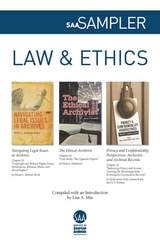
SAA Sampler
Law & EthicsLisa A. Mix
Society of American Archivists, 2013

Saints and Postmodernism
Revisioning Moral PhilosophyEdith Wyschogrod
University of Chicago Press, 1990
"A 'must' for readers interested in the borderlands between philosophy, hagiography, and ethics."—Mark I. Wallace, Religious Studies Review

Saved for a Purpose
A Journey from Private Virtues to Public ValuesJames A. Joseph
Duke University Press, 2015
In an engaging and personal style, Joseph shows how his commitment to applying moral and ethical principles to large groups and institutions played out in his work in the civil rights movement in Alabama and as a college chaplain in California in the turbulent 1960s. His time later as vice president of the Cummins Engine Company provided an opportunity to promote corporate ethics, and his tenure as Under Secretary of the Interior in the Carter Administration underscored the difficulty and weight of making the right decisions while balancing good policy analysis with transcendent moral principles.
In 1996 President Clinton selected Joseph to become the United States Ambassador to South Africa. His recollections of working with Nelson Mandela, whom he describes as a noble and practical politician, and his observations about what he learned from Desmond Tutu and others about reconciliation contain some of the book’s most poignant passages.
Saved for a Purpose is unique, as Joseph combines his insights from working to integrate values into America’s public and private sectors with his long engagement with ethics as an academic discipline and as a practical guide for social behavior. Ultimately, it reflects Joseph’s passionate search for values that go beyond the personal to include the ethical imperatives that should be applied to the communal.

Scheler’s Critique of Kant’s Ethics
Philip Blosser
Ohio University Press, 1995
“My interest in [Max] Scheler’s critique of Kant runs back nearly a decade…. The more I read of Scheler, the more I began to see the value of a project dealing with his critique of Kant in Der Formalismus in der Ethik und die Materiale Wetethik, which would possess the virtue of focusing in a single project three important strands of philosophical interest: phenomenology, Kantianism, and ethics….
“The study is divided into six chapters and two appendices. Each of the chapters constituting the body of the work contains a brief analysis of the Kantian position or discussion of the basic questions at issue in it, an exposition of Scheler’s critique of the Kantian position and its presuppositions, and a detailed appraisal of Scheler’s critique.”—from the introduction by the author

Scientific Characters
Rhetoric, Politics, and Trust in Breast Cancer ResearchLisa Keränen
University of Alabama Press, 2010

Seeing Witness
Visuality and the Ethics of TestimonyJane Blocker
University of Minnesota Press, 2009
Unearthing the meaning of witnessing in contemporary art and politics
The act of bearing witness can reveal much, but what about the figure of the witness itself? As contemporary culture is increasingly dominated by surveillance, the witness—whether artist, historian, scientist, government official, or ordinary citizen—has become empowered in realms from art to politics.
In Seeing Witness, Jane Blocker challenges the implicit authority of witnessing through the examination of a series of contemporary artworks, all of which make the act of witnessing visible, open to inspection and critique. Considering such artists as Marina Abramović, James Luna, Felix Gonzalez-Torres, Eduardo Kac, and Ann Hamilton, Blocker investigates the artists and spectators who look, the technologies they look with, and the forms of power and moral authority that permit their viewing. Going beyond particular traumatic or sensational events, Blocker contemplates the politics of witnessing and argues that the witness represents a morally unique—and even problematic—position of privilege. Separating Seeing Witness from previous literature on the subject, she finds that the visual is inherent in witnessing and asserts that contemporary art is integral to questioning and understanding how witnessing is mobilized in culture today.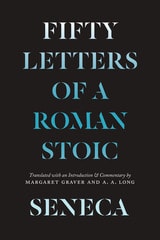
Seneca
Fifty Letters of a Roman StoicLucius Annaeus Seneca
University of Chicago Press, 2021
“There is only one course of action that can make you happy. . . . rejoice in what is yours. What is it that is yours? Yourself; the best part of you.”
In the year 62, citing health issues, the Roman philosopher Seneca withdrew from public service and devoted his time to writing. His letters from this period offer a window onto his experience as a landowner, a traveler, and a man coping with the onset of old age. They share his ideas on everything from the treatment of enslaved people to the perils of seafaring, and they provide lucid explanations for many key points of Stoic philosophy.
This selection of fifty letters brings out the essentials of Seneca’s thought, with much that speaks directly to the modern reader. Above all, they explore the inner life of the individual who proceeds through philosophical inquiry from a state of emotional turmoil to true friendship, self-determination, and personal excellence.
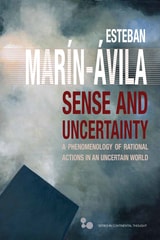
Sense and Uncertainty
A Phenomenology of Rational Actions in an Uncertain WorldEsteban Marín-Ávila
Ohio University Press, 2025
- We are often forced through violence to do things that do not make sense for us except to avoid retaliations, punishments, or the various evils that others might inflict on us.
- We inhabit a world that escapes our control. This involves living in uncertainty concerning the things that we might suffer and do, that is, the things that might happen to us and the results of our actions.
- We are dependent on others and collaborate with them in ways that make it impossible to fully understand the sense of our own actions and practical intentions.

Sex and Virtue
An Introduction to Sexual Ethics (Catholic Moral Thought, Volume 2)John S. Grabowski
Catholic University of America Press, 2003

Shadows of Ethics
Criticism and the Just SocietyGeoffrey Galt Harpham
Duke University Press, 1999
Ethics, he claims, has been seen by its most powerful theorists as a discourse of “shadows,” a characteristic disturbance of thought in the presence of the other, a source of doubts rather than certainty. At the same time, however, ethics includes an element of violence, even blindness and “fundamentalism,” a crushing drive to clarity and resolution. Contemporary thinkers, Harpham argues, have been unwilling to accept this account of ethics and the obligations it would impose, and have, as a consequence, cultivated social and intellectual marginality as the only site of virtue, the only position in which critical intelligence is at home. They have, he contends, failed to “imagine the center,” to take up the true intellectual and worldly challenge of ethics.
Tracking these issues and energies in debates about enlightenment, the politics of the aesthetic, the nature of rationality, and the worldly contexts of theory, Harpham demonstrates in compelling detail the ubiquity and true difficulty of ethics. Shadows of Ethics also revives a neglected genre, the intellectual portrait, with extended meditations on Jacques Derrida, Martha Nussbaum, Fredric Jameson, Geoffrey Hartman, and Noam Chomsky.
The book will interest literary critics, philosophers, cultural critics, and all those interested in the ethical character of intellectual work.

Shakespeare and Trump
Jeffrey R. Wilson
Temple University Press, 2020
Should we draw an analogy between Shakespeare’s tyrants—Richard III, Julius Caesar, Macbeth, and King Lear—and Donald Trump? In Shakespeare and Trump, Jeffrey Wilson applies literary criticism to real life, examining plot, character, villainy, soliloquy, tragedy, myth, and metaphor to identify the formal features of the Trump phenomenon, and its hidden causes, structure, and meanings.
Wilsonapproaches his comparison prismatically. He first considers two high-concept (read: far-fetched) Shakespeare adaptations penned by Trump’s former chief political strategist Steve Bannon. He looks at University of Pennsylvania students protesting Trump by taking down a monument to Shakespeare. He reads Trump’s first 100 days in office against Netflix’s House of Cards. Wilson also addresses the summer 2017 Shakespeare in the Park production of Julius Caesar wherein an assassination of a Trump-ian leader caused corporations to withdraw sponsorship.
These stories reveal a surprising—and bizarre—relationship between the provincial English playwright and the billionaire President of the United States, ostensibly a medieval king living in a modern world. The comparison reveals a politics that blends villainy and comedy en route to tragedy.
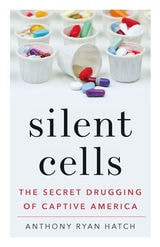
Silent Cells
The Secret Drugging of Captive AmericaAnthony Ryan Hatch
University of Minnesota Press, 2019
A critical investigation into the use of psychotropic drugs to pacify and control inmates and other captives in the vast U.S. prison, military, and welfare systems
For at least four decades, U.S. prisons and jails have aggressively turned to psychotropic drugs—antidepressants, antipsychotics, sedatives, and tranquilizers—to silence inmates, whether or not they have been diagnosed with mental illnesses. In Silent Cells, Anthony Ryan Hatch demonstrates that the pervasive use of psychotropic drugs has not only defined and enabled mass incarceration but has also become central to other forms of captivity, including foster homes, military and immigrant detention centers, and nursing homes.
Silent Cells shows how, in shockingly large numbers, federal, state, and local governments and government-authorized private agencies pacify people with drugs, uncovering patterns of institutional violence that threaten basic human and civil rights. Drawing on publicly available records, Hatch unearths the coercive ways that psychotropics serve to manufacture compliance and docility, practices hidden behind layers of state secrecy, medical complicity, and corporate profiteering.
Psychotropics, Hatch shows, are integral to “technocorrectional” policies devised to minimize public costs and increase the private profitability of mass captivity while guaranteeing public safety and national security. This broad indictment of psychotropics is therefore animated by a radical counterfactual question: would incarceration on the scale practiced in the United States even be possible without psychotropics?
Sister Species
Women, Animals and Social JusticeEdited by Lisa A. Kemmerer
University of Illinois Press, 2011
Slow Cures and Bad Philosophers
Essays on Wittgenstein, Medicine, and BioethicsCarl Elliott, ed.
Duke University Press, 2001
As Elliott explains in his introduction, Wittgenstein’s philosophy runs against the grain of most contemporary bioethics scholarship, which all too often ignores the context in which moral problems are situated and pays little attention to narrative, ethnography, and clinical case studies in rendering bioethical judgments. Such anonymous, impersonal, rule-writing directives in which health care workers are advised how to behave is what this volume intends to counteract. Instead, contributors stress the value of focusing on the concrete particulars of moral problems and write in the spirit of Wittgenstein’s belief that philosophy should be useful. Specific topics include the concept of “good dying,” the nature of clinical decision making, the treatment of neurologically damaged patients, the moral treatment of animals, and the challenges of moral particularism.
Inspired by a philosopher who deplored “professional philosophy,” this work brings some startling insights and clarifications to contemporary ethical problems posed by the realities of modern medicine.
Contributors. Larry Churchill, David DeGrazia, Cora Diamond, James Edwards, Carl Elliott, Grant Gillett, Paul Johnston, Margaret Olivia Little, James Lindemann Nelson, Knut Erik Tranoy

Somatics in Dance, Ecology, and Ethics
The Flowing Live PresentSondra Fraleigh
Intellect Books, 2024
Somatics in Dance, Ecology, and Ethics explores the relationships between self, world, and earth to understand the experience of being alive and corporeal. In doing so, Sondra Fraleigh develops a philosophy of an ethical world gaze that promises to enliven the senses. Chapters borrow from wide-ranging intellectual influences—phenomenology, Buddhism, butoh, dialogics, aesthetics, poetry, feminism, ecology, and more—Fraleigh describes the ways somatics can help people to feel well, practice empathetic communication, and recognize the psychic, unpredictable edges of experience as they move. An interview with Amanda Williamson complements the chapters. “The body is the fascinating home for all our dispositions,” Fraleigh tells hers. “Spiritual qualities are embodied. We dance and sing them into being.”
Speculation
Politics, Ideology, EventGlyn Daly
Northwestern University Press, 2019
Speculation: Politics, Ideology, Event develops Hegel’s radical perspective of speculative thought as a way of reclaiming and revitalizing the sense of the future and its possibilities. Engaging with such figures as Alain Badiou, Quentin Meillassoux, Ernesto Laclau, Slavoj Žižek, and Fredric Jameson, Glyn Daly articulates the distinctness of speculative philosophy and draws its implications for new debates in areas of science, politics, capitalism, ideology, ethics, and the event.
In a confrontation with today’s fatalistic milieu, principal emphasis is given to Hegel’s idea of infinity as the intrinsic dimension of negativity within all finitude. Against the modern era’s paradigmatic tendency to externalize social problems in the form of antagonism and Otherness, Daly argues for a renewal of utopian thought based on Hegelian reconciliation and the affirmation of excess as the essence of all being. On these grounds, he advances a new kind of political imagination that in speculative terms centers on uncompromising notions of truth and reason.

Street Saints
Renewing American CitiesBarbara J. Elliott
Templeton Press, 2006
Based on eight years of hands-on experience and more than 300 interviews, Street Saints is both a book of motivational stories about unsung heroes and a sociological study of the "faith factor," documenting faith-based programs that are treating social maladies in America. This book takes readers on a tour of communities and institutions in America where faith-based initiatives are making a difference. It offers inspiration, role models, and guidelines for people who would like to give back to their own communities.
Striving to Be Human
Jewish Perspectives on Twenty-First-Century ChallengesRabbi Leah Cohen Tenenbaum and Rabbi Douglas Kohn
Central Conference of American Rabbis, 2025
In his clarion call for ethical behavior, Rabbi Hillel tells us, “In a place where there is no humanity, strive to be human.” But what exactly does it mean to be human, especially in an age of rapid transformation? Striving to Be Human: Jewish Perspectives on Twenty-First-Century Challenges confronts this question with boldness, hope, and a foundation of Jewish wisdom. The volume begins with “Challenges from Within Us,” addressing such topics as moral justice, belonging, queer theology, and good and evil. In part two, “Challenges from Beyond Us,” the authors delve into artificial intelligence, robotics, reproductive technologies, and the animal-human relationship. The result is a profound conversation about Jewish values and human dignity in our evolving landscape.

Surgical Consent
Bioethics and Cochlear ImplantationLinda Komesaroff
Gallaudet University Press, 2007
Drawing on current research, this volume presents the varying reactions around the globe to the high rate of implantation. These views contrast sharply with the medical perspective of deafness overwhelmingly promoted through the media and by the cochlear implantation industry. At the same time, the contributors aim to disrupt the binaries that have long dominated the field of deafness — speech versus sign, instruction through speech and sign systems versus bilingual education, and medical intervention versus cultural membership in the Deaf community.
Surgical Consent begins and ends with the voices of Deaf people. Their articulate and, at times, raw insights clearly delineate the issues of power, positioning, and minority-majority group relations that are inherent in the dominant hearing culture’s understanding of diversity and globalization.
Surrender
Feminist Rhetoric and Ethics in Love and IllnessJessica Restaino
Southern Illinois University Press, 2019
One of Library Journal's Top 20 Best-Selling Language Titles of 2019
In an ethnographic study spanning the last years of research collaborator and friend Susan Lundy Maute’s life with terminal breast cancer, author Jessica Restaino argues the interpretative challenges posed by research and writing amid illness and intimacy demand a methodological break from accepted genres and established practices of knowledge making. Restaino searches their experiences—recorded in interviews, informal writings, and correspondence—to discover a rhetoric of love and illness. She encourages a synthesis of methods and the acceptance of a reversal of roles—researcher and researched, writer and written-about—and emphasizes the relevancy of methodological diversity, the necessity of the personal, and the analytical richness of unpredictability and risk in being who we are in our scholarship at any given moment.
Bringing together critical analysis, qualitative-style research methods, close reading, Surrender: Feminist Rhetoric and Ethics inLove and Illness resists traditional ideas about academic writing and invites others to pursue collaborations that subvert accepted approaches to representation, textual production, and subjectivity. Restaino demonstrates a way of writing—the rendering of the academic text itself—that suggests how we do our work has resonance for what we produce. She offers framing questions for use by others interested in doing similar kinds of scholarship that may frighten, overwhelm, or confound. This book deepens our understanding of subjectivity and the gains made by feminist resistance to conventional concepts of objectivity in research collaborations.