Results by title
496 books match the query 'Ethnic identity' and 22 start with s
Savages and Citizens
How Indigeneity Shapes the StateAndrew Canessa and Manuela Lavinas Picq; Foreword by Jeff Ganohalidoh Corntassel
University of Arizona Press, 2024
Delving into European political philosophy, comparative politics, and contemporary international law, the book shows how the concept of indigeneity has shaped the development of the modern state. The exclusion of Indigenous people was not a collateral byproduct; it was a political project in its own right. The book argues that indigeneity is a political identity relational to modern nation-states and that Indigenous politics, although marking the boundary of the state, are co-constitutive of colonial processes of state-making. In showing how indigeneity is central to how the international system of states operates, the book forefronts Indigenous peoples as political actors to reject essentializing views that reduce them to cultural “survivors” rooted in the past.
With insights drawn from diverse global contexts and empirical research from Bolivia and Ecuador, this work advocates for the relevance of Indigenous studies within political science and argues for an ethnography of sovereignty in anthropology. Savages and Citizens makes a compelling case for the centrality of Indigenous perspectives to understand the modern state from political theory to international studies.
Seeing and Being Seen
The Q'eqchi' Maya of Livingston, Guatemala, and BeyondBy Hilary E. Kahn
University of Texas Press, 2006
The practice of morality and the formation of identity among an indigenous Latin American culture are framed in a pioneering ethnography of sight that attempts to reverse the trend of anthropological fieldwork and theory overshadowing one another.
In this vital and richly detailed work, methodology and theory are treated as complementary partners as the author explores the dynamic Mayan customs of the Q'eqchi' people living in the cultural crossroads of Livingston, Guatemala. Here, Q'eqchi', Ladino, and Garifuna (Caribbean-coast Afro-Indians) societies interact among themselves and with others ranging from government officials to capitalists to contemporary tourists.
The fieldwork explores the politics of sight and incorporates a video camera operated by multiple people—the author and the Q'eqchi' people themselves—to watch unobtrusively the traditions, rituals, and everyday actions that exemplify the long-standing moral concepts guiding the Q'eqchi' in their relationships and tribulations. Sharing the camera lens, as well as the lens of ethnographic authority, allows the author to slip into the world of the Q'eqchi' and capture their moral, social, political, economic, and spiritual constructs shaped by history, ancestry, external forces, and time itself.
A comprehensive history of the Q'eqchi' illustrates how these former plantation laborers migrated to lands far from their Mayan ancestral homes to co-exist as one of several competing cultures, and what impact this had on maintaining continuity in their identities, moral codes of conduct, and perception of the changing outside world.
With the innovative use of visual methods and theories, the author's reflexive, sensory-oriented ethnographic approach makes this a study that itself becomes a reflection of the complex set of social structures embodied in its subject.

Selenidad
Selena, Latinos, and the Performance of MemoryDeborah Paredez
Duke University Press, 2009
Paredez argues that Selena’s death galvanized Latina/o efforts to publicly mourn collective tragedies (such as the murders of young women along the U.S.-Mexico border) and to envision a brighter future. At the same time, reactions to the star’s death catalyzed political jockeying for the Latino vote and corporate attempts to corner the Latino market. Foregrounding the role of performance in the politics of remembering, Paredez unravels the cultural, political, and economic dynamics at work in specific commemorations of Selena. She analyzes Selena’s final concert, the controversy surrounding the memorial erected in the star’s hometown of Corpus Christi, and the political climate that served as the backdrop to the touring musicals Selena Forever and Selena: A Musical Celebration of Life. Paredez considers what “becoming” Selena meant to the young Latinas who auditioned for the biopic Selena, released in 1997, and she surveys a range of Latina/o queer engagements with Selena, including Latina lesbian readings of the star’s death scene and queer Selena drag. Selenidad is a provocative exploration of how commemorations of Selena reflected and changed Latinidad.
Semiotics of Peasants in Transition
Slovene Villagers and Their Ethnic Relatives in AmericaIrene Portis-Winner
Duke University Press, 2002
Describing a process of continuous and enduring interaction between these geographically separate communities, Portis-Winner explains how, for instance, financial assistance from the emigrants enabled their Slovenian hometown to survive the economic depressions of the 1890s and 1930s. She also analyzes the extent to which memories, rituals, myths, and traditional activities from Slovenia have sustained their Cleveland relatives. The result is a unique anthropological investigation into the signifying practices of a strongly cohesive—yet geographically split—ethnic group, as well as an illuminating application of semiotic analyses to communities and the complex problems they face.
Settlement, Subsistence, and Change Among the Labrador Inuit
David Natcher
University of Manitoba Press, 2012
Settler Militarism
World War II in Hawai'i and the Making of US EmpireJuliet Nebolon
Duke University Press, 2024
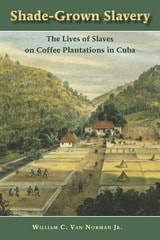
Shade-Grown Slavery
The Lives of Slaves on Coffee Plantations in CubaWilliam C. Van Norman
Vanderbilt University Press, 2013
In this broad, interdisciplinary study, William Van Norman describes how each type of plantation and the amount of manual labor it required directly influenced the nature of slave life in that community. Slaves on coffee plantations lived in a unique context in comparison to that of their fellow slaves on sugar plantations, one that gave them greater flexibility in cultural and artistic creativity. To gain a deeper understanding of plantation slavery in Cuba, Van Norman explores what life and labor was like for coffee slaves and how it was different from what sugar slaves experienced. Shade-Grown Slavery reconstructs their world and in turn deconstructs the picture we now have of Cuba in the late eighteenth and early nineteenth centuries.
Ultimately, Shade-Grown Slavery reveals the lives of enslaved Africans on Cuban coffee plantations and shows how they were able to maintain and transform their cultural traditions in spite of slavery.
Shaming into Brown
Somatic Transactions of Race in Latina/o LiteratureStephanie Fetta
The Ohio State University Press, 2018
In Shaming into Brown: Somatic Transactions of Race in Latina/o Literature, Stephanie Fetta asserts that our bodies are fundamental to how we live and how we make meaning. Anchored by two psychoanalytic theories, bioenergetic analysis developed by Alexander Lowen and affect theory put forth by Silvan Tomkins, Fetta examines Latinx fiction to draw attention to the cultural role of the intelligent, emotional, and communicative body—the soma—in relation to shame. She argues that we bring the soma—the physical, emotive, and social register of our subjectivity—to the text as we do to our lives,proposing that the power of racialization operates at the level of somatic expression and reception through habituated, socially cued behaviors that are not readily subject to intentional control.
Fetta examines shame beyond individual experiences, looking at literary renderings of the cultural practice of racial shaming that are deeply embedded into our laws, hiring practices, marketing strategies, and more. Grounding her analysis in the works of Gloria Anzaldúa and Cherríe Moraga, Shaming into Brown focuses on exposing the underpinnings of racialized shame and does so through analyzing “scenes of racialization” in prominent works by authors such as Junot Díaz, Sandra Cisneros, and Oscar Zeta Acosta.
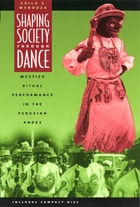
Shaping Society through Dance
Mestizo Ritual Performance in the Peruvian AndesZoila S. Mendoza
University of Chicago Press, 2000
In this fluid world, she argues, racial and ethnic identities are shaped more by notions of what is decent, elegant, and modern rather than by skin color or status. As the different troupes vie for the townspeople's recognition as the most "authentic" group, these notions are challenged and reworked. A fascinating look at a rich tradition, this innovative work is also a compelling example of the critical anthropology of performance.
Shipwrecked Identities
Navigating Race on Nicaragua's Mosquito CoastPineda, Baron
Rutgers University Press, 2006
Global identity politics rest heavily on notions of ethnicity and authenticity, especially in contexts where indigenous identity becomes a basis for claims of social and economic justice. In contemporary Latin America there is a resurgence of indigenous claims for cultural and political autonomy and for the benefits of economic development. Yet these identities have often been taken for granted.
In this historical ethnography, Baron Pineda traces the history of the port town of Bilwi, now known officially as Puerto Cabezas, on the Atlantic coast of Nicaragua to explore the development, transformation, and function of racial categories in this region. From the English colonial period, through the Sandinista conflict of the 1980s, to the aftermath of the Contra War, Pineda shows how powerful outsiders, as well as Nicaraguans, have made efforts to influence notions about African and Black identity among the Miskito Indians, Afro-Nicaraguan Creoles, and Mestizos in the region. In the process, he provides insight into the causes and meaning of social movements and political turmoil. Shipwrecked Identities also includes important critical analysis of the role of anthropologists and other North American scholars in the Contra-Sandinista conflict, as well as the ways these scholars have defined ethnic identities in Latin America.
As the indigenous people of the Mosquito Coast continue to negotiate the effects of a long history of contested ethnic and racial identity, this book takes an important step in questioning the origins, legitimacy, and consequences of such claims.
Singing for the Dead
The Politics of Indigenous Revival in MexicoPaja Faudree
Duke University Press, 2013
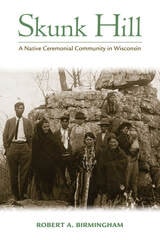
Skunk Hill
A Native Ceremonial Community in WisconsinRobert A. Birmingham
Wisconsin Historical Society Press, 2015
In Skunk Hill, archeologist Robert A. Birmingham traces the largely unknown story of this community, detailing the role it played in preserving Native culture through a harsh period of US Indian policy from the 1880s to 1930s. The story’s central focus is the Drum Dance, also known as the Dream Dance or Big Drum, a pan-tribal cultural revitalization movement that swept the Upper Midwest during the Great Suppression, emphasizing Native values and rejecting the vices of the white world. Though the community disbanded by the 1930s, the site, now on the National Register of Historic
Places with two dance circles still visible on the grounds, stands as testimony to the efforts of its members to resist cultural assimilation.

Sociolinguistic Constructs of Ethnic Identity
The Syntactic Delineation of an American Indian English, Volume 77Clare J. Dannenberg, ed.
Duke University Press, 0
Somos Tejanas!
Chicana Identity and Culture in TexasEdited by Jody A. Marín and Norma E. Cantú
University of Texas Press, 2025
2026 Outstanding Book Award for Non-Fiction, National Association for Chicana and Chicano Studies (NACCS) Tejas Foco
2026 Silver Medal for the Dolores Huerta Best Cultural & Community Themed Book – English, Conference on Latin American History (CLAH)
An expansive volume on Tejana identity and Tejanidad told through personal narratives, poetry, and essays.
Being Tejanx is different than just being from Texas. Being Tejanx means you are a border subject. Being Tejanx means living in and from a certain history of oppression, possibility, activism, and cultural-linguistic hybridity arising within the US-Mexico borderland that is home. And being Tejanx means something in particular if you are a woman.
In ¡Somos Tejanas!, editors Norma E. Cantú and Jody A. Marín assemble contemporary Tejanx writers who provide firsthand accounts of their experience of identity, enriching the field of Tejanx studies through an encounter with gender and sexuality. The contributions, including personal and scholarly essays, poems, criticism, and artworks, explore the heterogeneity of Tejana identity and the sociopolitical movements, stories, dances, music, and athletic feats that mark Tejanidad. Authors contemplate the history and memory of segregation in Texas, the struggles of surviving the unnatural disaster and blackouts of 2021 amid the global pandemic of COVID-19, and the drug-war violence and ever-tightening immigration restrictions that strangle a transborder way of life shared by millions. An unrepentant act of expression from women under attack by state policymakers, this collection dispels the silence imposed by colonial erasure.
Spectacular Wealth
The Festivals of Colonial South American Mining TownsBy Lisa Voigt
University of Texas Press, 2016
Bridging print culture and performance, Spectacular Wealth draws on eighteenth-century festival accounts to explore how colonial residents of the silver-mining town of Potosí, in the viceroyalty of Peru, and the gold-mining region of Minas Gerais, in Brazil, created rich festive cultures that refuted European allegations of barbarism and greed. In her examination of the festive participation of the towns’ diverse inhabitants, including those whose forced or slave labor produced the colonies’ mineral wealth, Lisa Voigt shows how Amerindians, Afro-descendants, Europeans, and creoles displayed their social capital and cultural practices in spectacular performances.
Tracing the multiple meanings and messages of civic festivals and religious feast days alike, Spectacular Wealth highlights the conflicting agendas at work in the organization, performance, and publication of festivals. Celebrants and writers in mining boomtowns presented themselves as far more than tributaries yielding mineral wealth to the Spanish and Portuguese empires, using festivals to redefine their reputations and to celebrate their cultural, spiritual, and intellectual wealth.
Spiral to the Stars
Mvskoke Tools of FuturityLaura Harjo
University of Arizona Press, 2019
Geographer Laura Harjo demonstrates that Mvskoke communities have what they need to dream, imagine, speculate, and activate the wishes of ancestors, contemporary kin, and future relatives—all in a present temporality—which is Indigenous futurity.
Organized around four methodologies—radical sovereignty, community knowledge, collective power, and emergence geographies—Spiral to the Stars provides a path that departs from traditional community-making strategies, which are often extensions of the settler state. Readers are provided a set of methodologies to build genuine community relationships, knowledge, power, and spaces for themselves. Communities don’t have to wait on experts because this book helps them activate their own possibilities and expertise. A detailed final chapter provides participatory tools that can be used in workshop settings or one on one.
This book offers a critical and concrete map for community making that leverages Indigenous way-finding tools. Mvskoke narratives thread throughout the text, vividly demonstrating that theories come from lived and felt experiences. This is a must-have book for community organizers, radical pedagogists, and anyone wishing to empower and advocate for their community.

States Of Exception
Everyday Life and Postcolonial IdentityKeya Ganguly
University of Minnesota Press, 2001
Explores the conflict between capitalism and tradition in an immigrant community.
A philosophical anthropology of everyday experience, this book is also a deeply informed and thought-provoking reflection on the work of cultural critique. States of Exception looks into a community of immigrants from India living in southern New Jersey—a group to whom the author, as a daughter of two of its members, enjoyed unprecedented access.
Her position allows Keya Ganguly to approach the culture of a middle-class group (albeit one that is marginalized by racial prejudice), while the group’s relatively comfortable and protected style of life offers unusual insight into the concept of the everyday and the sense in which a seemingly commonplace existence can be understood as in crisis: a state of exception. Thus, Ganguly draws on the work of the Frankfurt School, particularly Walter Benjamin and Theodor Adorno, to explore the possibilities of a dialectical critique of the everyday—a state of exception informing ordinary yet crisis-ridden narratives of the self under late capitalism.
Staying Italian
Urban Change and Ethnic Life in Postwar Toronto and PhiladelphiaJordan Stanger-Ross
University of Chicago Press, 2009
Despite their twin positions as two of North America’s most iconic Italian neighborhoods, South Philly and Toronto’s Little Italy have functioned in dramatically different ways since World War II. Inviting readers into the churches, homes, and businesses at the heart of these communities, Staying Italian reveals that daily experience in each enclave created two distinct, yet still Italian, ethnicities.
As Philadelphia struggled with deindustrialization, Jordan Stanger-Ross shows, Italian ethnicity in South Philly remained closely linked with preserving turf and marking boundaries. Toronto’s thriving Little Italy, on the other hand, drew Italians together from across the wider region. These distinctive ethnic enclaves, Stanger-Ross argues, were shaped by each city’s response to suburbanization, segregation, and economic restructuring. By situating malleable ethnic bonds in the context of political economy and racial dynamics, he offers a fresh perspective on the potential of local environments to shape individual identities and social experience.
Subject to Colonialism
African Self-Fashioning and the Colonial LibraryGaurav Desai
Duke University Press, 2001
Presenting colonialism not as a singular, monolithic structure but rather as a practice frought with contradictions and tensions, Desai works to historicize the foundation of postcolonialism by decentering both canonical texts and privileged categories of analysis such as race, capitalism, empire, and nation. To achieve this, he focuses on texts that construct or reform—rather than merely reflect—colonialism, placing explicit emphasis on processes, performances, and the practices of everyday life. Reading these texts not merely for the content of their assertions but also for how they were created and received, Desai looks at works such as Jomo Kenyatta’s ethnography of the Gikuyu and Akiga Sai’s history of the Tiv and makes a particular plea for the canonical recuperation of African women’s writing.
Scholars in African history, literature, and philosophy, postcolonial studies, literary criticism, and anthropology will welcome publication of this book.

Swahili Origins
Swahili Culture and The Shungwaya PhenomenonJames de Vere Allen
Ohio University Press, 1993
Kiswahili has become the lingua franca of eastern Africa. Yet there can be few historic peoples whose identity is as elusive as that of the Swahili. Some have described themselves as Arabs, as Persians or even, in one place, as Portuguese. It is doubtful whether, even today, most of the people about whom this book is written would unhesitatingly and in all contexts accept the name Swahili.
This book was central to the thought and lifework of the late James de Vere Allen. It is his major study of the origin of the Swahili and of their cultural identity. He focuses on how the African element in their cultural patrimony was first modified by Islam and later changed until many Swahili themselves lost sight of it.
They share a language and they share a culture. Their territory stretches from the coast of southern Somalia to the Lamu archipelago in Kenya, to the Rovuma River in modern Mozambique and out into the islands of the Indian Ocean. But they lack a shared historical experience.
James de Vere Allen, in this study of contentious originality, set out to give modern Swahili evidence of their shared history during a period of eight centuries.
Sweating Saris
Indian Dance as Transnational LaborPriya Srinivasan
Temple University Press, 2011
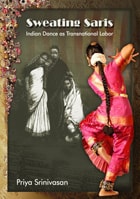
A groundbreaking book that seeks to understand dance as labor, Sweating Saris examines dancers not just as aesthetic bodies but as transnational migrant workers and wage earners who negotiate citizenship and gender issues.
Srinivasan merges ethnography, history, critical race theory, performance and post-colonial studies among other disciplines to investigate the embodied experience of Indian dance. The dancers’ sweat stained and soaked saris, the aching limbs are emblematic of global circulations of labor, bodies, capital, and industrial goods. Thus the sweating sari of the dancer stands in for her unrecognized labor.
Srinivasan shifts away from the usual emphasis on Indian women dancers as culture bearers of the Indian nation. She asks us to reframe the movements of late nineteenth century transnational Nautch Indian dancers to the foremother of modern dance Ruth St. Denis in the early twentieth century to contemporary teenage dancers in Southern California, proposing a transformative theory of dance, gendered-labor, and citizenship that is far-reaching.

Swiss in Wisconsin
Frederick Hale
Wisconsin Historical Society Press, 2007
In this concise introduction to the state’s Swiss settlers, Frederick Hale traces the catalysts for Swiss emigration, their difficult journeys, and their adjustments to life on Wisconsin soil. Updates for this expanded edition include additional historic photographs and the selected writings of John Luchsinger, who settled at the Swiss colony at New Glarus, in 1856.