Results by title
151 books match the query 'Exhibitions' and 9 start with s
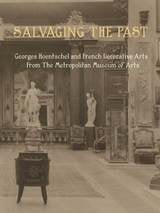
Salvaging the Past
Georges Hoentschel and French Decorative Arts from The Metropolitan Museum of Art, 1907-2013Daniëlle O. Kisluk-Grosheide
Bard Graduate Center, 2013
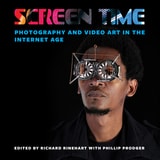
Screen Time
Photography and Video Art in the Internet AgeRichard Rinehart
Bucknell University Press, 2022
Published by Bucknell University Press for the Samek Art Museum.
Distributed worldwide by Rutgers University Press.

Seeing Baya
Portrait of an Algerian Artist in ParisAlice Kaplan
University of Chicago Press, 2024
On a flower farm in colonial Algeria, a servant and field worker known as Baya escaped the drudgery of her labor by coloring the skirts in fashion magazines. Three years later, in November 1947, her paintings and fanciful clay beasts were featured in a solo show in Paris. She wasn’t yet sixteen years old. In this first biography of Baya, Alice Kaplan tells the story of a young woman seemingly trapped in subsistence who becomes a sensation in the French capital, then mysteriously fades from the history of modern art—only to reemerge after independence as an icon of Algerian artistic heritage.
The toast of Paris for the 1947 season, Baya inspired colonialist fantasies about her “primitive” genius as well as genuine appreciation. She was featured in newspapers, on the radio, and in a newsreel; her art was praised by Breton and Camus, Marchand and Braque. At the dawn of Algerian liberation, her appearance in Paris was used to stage the illusion of French-Algerian friendship, while horrific French massacres in Algeria were still fresh in memory.
Kaplan uncovers the central figures in Baya’s life and the role they played in her artistic career. Among the most poignant was Marguerite Caminat-McEwen-Benhoura, who took Baya from her sister’s farm to Algiers, where Baya worked as Marguerite’s maid and was given paint and brushes. A complex and endearing character, Marguerite—and her Pygmalion ambitions—was decisive in shaping Baya’s destiny. Kaplan also looks closely at Baya’s earliest paintings with an eye to their themes, their palette and design, and their enduring influence.
In vivid prose that brings Baya’s story into the present, Kaplan’s book, the fruit of scrupulous research in Algiers, Blida, Paris, and Provence, allows us to see in a whole new light the beloved artist who signed her paintings simply “Baya.”
Sensing the Future
Experiments in Art and Technology (E.A.T.)Nancy Perloff
J. Paul Getty Trust, The, 2024
In 1966, Billy Klüver and Fred Waldhauer, engineers at Bell Labs in Murray Hill, New Jersey, teamed up with artists Robert Rauschenberg and Robert Whitman to form a nonprofit organization, Experiments in Art and Technology (E.A.T.). E.A.T.’s debut event, 9 Evenings: Theatre & Engineering, integrated art, theater, and groundbreaking technology in a series of performances at the 69th Regiment Armory in Manhattan. Its second major event, the Pepsi Pavilion at Expo ’70 in Osaka, Japan, presented a multisensory environment for the first world exposition held in Asia. At these events, and in the hundreds of collaborations E.A.T. facilitated in between, the participants—including John Cage, Lucinda Childs, Deborah Hay, Steve Paxton, Yvonne Rainer, and David Tudor—imagined innovative ways for art and science to intersect and enrich society.
Sensing the Future tells the story of these collaborations between artists and engineers and how they led to new installations and technology-based artworks. Through the examination of films, photographs, diagrams, and artists’ records from the E.A.T. archive at the Getty Research Institute, this volume provides a new perspective on multimedia art in the 1960s and ’70s and highlights the ways E.A.T. pushed the role of the artist beyond the traditional art world.
This volume is published to accompany an exhibition on view at the Getty Research Institute at the Getty Center from September 10, 2024, to February 23, 2025.
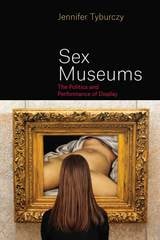
Sex Museums
The Politics and Performance of DisplayJennifer Tyburczy
University of Chicago Press, 2015
All museums are sex museums. In Sex Museums, Jennifer Tyburczy takes a hard look at the formation of Western sexuality—particularly how categories of sexual normalcy and perversity are formed—and asks what role museums have played in using display as a technique for disciplining sexuality. Most museum exhibits, she argues, assume that white, patriarchal heterosexuality and traditional structures of intimacy, gender, and race represent national sexual culture for their visitors. Sex Museums illuminates the history of such heteronormativity at most museums and proposes alternative approaches for the future of public display projects, while also offering the reader curatorial tactics—what she calls queer curatorship—for exhibiting diverse sexualities in the twenty-first century.
Tyburczy shows museums to be sites of culture-war theatrics, where dramatic civic struggles over how sex relates to public space, genealogies of taste and beauty, and performances of sexual identity are staged. Delving into the history of erotic artifacts, she analyzes how museums have historically approached the collection and display of the material culture of sex, which poses complex moral, political, and logistical dilemmas for the Western museum. Sex Museums unpacks the history of the museum and its intersections with the history of sexuality to argue that the Western museum context—from its inception to the present—marks a pivotal site in the construction of modern sexual subjectivity.

Shall Not Be Denied
Women Fight for the VoteLibrary of Library of Congress
Rutgers University Press, 2019
Official Companion to the Library of Congress Exhibition.
The campaign for women’s suffrage—considered the largest reform movement in American history—lasted more than seven decades. The struggle was not for the fainthearted. For years, determined women organized, lobbied, paraded, petitioned, lectured, picketed, and faced imprisonment in pursuit of the right to vote. Drawing from the Library’s extensive collections of photographs, personal papers, and the organizational records of such figures as Susan B. Anthony, Elizabeth Cady Stanton, Mary Church Terrell, Carrie Chapman Catt, the National Woman’s Party, and the National American Woman Suffrage Association, Shall Not Be Denied traces the movement leading to the women’s rights convention at Seneca Falls, the contributions of suffragists who worked to persuade women that they deserved the same rights as men, the divergent political strategies and internal divisions they overcame, the push for a federal women’s suffrage amendment, and the legacy of the movement.
A companion to the exhibition staged by the Library of Congress, which opened on June 4, 2019—the 100th anniversary of the US Senate’s passage of the suffrage amendment that would become the 19th amendment—Shall Not Be Denied: Women Fight for the Vote is part of the national commemoration of the 100th anniversary of women’s suffrage.
Published by Rutgers University Press in association with the Library of Congress.
Social Fabric
Art and Activism in Contemporary BrazilEdited by Maria Emilia Fernandez, Adele Nelson, and MacKenzie Stevens
University of Texas Press, 2023
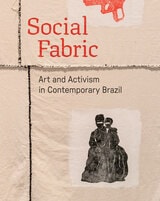
Social Fabric: Art and Activism in Contemporary Brazil brings together the work of ten artists who reflect upon the long-standing histories of oppressive power structures in the territory now known as Brazil. Blurring the line between art and activism and spanning installation, painting, performance, photography, sculpture, and video, these artists contribute to local and global conversations about the state of democracy, racial injustice, and the violence inflicted by the nation-state. This first English-language, book-length study of contemporary Brazilian art in relationship to activism assembles artist-authored texts, interviews, essays, and a conceptual mapping of Brazilian history to illuminate the function of art as a platform for critical engagement with the historical, political, and cultural configurations of a particular place. By refusing to remain neutral, these artists create spaces of vibrant and vital community and self-construction to explore how healing and justice may be possible, especially in the Black, LGBTQIA+, and Indigenous communities to which many of them belong.
Still Life
Ecologies of the Modern Imagination at the Art MuseumFernando Domínguez Rubio
University of Chicago Press, 2020
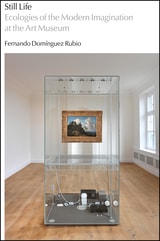
Still Life offers a fascinating and detailed ethnographic account of what it takes to prevent these disasters from happening. Going behind the scenes at MoMA, Domínguez Rubio provides a rare view of the vast technological apparatus—from climatic infrastructures and storage facilities, to conservation labs and machine rooms—and teams of workers—from conservators and engineers to guards and couriers—who fight to hold artworks still.
As MoMA reopens after a massive expansion and rearranging of its space and collections, Still Life not only offers a much-needed account of the spaces, actors, and forms of labor traditionally left out of the main narratives of art, but it also offers a timely meditation on how far we, as a society, are willing to go to keep the things we value from disappearing into oblivion.
Supernatural America
The Paranormal in American ArtEdited by Robert Cozzolino
University of Chicago Press, 2021
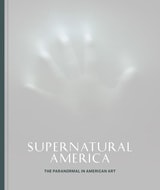
Featuring artists from James McNeill Whistler and Kerry James Marshall to artist/mediums who made images with spirits during séances, this catalog covers more than two hundred years of the supernatural in American art. Here we find works that explore haunting, UFO sightings, and a broad range of experiential responses to other worldly contact.