Results by title
67 books match the query 'Exile' and 2 start with s
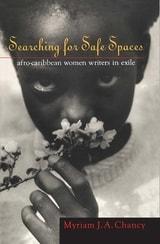
Searching for Safe Spaces
Afro-Caribbean Women Writers in ExileMyriam Chancy
Temple University Press, 1997
Home. Exile. Return. Words heavy with meaning and passion. For Myriam Chancy, these three themes animate the lives and writings of dispossessed Afro-Caribbean women.
Understanding exile as flight from political persecution or types of oppression that single out women, Chancy concentrates on diasporic writers and filmmakers who depict the vulnerability of women to poverty and exploitation in their homelands and their search for safe refuge. These Afro-Caribbean feminists probe the complex issues of race, nationality, gender, sexuality, and class that limit women's lives. They portray the harsh conditions that all too commonly drive women into exile, depriving them of security and a sense of belonging in their adopted countries -- the United States, Canada, or England.
As they rework traditional literary forms, artists such as Joan Riley, Beryl Gilroy, M. Noubese Philip, Dionne Brand, Makeda Silvera, Audre Lorde, Rosa Guy, Michelle Cliff, and Mari Chauvet give voice to Åfro-Caribbean women's alienation and longing to return home. Whether their return is realized geographically or metaphorically, the poems, fiction, and film considered in this book speak boldly of self-definition and transformation.
[more]
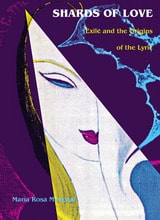
Shards of Love
Exile and the Origins of the LyricMaría Rosa Menocal
Duke University Press, 1994
With the Spanish conquest of Islamic Granada and the expulsion of the Jews from Spain, the year 1492 marks the exile from Europe of crucial strands of medieval culture. It also becomes a symbolic marker for the expulsion of a diversity in language and grammar that was disturbing to the Renaissance sensibility of purity and stability. In rewriting Columbus's narrative of his voyage of that year, Renaissance historians rewrote history, as was often their practice, to purge it of an offending vulgarity. The cultural fragments left behind following this exile form the core of Shards of Love, as María Rosa Menocal confronts the difficulty of writing their history.
It is in exile that Menocal locates the founding conditions for philology--as a discipline that loves origins--and for the genre of love songs that philology reveres. She crosses the boundaries, both temporal and geographical, of 1492 to recover the "original" medieval culture, with its Mediterranean mix of European, Arabic, and Hebrew poetics. The result is a form of literary history more lyrical than narrative and, Menocal persuasively demonstrates, more appropriate to the Middle Ages than to the revisionary legacy of the Renaissance. In discussions ranging from Eric Clapton's adaption of Nizami's Layla and Majnun, to the uncanny ties between Jim Morrison and Petrarch, Shards of Love deepens our sense of how the Middle Ages is tied to our own age as it expands the history and meaning of what we call Romance philology.
It is in exile that Menocal locates the founding conditions for philology--as a discipline that loves origins--and for the genre of love songs that philology reveres. She crosses the boundaries, both temporal and geographical, of 1492 to recover the "original" medieval culture, with its Mediterranean mix of European, Arabic, and Hebrew poetics. The result is a form of literary history more lyrical than narrative and, Menocal persuasively demonstrates, more appropriate to the Middle Ages than to the revisionary legacy of the Renaissance. In discussions ranging from Eric Clapton's adaption of Nizami's Layla and Majnun, to the uncanny ties between Jim Morrison and Petrarch, Shards of Love deepens our sense of how the Middle Ages is tied to our own age as it expands the history and meaning of what we call Romance philology.
[more]