Results by title
50 books match the query 'Experiments' and 5 start with s
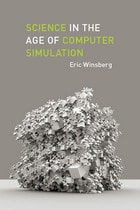
Science in the Age of Computer Simulation
Eric Winsberg
University of Chicago Press, 2010
Computer simulation was first pioneered as a scientific tool in meteorology and nuclear physics in the period following World War II, but it has grown rapidly to become indispensible in a wide variety of scientific disciplines, including astrophysics, high-energy physics, climate science, engineering, ecology, and economics. Digital computer simulation helps study phenomena of great complexity, but how much do we know about the limits and possibilities of this new scientific practice? How do simulations compare to traditional experiments? And are they reliable? Eric Winsberg seeks to answer these questions in Science in the Age of Computer Simulation.
Scrutinizing these issue with a philosophical lens, Winsberg explores the impact of simulation on such issues as the nature of scientific evidence; the role of values in science; the nature and role of fictions in science; and the relationship between simulation and experiment, theories and data, and theories at different levels of description. Science in the Age of Computer Simulation will transform many of the core issues in philosophy of science, as well as our basic understanding of the role of the digital computer in the sciences.
Scientific History
Experiments in History and Politics from the Bolshevik Revolution to the End of the Cold WarElena Aronova
University of Chicago Press, 2021
The book explores the intertwined trajectories of six intellectuals and the larger programs they set in motion: Henri Berr (1863–1954), Nikolai Bukharin (1888–1938), Lucien Febvre (1878–1956), Nikolai Vavilov (1887–1943), Julian Huxley (1887–1975), and John Desmond Bernal (1901–1971). Though they held different political views, spoke different languages, and pursued different goals, these thinkers are representative of a larger motley crew who joined the techniques, approaches, and values of science with the writing of history, and who created powerful institutions and networks to support their projects.
In tracing these submerged stories, Aronova reveals encounters that profoundly shaped our knowledge of the past, reminding us that it is often the forgotten parts of history that are the most revealing.

Scientific Practice
Theories and Stories of Doing PhysicsEdited by Jed Z. Buchwald
University of Chicago Press, 1995
This book examines small-scale experiment in physics, in particular the relation between theory and practice. The contributors focus on interactions among the people, materials, and ideas involved in experiments—factors that have been relatively neglected in science studies.
The first half of the book is primarily philosophical, with contributions from Andrew Pickering, Peter Galison, Hans Radder, Brian Baigrie, and Yves Gingras. Among the issues they address are the resources deployed by theoreticians and experimenters, the boundaries that constrain theory and practice, the limits of objectivity, the reproducibility of results, and the intentions of researchers. The second half is devoted to historical case studies in the practice of physics from the early nineteenth to the early twentieth century. These chapters address failed as well as successful experimental work ranging from Victorian astronomy through Hertz's investigation of cathode rays to Trouton's attempt to harness the ether. Contributors to this section are Jed Z. Buchwald, Giora Hon, Margaret Morrison, Simon Schaffer, and Andrew Warwick.
With a lucid introduction by Ian Hacking, and original articles by noted scholars in the history and philosophy of science, this book is poised to become a significant source on the nature of small-scale experiment in physics.
Sensing the Future
Experiments in Art and Technology (E.A.T.)Nancy Perloff
J. Paul Getty Trust, The, 2024
In 1966, Billy Klüver and Fred Waldhauer, engineers at Bell Labs in Murray Hill, New Jersey, teamed up with artists Robert Rauschenberg and Robert Whitman to form a nonprofit organization, Experiments in Art and Technology (E.A.T.). E.A.T.’s debut event, 9 Evenings: Theatre & Engineering, integrated art, theater, and groundbreaking technology in a series of performances at the 69th Regiment Armory in Manhattan. Its second major event, the Pepsi Pavilion at Expo ’70 in Osaka, Japan, presented a multisensory environment for the first world exposition held in Asia. At these events, and in the hundreds of collaborations E.A.T. facilitated in between, the participants—including John Cage, Lucinda Childs, Deborah Hay, Steve Paxton, Yvonne Rainer, and David Tudor—imagined innovative ways for art and science to intersect and enrich society.
Sensing the Future tells the story of these collaborations between artists and engineers and how they led to new installations and technology-based artworks. Through the examination of films, photographs, diagrams, and artists’ records from the E.A.T. archive at the Getty Research Institute, this volume provides a new perspective on multimedia art in the 1960s and ’70s and highlights the ways E.A.T. pushed the role of the artist beyond the traditional art world.
This volume is published to accompany an exhibition on view at the Getty Research Institute at the Getty Center from September 10, 2024, to February 23, 2025.
Split and Splice
A Phenomenology of ExperimentationHans-Jörg Rheinberger
University of Chicago Press, 2023
The experiment has long been seen as a test bed for theory, but in Split and Splice, Hans-Jörg Rheinberger makes the case, instead, for treating experimentation as a creative practice. His latest book provides an innovative look at the experimental protocols and connections that have made the life sciences so productive.
Delving into the materiality of the experiment, the first part of the book assesses traces, models, grafting, and note-taking—the conditions that give experiments structure and make discovery possible. The second section widens its focus from micro-level laboratory processes to the temporal, spatial, and narrative links between experimental systems. Rheinberger narrates with accessible examples, most of which are drawn from molecular biology, including from the author’s laboratory notebooks from his years researching ribosomes.
A critical hit when it was released in Germany, Split and Splice describes a method that involves irregular results and hit-or-miss connections—not analysis, not synthesis, but the splitting and splicing that form a scientific experiment. Building on Rheinberger’s earlier writing about science and epistemology, this book is a major achievement by one of today’s most influential theorists of scientific practice.