Results by title
56 books match the query 'Fear' and 2 start with s
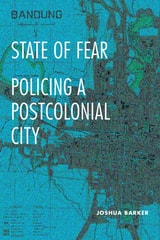
State of Fear
Policing a Postcolonial CityJoshua Barker
Duke University Press, 2024
In State of Fear, Joshua Barker reckons with how fear and violence are produced and reproduced through everyday practices of rule and control. Examining the ethnographic and historical genealogies of Indonesian policing, Barker focuses on the city of Bandung, which is permeated by anxieties about security, in spite of the fact that it’s a relatively safe city according to the data. Drawing from his fieldwork there during the latter years of the authoritarian New Order regime, Barker traces the complex relationship between the state and vigilante groups like neighborhood watch patrols and street gangs. Through interviews with police officers, vigilantes, and street-level toughs, he uncovers a struggle between two visions of social control that continues to animate policing in Indonesia: the modern, bureaucratic approach favored by the state, and a territorial approach that divides the city into fiefdoms overseen by charismatic individuals of authority. Synthesizing insights from in-depth ethnographic, historical, and theoretical work, Barker reveals how authoritarianism can take root not just from the top down but also from the bottom up.
[more]
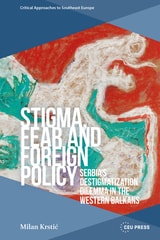
Stigma, Fear and Foreign Policy
Serbia’s Destigmatization Dilemma in the Western BalkansMilan Krstic
Central European University Press, 2026
This book tells a story about the stigmatization of Serbia and how the country has managed its stigma since 2001. It contributes to the theoretical understanding of the foreign policy of stigmatized states by examining how they select stigma-management strategies in relations with former adversaries. It also offers a stigma-centered lens for analyzing the political dynamics in the Western Balkans.
The central argument is that Serbia’s decision-makers grappled with a “destigmatization dilemma,” perceiving that actions aimed at facilitating Serbia’s destigmatization within international society could simultaneously undermine its security in regional relations with former adversaries. This produced a dillema between prioritizing destigmatization or security concerns. Through an examination of Serbia’s relations with Croatia and Bosnia and Herzegovina, the book explores how decision-makers navigated this dilemma, focusing on two key perceptions: the level of threat posed by the former adversary, and the perceived importance of the bilateral relationship for its destigmatization goals.
The central argument is that Serbia’s decision-makers grappled with a “destigmatization dilemma,” perceiving that actions aimed at facilitating Serbia’s destigmatization within international society could simultaneously undermine its security in regional relations with former adversaries. This produced a dillema between prioritizing destigmatization or security concerns. Through an examination of Serbia’s relations with Croatia and Bosnia and Herzegovina, the book explores how decision-makers navigated this dilemma, focusing on two key perceptions: the level of threat posed by the former adversary, and the perceived importance of the bilateral relationship for its destigmatization goals.
[more]