Results by title
198 books match the query 'Food' and 8 start with s
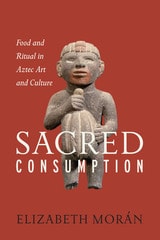
Sacred Consumption
Food and Ritual in Aztec Art and CultureBy Elizabeth Morán
University of Texas Press, 2016
Making a foundational contribution to Mesoamerican studies, this book explores Aztec painted manuscripts and sculptures, as well as indigenous and colonial Spanish texts, to offer the first integrated study of food and ritual in Aztec art.
Aztec painted manuscripts and sculptural works, as well as indigenous and Spanish sixteenth-century texts, were filled with images of foodstuffs and food processing and consumption. Both gods and humans were depicted feasting, and food and eating clearly played a pervasive, integral role in Aztec rituals. Basic foods were transformed into sacred elements within particular rituals, while food in turn gave meaning to the ritual performance.
This pioneering book offers the first integrated study of food and ritual in Aztec art. Elizabeth Morán asserts that while feasting and consumption are often seen as a secondary aspect of ritual performance, a close examination of images of food rites in Aztec ceremonies demonstrates that the presence—or, in some cases, the absence—of food in the rituals gave them significance. She traces the ritual use of food from the beginning of Aztec mythic history through contact with Europeans, demonstrating how food and ritual activity, the everyday and the sacred, blended in ceremonies that ranged from observances of births, marriages, and deaths to sacrificial offerings of human hearts and blood to feed the gods and maintain the cosmic order. Morán also briefly considers continuities in the use of pre-Hispanic foods in the daily life and ritual practices of contemporary Mexico. Bringing together two domains that have previously been studied in isolation, Sacred Consumption promises to be a foundational work in Mesoamerican studies.
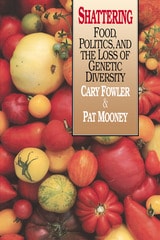
Shattering
Food, Politics, and the Loss of Genetic DiversityCary Fowler and Pat Mooney
University of Arizona Press, 1990
Large-scale agriculture has come to favor uniformity in food crops. More than 7,000 U.S. apple varieties once grew in American orchards; 6,000 of them are no longer available. Every broccoli variety offered through seed catalogs in 1900 has now disappeared. As the international genetics supply industry absorbs seed companies—with nearly one thousand takeovers since 1970—this trend toward uniformity seems likely to continue; and as third world agriculture is brought in line with international business interests, the gene pools of humanity's most basic foods are threatened.
The consequences are more than culinary. Without the genetic diversity from which farmers traditionally breed for resistance to diseases, crops are more susceptible to the spread of pestilence. Tragedies like the Irish Potato Famine may be thought of today as ancient history; yet the U.S. corn blight of 1970 shows that technologically based agribusiness is a breeding ground for disaster.
Shattering reviews the development of genetic diversity over 10,000 years of human agriculture, then exposes its loss in our lifetime at the hands of political and economic forces. The possibility of crisis is real; this book shows that it may not be too late to avert it.

Snacks
A Canadian Food StoryJanis Thiessen
University of Manitoba Press, 2017
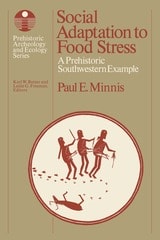
Social Adaptation to Food Stress
A Prehistoric Southwestern ExamplePaul E. Minnis
University of Chicago Press, 1985
Minnis proposes that, faced with the threat of food shortages, nonstratified societies survive by employing a series of responses that are increasingly effective but also are increasingly costly and demand increasingly larger cooperative efforts. The model Minnis develops allows him to infer, from evidence of such factors as population size, resource productivity, and climate change, the occurrence of food crises in the past. Using the Classic Mimbres society as a test case, he summarizes the regional archeological sequence and analyzes the effects of environmental fluctuations on economic and social organization. He concludes that the responses of the Mimbres people to their burgeoning population were inadequate to prevent the collapse of the society in the late twelfth century.
In its illumination of the general issue of responses to food shortages, Social Adaptation to Food Stress will interest not only archeologists but also those concerned with current food shortages in the Third World. Cultural ecologists and human geographers will be able to derive a wealth of ideas, methods, and data from Minnis's work.
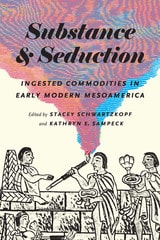
Substance and Seduction
Ingested Commodities in Early Modern MesoamericaEdited by Stacey Schwartzkopf and Kathryn E. Sampeck
University of Texas Press, 2017
Chocolate and sugar, alcohol and tobacco, peyote and hallucinogenic mushrooms—these seductive substances have been a nexus of desire for both pleasure and profit in Mesoamerica since colonial times. But how did these substances seduce? And when and how did they come to be desired and then demanded, even by those who had never encountered them before? The contributors to this volume explore these questions across a range of times, places, and peoples to discover how the individual pleasures of consumption were shaped by social, cultural, economic, and political forces.
Focusing on ingestible substances as a group, which has not been done before in the scholarly literature, the chapters in Substance and Seduction trace three key links between colonization and commodification. First, as substances that were taken into the bodies of both colonizers and colonized, these foods and drugs participated in unexpected connections among sites of production and consumption; racial and ethnic categories; and free, forced, and enslaved labor regimes. Second, as commodities developed in the long transition from mercantile to modern capitalism, each substance in some way drew its enduring power from its ability to seduce: to stimulate bodies; to alter minds; to mark class, social, and ethnic boundaries; and to generate wealth. Finally, as objects of scholarly inquiry, each substance rewards interdisciplinary approaches that balance the considerations of pleasure and profit, materiality and morality, and culture and political economy.
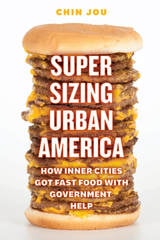
Supersizing Urban America
How Inner Cities Got Fast Food with Government HelpChin Jou
University of Chicago Press, 2017
What doesn’t get mentioned in all this? The fact that the federal government helped create the obesity crisis in the first place—especially where it is strikingly acute, among urban African-American communities. Supersizing Urban America reveals the little-known story of how the U.S. government got into the business of encouraging fast food in inner cities, with unforeseen consequences we are only beginning to understand. Chin Jou begins her story in the late 1960s, when predominantly African-American neighborhoods went from having no fast food chain restaurants to being littered with them. She uncovers the federal policies that have helped to subsidize that expansion, including loan guarantees to fast food franchisees, programs intended to promote minority entrepreneurship, and urban revitalization initiatives. During this time, fast food companies also began to relentlessly market to urban African-American consumers. An unintended consequence of these developments was that low-income minority communities were disproportionately affected by the obesity epidemic.
In the first book about the U.S. government’s problematic role in promoting fast food in inner-city America, Jou tells a riveting story of the food industry, obesity, and race relations in America that is essential to understanding health and obesity in contemporary urban America.
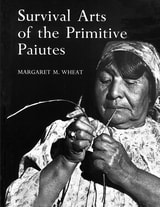
Survival Arts of the Primitive Paiutes
Margaret M. Wheat
University of Nevada Press, 1977
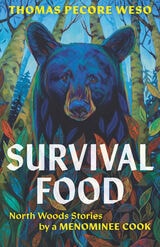
Survival Food
North Woods Stories by a Menominee CookThomas Pecore Weso
Wisconsin Historical Society Press, 2023
In these coming-of-age tales set on the Menominee Indian Reservation of the 1980s and 1990s, Thomas Pecore Weso explores the interrelated nature of meals and memories. As he puts it, “I cannot separate foods from the moments in my life when I first tasted them.” Weso’s stories recall the foods that influenced his youth in northern Wisconsin: subsistence meals from hunted, fished, and gathered sources; the culinary traditions of the German, Polish, and Swedish settler descendants in the area; and the commodity foods distributed by the government—like canned pork, dried beans, and powdered eggs—that made up the bulk of his family’s pantry. His mom called this “survival food.”
These stories from the author’s teen and tween years—some serious, some laugh-out-loud funny—will take readers from Catholic schoolyards to Native foot trails to North Woods bowling alleys, while providing Weso’s perspective on the political currents of the era. The book also contains dozens of recipes, from turtle soup and gray squirrel stew to twice-baked cheesy potatoes. This follow-up to Weso’s Good Seeds: A Menominee Indian Food Memoir is a hybrid of modern foodways, Indigenous history, and creative nonfiction from a singular storyteller.
2024 Wisconsin Library Association Outstanding Achievement Award
2024 PEN Oakland Josephine Miles Award for Excellence
Silver winner of the 2023 Midwest Book Award for Cookbooks/Crafts/Hobbies
Thomas Pecore Weso’s Survival Food was selected by the Wisconsin Center for the Book as the Wisconsin entry in the “Great Reads from Great Places” program of the Library of Congress.
“This book is not only about survival food, but about the singular beauty, creativity, and fortitude that comes out of that survival.”
—Chef Sean Sherman, author, The Sioux Chef’s Indigenous Kitchen
“Survival Food is interesting because it’s one part cookbook, three parts memoir, one part history, and one part multidisciplinary exploration of its setting, northern Wisconsin."
—James Norton, The Cookbook Test
“Nothing brings people together like good food and good stories. There’s an abundance of both in Thomas Pecore Weso’s latest memoir. As Weso attests, food can bring back happy, loving memories of times that were far from happy. Even a tray of funeral sandwiches brings a kind of comfort. This is a wonderful, honest portrait of northeastern Wisconsin, enlightening even to those of us who call this area home.”
—Jared Santek, Founder & Artistic Director, Write On Door County
“Survival Food provides ample nourishment for the mind and body. . . . The stories, told with humor and affection, are complemented by recipes ranging from mouth-watering instructions for cooking wild asparagus to ever-so-interesting advice for preparing bear stew.”
—Lucille Lang Day, author of Birds of San Pancho and Other Poems of Place and coeditor of Red Indian Road West: Native American Poetry from California
“His grandmother cooked according to Native traditions; his mother, ‘a nontraditional college student during my teens,’ resorted to instant meals. His grandfather was town constable and days spent with him brought Weso to the meatloaf, sausage and sauerkraut of German and Polish neighbors. Uncle Buddy’s flash car brings buckwheat pancakes to Weso’s mind, and he lived for a time near Cheese Box Curve—so called after a truck hauling dairy products overturned. Weso includes a few recipes, but mostly, Survival Food is an entertaining look back at life in Wisconsin’s rural north.”
—David Luhrssen, Shepherd Express
“Survival Food: North Woods Stories by a Menominee Cook by Thomas Pecore Weso is a posthumous sequel to his celebrated collection of family stories, Good Seeds: A Menominee Food Memoir. . . . Rich with captivating tales that include driving a convertible on logging roads, agreeing on terms before throwing eggs at passing cars, and his grandmother’s brief stay in a jailhouse she’d later purchase, Weso’s entries offer readers catharsis—demonstrating how to laugh, boast, debate, eat, mourn, and heal.”
—Ryan Winn, College of Menominee Nation, Tribal College Journal