Results by title
52 books match the query 'Foreign speakers' and 2 start with s
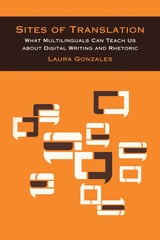
Sites of Translation
What Multilinguals Can Teach Us about Digital Writing and RhetoricLaura Gonzales
University of Michigan Press, 2018
Winner of the 2016 Sweetland Digital Rhetoric Collaborative Book Prize
Sites of Translation illustrates the intricate rhetorical work that multilingual communicators engage in as they translate information for their communities. Blending ethnographic and empirical methods from multiple disciplines, Laura Gonzales provides methodological examples of how linguistic diversity can be studied in practice, both in and outside the classroom, and provides insights into the rhetorical labor that is often unacknowledged and made invisible in multilingual communication. Sites of Translation is relevant to researchers and teachers of writing as well as technology designers interested in creating systems, pedagogies, and platforms that will be more accessible and useful to multilingual audiences. Gonzales presents multilingual communication as intellectual labor that should be further valued in both academic and professional spaces, and supported by multilingual technologies and pedagogies that center the expertise of linguistically diverse communicators.
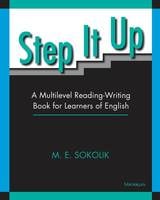
Step It Up
A Multilevel Reading-Writing Book for Learners of EnglishM. E. Sokolik
University of Michigan Press, 2005
Each chapter focuses on a different academic discipline (education, art, history, business, geology, ecology, nutrition, language and culture, and literature). Chapters include three readings at three fluency levels-called the First Step (intermediate), Second Step (high-intermediate to low-advanced), and Third Step (advanced). Corresponding vocabulary development exercises, comprehension questions, group discussion questions, and wrap-up activities encourage students to work at their own learning levels even as they are asked to interact with the group and share the expertise that they have gained from the material.
Step It Up can also address the needs of learners who don't fall into the traditional categories and who will benefit from activities at different levels to help fill in gaps of their knowledge of English.