Results by title
252 books match the query 'Future' and 25 start with s

Saving Migrant Birds
Developing Strategies for the FutureBy John Faaborg
University of Texas Press, 2002
In the 1980s, numerous scientific surveys documented both declining bird populations, especially among Neotropical songbirds that winter in the tropics, and the loss of tropical rain forest habitat. Drawing the seemingly obvious conclusion, scientists and environmental activists linked songbird declines to loss of tropical habitats and alerted the world to an impending ecological catastrophe. Their warnings led to the establishment of the Neotropical Migratory Bird Conservation Program, also known as Partners in Flight, the self-proclaimed largest conservation effort in history.
Looking back over more than a decade of efforts to save migrant birds, John Faaborg offers the first serious evaluation of the state of songbird populations today, the effectiveness of conservation programs such as Partners in Flight, and the reliability and completeness of scientific research on migrant birds. Taking neither an alarmist nor a complacent approach, he shows that many factors besides habitat loss affect bird populations and that Neotropical migrants as a group are not declining dramatically, though some species adapt to habitat alteration more successfully than others. Faaborg's state-of-the-art survey thus clarifies the kinds of information we will need and the conservation efforts we should undertake to ensure the long-term survival of Neotropical migrant birds.
School Choice and the Future of American Democracy
Scott Franklin Abernathy
University of Michigan Press, 2005
"Scott Abernathy takes up big questions and provides answers grounded in the complex reality of policy and politics. School Choice and the Future of American Democracy is a book written for those who understand that the world does not fit the simple explanations too often put forward."
--Clarence Stone, Professor Emeritus, University of Maryland, and Research Professor, George Washington University
"Will school choice revive or eviscerate democratic processes and institutions? Will it narrow or exacerbate the range of educational inequities? This book takes several differently angled slices into these questions and draws intriguing answers."
--Jeffrey R. Henig, Teachers College, Columbia University, and author of Rethinking School Choice: Limits of the Market Metaphor
"Through extensive research and refreshingly impartial analysis, Scott Abernathy probes how the use of market principles to reform public schools affects democratic citizenship. Treating citizens first and foremost as customers, he finds, threatens civic engagement and the well-being of schools, especially in the nation's neediest communities. This thoughtful and balanced appraisal is must-reading for those concerned about the future of American education and democracy."
--Suzanne Mettler, Alumni Associate Professor, Syracuse University, and author of Soldiers to Citizens: The G.I. Bill and the Making of the Greatest Generation
Scott Franklin Abernathy is Assistant Professor of Political Science, University of Minnesota
Seaway to the Future
American Social Visions and the Construction of the Panama CanalAlexander Missal
University of Wisconsin Press, 2008
Best Books for Regional Special Interests, selected by the American Association of School Librarians, and Best Books for General Audiences, selected by the Public Library Association
“Provide[s] a useful vantage on the world bequeathed to us by the forces that set out to put America astride the globe nearly a century ago.”—Chris Rasmussen, Bookforum
Securing the Future
Investing in Children From Birth to CollegeSheldon Danziger
Russell Sage Foundation, 2000
Sensing the Future
Experiments in Art and Technology (E.A.T.)Nancy Perloff
J. Paul Getty Trust, The, 2024
In 1966, Billy Klüver and Fred Waldhauer, engineers at Bell Labs in Murray Hill, New Jersey, teamed up with artists Robert Rauschenberg and Robert Whitman to form a nonprofit organization, Experiments in Art and Technology (E.A.T.). E.A.T.’s debut event, 9 Evenings: Theatre & Engineering, integrated art, theater, and groundbreaking technology in a series of performances at the 69th Regiment Armory in Manhattan. Its second major event, the Pepsi Pavilion at Expo ’70 in Osaka, Japan, presented a multisensory environment for the first world exposition held in Asia. At these events, and in the hundreds of collaborations E.A.T. facilitated in between, the participants—including John Cage, Lucinda Childs, Deborah Hay, Steve Paxton, Yvonne Rainer, and David Tudor—imagined innovative ways for art and science to intersect and enrich society.
Sensing the Future tells the story of these collaborations between artists and engineers and how they led to new installations and technology-based artworks. Through the examination of films, photographs, diagrams, and artists’ records from the E.A.T. archive at the Getty Research Institute, this volume provides a new perspective on multimedia art in the 1960s and ’70s and highlights the ways E.A.T. pushed the role of the artist beyond the traditional art world.
This volume is published to accompany an exhibition on view at the Getty Research Institute at the Getty Center from September 10, 2024, to February 23, 2025.
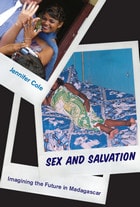
Sex and Salvation
Imagining the Future in MadagascarJennifer Cole
University of Chicago Press, 2010
Sex and Salvation chronicles the coming of age of a generation of women in Tamatave in the years that followed Madagascar’s economic liberalization. Eager to forge a viable future amid poverty and rising consumerism, many young women have entered the sexual economy in hope of finding a European husband. Just as many Westerners believe that young people break with the past as they enter adulthood, Malagasy citizens fear that these women have severed the connection to their history and culture.
Jennifer Cole’s elegant analysis shows how this notion of generational change is both wrong and consequential. It obscures the ways young people draw on long-standing ideas of gender and sexuality, it ignores how urbanites relate to their rural counterparts, and it neglects the relationship between these husband-seeking women and their elders who join Pentecostal churches. And yet, as talk about the women circulates through the city’s neighborhoods, bars, Internet cafes, and churches, it teaches others new ways of being.
Cole’s sophisticated depiction of how a generation’s coming of age contributes to social change eschews a narrow focus on crisis. Instead, she reveals how fantasies of rupture and conceptions of the changing life course shape the everyday ways that people create the future.
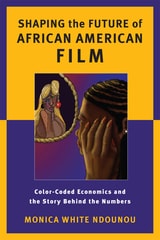
Shaping the Future of African American Film
Color-Coded Economics and the Story Behind the NumbersMonica White Ndounou
Rutgers University Press, 2014
In Hollywood, we hear, it’s all about the money. It’s a ready explanation for why so few black films get made—no crossover appeal, no promise of a big payoff. But what if the money itself is color-coded? What if the economics that governs film production is so skewed that no film by, about, or for people of color will ever look like a worthy investment unless it follows specific racial or gender patterns? This, Monica Ndounou shows us, is precisely the case. In a work as revealing about the culture of filmmaking as it is about the distorted economics of African American film, Ndounou clearly traces the insidious connections between history, content, and cash in black films.
How does history come into it? Hollywood’s reliance on past performance as a measure of potential success virtually guarantees that historically underrepresented, underfunded, and undersold African American films devalue the future prospects of black films. So the cycle continues as it has for nearly a century. Behind the scenes, the numbers are far from neutral. Analyzing the onscreen narratives and off-screen circumstances behind nearly two thousand films featuring African Americans in leading and supporting roles, including such recent productions as Bamboozled, Beloved, and Tyler Perry’s Diary of a Mad Black Woman, Ndounou exposes the cultural and racial constraints that limit not just the production but also the expression and creative freedom of black films. Her wide-ranging analysis reaches into questions of literature, language, speech and dialect, film images and narrative, acting, theater and film business practices, production history and financing, and organizational history.
By uncovering the ideology behind profit-driven industry practices that reshape narratives by, about, and for people of color, this provocative work brings to light existing limitations—and possibilities for reworking stories and business practices in theater, literature, and film.
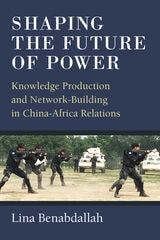
Shaping the Future of Power
Knowledge Production and Network-Building in China-Africa RelationsLina Benabdallah
University of Michigan Press, 2020

Sharing the Land, Sharing a Future
The Legacy of the Royal Commission on Aboriginal PeoplesKatherine Graham
University of Manitoba Press, 2021

Shuva
The Future of the Jewish PastYehuda Kurtzer
Brandeis University Press, 2012

Social Research for our Times
Thomas Coram Research Unit past, Present and FutureEdited by Claire Cameron, Alison Koslowski, Alison Lamont, and Peter Moss
University College London, 2023
For fifty years, researchers at UCL’s Thomas Coram Research Unit have been undertaking ground-breaking policy-relevant social research. Their main focus has been social issues affecting children, young people, and families and the services provided for them. Social Research for our Times brings together different generations of researchers from the Unit to share some of the most important results of their studies.
Two sections focus on the main findings and conclusions from research into children and children services and on family life, minoritized groups, and gender. A third section is devoted to the innovative methods that have been developed and used to undertake research in these complex areas. Running through the book is a key strategic question: what should be the relationship between research and policy? Or put another way, what does “policy-relevant research” mean? This perennial question has gained new importance in the post-COVID, post-Brexit world that we have entered, making this text a timely intervention for sharing decades of experience. Taking a unique opportunity to reflect on the research context as well as research findings, this book will be of interest to researchers, teachers, students, and those involved in policy-making both in and beyond dedicated research units, and it can be read as a whole or sampled for individual standalone chapters.

Socialism
An Analysis of its Past and FutureErzsébet Szalai
Central European University Press, 2005

Socialism
Past and FutureMichael Harrington
Pluto Press, 1993

Sociology of the Future
Theory, Cases and Annotated BibliographyWendell Bell
Russell Sage Foundation, 1971

Soloveitchik's Children
Irving Greenberg, David Hartman, Jonathan Sacks, and the Future of Jewish Theology in AmericaDaniel Ross Goodman
University of Alabama Press, 2023
A revealing account of the three main disciples of Rabbi Joseph B. Soloveitchik, an essential figure in Orthodox Judaism in America
Orthodox Judaism is one of the fastest-growing religious communities in contemporary American life. Anyone who wishes to understand more about Judaism in America will need to consider the tenets and practices of Orthodox Judaism: who its adherents are, what they believe in, what motivates them, and to whom they turn for moral, intellectual, and spiritual guidance.
Among those spiritual leaders none looms larger than Rabbi Joseph B. Soloveitchik, heir to the legendary Talmudic dynasty of Brisk and a teacher and ordainer of thousands of rabbis during his time as a Talmud teacher at Yeshiva University from the Second World War until the 1980s. Soloveitchik was not only a Talmudic authority but a scholar of Western philosophy. While many books and articles have been written about Soloveitchik’s legacy and his influence on American Orthodoxy, few have looked carefully at his disciples in Torah and Talmud study, and even fewer at his disciples in Jewish thought and philosophy.
Soloveitchik’s Children: Irving Greenberg, David Hartman, Jonathan Sacks, and the Future of Jewish Theology in America is the first book to study closely three of Soloveitchik’s major disciples in Jewish thought and philosophy: Rabbis Irving (“Yitz”) Greenberg, David Hartman, and Jonathan Sacks. Daniel Ross Goodman narrates how each of these three major modern Jewish thinkers learned from and adapted Soloveitchik’s teachings in their own ways, even while advancing his philosophical and theological legacy.
The story of religious life and Judaism in contemporary America is incomplete without an understanding of how three of the most consequential Jewish thinkers of this generation adapted the teachings of one of the most consequential Jewish thinkers of the previous generation. Soloveitchik’s Children tells this gripping intellectual and religious story in a learned and engaging manner, shining a light on where Jewish religious thought in the United States currently stands—and where it may be heading in future generations.
Some Write to the Future
Essays on Contemporary Latin American FictionAriel Dorfman
Duke University Press, 1991
Praise for Ariel Dorfman
“One of the most important voices coming out of Latin America.”—Salman Rushdie
“A remarkable writer . . . writing out of a very different cultural perspective from comfortable American readers.”—Digby Diehl, Los Angeles Herald Examiner
“One of the six greatest Latin American novelists.”—Jacobo Timmerman, Newsweek
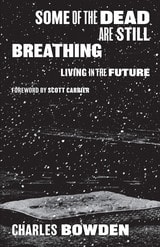
Some of the Dead Are Still Breathing
Living in the FutureBy Charles Bowden
University of Texas Press, 2018
The third book in Charles Bowden’s “accidental trilogy” that began with Blood Orchid and Blues for Cannibals, Some of the Dead Are Still Breathing attempts to resolve the overarching question: “How can a person live a moral life in a culture of death?” As humanity moves further into the twenty-first century, Bowden continues to interrogate our roles in creating the ravaged landscapes and accumulated death that still surround us, as well as his own childhood isolation, his lust for alcohol and women, and his waning hope for a future. We witness post-Katrina New Orleans and terrorist-bombed Bali; we encounter our shared actions with the animal world and the desirous need for consumption; we see the clash and erosion of our physical and figurative borders, the savagery of our own civilization. A man of his time and out of time, Bowden seeks acceptance and a will to endure what may lie ahead.
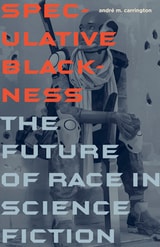
Speculative Blackness
The Future of Race in Science FictionAndré M. Carrington
University of Minnesota Press, 2016
In Speculative Blackness, André M. Carrington analyzes the highly racialized genre of speculative fiction—including science fiction, fantasy, and utopian works, along with their fan cultures—to illustrate the relationship between genre conventions in media and the meanings ascribed to blackness in the popular imagination.
Carrington’s argument about authorship, fandom, and race in a genre that has been both marginalized and celebrated offers a black perspective on iconic works of science fiction. He examines the career of actor Nichelle Nichols, who portrayed the character Uhura in the original Star Trek television series and later became a recruiter for NASA, and the spin-off series Star Trek: Deep Space Nine, set on a space station commanded by a black captain. He recovers a pivotal but overlooked moment in 1950s science fiction fandom in which readers and writers of fanzines confronted issues of race by dealing with a fictitious black fan writer and questioning the relevance of race to his ostensible contributions to the 'zines. Carrington mines the productions of Marvel comics and the black-owned comics publisher Milestone Media, particularly the representations of black sexuality in its flagship title, Icon. He also interrogates online fan fiction about black British women in Buffy the Vampire Slayer and the Harry Potter series.
Throughout this nuanced analysis, Carrington theorizes the relationship between race and genre in cultural production, revealing new understandings of the significance of blackness in twentieth-century American literature and culture.

Spying with Maps
Surveillance Technologies and the Future of PrivacyMark Monmonier
University of Chicago Press, 2002
Despite our apprehension about surveillance technology, Spying with Maps is not a jeremiad, crammed with dire warnings about eyes in the sky and invasive tracking. Monmonier's approach encompasses both skepticism and the acknowledgment that geospatial technology brings with it unprecedented benefits to governments, institutions, and individuals, especially in an era of asymmetric warfare and bioterrorism. Monmonier frames his explanations of what this new technology is and how it works with the question of whether locational privacy is a fundamental right. Does the right to be left alone include not letting Big Brother (or a legion of Little Brothers) know where we are or where we've been? What sacrifices must we make for homeland security and open government?
With his usual wit and clarity, Monmonier offers readers an engaging, even-handed introduction to the dark side of the new technology that surrounds us—from traffic cameras and weather satellites to personal GPS devices and wireless communications.
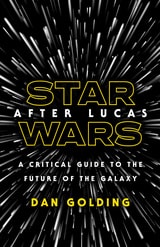
Star Wars after Lucas
A Critical Guide to the Future of the GalaxyDan Golding
University of Minnesota Press, 2019
Politics, craft, and cultural nostalgia in the remaking of Star Wars for a new age
A long time ago, in a galaxy far, far away—way back in the twenty-first century’s first decade—Star Wars seemed finished. Then in 2012 George Lucas shocked the entertainment world by selling the franchise, along with Lucasfilm, to Disney. This is the story of how, over the next five years, Star Wars went from near-certain extinction to what Wired magazine would call “the forever franchise,” with more films in the works than its first four decades had produced.
Focusing on The Force Awakens (2015), Rogue One (2016), The Last Jedi (2017), and the television series Rebels (2014–18), Dan Golding explores the significance of pop culture nostalgia in overcoming the skepticism, if not downright hostility, that greeted the Star Wars relaunch. At the same time he shows how Disney, even as it tapped a backward-looking obsession, was nonetheless creating genuinely new and contemporary entries in the Star Wars universe.
A host of cultural factors and forces propelled the Disney-engineered Star Wars renaissance, and all figure in Golding’s deeply informed analysis: from John Williams’s music in The Force Awakens to Peter Cushing’s CGI face in Rogue One, to Carrie Fisher’s passing, to the rapidly changing audience demographic. Star Wars after Lucas delves into the various responses and political uses of the new Star Wars in a wider context, as in reaction videos on YouTube and hate-filled, misogynistic online rants. In its granular textual readings, broad cultural scope, and insights into the complexities of the multimedia galaxy, this book is as entertaining as it is enlightening, an apt reflection of the enduring power of the Star Wars franchise.

Storm Warnings
Science Fiction Confronts the FutureGeorge E Slusser
Southern Illinois University Press, 1987
These 17 original essays, written for the sixth Eaton Conference on Fantasy and Science Fiction, explore the uses, origins, and forms of future fiction. The contributors are George E. Slusser, Paul Alkon, Marie-Hélène Huet, Howard V. Hendrix, Bradford Lyau, Gregory Benford, José Manuel Mota, Frederik Pohl, George Hay, Colin Greenland, John Huntington, Elizabeth Maslen, W. M. S. and Claire Russell, T. A. Shippey, Kenneth V. Bailey, Gary Kern, and Frank McConnell.
The essays address the question “Do we call up images of future societies in order to prepare for them, or to forestall their ever coming into existence?”
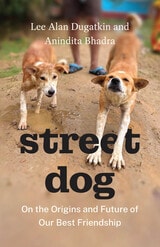
Street Dog
On the Origins and Future of Our Best FriendshipLee Alan Dugatkin and Anindita Bhadra
University of Chicago Press, 0
A fascinating look at the lives of the world’s largest dog population—street dogs—offering essential insights into your dog’s behavior and the mysterious origins of human-dog cooperation.
Today, there are close to a billion dogs on the planet. Some twenty thousand years ago, there were none. How did dogs originate from wolves? And how did we begin our best friendship? Although we can’t go back in time, we can study modern dogs for clues. Of today’s dogs, about eighty percent are street dogs, which don’t live in human homes, but near them, existing in a space between wild and domesticated.
This fascinating and eye-opening book offers us a chance to meet these street dogs and, through them, to imagine the earliest stages of human-canine companionship and collaboration. Award-winning author and animal behaviorist Lee Alan Dugatkin and world canine expert Anindita Bhadra take us from the hallways of Bhadra’s Dog Lab onto the bustling streets of Kolkata, India, where we encounter the intelligent, resourceful, and sometimes mischievous street dogs that have lived alongside humans for hundreds of dog generations. By observing these street dogs’ social structures, survival strategies, and personalities—and comparing them to foxes, wolves, and house dogs, among other species—we learn a lot about canine behavior. Take, for example, Bhadra’s discovery that, no matter how vital food is to a street dog, when given a choice between a meal and a gentle carress, dogs choose love over the food. We also learn that many dogs prefer yellow to other colors; that dog grandmoms may adopt unrelated puppies; and that dog genes harbor a mutation that, in humans, is associated with extreme friendliness. We even begin to understand why dogs pee on, well, everything—particularly on other dog pee.
Watching dogs live independent lives alongside humans, we also start to wonder, as Bhadra does, about the origins of human-dog cooperation. She persuades us that early dogs and humans likely protected each other, as many still do today, and that street dogs may help us to imagine our ancestors’ interactions with the earliest proto-dogs. In their engaging exploration, Dugatkin and Bhadra show that getting to know street dogs may help us understand the past, present, and future of our unique interspecies relationship.

Stung!
On Jellyfish Blooms and the Future of the OceanLisa-ann Gershwin
University of Chicago Press, 2013
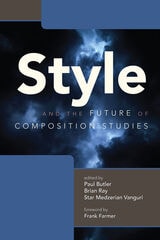
Style and the Future of Composition Studies
Paul Butler
Utah State University Press, 2020
Many college writing teachers operate under the belief that style still refers primarily to the kinds of issues discussed in Strunk and White’s popular but outdated book The Elements of Style. This work not only challenges this view but also offers theories and pedagogies from diverse perspectives that help teachers and students develop strategic habits and mindsets to negotiate languages, genres, and discourse conventions. The chapters explore the ways in which style directly affects—and is affected by—multiple sources of shifting disciplinary inquiry, contributing new insights by drawing on research in cultural studies, sociolinguistics, discourse studies, translingualism, and writing across the curriculum, as well as new approaches to classical rhetorical theory.
The reemergence of stylistic inquiry can be used dynamically to produce new insights not only about emerging disciplinary interests but also about the study of style as a kind of language in and of itself. Style and the Future of Composition Studies demonstrates that style deserves to be a central focus of writing teaching. More than just the next style collection, the book advocates for style’s larger prominence in composition discussions generally. It will be of interest to a broad range of students and scholars of writing studies, as well as a wider set of readers in academe.
Contributors:
Cydney Alexis, Laura Aull, Anthony Box, Jimmy Butts, Mike Duncan, William FitzGerald, Melissa Goldthwaite, Eric House, TR Johnson, Almas Khan, Zak Lancaster, Eric Leake, Andrea Olinger, Thomas Pace, Jarron Slater, Jonathan Udelson
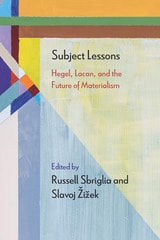
Subject Lessons
Hegel, Lacan, and the Future of MaterialismEdited by Russell Sbriglia and Slavoj Zizek
Northwestern University Press, 2020
Responding to the ongoing “objectal turn” in contemporary humanities and social sciences, the essays in Subject Lessons present a sustained case for the continued importance— indeed, the indispensability—of the category of the subject for the future of materialist thought.
Approaching matters through the frame of Hegel and Lacan, the contributors to this volume, including the editors, as well as Andrew Cole, Mladen Dolar, Nathan Gorelick, Adrian Johnston, Todd McGowan, Borna Radnik, Molly Anne Rothenberg, Kathryn Van Wert, and Alenka Zupančič—many of whom stand at the forefront of contemporary Hegel and Lacan scholarship—agree with neovitalist thinkers that material reality is ontologically incomplete, in a state of perpetual becoming, yet they maintain that this is the case not in spite of but, rather, because of the subject.
Incorporating elements of philosophy, psychoanalysis, and literary and cultural studies, Subject Lessons contests the movement to dismiss the subject, arguing that there can be no truly robust materialism without accounting for the little piece of the Real that is the subject.