Results by title
75 books match the query 'Historic Preservation' and 5 start with s

Saving the Big Thicket
From Exploration to Preservation, 1685-2003James J. Cozine Jr.
University of North Texas Press, 2004
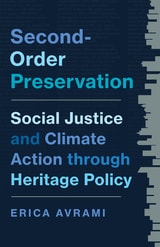
Second-Order Preservation
Social Justice and Climate Action through Heritage PolicyErica Avrami
University of Minnesota Press, 2024
An urgent appeal to rethink the heritage enterprise
A critical reassessment of historic preservation policies in the United States, Second-Order Preservation brings needed attention to the hierarchical underpinnings and effects of established preservation frameworks. Questioning the criteria by which value is ascribed to historic buildings and neighborhoods, Erica Avrami works to elucidate and transform how—and which—claims to place become codified in and reinforced through public policy.
As she eschews dominant case-study approaches that center the individual object of preservation, such as a discrete building or site, Avrami develops the concept of second-order preservation as a means of integrating broader considerations around social justice, equitable land-use planning, and environmental sustainability. Ranging from municipal to state to national and international levels of governance, her critique of the origins and evolution of heritage policy reveals how this conventional emphasis on the object has contributed to policy tensions and systemic exclusion.
Stressing the need to reform current preservation practices to serve more diverse publics, Avrami encourages a turn to an approach that substantively considers contexts and implications of preservation in the scheme of climate and justice. Second-Order Preservation maintains the interrelation between theory and practice, serving as both a critical reflection and a provocation aimed at advancing a more just set of urban policy agendas.

Sense of History
The Place of the Past in American LifeDavid Glassberg
University of Massachusetts Press, 2001
As Americans enter the new century, their interest in the past has never been greater. In record numbers they visit museums and historic sites, attend commemorative ceremonies and festivals, watch historically based films, and reconstruct family genealogies. The question is, Why? What are Americans looking for when they engage with the past? And how is it different from what scholars call “history?”
In this book, David Glassberg surveys the shifting boundaries between the personal, public, and professional uses of the past and explores their place in the broader cultural landscape. Each chapter investigates a specific encounter between Americans and their history: the building of a pacifist war memorial in a rural Massachusetts town; the politics behind the creation of a new historical festival in San Francisco; the letters Ken Burns received in response to his film series on the Civil War; the differing perceptions among black and white residents as to what makes an urban neighborhood historic; and the efforts to identify certain places in California as worthy of commemoration. Along the way, Glassberg reflects not only on how Americans understand and use the past, but on the role of professional historians in that enterprise. Combining the latest research on American memory with insights gained from Glassberg's more than twenty years of personal experience in a variety of public history projects, Sense of History offers stimulating reading for all who care about the future of history in America.
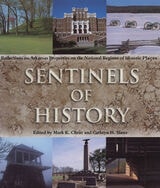
Sentinels of History
Reflections on Arkansas Properties on the National Register of Historic PlacesMark Christ
University of Arkansas Press, 2000
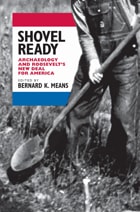
Shovel Ready
Archaeology and Roosevelt's New Deal for AmericaBernard K. Means
University of Alabama Press, 2013
John L. Cordell / John F. Doershuk / David H. Dye /Scott W. Hammerstedt / Janet R. Johnson / Kevin Kiernan /Gregory D. Lattanzi /Patrick C. Livingood / Anna R. Lunn / Bernard K. Means / Stephen E. Nash / Amanda L. Regnier / Sissel Schroeder / James R. Wettstaed