Results by title
143 books match the query 'History of doctrines' and 12 start with s
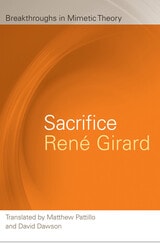
Sacrifice
René Girard
Michigan State University Press, 2011
In Sacrifice, René Girard interrogates the Brahmanas of Vedic India, exploring coincidences with mimetic theory that are too numerous and striking to be accidental. Even that which appears to be dissimilar fails to contradict mimetic theory, but instead corresponds to the minimum of illusion without which sacrifice becomes impossible.
The Bible reveals collective violence, similar to that which generates sacrifice everywhere, but instead of making victims guilty, the Bible and the Gospels reveal the persecutors of a single victim. Instead of elaborating myths, they tell the truth absolutely contrary to the archaic sense. Once exposed, the single victim mechanism can no longer function as the model for would-be sacrificers.
Recognizing that the Vedic tradition also converges on a revelation that discredits sacrifice, mimetic theory locates within sacrifice itself a paradoxical power of quiet reflection that leads, in the long run, to the eclipse of this institution which is violent but nevertheless fundamental to the development of human culture. Far from unduly privileging the Western tradition and awarding it a monopoly on the knowledge and repudiation of blood sacrifice, mimetic analysis recognizes comparable, but never truly identical, traits in the Vedic tradition.
Saint Augustine and the Fall of the Soul
Beyond O'Connell & His CriticsRonnie J. Rombs
Catholic University of America Press, 2006
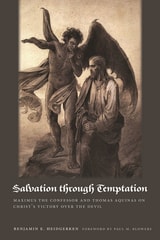
Salvation through Temptation
Maximus the Confessor and Thomas Aquinas on Christ's Victory over the DevilBenjamin E. Heidgerken
Catholic University of America Press, 2021

Same-Sex Dynamics among Nineteenth-Century Americans
A MORMON EXAMPLED. Michael Quinn
University of Illinois Press, 1996
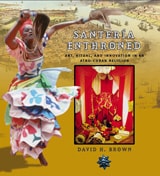
Santeria Enthroned
Art, Ritual, and Innovation in an Afro-Cuban ReligionDavid H. Brown
University of Chicago Press, 2003
Focusing on the royal throne as a potent metaphor in Santería belief and practice, Brown shows how negotiation among ideologically competing interests have shaped the religion's symbols, rituals, and institutions from the nineteenth century to the present. Rich case studies of change in Cuba and the United States, including a New Jersey temple and South Carolina's Oyotunji Village, reveal patterns of innovation similar to those found among rival Yoruba kingdoms in Nigeria. Throughout, Brown argues for a theoretical perspective on culture as a field of potential strategies and "usable pasts" that actors draw upon to craft new forms and identities—a perspective that will be invaluable to all students of the African Diaspora.
American Acemy of Religion Award for Excellence in the Study of Religion (Analytical-Descriptive Category)
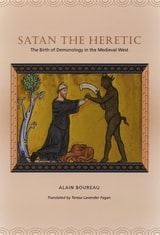
Satan the Heretic
The Birth of Demonology in the Medieval WestAlain Boureau
University of Chicago Press, 2006
Depicting this new demonology, Satan the Heretic considers the period between the mid-thirteenth and mid-fourteenth centuries when demons, in the eyes of Church authorities, suddenly burst forth, more real and more terrifying than ever before in the history of Christianity. Boureau argues that the rise in this obsession with demons occurs at the crossroads of the rise of sovereignties and of the individual, a rise that, tellingly, also coincides with the emergence of the modern legal system in the European West.
Teeming with original insights and lively anecdotes, Satan the Heretic is a significant contribution to the history of Christian demonology from one of the most original minds in the field of medieval studies today.
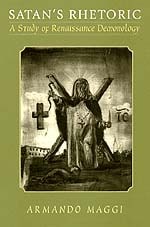
Satan's Rhetoric
A Study of Renaissance DemonologyArmando Maggi
University of Chicago Press, 2001
With this probing new contribution to the study of Christianity, Armando Maggi examines this dialogue, exploring how evil spirits interacted with mankind during the early modern period. Reading innumerable treatises on demonology written during the Renaissance, including Thesaurus exorcismorum, the most important record of early modern exorcisms, Maggi finds repeated attempts to define the language exchanged between the fallen progeny of Adam, and the most notorious fallen angel of them all, Satan. Using points of departure taken from de Certeau and Lacan, Maggi shows that Satan articulates his language first and foremost in the mind. More than speaking, the devil tries to make human beings understand his language and speak it themselves. Through sodomites, infidels, and witches, then, the devil is able to infect humanity as it appropriates his seductive rhetoric.
Serbian Orthodox Fundamentals
The Quest for an Eternal IdentityChristos Mylonas
Central European University Press, 2003
Sin
A Thomistic PsychologySteven J. Jensen
Catholic University of America Press, 2018
Speaking the Incomprehensible God
Thomas Aquinas on the Interplay of Positive and Negative TheologyGregory P. Rocca O.P.
Catholic University of America Press, 2004
Spiraling Into God
Bonaventure on Grace, Hierarchy , and HolinessKatherine Wrisley Shelby
Catholic University of America Press, 2023
State of Virginity
Gender, Religion, and Politics in an Early Modern Catholic StateUlrike Strasser
University of Michigan Press, 2006
Winner: 2005 Book Award from the Society for the Study of Early Modern Women; Selected by the German Studies Association as one of the top five books of 2004 in early modern history
"A fresh, original study of gender roles and religious ideology in the early modern Catholic state. . . . Using a rich array of archival sources, Strasser explores ways in which an increasingly centralized Bavarian government in Munich inaugurated marriage and convent reforms and a civil religion based on the veneration of the Virgin Mary. Her carefully selected case studies show how church and state collaborated to produce a shared discourse and consistent policies proscribing extramarital sex, and excluding those without property from marriage. "
Ulrike Strasser is Associate Professor of History, Affiliate Faculty in Women's Studies, and Core Faculty in Religious Studies at the University of California, Irvine.