Results by title
125 books match the query 'Human-animal relationships' and 6 start with s
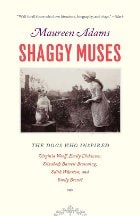
Shaggy Muses
The Dogs who Inspired Virginia Woolf, Emily Dickinson, Elizabeth Barrett Browning, Edith Wharton, and Emily BrontëMaureen Adams
University of Chicago Press, 2011
“You’ll call this sentimental—perhaps—but then a dog somehow represents the private side of life, the play side,” Virginia Woolf confessed to a friend. In this charming and engaging book, Maureen Adams celebrates this private, playful side telling readers about the relationships between five remarkable women writers and their dogs.
In Shaggy Muses, Adams explores the work and lives of these authors through the various roles played by their most devoted companions. Elizabeth Barrett Browning was rescued from a life of passivity and illness by Flush, a lively, possessive (and frequently dog-napped!) golden Cocker Spaniel. Emily Brontë’s fierce Mastiff mix, Keeper, provided a safe and loving outlet for the writer’s equally fierce spirit. Emily Dickinson found companionship with Carlo, the gentle, giant Newfoundland who soothed her emotional terrors. A troop of ever-faithful Pekingese warmed Edith Wharton’s lonely heart during her restless travels among Europe and America’s social and intellectual elite. And Virginia Woolf developed a deep attachment to Pinka, a black Cocker Spaniel who was both gift from her lover, Vita Sackville-West, and a link to her husband Leonard.
Based on diaries, letters, and other contemporary accounts—and featuring many illustrations of the writers and their dogs—these five miniature biographies allow unparalleled intimacy with women of genius in their hours of domestic ease and inner vulnerability.
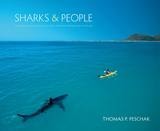
Sharks and People
Exploring Our Relationship with the Most Feared Fish in the SeaThomas P. Peschak
University of Chicago Press, 2008
A contributing photographer to National Geographic, Peschak is best known for his unusual photographs of sharks—his iconic image of a great white shark following a researcher in a small yellow kayak is one of the most recognizable shark photographs in the world. The other images gathered here are no less riveting, bringing us as close as possible to sharks in the wild. Alongside the photographs, Sharks and People tells the compelling story of the natural history of sharks. Sharks have roamed the oceans for more than four hundred million years, and in this time they have never stopped adapting to the ever-changing world—their unique cartilage skeletons and array of super-senses mark them as one of the most evolved groups of animals. Scientists have recently discovered that sharks play an important role in balancing the ocean, including maintaining the health of coral reefs. Yet, tens of millions of sharks are killed every year just to fill the demand for shark fin soup alone. Today more than sixty species of sharks, including hammerhead, mako, and oceanic white-tip sharks, are listed as vulnerable or in danger of extinction.
The need to understand the significant part sharks play in the oceanic ecosystem has never been so urgent, and Peschak’s photographs bear witness to the thrilling strength and unique attraction of sharks. They are certain to enthrall and inspire.
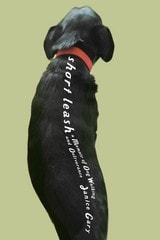
Short Leash
A Memoir of Dog Walking and DeliveranceJanice Gary
Michigan State University Press, 2013
Janice Gary never walked alone without a dog - a big dog. Once, she was an adventurer, a girl who ran off to California with big dreams and hopes of leaving her past behind. But after a brutal rape, her youthful bravado vanished, replaced by a crippling need for safety. When she rescues a gangly Lab-Rottweiler pup,Gary is sure she’s found her biggest protector yet. But after Barney is attacked by a vicious dog, he becomes a clone of his attacker, trying to kill any dog that comes near him. Walking with Barney is impossible. Yet walking without him is unthinkable.
After years of being exiled by her terror and Barney’s defensiveness, Janice risks taking her dog to a park near the Chesapeake Bay. There, she begins the messy, lurching process of walking into her greatest fears. As the leash of the past unravels, Barney sheds the defensive behaviors that once shackled him and Gary steps out of the self-imposed isolation that held her captive for three decades. Beautifully written, Short Leash is much more than a “dog story” or a book about recovering from trauma. It is a moving tale of love and loss, the journey of a broken soul finding itsway toward wholeness.
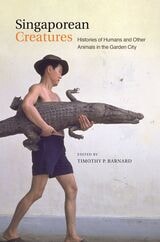
Singaporean Creatures
Histories of Humans and Other Animals in the Garden CityEdited by Timothy Barnard
National University of Singapore Press, 2024
Modern Singapore is the Garden City, a biophilic urban space that includes a variety of animals, from mosquitoes to humans, even polar bears. Singaporean Creatures brings together historians to contemplate this human-animal relationship and how it has shaped society—socially, economically, politically, and environmentally. It is a work of historical and ecological analysis, in which various institutions, perspectives, and events involving animals provide insight into how the larger society has been formed and developed over the last half-century. The interaction of all Singaporean creatures thus provides a lens through which we can understand the creation of a modern and urban nation-state, shaped by the forces of the Anthropocene.
Staying with the Trouble
Making Kin in the ChthuluceneDonna J. Haraway
Duke University Press, 2016
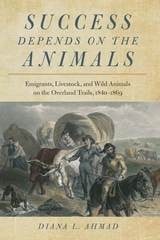
Success Depends on the Animals
Emigrants, Livestock, and Wild Animals on the Overland Trails, 1840–1869Diana L. Ahmad
University of Nevada Press, 2016
Between 1840 and 1869, thousands of people crossed the American continent looking for a new life in the West. Success Depends on the Animals explores the relationships and encounters that these emigrants had with animals, both wild and domestic, as they traveled the Overland Trail. In the longest migration of people in history, the overlanders were accompanied by thousands of work animals such as horses, oxen, mules, and cattle. These travelers also brought dogs and other companion animals, and along the way confronted unknown wild animals.
Ahmad’s study is the first to explore how these emigrants became dependent upon the animals that traveled with them, and how, for some, this dependence influenced a new way of thinking about the human-animal bond. The pioneers learned how to work with the animals and take care of them while on the move. Many had never ridden a horse before, let alone hitched oxen to a wagon. Due to the close working relationship that the emigrants were forced to have with these animals, many befriended the domestic beasts of burden, even attributing human characteristics to them.
Drawing on primary sources such as journals, diaries, and newspaper accounts, Ahmad explores how these new experiences influenced fresh ideas about the role of animals in pioneer life. Scholars and students of western history and animal studies will find this a fascinating and distinctive analysis of an understudied topic.