Results by title
78 books match the query 'Humanism' and 2 start with s

Self-Deception and Paradoxes of Rationality
Edited by Jean-Pierre Dupuy
CSLI, 1998
Self-deception is one of the topics that lends itself best to the task of exploring the possibilities of cross-fertilization between 'continental philosophy' and 'analytic philosophy'. Fifty years ago, in Being and Nothingness, Sartre defined the core notion of 'Bad Faith' as lying to oneself. On the other side of the Atlantic, self-deception has become one of the most exciting puzzles in the philosophy of mind, and a number of paradoxes encountered by the theory of rational choice involve that very same notion. One of the objectives is to show that bridges can be thrown over the gap between the two traditions, but also that both of them make self-deception too intrapsychic and suffer from a serious individualistic bias. The conference was intended to explore the intersubjective and social dimensions of self-deception.
[more]
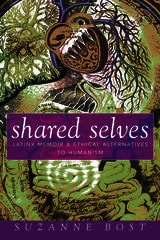
Shared Selves
Latinx Memoir and Ethical Alternatives to HumanismSuzanne Bost
University of Illinois Press, 2019
Memoir typically places selfhood at the center. Interestingly, the genre's recent surge in popularity coincides with breakthroughs in scholarship focused on selfhood in a new way: as an always renewing, always emerging entity. Suzanne Bost draws on feminist and posthumanist ideas to explore how three contemporary memoirists decenter the self. Latinx writers John Rechy, Aurora Levins Morales, and Gloria E. Anzaldúa work in places where personal history intertwines with communities, environments, animals, plants, and spirits. This dedication to interconnectedness resonates with ideas in posthumanist theory while calling on indigenous worldviews. As Bost argues, our view of life itself expands if we look at how such frameworks interact with queer theory, disability studies, ecological thinking, and other fields. These webs of relation in turn mediate experience, agency, and lift itself.A transformative application of posthumanist ideas to Latinx, feminist, and literary studies, Shared Selves shows how memoir can encourage readers to think more broadly and deeply about what counts as human life.
[more]