Results by title
83 books match the query 'Inclusive Education' and 8 start with s
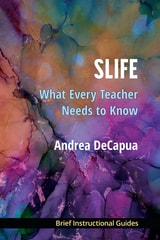
SLIFE
What Every Teacher Needs to KnowAndrea DeCapua
University of Michigan Press, 2019
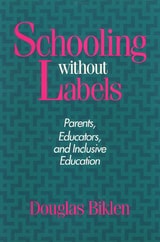
Schooling Without Labels
Parents, Educators, and Inclusive EducationDouglas Biklen
Temple University Press, 1992
Douglas Biklen closely examines the experiences of six families in which children with disabilities are full participants in family life in order to understand how people who have been labeled disabled might become full participants in the other areas of society as well. He focuses on the contradictions between what some families have achieved, what they want for their children, and what society and its social policies allow. He demonstrates how the principles of inclusion that govern the lives of these families can be extended to education, community life, and other social institutions.
The parents who tell their stories here have actively sought inclusion of their children in regular schools and community settings; several have children with severe or multiple disabilities. In discussing issues such as normalization, acceptance, complete schooling, circles of friends, and community integration, these parents describe the challenge and necessity of their children's "leading regular lives."
In the series Health, Society, and Policy, edited by Sheryl Ruzek and Irving Kenneth Zola.
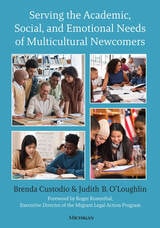
Serving the Academic, Social, and Emotional Needs of Multicultural Newcomers
Brenda Custodio and Judith B. O’Loughlin
University of Michigan Press, 2025
- Collaborate with school professionals to create a program specifically to meet the unique needs of new arrivals.
- Provide intensive literacy, numeracy, and content area support, especially for students with interrupted schooling.
- Develop the classroom supports necessary for students to achieve academic success.
- Provide supports that address the physical, social, and emotional challenges of newcomers.
- Work with families and communities to support students outside of a school environment.
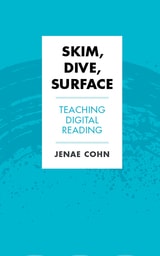
Skim, Dive, Surface
Teaching Digital ReadingJenae Cohn
West Virginia University Press, 2021
Students are reading on screens more than ever—how can we teach them to be better digital readers?
Smartphones, laptops, tablets: college students are reading on-screen all the time, and digital devices shape students’ understanding of and experiences with reading. In higher education, however, teachers rarely consider how digital reading experiences may have an impact on learning abilities, unless they’re lamenting students’ attention spans or the distractions available to students when they’re learning online.
Skim, Dive, Surface offers a corrective to these conversations—an invitation to focus not on losses to student learning but on the spectrum of affordances available within digital learning environments. It is designed to help college instructors across the curriculum teach digital reading in their classes, whether they teach face-to-face, fully online, or somewhere in between. Placing research from cognitive psychology, neuroscience, learning science, and composition in dialogue with insight from the scholarship of teaching and learning, Jenae Cohn shows how teachers can better frame, scaffold, and implement effective digital reading assignments. She positions digital reading as part of a cluster of literacies that students should develop in order to communicate effectively in a digital environment.
Social-Emotional Learning in English Language Teaching
Luis Javier Pentón Herrera and Janine J. Darragh
University of Michigan Press, 2024
Special Education in the 21st Century
Margret A. Winzer
Gallaudet University Press, 2000
In the late 20th century, a tidal wave of calls for reform and inclusion of special needs students swept over public special education. The current debates over implementing these themes today are authoritatively addressed by 19 distinguished scholars in this thorough volume. Organized into three cohesive sections, it begins with the issues of educational reform and the emerging discourses of disability and integration in the inclusion movement. Respective chapters appraise specific arguments for inclusion and the federal legislation and litigation surrounding and supporting special education.
The second part features the thorny issue of assessment, the technological revolution in special education, and the disposition of teacher training. The third section scrutinizes the inclusion of various populations of students with exceptional needs, particularly how teachers can make an easy transition from ideology to educational practice.
Special Education in the 21st Century sets the standard for extrapolating future directions by wisely weighing classroom practices for different groups and the technical problems of resources, management, social groupings, instructional design, and the supposition that teachers will automatically change to accommodate an even greater diversity of learners.
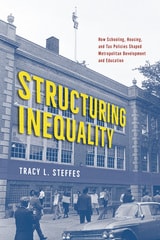
Structuring Inequality
How Schooling, Housing, and Tax Policies Shaped Metropolitan Development and EducationTracy L. Steffes
University of Chicago Press, 2024
As in many American metropolitan areas, inequality in Chicagoland is visible in its neighborhoods. These inequalities are not inevitable, however. They have been constructed and deepened by public policies around housing, schooling, taxation, and local governance, including hidden state government policies.
In Structuring Inequality, historian Tracy L. Steffes shows how metropolitan inequality in Chicagoland was structured, contested, and naturalized over time even as reformers tried to change it through school desegregation, affordable housing, and property tax reform. While these efforts had modest successes in the city and the suburbs, reformers faced significant resistance and counter-mobilization from affluent suburbanites, real estate developers, and other defenders of the status quo who defended inequality and reshaped the policy conversation about it. Grounded in comprehensive archival research and policy analysis, Structuring Inequality examines the history of Chicagoland’s established systems of inequality and provides perspective on the inequality we live with today.
Structuring Inequality
How Schooling, Housing, and Tax Policies Shaped Metropolitan Development and EducationTracy L. Steffes
University of Chicago Press, 2024
How inequality was forged, fought over, and forgotten through public policy in metropolitan Chicago.
As in many American metropolitan areas, inequality in Chicagoland is visible in its neighborhoods. These inequalities are not inevitable, however. They have been constructed and deepened by public policies around housing, schooling, taxation, and local governance, including hidden state government policies.
In Structuring Inequality, historian Tracy L. Steffes shows how metropolitan inequality in Chicagoland was structured, contested, and naturalized over time even as reformers tried to change it through school desegregation, affordable housing, and property tax reform. While these efforts had modest successes in the city and the suburbs, reformers faced significant resistance and counter-mobilization from affluent suburbanites, real estate developers, and other defenders of the status quo who defended inequality and reshaped the policy conversation about it. Grounded in comprehensive archival research and policy analysis, Structuring Inequality examines the history of Chicagoland’s established systems of inequality and provides perspective on the inequality we live with today.