69 books match the query 'Indiana' and 2 start with s
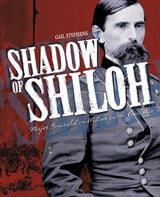
cover of Shadow of Shiloh: Major General Lew Wallace in the Civil War

Shadow of Shiloh

Major General Lew Wallace in the Civil War

Gail Stephens

Indiana Historical Society Press, 2010
Thirty-two years after the battle of Shiloh, Lew Wallace returned to the battlefield, mapping the route of his April 1862 march. Ulysses S. Grant, Wallace's commander at Shiloh, expected Wallace and his Third Division to arrive early in the afternoon of April 6. Wallace and his men, however, did not arrive until nightfall, and in the aftermath of the bloodbath of Shiloh Grant attributed Wallace's late arrival to a failure to obey orders. By mapping the route of his march and proving how and where he had actually been that day, the sixty-seven-year-old Wallace hoped to remove the stigma of "Shiloh and its slanders." That did not happen. Shiloh still defines Wallace's military reputation, overshadowing the rest of his stellar military career and making it easy to forget that in April 1862 he was a rising military star, the youngest major general in the Union army. Wallace was devoted to the Union, but he was also pursuing glory, fame, and honor when he volunteered to serve in April 1861. In Shadow of Shiloh: Major General Lew Wallace in the Civil War, author Gail Stephens specifically addresses Wallace's military career and its place in the larger context of Civil War military history.
[more]
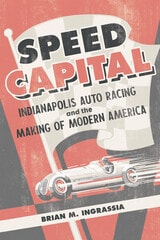
cover of Speed Capital: Indianapolis Auto Racing and the Making of Modern America

Speed Capital

Indianapolis Auto Racing and the Making of Modern America

Brian M. Ingrassia

University of Illinois Press, 2024

How a speedway became a legendary sports site and sparked America’s car culture

The 1909 opening of the Indianapolis Motor Speedway marked a foundational moment in the history of automotive racing. Events at the famed track and others like it also helped launch America’s love affair with cars and an embrace of road systems that transformed cities and shrank perceptions of space.

Brian Ingrassia tells the story of the legendary oval’s early decades. This story revolves around Speedway cofounder and visionary businessman Carl Graham Fisher, whose leadership in the building of the transcontinental Lincoln Highway and the iconic Dixie Highway had an enormous impact on American mobility. Ingrassia looks at the Speedway’s history as a testing ground for cars and airplanes, its multiple close brushes with demolition, and the process by which racing became an essential part of the Golden Age of Sports. At the same time, he explores how the track’s past reveals the potent links between sports capitalism and the selling of nostalgia, tradition, and racing legends.

[more]