Results by title
338 books match the query 'Indigenous Studies' and 32 start with s
Salmon and Acorns Feed Our People
Colonialism, Nature, and Social ActionKari Marie Norgaard
Rutgers University Press, 2019
Since time before memory, large numbers of salmon have made their way up and down the Klamath River. Indigenous management enabled the ecological abundance that formed the basis of capitalist wealth across North America. These activities on the landscape continue today, although they are often the site of intense political struggle. Not only has the magnitude of Native American genocide been of remarkable little sociological focus, the fact that this genocide has been coupled with a reorganization of the natural world represents a substantial theoretical void. Whereas much attention has (rightfully) focused on the structuring of capitalism, racism and patriarchy, few sociologists have attended to the ongoing process of North American colonialism. Salmon and Acorns Feed Our People draws upon nearly two decades of examples and insight from Karuk experiences on the Klamath River to illustrate how the ecological dynamics of settler-colonialism are essential for theorizing gender, race and social power today.
Sanctuary
Exclusion, Violence, and Indigenous Migrants in the East BayCruz Medina
The Ohio State University Press, 2024
Taking a Northern California community of migrants from Guatemala as a case study, Medina demonstrates the ways in which immigration policy and educational barriers exclude Indigenous migrant populations. He follows the community at the “Sanctuary”—a Spanish-speaking church in the East Bay Area that serves as a place of worship, English language instruction, and refuge for migrants. Medina assembles participant observations, interviews, surveys, and other data to provide points of entry into intersecting issues of immigration, violence, language, and property and to untangle aspects of citizenship, exclusion, and assumptions about literacy.
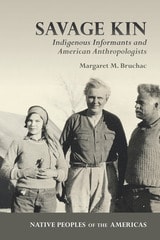
Savage Kin
Indigenous Informants and American AnthropologistsMargaret M. Bruchac
University of Arizona Press, 2018
This book reconceptualizes the intimate details of encounters with Native interlocutors who by turns inspired, facilitated, and resisted the anthropological enterprise. Like other texts focused on this era, Savage Kin features some of the elite white men credited with salvaging material that might otherwise have been lost. Unlike other texts, this book highlights the intellectual contributions and cultural strategies of unsung Indigenous informants without whom this research could never have taken place.
These bicultural partnerships transgressed social divides and blurred the roles of anthropologist/informant, relative/stranger, and collector/collected. Yet these stories were obscured by collecting practices that separated people from objects, objects from communities, and communities from stories. Bruchac’s decolonizing efforts include “reverse ethnography”—painstakingly tracking seemingly unidentifiable objects, misconstrued social relations, unpublished correspondence, and unattributed field notes—to recover this evidence. Those early encounters generated foundational knowledges that still affect Indigenous communities today.
Savage Kin also contains unexpected narratives of human and other-than-human encounters—brilliant discoveries, lessons from ancestral spirits, prophetic warnings, powerful gifts, and personal tragedies—that will move Native and non-Native readers alike.
Savages and Citizens
How Indigeneity Shapes the StateAndrew Canessa and Manuela Lavinas Picq; Foreword by Jeff Ganohalidoh Corntassel
University of Arizona Press, 2024
Delving into European political philosophy, comparative politics, and contemporary international law, the book shows how the concept of indigeneity has shaped the development of the modern state. The exclusion of Indigenous people was not a collateral byproduct; it was a political project in its own right. The book argues that indigeneity is a political identity relational to modern nation-states and that Indigenous politics, although marking the boundary of the state, are co-constitutive of colonial processes of state-making. In showing how indigeneity is central to how the international system of states operates, the book forefronts Indigenous peoples as political actors to reject essentializing views that reduce them to cultural “survivors” rooted in the past.
With insights drawn from diverse global contexts and empirical research from Bolivia and Ecuador, this work advocates for the relevance of Indigenous studies within political science and argues for an ethnography of sovereignty in anthropology. Savages and Citizens makes a compelling case for the centrality of Indigenous perspectives to understand the modern state from political theory to international studies.
Scarlet and Black, Volume Three
Making Black Lives Matter at Rutgers, 1945-2020Miya Carey
Rutgers University Press, 2021
Seeds of Tomorrow
Nurturing Roots of Oneida GovernanceEdited by Rebecca M. Webster and Lois Stevens
University of Wisconsin Press, 2026
This indispensable and unique volume is at once a history of and a pathfinder for the future of the Great Law, the governing principles behind the long-standing Haudenosaunee Confederacy. Focused on the Duck Creek Oneida people of Wisconsin, Seeds of Tomorrow draws together a wide range of tribal voices, from elders and community members to young people and academic experts. This collection chronicles the history of the Haudenosaunee Confederacy’s revolutionary governing principles, outlines the current state of tribal government, and proposes a vision for a political future that draws on traditional Indigenous practices and knowledge. This guide toward stronger sovereignty, revitalized community ties, and a healthier and more self-determined future based on traditional structures of governance is indigenization in practice: a model not just for Duck Creek Oneida but for Indigenous nations everywhere.
Contributors: Kenzie Allen, Marley Atkinson, Marena Bridges, Robert “Bob” Brown, Breann Clark, Julie Clark, Carol Cornelius, Margaret Cornelius, Randy Cornelius, Michele Doxtater, Richard “Lotni” Elm-Hill, Jennifer “Jen” Falck, William Gollnick, Joie Guiterrez, Gerald L. Hill, Jo Anne House, Toni M. House, Nicholas Metoxen, Paul Ninham, Saniya Ninham, John III Powless, Mark Powless, Nina Powless, Artley Skenandore, Lois Stevens, Vernon Stevens, Amelia “Mia” Webster, Grace Webster, Hunter D. Webster, Rebecca M. Webster, Arthur Wilbur, Jameson Wilson
Seeking Justice for Gendered Violence
Courts, Communities, and Care in GuatemalaErin Beck and Lynn Stephen
Duke University Press, 2026
Sentient Lands
Indigeneity, Property, and Political Imagination in Neoliberal ChilePiergiorgio Di Giminiani
University of Arizona Press, 2018
Sentient Lands is a historically grounded ethnography of the Mapuche people’s engagement with state-run reconciliation and land-restitution efforts. Piergiorgio Di Giminiani analyzes environmental relations, property, state power, market forces, and indigeneity to illustrate how land connections are articulated, in both landscape experiences and land claims. Rather than viewing land claims as simply bureaucratic procedures imposed on local understandings and experiences of land connections, Di Giminiani reveals these processes to be disputed practices of world making.
Ancestral land formation is set in motion by the entangled principles of Indigenous and legal land ontologies, two very different and sometimes conflicting processes. Indigenous land ontologies are based on a relation between two subjects—land and people—both endowed with sentient abilities. By contrast, legal land ontologies are founded on the principles of property theory, wherein land is an object of possession that can be standardized within a regime of value. Governments also use land claims to domesticate Indigenous geographies into spatial constructs consistent with political and market configurations.
Exploring the unexpected effects on political activism and state reparation policies caused by this entanglement of Indigenous and legal land ontologies, Di Giminiani offers a new analytical angle on Indigenous land politics.

Settler Colonialism is the Disaster
A Critique of New Orleans After Hurricane Katrina and During the COVID-19 PandemicCassandra Shepard
University of Illinois Press, 2026
Severalty
PoemsLaura Da'
University of Arizona Press, 2025
With clear roots in her first two books of poetry, Tributaries and Instruments of the True Measure, this volume joins the author’s poetic trilogy with a deeply personal accounting of history, community, and selfhood.
Weaving the past and present into a stunning tapestry, this collection is a powerful testament to Indigenous endurance and creativity, offering readers a deeply insightful and necessary work.
Shamanism and Vulnerability on the North and South American Great Plains
Kathleen Bolling Lowrey
University Press of Colorado, 2020
The book reveals the various ways in which anthropologists, historians, folklorists, and other writers have often misrepresented indigenous shamanism and revitalization movements by unconsciously projecting ideologies and assumptions derived from modern ‘contract societies’ onto ethnographic and historical realities. Lowrey also provides alternative ways of understanding indigenous American communities and their long histories of interethnic relations with expanding colonial and national states in the Americas. A creative historical and ethnographical reevaluation of the last few decades of scholarship on shamanism, disability, and dependence, Shamanism and Vulnerability on the North and South American Great Plains will be of interest to scholars of North and South American anthropology, indigenous history, American studies, and feminism.
Silver “Thieves," Tin Barons, and Conquistadors
Small-Scale Mineral Production in Southern BoliviaMary Van Buren
University of Arizona Press, 2024
The methods of historian Bertell Ollman, particularly a dialectical approach and “doing history backwards,” are used to examine small-scale mineral production in Porco, Bolivia. The research is based on nine seasons of archaeological fieldwork and historical research, with a particular focus on labor and technology. Van Buren argues that artisanal mineral production must be understood in relation to large-scale mining rather than as a traditional practice and that the Bolivian case is a culturally specific instantiation of a broader economic phenomenon that began under colonial regimes.
Since Time Immemorial
Native Custom and Law in Colonial MexicoYanna Yannakakis
Duke University Press, 2023

Skin and Starch
Manioc and Worldmaking in the CaribbeanIsabel Bradley
Duke University Press, 2027
Skin and Starch
Manioc and Worldmaking in the CaribbeanIsabel Bradley
Duke University Press, 2027
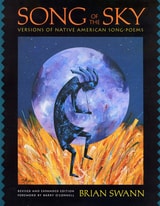
Song of the Sky
Versions of Native American Song-PoemsBrian Swann
University of Massachusetts Press, 1993
“Swann's ‘concrete’ renderings of the poems are visually striking and are meant to embody the notions of silence and cycle that are so important in Native American culture. . . . [He] does a fine job of encouraging readers to return to return to these original songs and poems from a culture that most latter-day Americans know far too little about.”—Anne Bromley, Georgia Review
Based on the work of anthropologist collectors, this compendium of more than 100 Native American chants and songs revises and updates a prior edition out of print since 1989. ‘These poems are not translations,’ argues Swann. They're versions that have gone through ‘a series of mediations and filters and exist somewhere between the individual lyric voice’ and a diverse, multileveled Native American imaginative-mystical identity. Whether versions, translations, or poems, whether sung at a Crazy Dance, potlatch, corn-grinding, or curative or marriage ceremony, whether celebrating buffalo, maize, red fox, or tobacco, these works capture the ‘otherness’ of the primeval spirit of the Native American fusion of natural and supernatural, animal and deity. Originally performed aloud, these ‘verbal artifacts’—which are sometimes breathtakingly pure, sometimes obscure—reveal that there can be no conventional or single notion of ‘the Indian.’”—Library Journal
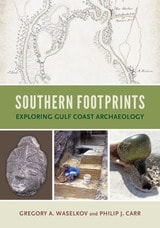
Southern Footprints
Exploring Gulf Coast ArchaeologyGregory A. Waselkov and Philip J. Carr
University of Alabama Press, 2024
Unearthing the Gulf Coast’s past—one footprint at a time.
Southern Footprints celebrates more than fifty years of archaeological research along the Gulf Coast by the University of South Alabama and the Center for Archaeological Studies. Archaeologists Gregory A. Waselkov and Philip J. Carr, the former and current directors of the center, present the “greatest hits” that have transformed knowledge of human history on the Alabama and Mississippi Gulf Coast from the Ice Age until recently. Each archaeological site, from surface collections to premiere archaeological preserves, such as Old Mobile and Holy Ground, offers clues to the past.
The chapters in this collection are arranged chronologically and survey the history and archaeology of a wide range of significant sites, including the Gulf Shores canoe canal, Bottle Creek Mounds, Old Mobile, Fort Mims, Spanish Fort, Spring Hill College, and Mobile River Bridge.
Waselkov and Carr take care to acknowledge in these stories populations who have been historically underdocumented, now recognizing the contributions of Native Americans and African Americans that have been uncovered through archaeology. The authors reveal the dire impacts of climate change, environmental disasters, development, and neglect—and convey their urgency to protect these areas of shared history—as a result of the meticulous excavation, analysis, and preservation of artifacts from these sites. Color photographs showcase the archaeology as it unfolds, often with the help of dedicated volunteers. Southern Footprints will serve as an indispensable reference on the rich Gulf Coast heritage for all to appreciate.
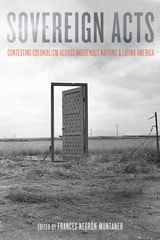
Sovereign Acts
Contesting Colonialism Across Indigenous Nations and Latinx AmericaEdited by Frances Negrón-Muntaner
University of Arizona Press, 2017
Editor Frances Negrón-Muntaner and the contributors to Sovereign Acts engage in a debate around these questions with surprising results. Moving the idea of sovereignty beyond the narrow confines of the nation-state, beyond the concept of a power that one either has or lacks, this paradigm-shifting work examines the multiple ways that Indigenous nations and U.S. territorial peoples act as sovereign and the possible limits of such sovereign acts within the current globalized context. A valuable contribution to the debate around indigenous and other conceptions of sovereignty, Sovereign Acts goes further than legal frameworks to investigate the relationships among sovereignty, gender, sexuality, representation, and the body.
From activist style and choreography to the politics of recognition, the scholars and artists featured in this unique volume map out how people disrupt modern notions of sovereignty, attempt to redefine what being sovereign means, or seek alternative political vocabularies. Sovereignty is not only, after all, a kingdom and a crown.
CONTRIBUTORS
Michael Lujan Bevacqua
Glen Coulthard
Jennifer Nez Denetdale
Adriana María Garriga-López
Jessica A. F. Harkins
Brian Klopotek
Davianna Pomaika‘i McGregor
Frances Negrón-Muntaner
Yasmin Ramírez
Mark Rifkin
Madeline Román
Stephanie Nohelani Teves
Fa‘anofo Lisaclaire Uperesa
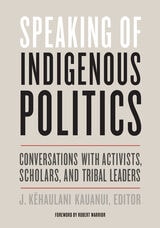
Speaking of Indigenous Politics
Conversations with Activists, Scholars, and Tribal LeadersJ. Kehaulani Kauanui
University of Minnesota Press, 2018
“A lesson in how to practice recognizing the fundamental truth that every inch of the Americas is Indigenous territory” —Robert Warrior, from the Foreword
Many people learn about Indigenous politics only through the most controversial and confrontational news: the Standing Rock Sioux Tribe’s efforts to block the Dakota Access Pipeline, for instance, or the battle to protect Bears Ears National Monument in Utah, a site sacred to Native peoples. But most Indigenous activism remains unseen in the mainstream—and so, of course, does its significance. J. Kēhaulani Kauanui set out to change that with her radio program Indigenous Politics. Issue by issue, she interviewed people who talked candidly and in an engaging way about how settler colonialism depends on erasing Native peoples and about how Native peoples can and do resist. Collected here, these conversations speak with clear and compelling voices about a range of Indigenous politics that shape everyday life.
Land desecration, treaty rights, political status, cultural revitalization: these are among the themes taken up by a broad cross-section of interviewees from across the United States and from Canada, Mexico, Chile, Bolivia, Peru, Australia, and New Zealand. Some speak from the thick of political action, some from a historical perspective, others from the reaches of Indigenous culture near and far. Writers, like Comanche Paul Chaat Smith, author of Everything You Know about Indians Is Wrong, expand on their work—about gaming and sovereignty, for example, or protecting Native graves, the reclamation of land, or the erasure of Indian identity. These conversations both inform and engage at a moment when their messages could not be more urgent.
Contributors: Jessie Little Doe Baird (Mashpee Wampanoag), Omar Barghouti, Lisa Brooks (Abenaki), Kathleen A. Brown-Pérez (Brothertown Indian Nation), Margaret “Marge” Bruchac (Abenaki), Jessica Cattelino, David Cornsilk (Cherokee Nation), Sarah Deer (Muskogee Creek Nation), Philip J. Deloria (Dakota), Tonya Gonnella Frichner (Onondaga Nation), Hone Harawira (Ngapuhi Nui Tonu), Suzan Shown Harjo (Cheyenne and Hodulgee Muscogee), Rashid Khalidi, Winona LaDuke (White Earth Ojibwe), Maria LaHood, James Luna (Luiseño), Aileen Moreton-Robinson (Quandamooka), Chief Mutáwi Mutáhash (Many Hearts) Marilynn “Lynn” Malerba (Mohegan), Steven Newcomb (Shawnee/Lenape), Jean M. O’Brien (White Earth Ojibwe), Jonathan Kamakawiwo‘ole Osorio (Kanaka Maoli), Steven Salaita, Paul Chaat Smith (Comanche), Circe Sturm (Mississippi Choctaw descendant), Margo Taméz (Lipan Apache), Chief Richard Velky (Schaghticoke), Patrick Wolfe.
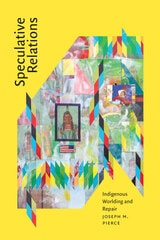
Speculative Relations
Indigenous Worlding and RepairJoseph M. Pierce
Duke University Press, 2025
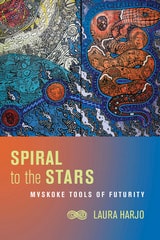
Spiral to the Stars
Mvskoke Tools of FuturityLaura Harjo
University of Arizona Press, 2019
Geographer Laura Harjo demonstrates that Mvskoke communities have what they need to dream, imagine, speculate, and activate the wishes of ancestors, contemporary kin, and future relatives—all in a present temporality—which is Indigenous futurity.
Organized around four methodologies—radical sovereignty, community knowledge, collective power, and emergence geographies—Spiral to the Stars provides a path that departs from traditional community-making strategies, which are often extensions of the settler state. Readers are provided a set of methodologies to build genuine community relationships, knowledge, power, and spaces for themselves. Communities don’t have to wait on experts because this book helps them activate their own possibilities and expertise. A detailed final chapter provides participatory tools that can be used in workshop settings or one on one.
This book offers a critical and concrete map for community making that leverages Indigenous way-finding tools. Mvskoke narratives thread throughout the text, vividly demonstrating that theories come from lived and felt experiences. This is a must-have book for community organizers, radical pedagogists, and anyone wishing to empower and advocate for their community.
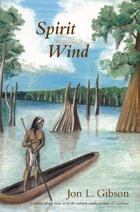
Spirit Wind
Jon L. Gibson
University of Alabama Press, 2009
A coming-of-age story set in the isolated, murky swamps of Louisiana.
When the mighty wind blows through the swamps of southern Louisiana, it changes not only the land, but the inhabitants as well. Just such a wind brought a lone infant into the care of the Chitimacha Indians deep in the Atchafalaya swamp. Raised by the tribal holy man, Storm Rider grows to adolescence as a respected tribal member, steeped in the wisdom and traditions of his adopted people. Their clan competitions, life-cycle rituals, social interactions, and subsistence labors are well explained in this historical novel.
When captured by an enemy raiding party, Storm Rider and his nemesis, the village bully, forge a bond that delivers them from danger and charts their futures. Love, hate, friendship, and loyalty ride the dark bayou waters and converge at the sacred Rain Tree. Swamps, hurricanes, cannibals, and unforgettable characters are interwoven as tightly as one of old Cane Basket's watertight baskets in this anthropologically accurate story of American Indian cultures in conflict.
Staking Claim
Settler Colonialism and Racialization in Hawai'iJudy Rohrer
University of Arizona Press, 2016
Author Judy Rohrer brings together an analysis of racial formation and colonization in the islands through a study of legal cases, contemporary public discourse (local media and literature), and Hawai‘i scholarship. Her analysis exposes how racialization works to obscure—with the ultimate goal of eliminating—native Hawaiian indigeneity, homeland, nation, and sovereignty.
Staking Claim argues that the dual settler colonial processes of racializing native Hawaiians (erasing their indigeneity), and indigenizing non-Hawaiians, enable the staking of non-Hawaiian claims to Hawai‘i. It encourages us to think beyond a settler-native binary by analyzing the ways racializations of Hawaiians and various non-Hawaiian settlers and arrivants bolster settler colonial claims, structures, and white supremacist ideologies.

Stand Up and Fight
Participatory Indigenismo, Populism, and Mobilization in Mexico, 1970–1984María L. O. Muñoz
University of Arizona Press, 2016
Using previously unavailable documents, María L. O. Muñoz examines the events that led to the congress, the meeting itself, and developments after the assembly. Muñoz shows how indigenous leaders working within Mexico’s Department of Colonization and Agrarian Affairs (DAAC) sidestepped state attempts to control indigenous communities, and how they made bold demands that redefined the ways federal and state governments engaged with pueblos indígenas.
Through research in previously untapped archives, Muñoz is able to trace the political history of the indigenous leaders and government officials who redefined the ways indigenous peoples engaged with governments. She illustrates the fluid and evolving power relationships of the key players with a focus on the twelve years of populism in the last decades of the twentieth century.
This book challenges the discourse of unquestioned power and hegemony of the national ruling party, the Institutional Revolutionary Party (PRI), and it illustrates how indigenous communities in Mexico reimagined their roles in the social, political, and economic life of the nation.
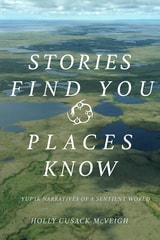
Stories Find You, Places Know
Yup'ik Narratives of a Sentient WorldHolly Cusack-McVeigh
University of Utah Press, 2017
For the Yup’ik people, places are also social actors that react to human actions and emotions. Stories tell how people learn about each other through encounters on the land, and thereby places also learn about people. Places comment on human behavior through the land's responses to specific actions. Stories variously reveal ideas about human associations and relationships between humans and nonhuman beings. Pointing to a systematic correlation between places and narrative elements that has not been previously explored, this volume makes a unique contribution to the literature on place.
Winner of the Brian McConnell Book Award from the International Society for Contemporary Legend Research.
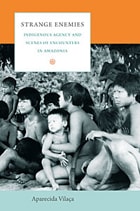
Strange Enemies
Indigenous Agency and Scenes of Encounters in AmazoniaAparecida Vilaça
Duke University Press, 2010
During the 1940s and 1950s, white rubber tappers invading the Wari’ lands raided the native villages, shooting and killing their victims as they slept. These massacres prompted the Wari’ to initiate a period of intense retaliatory warfare. The national government and religious organizations subsequently intervened, seeking to “pacify” the Indians. Aparecida Vilaça was able to interview both Wari’ and non-Wari’ participants in these encounters, and here she shares their firsthand narratives of the dramatic events. Taking the Wari’ perspective as its starting point, Strange Enemies combines a detailed examination of these cross-cultural encounters with analyses of classic ethnological themes such as kinship, shamanism, cannibalism, warfare, and mythology.

Strong Hearts and Healing Hands
Southern California Indians and Field Nurses, 1920–1950Clifford E. Trafzer
University of Arizona Press, 2021
Over time, field nurses and Native people formed a positive working relationship that resulted in the decline of mortality from infectious diseases. Many Native Americans accepted and used Western medicine to fight pathogens, while also continuing Indigenous medicine ways. Nurses helped control tuberculosis, measles, influenza, pneumonia, and a host of gastrointestinal sicknesses. In partnership with the community, nurses quarantined people with contagious diseases, tested for infections, and tracked patients and contacts. Indians turned to nurses and learned about disease prevention. With strong hearts, Indians eagerly participated in the tuberculosis campaign of 1939–40 to x-ray tribal members living on twenty-nine reservations. Through their cooperative efforts, Indians and health-care providers decreased deaths, cases, and misery among the tribes of Southern California.
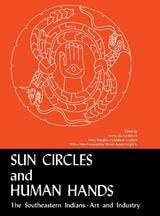
Sun Circles and Human Hands
The Southeastern Indians Art and IndustriesEdited by Emma Lila Fundaburk and Mary Douglass Fundaburk Foreman
University of Alabama Press, 2001
This classic compendium of ancient Indian artifacts from the entire southeastern United States remains an indispensable reference source for professionals and enthusiasts alike.
From utilitarian arrowheads to beautiful stone effigy pipes to ornately-carved shell disks, the photographs and drawings in Sun Circles and Human Hands present the archaeological record of the art and native crafts of the prehistoric southeastern Indians. Painstakingly compiled in the 1950s by two sisters who traveled the eastern United States interviewing archaeologists and collectors and visiting the major repositories, Sun Circles and Human Hands is remarkable for its breadth of illustration of Indian-made artifacts and its comprehensive documentation. Although research over the last 50 years has disproven many of the early theories reported in the text—which were not the editors' theories but those of the archaeologists of the day—the excellent illustrations of objects no longer available for examination have more than validated the lasting worth of this popular book.
Broadly acclaimed when it first appeared, this new printing has the added value of Knight's foreword, which places the work in its proper context. Useful to museums, state and national parks, school libraries, gift stores, archaeological agencies, and private collections, Sun Circles and Human Hands is a rich pictorial survey accessible to anyone interested in early American Indian culture.
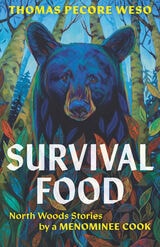
Survival Food
North Woods Stories by a Menominee CookThomas Pecore Weso
Wisconsin Historical Society Press, 2023
In these coming-of-age tales set on the Menominee Indian Reservation of the 1980s and 1990s, Thomas Pecore Weso explores the interrelated nature of meals and memories. As he puts it, “I cannot separate foods from the moments in my life when I first tasted them.” Weso’s stories recall the foods that influenced his youth in northern Wisconsin: subsistence meals from hunted, fished, and gathered sources; the culinary traditions of the German, Polish, and Swedish settler descendants in the area; and the commodity foods distributed by the government—like canned pork, dried beans, and powdered eggs—that made up the bulk of his family’s pantry. His mom called this “survival food.”
These stories from the author’s teen and tween years—some serious, some laugh-out-loud funny—will take readers from Catholic schoolyards to Native foot trails to North Woods bowling alleys, while providing Weso’s perspective on the political currents of the era. The book also contains dozens of recipes, from turtle soup and gray squirrel stew to twice-baked cheesy potatoes. This follow-up to Weso’s Good Seeds: A Menominee Indian Food Memoir is a hybrid of modern foodways, Indigenous history, and creative nonfiction from a singular storyteller.
2024 Wisconsin Library Association Outstanding Achievement Award
2024 PEN Oakland Josephine Miles Award for Excellence
Silver winner of the 2023 Midwest Book Award for Cookbooks/Crafts/Hobbies
Thomas Pecore Weso’s Survival Food was selected by the Wisconsin Center for the Book as the Wisconsin entry in the “Great Reads from Great Places” program of the Library of Congress.
“This book is not only about survival food, but about the singular beauty, creativity, and fortitude that comes out of that survival.”
—Chef Sean Sherman, author, The Sioux Chef’s Indigenous Kitchen
“Survival Food is interesting because it’s one part cookbook, three parts memoir, one part history, and one part multidisciplinary exploration of its setting, northern Wisconsin."
—James Norton, The Cookbook Test
“Nothing brings people together like good food and good stories. There’s an abundance of both in Thomas Pecore Weso’s latest memoir. As Weso attests, food can bring back happy, loving memories of times that were far from happy. Even a tray of funeral sandwiches brings a kind of comfort. This is a wonderful, honest portrait of northeastern Wisconsin, enlightening even to those of us who call this area home.”
—Jared Santek, Founder & Artistic Director, Write On Door County
“Survival Food provides ample nourishment for the mind and body. . . . The stories, told with humor and affection, are complemented by recipes ranging from mouth-watering instructions for cooking wild asparagus to ever-so-interesting advice for preparing bear stew.”
—Lucille Lang Day, author of Birds of San Pancho and Other Poems of Place and coeditor of Red Indian Road West: Native American Poetry from California
“His grandmother cooked according to Native traditions; his mother, ‘a nontraditional college student during my teens,’ resorted to instant meals. His grandfather was town constable and days spent with him brought Weso to the meatloaf, sausage and sauerkraut of German and Polish neighbors. Uncle Buddy’s flash car brings buckwheat pancakes to Weso’s mind, and he lived for a time near Cheese Box Curve—so called after a truck hauling dairy products overturned. Weso includes a few recipes, but mostly, Survival Food is an entertaining look back at life in Wisconsin’s rural north.”
—David Luhrssen, Shepherd Express
“Survival Food: North Woods Stories by a Menominee Cook by Thomas Pecore Weso is a posthumous sequel to his celebrated collection of family stories, Good Seeds: A Menominee Food Memoir. . . . Rich with captivating tales that include driving a convertible on logging roads, agreeing on terms before throwing eggs at passing cars, and his grandmother’s brief stay in a jailhouse she’d later purchase, Weso’s entries offer readers catharsis—demonstrating how to laugh, boast, debate, eat, mourn, and heal.”
—Ryan Winn, College of Menominee Nation, Tribal College Journal
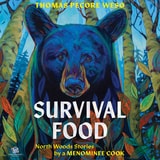
Survival Food
North Woods Stories by a Menominee CookThomas Pecore Weso
Wisconsin Historical Society Press, 2025
In these coming-of-age tales set on the Menominee Indian Reservation of the 1980s and 1990s, Thomas Pecore Weso explores the interrelated nature of meals and memories. As he puts it, “I cannot separate foods from the moments in my life when I first tasted them.” Weso’s stories recall the foods that influenced his youth in northern Wisconsin: subsistence meals from hunted, fished, and gathered sources; the culinary traditions of the German, Polish, and Swedish settler descendants in the area; and the commodity foods distributed by the government—like canned pork, dried beans, and powdered eggs—that made up the bulk of his family’s pantry. His mom called this “survival food.”
These stories from the author’s teen and tween years—some serious, some laugh-out-loud funny—will take readers from Catholic schoolyards to Native foot trails to North Woods bowling alleys, while providing Weso’s perspective on the political currents of the era. The book also contains dozens of recipes, from turtle soup and gray squirrel stew to twice-baked cheesy potatoes. This follow-up to Weso’s Good Seeds: A Menominee Indian Food Memoir is a hybrid of modern foodways, Indigenous history, and creative nonfiction from a singular storyteller.
2024 Wisconsin Library Association Outstanding Achievement Award
2024 PEN Oakland Josephine Miles Award for Excellence
Silver winner of the 2023 Midwest Book Award for Cookbooks/Crafts/Hobbies
Thomas Pecore Weso’s Survival Food was selected by the Wisconsin Center for the Book as the Wisconsin entry in the “Great Reads from Great Places” program of the Library of Congress.
“This book is not only about survival food, but about the singular beauty, creativity, and fortitude that comes out of that survival.”
—Chef Sean Sherman, author, The Sioux Chef’s Indigenous Kitchen
“Survival Food is interesting because it’s one part cookbook, three parts memoir, one part history, and one part multidisciplinary exploration of its setting, northern Wisconsin."
—James Norton, The Cookbook Test
“Nothing brings people together like good food and good stories. There’s an abundance of both in Thomas Pecore Weso’s latest memoir. As Weso attests, food can bring back happy, loving memories of times that were far from happy. Even a tray of funeral sandwiches brings a kind of comfort. This is a wonderful, honest portrait of northeastern Wisconsin, enlightening even to those of us who call this area home.”
—Jared Santek, Founder & Artistic Director, Write On Door County
“Survival Food provides ample nourishment for the mind and body. . . . The stories, told with humor and affection, are complemented by recipes ranging from mouth-watering instructions for cooking wild asparagus to ever-so-interesting advice for preparing bear stew.”
—Lucille Lang Day, author of Birds of San Pancho and Other Poems of Place and coeditor of Red Indian Road West: Native American Poetry from California
“His grandmother cooked according to Native traditions; his mother, ‘a nontraditional college student during my teens,’ resorted to instant meals. His grandfather was town constable and days spent with him brought Weso to the meatloaf, sausage and sauerkraut of German and Polish neighbors. Uncle Buddy’s flash car brings buckwheat pancakes to Weso’s mind, and he lived for a time near Cheese Box Curve—so called after a truck hauling dairy products overturned. Weso includes a few recipes, but mostly, Survival Food is an entertaining look back at life in Wisconsin’s rural north.”
—David Luhrssen, Shepherd Express
“Survival Food: North Woods Stories by a Menominee Cook by Thomas Pecore Weso is a posthumous sequel to his celebrated collection of family stories, Good Seeds: A Menominee Food Memoir. . . . Rich with captivating tales that include driving a convertible on logging roads, agreeing on terms before throwing eggs at passing cars, and his grandmother’s brief stay in a jailhouse she’d later purchase, Weso’s entries offer readers catharsis—demonstrating how to laugh, boast, debate, eat, mourn, and heal.”
—Ryan Winn, College of Menominee Nation, Tribal College Journal
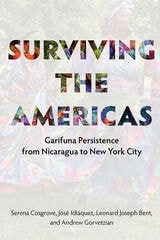
Surviving the Americas
Garifuna Persistence from Nicaragua to New York CitySerena Cosgrove, José Idiáquez, Leonard Joseph Bent, and Andrew Gorvetzian
University of Minnesota Press, 2020
In Surviving the Americas, Serena Cosgrove, José Idiáquez, Leonard Joseph Bent, and Andrew Gorvetzian shed light on what it means to be Garifuna today, particularly in Nicaragua. Their research includes over nine months of fieldwork in Garifuna communities in the Pearl Lagoon on the southern Caribbean coast of Nicaragua and in New York City. The resulting ethnography illustrates the unique social issues of the Nicaraguan Garifuna and how their culture, traditions, and reverence for their ancestors continues to persist.
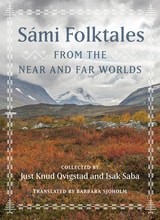
Sámi Folktales from the Near and Far Worlds
Just Knud Qvigstad
University of Minnesota Press, 2026
The most comprehensive collection of Sámi folktales ever translated into English
From the vast region of Northern Sápmi comes Sámi Folktales from the Near and Far Worlds, the most extensive compilation of Sámi narratives recorded from Sámi storytellers ever published in English translation. Comprising more than 300 folktales and legends from Northern Norway, including many from the coastal Sámi and the Skolt Sámi of Eastern Finnmark, this volume illuminates an oral storytelling tradition and shares narratives told by fishers, farmers, reindeer herders, lay preachers, and teachers from the interior plateaus and valleys to the Arctic fjords.
Originally recorded in the late nineteenth and early twentieth centuries by the Norwegian philologist Just Knud Qvigstad and the Sámi politician and folklorist Isak Saba, this collection spans centuries of storytelling in multiple genres, from migratory fairytales with kings and princesses to legends of ghosts and the Devil to fables with talking animals. A young lad from a poor family embarks on a quest through the wilderness to find treasure, receiving help from a wise female elder along his path. A Sámi boy falls in love with a háldi girl from another world, and they find a way to marry. A man carries sickness out of a village and stops the plague from spreading. Cunning foxes outsmart bears and humans alike. The villainous Chudes are tricked, foiled in their plans to steal from and kill the Sámi. People are turned into wolves, able to turn back only if they don’t taste the blood of a reindeer or if they are given cooked food. The ogre Stállu appears again and again, terrorizing the community until he’s outwitted or subdued. Rávgas, undead creatures of the sea, drag themselves out of the depths to lure others to their demise.
With historical context that reveals the cultural resilience of the Sámi people, Sámi Folktales from the Near and Far Worlds honors these traditional narratives, often overlooked in other folktale anthologies from the Nordic countries. Translator Barbara Sjoholm’s insightful introduction describes Qvigstad’s and Saba’s backgrounds and their work in gathering and translating these essential texts, and she introduces Sámi storytellers Johan Aikio, Efraim Pedersen, and Elen Utsi, who contributed dozens of stories.
An unprecedented trove of Sámi narratives, this expansive collection brings most of these tales to English readers for the first time, marking a major contribution to Indigenous folk literature and enhancing a broader understanding of Sámi and Nordic cultures.
Retail e-book files for this title are screen-reader friendly with images accompanied by short alt text and/or extended descriptions.