Results by title
57 books match the query 'Individual Director' and 4 start with s
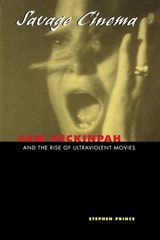
Savage Cinema
Sam Peckinpah and the Rise of Ultraviolent MoviesBy Stephen Prince
University of Texas Press, 1998
More than any other filmmaker, Sam Peckinpah opened the door for graphic violence in movies. In this book, Stephen Prince explains the rise of explicit violence in the American cinema, its social effects, and the relation of contemporary ultraviolence to the radical, humanistic filmmaking that Peckinpah practiced.
Prince demonstrates Peckinpah's complex approach to screen violence and shows him as a serious artist whose work was tied to the social and political upheavals of the 1960s. He explains how the director's commitment to showing the horror and pain of violence compelled him to use a complex style that aimed to control the viewer's response.
Prince offers an unprecedented portrait of Peckinpah the filmmaker. Drawing on primary research materials—Peckinpah's unpublished correspondence, scripts, production memos, and editing notes—he provides a wealth of new information about the making of the films and Peckinpah's critical shaping of their content and violent imagery. This material shows Peckinpah as a filmmaker of intelligence, a keen observer of American society, and a tragic artist disturbed by the images he created.
Prince's account establishes, for the first time, Peckinpah's place as a major filmmaker. This book is essential reading for those interested in Peckinpah, the problem of movie violence, and contemporary American cinema.
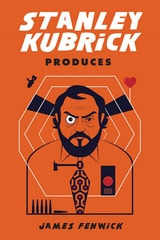
Stanley Kubrick Produces
James Fenwick
Rutgers University Press, 2021
Making use of overlooked archival sources and uncovering newly discovered ‘lost’ Kubrick projects (The Cop Killer, Shark Safari, and The Perfect Marriage among them), as well as providing the first detailed overview of the World Assembly of Youth film, James Fenwick provides a comprehensive account of Kubrick’s life and career and of how he managed to obtain the level of control that he possessed by the 1970s. Along the way, the book traces the rapid changes taking place in the American film industry in the post-studio era, uncovering new perspectives about the rise of young independent producers, the operations of influential companies such as Seven Arts and United Artists, and the whole field of film marketing.
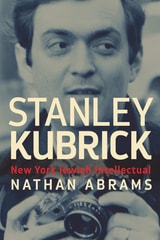
Stanley Kubrick
New York Jewish IntellectualAbrams, Nathan
Rutgers University Press, 2018
Stanley Kubrick reexamines the director’s work in context of his ethnic and cultural origins. Focusing on several of Kubrick’s key themes—including masculinity, ethical responsibility, and the nature of evil—it demonstrates how his films were in conversation with contemporary New York Jewish intellectuals who grappled with the same concerns. At the same time, it explores Kubrick’s fraught relationship with his Jewish identity and his reluctance to be pegged as an ethnic director, manifest in his removal of Jewish references and characters from stories he adapted.
As he digs deep into rare Kubrick archives to reveal insights about the director’s life and times, film scholar Nathan Abrams also provides a nuanced account of Kubrick’s cinematic artistry. Each chapter offers a detailed analysis of one of Kubrick’s major films, including Lolita, Dr. Strangelove, 2001, A Clockwork Orange, Barry Lyndon, The Shining, Full Metal Jacket, and Eyes Wide Shut. Stanley Kubrick thus presents an illuminating look at one of the twentieth century’s most renowned and yet misunderstood directors.
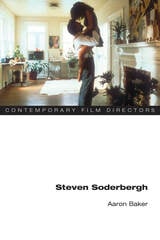
Steven Soderbergh
Aaron Baker
University of Illinois Press, 2011
A Hollywood director who blends substance with the mainstream
Steven Soderbergh's feature films present a diverse range of subject matter and formal styles: from the self-absorption of his breakthrough hit Sex, Lies, and Videotape to populist social problem films such as Erin Brockovich, and from the modernist discontinuity of Full Frontal and filmed performance art of Gray's Anatomy to a glossy, star-studded action blockbuster such as Ocean's Eleven. Using a combination of realism and expressive stylization of character subjectivity, Soderbergh's films diverge from the contemporary Hollywood mainstream through the statements they offer on issues including political repression, illegal drugs, violence, environmental degradation, the empowering and controlling potential of digital technology, and economic inequality.
Arguing that Soderbergh practices an eclectic type of moviemaking indebted both to the European art cinema and the Hollywood genre film, Aaron Baker charts the common thematic and formal patterns present across Soderbergh's oeuvre. Almost every movie centers on an alienated main character, and Soderbergh has repeatedly emphasized place as a major factor in his narratives. Formally, he represents the unconventional thinking of his outsider protagonists through a discontinuous editing style. Including detailed analyses of major films as well as two interviews with the director, this volume illustrates Soderbergh's hybrid flexibility in bringing an independent aesthetic to wide audiences.