Results by title
124 books match the query 'Information technology' and 7 start with s

Scholarship In The Sandbox
Amy Jackson
Assoc of College & Research Libraries, 2019

Semantic Web Technologies and Social Searching for Librarians
Robin M. American Library Association
American Library Association, 2012

Smartland Korea
Mobile Communication, Culture, and SocietyDal Yong Jin
University of Michigan Press, 2017
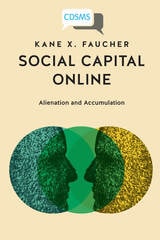
Social Capital Online
Alienation and AccumulationKane X. Faucher
University of Westminster Press, 2018
What is ‘social capital’? The enormous positivity surrounding it conceals the instrumental economic rationality underpinning the notion as corporations silently sell consumer data for profit. Status chasing is just one aspect of a process of transforming qualitative aspects of social interactions into quantifiable metrics for easier processing, prediction, and behavioural shaping.
A work of critical media studies, Social Capital Online examines the idea within the new ‘network spectacle’ of digital capitalism via the ideas of Marx, Veblen, Debord, Baudrillard and Deleuze. Explaining how such phenomena as online narcissism and aggression arise, Faucher offers a new theoretical understanding of how the spectacularisation of online activity perfectly aligns with the value system of neoliberalism and its data worship. Even so, at the centre of all, lie familiar ideas – alienation and accumulation – new conceptions of which he argues are vital for understanding today’s digital society.
Start a Revolution
Stop Acting Like a LibraryBen Bizzle
American Library Association, 2014
SuperVision
An Introduction to the Surveillance SocietyJohn Gilliom and Torin Monahan
University of Chicago Press, 2012
We live in a surveillance society. Anyone who uses a credit card, cell phone, or even search engines to navigate the Web is being monitored and assessed—and often in ways that are imperceptible to us. The first general introduction to the growing field of surveillance studies, SuperVision uses examples drawn from everyday technologies to show how surveillance is used, who is using it, and how it affects our world.
Switching Codes
Thinking Through Digital Technology in the Humanities and the ArtsEdited by Thomas Bartscherer and Roderick Coover
University of Chicago Press, 2011
Half a century into the digital era, the profound impact of information technology on intellectual and cultural life is universally acknowledged but still poorly understood. The sheer complexity of the technology coupled with the rapid pace of change makes it increasingly difficult to establish common ground and to promote thoughtful discussion.
Responding to this challenge, Switching Codes brings together leading American and European scholars, scientists, and artists—including Charles Bernstein, Ian Foster, Bruno Latour, Alan Liu, and Richard Powers—to consider how the precipitous growth of digital information and its associated technologies are transforming the ways we think and act. Employing a wide range of forms, including essay, dialogue, short fiction, and game design, this book aims to model and foster discussion between IT specialists, who typically have scant training in the humanities or traditional arts, and scholars and artists, who often understand little about the technologies that are so radically transforming their fields. Switching Codes will be an indispensable volume for anyone seeking to understand the impact of digital technology on contemporary culture, including scientists, educators, policymakers, and artists, alike.