Results by title
84 books match the query 'Instruction & Study' and 9 start with s
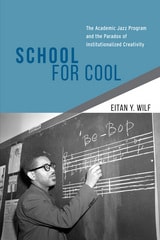
School for Cool
The Academic Jazz Program and the Paradox of Institutionalized CreativityEitan Y. Wilf
University of Chicago Press, 2014
Few art forms epitomize the anti-institutional image more than jazz, but it’s precisely at the academy where jazz is now flourishing. This shift has introduced numerous challenges and contradictions to the music’s practitioners. Solos are transcribed, technique is standardized, and the whole endeavor is plastered with the label “high art”—a far cry from its freewheeling days. Wilf shows how students, educators, and administrators have attempted to meet these challenges with an inventive spirit and a robust drive to preserve—and foster—what they consider to be jazz’s central attributes: its charisma and unexpectedness. He also highlights the unintended consequences of their efforts to do so. Ultimately, he argues, the gap between creative practice and institutionalized schooling, although real, is often the product of our efforts to close it.
Sensing Sound
Singing and Listening as Vibrational PracticeNina Sun Eidsheim
Duke University Press, 2016

Solfege, Ear Training, Rhythm, Dictation, and Music Theory
A Comprehensive CourseMarta Arkossy Ghezzo
University of Alabama Press, 1993
Solfege, Ear Training, Rhythm, Dictation, and Music Theory
A Comprehensive CourseMarta Arkossy Ghezzo
University of Alabama Press, 2005
One of the most highly acclaimed resources for the study of ear training in music education today
Solfège has become one of the most highly acclaimed resources for the study of ear training in music education today. This revised and expanded third edition includes a multitude of new musical examples and dictations covering the entire continuum of musical development from classical to modern. This edition is enhanced with a free online companion library of rich and definitive audio performances of each of the 51 musical dictations, keyed by track number to the musical notation in the text. As students progress from the simple to the complex by following these carefully interrelated lessons, the results are, according to Mel Powell, “akin to miracle-making.”
Sound Pedagogy
Radical Care in MusicEdited by Colleen Renihan, John Spilker, and Trudi Wright. Foreword by William Cheng
University of Illinois Press, 2024
Contributors: Molly M. Breckling, William A. Everett, Kate Galloway, Sara Haefeli, Eric Hung, Stephanie Jensen-Moulton, Mark Katz, Nathan A. Langfitt, Matteo Magarotto, Mary Natvig, Frederick A. Peterbark, Laura Moore Pruett, Colleen Renihan, Amanda Christina Soto, John Spilker, Reba A. Wissner, and Trudi Wright
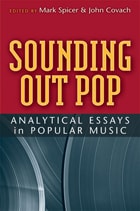
Sounding Out Pop
Analytical Essays in Popular MusicMark Spicer and John Covach, editors
University of Michigan Press, 2010
"A variety of approaches are brought to bear on fascinating repertoire, but with the underlying aim of better understanding some brilliant music. There’s nothing more exciting in music writing than something which entices you to listen to what’s familiar to you in a new way, and this collection brings such excitement in abundance."
---Allan Moore, author of Jethro Tull: Aqualung and Rock: The Primary Text
"These essays bring together a remarkable range of tools and perspectives to such diverse topics and contexts as the behind-the-scenes collaborations of composers, performers, arrangers, producers and engineers; pop culture; narratology; and race, politics and gender. The reader continuously benefits from a complementary lineup of sensitive ears that discover novelty in the familiar, exposing the heart of many rock and pop classics through imaginative and authoritative prose."
---Walter Everett, author of The Foundations of Rock and The Beatles as Musicians
The nine essays in Sounding Out Pop work together to map the myriad styles and genres of the pop-rock universe through detailed case studies that confront the music from a variety of engaging, thought-provoking perspectives---from historical to music-analytic, aesthetic to ethnographic, with several authors drawing liberally from ideas in other disciplines. The range of bands and artists covered is as vast and varied as the more than fifty-year history of pop and rock music, from the Coasters and Roy Orbison to Marvin Gaye, Bob Dylan, Radiohead, Beck, Genesis, Tori Amos, and the Police. Together these diverse essays cover a broad spectrum of studies ideally suited for classroom use and for other readers interested in gaining a deeper knowledge of the way popular music works.
Mark Spicer is Associate Professor and Director of Undergraduate Studies in Music at Hunter College and the Graduate Center, City University of New York. His writings have appeared in Contemporary Music Review, Gamut, Music Theory Online, twentieth-century music, and other scholarly journals and essay collections.
John Covach is Professor of Music at the University of Rochester and Professor of Theory at the Eastman School of Music. He is the author of the college textbook What's That Sound? An Introduction to Rock and Its History and the coeditor of Understanding Rock, American Rock and the Classical Music Tradition, and Traditions, Institutions, and American Popular Music.
Cover art credit: © iStockphoto.com/Aleksandar Dickov
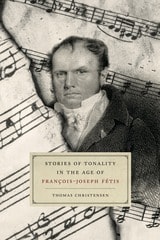
Stories of Tonality in the Age of François-Joseph Fétis
Thomas Christensen
University of Chicago Press, 2019
Style and Music
Theory, History, and IdeologyLeonard B. Meyer
University of Chicago Press, 1997
Meyer devotes the latter part of his book to a sketch-history of nineteenth-century music. He shows explicitly how the beliefs and attitudes of Romanticism influenced the choices of composers from Beethoven to Mahler and into our own time.
"A monumental work. . . . Most authors concede the relation of music to its cultural milieu, but few have probed so deeply in demonstrating this interaction."—Choice
"Probes the foundations of musical research precisely at the joints where theory and history fold into one another."—Kevin Korsyn, Journal of American Musicological Society
"A remarkably rich and multifaceted, yet unified argument. . . . No one else could have brought off this immense project with anything like Meyer's command."—Robert P. Morgan, Music Perception
"Anyone who attempts to deal with Romanticism in scholarly depth must bring to the task not only musical and historical expertise but unquenchable optimism. Because Leonard B. Meyer has those qualities in abundance, he has been able to offer fresh insight into the Romantic concept."—Donal Henahan, New York Times
Sync
Stylistics of Hieroglyphic TimeAuthored by James Tobias
Temple University Press, 2010
In Sync, James Tobias examines the development of musical sound and image in cinema and media art, indicating how these elements define the nature and experience of reception. Placing musicality at the center of understanding streaming media, Tobias presents six interwoven stories about synchronized audiovisual media—from filmmaker Sergei Eisenstein’s Alexander Nevsky to today’s contemporary digital art and computer games—to show how these effects are never merely "musical" in the literal sense of organized sound.