Results by title
89 books match the query 'Invention' and 5 start with s

Sade
The Invention Of The Libertine BodyMarcel Henaff
University of Minnesota Press, 1999
A new model for examining Sade and his creations.
A new model for examining Sade and his creations.
Decried as a misogynist and pornographer, imprisoned for debauchery and for his writings, there is scarcely a cultural figure as flamboyant and controversial as the Marquis de Sade, the father of the new libertine body. But this is not, Hénaff maintains, the only way to see Sade. In this long-awaited English translation, Hénaff says that Sade should be discussed less for the sensual heat of his writing and more for the larger poetic and economic model his work represents.With unabashed candor, Sade describes bodies in terms not of flesh but of production, use, exchange, and waste. In his writing, this libertine self is unleashed from its constraints, no longer bound by old conceptions of desire and traditions of courtship. Hénaff’s argument that Sade is a sign of his times-exposing the courtly facade of a society unable to preserve itself-reveals dark, disquieting secrets about the direction of civilization. The libertine body, he says, is a child of this new order.ISBN 0-8166-2536-0 Cloth £34.50 $49.95xxISBN 0-8166-2537-9 Paper £14.00 $19.95x296 Pages 5 7/8 x 9 OctoberTranslation inquiries: University of Minnesota Press[more]

Sex Isn't Real
The Invention of an Incoherent BinaryBeans Velocci
Duke University Press, 2026
In Sex Isn’t Real, Beans Velocci traces the history of current high stakes attempts to define sex and to create a world devoid of trans life. Drawing on lab notes, family genealogies, medical case studies, and more, Velocci follows scientists and clinicians from the mid-nineteenth through the mid-twentieth century and across five disciplines—zoology, eugenics, gynecology, statistical sexology, and transsexual medicine—as their ideas and practices created a definitional tangle. They demonstrate how the sorting of bodies into male and female persists not despite but because of sex’s incoherence: the defining features of these categories shift to contain various understandings of anatomy and physiology, theories of race, developments in research and medical methodologies, and bodies that cannot be accounted for in a binary framework. Exposing the endless work required to produce a world in which most people have a binary gender identity that neatly fits their binarily sexed body, Velocci demonstrates that it is not cis people who fit the categories; it’s the categories that flex to make them fit.
[more]

Slavery and the Invention of Dutch Art
Caroline Fowler
Duke University Press, 2025
In Slavery and the Invention of Dutch Art, Caroline Fowler examines the fundamental role of the transatlantic slave trade in the production and evolution of seventeenth-century Dutch art. Whereas the sixteenth-century image debates in Europe engaged with crises around the representation of divinity, Fowler argues that the rise of the transatlantic slave trade created a visual field of uncertainty around picturing the transformation of life into property. Fowler demonstrates how the emergence of landscape, maritime, and botanical painting were deeply intertwined with slavery’s economic expansion. Moreover, she considers how the development of one of the first art markets was inextricable from the trade in human lives as chattel property. Reading seventeenth-century legal theory, natural history, inventories, and political pamphlets alongside contemporary poetry, theory, and philosophy from Black feminism and the African diaspora, Fowler demonstrates that ideas about property, personhood, and citizenship were central to the oeuvres of artists such as Rembrandt van Rijn, Hercules Segers, Frans Post, Johannes Vermeer, and Maria Sibylla Merian and therefore inescapably within slavery’s grasp.
[more]

Social Science as Civic Discourse
Essays on the Invention, Legitimation, and Uses of Social TheoryRichard Harvey Brown
University of Chicago Press, 1989
Richard Harvey Brown's pioneering explorations in the philosophy of social science and the theory of rhetoric reach a culmination in Social Science as Civic Discourse. In his earlier works, he argued for a logic of discovery and explanation in social science by showing that science and art both depend on metaphoric thinking, and he has applied that logic to society as a narrative text in which significant action by moral agents is possible. This new work is at once a philosophical critique of social theory and a social-theoretical critique of politics. Brown proposes to redirect the language and the mission of the social sciences toward a new discourse for a humane civic practice.
[more]
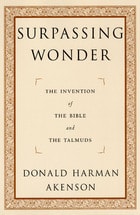
Surpassing Wonder
The Invention of the Bible and the TalmudsDonald Harman Akenson
University of Chicago Press, 2001
Elegant and inventive, Surpassing Wonder uncovers how the ancient Hebrew scriptures, the Christian New Testament, and the Talmuds of the Rabbis are related and how, collectively, they make up the core of Western consciousness. Donald Harman Akenson provides an incisive critique of how religious scholars have distorted the holy books and argues that it was actually the inventor of the Hebrew scriptures who shaped our concept of narrative history—thereby founding Western culture.
[more]