Results by title
87 books match the query 'Iraq' and 5 start with s
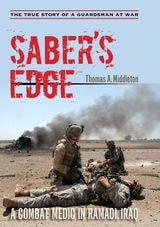
Saber’s Edge
A Combat Medic in Ramadi, IraqThomas A. Middleton
University Press of New England, 2010
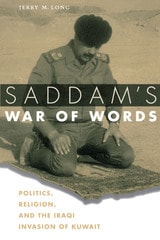
Saddam's War of Words
Politics, Religion, and the Iraqi Invasion of KuwaitBy Jerry M. Long
University of Texas Press, 2004
From a Western perspective, the Persian Gulf War of 1990-1991 largely fulfilled the first President Bush's objective: "In, out, do it, do it right, get gone. That's the message." But in the Arab world, the causes and consequences of Saddam Hussein's invasion of Kuwait and his subsequent defeat by a U.S.-led coalition were never so clear-cut. The potent blend of Islam and Arab nationalism that Saddam forged to justify the unjustifiable—his invasion of a Muslim state—gained remarkable support among both Muslims and Arabs and continued to resonate in the Middle East long after the fighting ended. Indeed, as this study argues in passing, it became a significant strand in the tangled web of ideologies and actions that led to the attacks of 9/11.
This landmark book offers the first in-depth investigation of how Saddam Hussein used Islam and Arab nationalism to legitimate his invasion of Kuwait in the eyes of fellow Muslims and Arabs, while delegitimating the actions of the U.S.-led coalition and its Arab members. Jerry M. Long addresses three fundamental issues: how extensively and in what specific ways Iraq appealed to Islam during the Kuwait crisis; how elites, Islamists, and the elusive Arab "street," both in and out of the coalition, responded to that appeal and why they responded as they did; and the longer-term effects that resulted from Saddam's strategy.
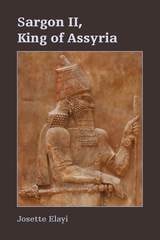
Sargon II, King of Assyria
Josette Elayi
SBL Press, 2017
A critical resource that traces the reign of Sargon in context
Josette Elayi's book is the only existing biography of Sargon II, the famous Assyrian king, who was a megalomaniac and a warlord. Elayi addresses such important questions, including what was his precise role in the disappearance of the kingdom of Israel; how did Sargon II succeed in enlarging the borders of the Assyrian Empire by several successful campaigns; how did he organize his empire (administration, trade, agriculture, libraries), and what was the so-called sin of Sargon?
Features:
- Interpretations of decisive events during the life and reign of the Assyrian king
- An evaluation of Sargon II s reign
- Maps, tables, and illustrations
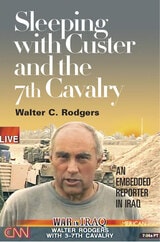
Sleeping with Custer and the 7th Cavalry
An Embedded Reporter in IraqWalter C. Rodgers
Southern Illinois University Press, 2005
An essential document of the first American war of the new century
Under a full opalescent moon in the spring of 2003, CNN correspondent Walter C. Rodgers and three colleagues climbed into an unarmored Humvee loaded with satellite transmission equipment and fell into column formation with the MIAI Abrams battle tanks and Bradley fighting vehicles of Apache Troop, Third Squadron, of the storied 7th Cavalry and crossed the Line of Departure between Kuwait and Iraq. Sleeping with Custer and the 7th Cavalry: An Embedded Reporter in Iraq is Rodgers’s account of the fight from the Kuwaiti border to the Iraqi capital of Baghdad.
Rodgers was embedded with the “tip of the tip of the spear,” the armored reconnaissance unit tasked with clearing the way for the invasion of Iraq. For the next three weeks Rodgers—a seasoned combat correspondent who has covered armed conflicts in the West Bank, along the “Green Line” in Lebanon, and in Sarajevo, Azerbaijan, and Afghanistan—was a first-person witness to the opening campaign of the most significant war America has embarked upon since Vietnam.
Rodgers and his journalistic colleagues in Operation Iraqi Freedom became pioneers in the process of embedding, the placing of journalists who can transmit video reports in real time under combat conditions with no censoring authority to block their reporting. During this journey into war, Rodgers and his crew embraced the dangers, the numbing fatigue, and the moments of stark fear of the young armored cavalrymen they lived with twenty-four hours each day, an experience that created for them the lifelong bond that only soldiers serving together under fire share.
Rodgers also details his return visit to Iraq a year later, reflecting on the nature of war and sharing his personal feelings about a conflict that has claimed the lives of over fifteen hundred American men and women. The volume is illustrated with photographs taken during the invasion by Jeff Barwise, the CNN engineer who accompanied Rodgers.
Sourcebook for Ancient Mesopotamian Medicine
JoAnn Scurlock
SBL Press, 2014
In this collection JoAnn Scurlock assembles and translates medical texts that provided instructions for ancient doctors and pharmacists. Scurlock unpacks the difficult, technical vocabulary that describes signs and symptoms as well as procedures and plants used in treatments. This fascinating material shines light on the development of medicine in the ancient Near East, yet these tablets were essentially inaccessible to anyone without an expertise in cuneiform. Scurlock’s work fills this gap by providing a key resource for teaching and research.
Features:
- Accessible translations and transliterations for both specialists and non-specialists
- Texts include a range of historical periods and regions
- Therapeutic, pharmacological, and diagnostic texts