Results by title
56 books match the query 'Jesus Christ' and 3 start with s
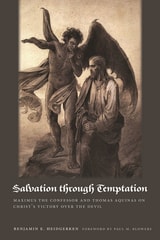
Salvation through Temptation
Maximus the Confessor and Thomas Aquinas on Christ's Victory over the DevilBenjamin E. Heidgerken
Catholic University of America Press, 2021
Salvation through Temptation describes the development of predominant Greek and Latin Christian conceptions of temptation and of the work of Christ to heal and restore humankind in the context of that temptation, focusing on Maximus the Confessor and Thomas Aquinas as well-developed examples of Greek and Latin thought on these matters.
Maximus and Thomas represent two trajectories concerning the woundedness of human emotionality in the wake of the primordial human sin. Heidgerken argues that Maximus stands in essential continuity with earlier Greek ascetic theology, which conceives of the weakness of fallen humankind in demonological categories, so that the Pauline law of sin is bound to external demonic agents that act upon the human mind through thoughts, desires, and sensory impressions. For Thomas, on the other hand, this wound consists primarily of an internal disordering of the faculties that results from the withdrawal of original grace: concupiscence or the fomes peccati. Yet even in this framework, the devil plays a significant role in Thomas’s account of postlapsarian temptation.
On the basis of these differing frameworks for human temptation, Heidgerken demonstrates the centrality of Christ’s exemplarity in the Greek account and the centrality of Christ’s moral perfections in the Latin account. As a consequence of these emphases, the Greek tradition of Maximus places distinct limits on the ability of human emotionality (even that of Christ) to be perfected in this life, whereas Thomas’s approach allows Christ to completely embody a perfected form of human emotionality in his earthly life. Reciprocally, Thomas’s account of Christ’s moral perfections and virtue places distinct limits on his affirmation of Christ’s experience of postlapsarian temptation, whereas Maximus’s account allows for Christ to experience interior forms of temptation that more closely mirror the concrete moral experiences and circumstances of fallen human beings. Salvation through Temptation recommends a retrieval of early ascetic theology and demonology as the best contemporary systematic and ecumenically-viable approach to Christ’s temptation and victory over the devil.
[more]
Selected Prose Works
Commentary on Genesis, Commentary on Exodus, Homily on Our Lord, Letter to PubliusSaint Ephrem the Syrian
Catholic University of America Press, 1994
This volume presents for the first time in the Fathers of the Church series the work of an early Christian writer who did not write in either Greek or Latin. It offers new English translations of selected prose works by St. Ephrem the Syrian (c. A.D. 309-373).
[more]
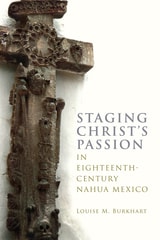
Staging Christ's Passion in Eighteenth-Century Nahua Mexico
Louise M. Burkhart
University Press of Colorado, 2023
Staging Christ’s Passion in Eighteenth-Century Nahua Mexico explores the Passion plays performed in Nahuatl (Aztec) by Indigenous Mexicans living under Spanish colonial occupation. Though sourced from European writings and devotional practices that emphasized the suffering of Christ and his mother, this Nahuatl theatrical tradition grounded the Passion story in the Indigenous corporate community. Passion plays had courted controversy in Europe since their twelfth-century origin, but in New Spain they faced Catholic authorities who questioned the spiritual and intellectual capacity of Indigenous people and, in the eighteenth century, sought to suppress these performances. Six surviving eighteenth-century scripts, variants of an original play possibly composed early in the seventeenth century, reveal how Nahuas passed along this model text while modifying it with new dialogue, characters, and stage techniques. Louise M. Burkhart explores the way Nahuas merged the Passion story with their language, cultural constructs, social norms, and religious practices while also responding to surveillance by Catholic churchmen. Analytical chapters trace significant themes through the six plays and key these to a composite play in English included in the volume.
A cast with over fifty distinct roles acted out events extending from Palm Sunday to Christ’s death on the cross. One actor became a localized embodiment of Jesus through a process of investiture and mimesis that carried aspects of pre-Columbian materialized divinity into the later colonial period. The play told afar richer version of the Passion story than what later colonial Nahuas typically learned from their priests or catechists. And by assimilating Jesus to an Indigenous, or macehualli, identity, the players enacted a protest against colonial rule.
The situation in eighteenth-century New Spain presents both a unique confrontation between Indigenous communities and Enlightenment era religious reformers and a new chapter in an age-old power game between popular practice and religious orthodoxy. By focusing on how Nahuas localized the universalizing narrative of Christ’s Passion, Staging Christ’s Passion in Eighteenth-Century Nahua Mexico offers an unusually in-depth view of religious life under colonial rule.
Burkhart’s accompanying website also makes available transcriptions and translations of the six Nahuatl-language plays, four Spanish-language plays composed in response to the suppression of the Nahuatl practice, and related documentation, providing a valuable resource for anyone interested in consulting the original material.
Comments restricted to single page
plays composed in response to the suppression of the Nahuatl practice, and related documentation,
providing a valuable resource for anyone interested in consulting the original material
[more]