Results by title
372 books match the query 'Language' and 27 start with s
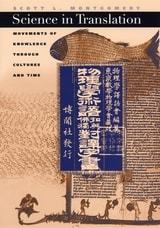
Science in Translation
Movements of Knowledge through Cultures and TimeScott L. Montgomery
University of Chicago Press, 2000
"[A] book of great richness, as much for its examples as for its ideas, which keenly illustrate the development of knowledge across languages and epochs. It is a book to read and reread. Its subject is important; it is ours, it is our history." -André Clas, Meta: Journal des Traducteurs
"[T]his book . . . seems to stand alone on the shelf. A good thing, therefore, that it is so full of good things, both in the content and the prose." —William R. Everdell, MAA Online
"[A]n impressive work. . . . By reminding us of the role of diverse cultures in the elevation of science within a particular nation or civilization, the book makes a substantial contribution to the postmodern worldview that emphasizes multiculturalism." —Choice
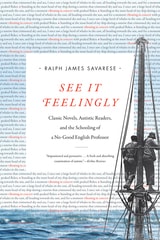
See It Feelingly
Classic Novels, Autistic Readers, and the Schooling of a No-Good English ProfessorRalph James Savarese
Duke University Press, 2018
Since the 1940s researchers have been repeating claims about autistic people's limited ability to understand language, to partake in imaginative play, and to generate the complex theory of mind necessary to appreciate literature. In See It Feelingly Ralph James Savarese, an English professor whose son is one of the first nonspeaking autistics to graduate from college, challenges this view.
Discussing fictional works over a period of years with readers from across the autism spectrum, Savarese was stunned by the readers' ability to expand his understanding of texts he knew intimately. Their startling insights emerged not only from the way their different bodies and brains lined up with a story but also from their experiences of stigma and exclusion.
For Mukhopadhyay Moby-Dick is an allegory of revenge against autism, the frantic quest for a cure. The white whale represents the autist's baffling, because wordless, immersion in the sensory. Computer programmer and cyberpunk author Dora Raymaker skewers the empathetic failings of the bounty hunters in Philip K. Dick's Do Androids Dream of Electric Sheep? Autistics, some studies suggest, offer instruction in embracing the nonhuman. Encountering a short story about a lonely marine biologist in Antarctica, Temple Grandin remembers her past with an uncharacteristic emotional intensity, and she reminds the reader of the myriad ways in which people can relate to fiction. Why must there be a norm?
Mixing memoir with current research in autism and cognitive literary studies, Savarese celebrates how literature springs to life through the contrasting responses of unique individuals, while helping people both on and off the spectrum to engage more richly with the world.
Seeming and Being in Plato’s Rhetorical Theory
Robin Reames
University of Chicago Press, 2018
Robin Reames’s Seeming & Being in Plato’s Rhetorical Theory marks a shift in Plato scholarship. Reames argues that an appropriate understanding of rhetorical theory in Plato’s dialogues illuminates how he developed the technical vocabulary needed to construct the very distinctions between seeming and being that separate true from false speech. By engaging with three key movements of twentieth- and twenty-first-century Plato scholarship—the rise and subsequent marginalization of “orality and literacy theory,” Heidegger’s controversial critique of Platonist metaphysics, and the influence of literary or dramatic readings of the dialogues—Reames demonstrates how the development of Plato’s rhetorical theory across several of his dialogues (Gorgias, Phaedrus, Protagoras, Theaetetus, Cratylus, Republic, and Sophist) has been both neglected and misunderstood.
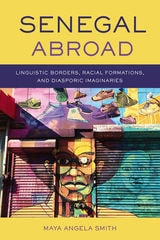
Senegal Abroad
Linguistic Borders, Racial Formations, and Diasporic ImaginariesMaya Angela Smith
University of Wisconsin Press, 2020
The Senegalese are notable, Smith suggests, both in their capacity for movement and in their multifaceted approach to language. She finds that, although the emigrants she interviews express complicated relationships to the multiple languages they speak and the places they inhabit, they also convey pleasure in both travel and language. Offering a mix of poignant, funny, reflexive, introspective, and witty stories, they blur the lines between the utility and pleasure of language, allowing a more nuanced understanding of why and how Senegalese move.
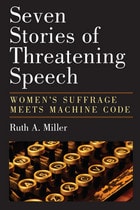
Seven Stories of Threatening Speech
Women's Suffrage Meets Machine CodeRuth A. Miller
University of Michigan Press, 2012
This book thus represents a radical methodological initiative not just for scholars of history and language but for specialists in law, political theory, political science, gender studies, semiotics, and science and technology studies. It takes posthumanist scholarship to an exciting and essential, if sometimes troubling, conclusion.
“It is an erudite work by a scholar of enormous talent, who advances a thesis that is richly insightful and deeply provocative.”—Mary Hawkesworth, Rutgers University
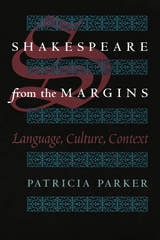
Shakespeare from the Margins
Language, Culture, ContextPatricia Parker
University of Chicago Press, 1996
Combining feminist and historical approaches with attention to the "matter" of language as well as of race and gender, Parker's brilliant "edification from the margins" illuminates much that has been overlooked, both in Shakespeare and in early modern culture. This book, a reexamination of popular and less familiar texts, will be indispensable to all students of Shakespeare and the early modern period.
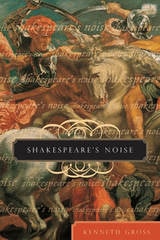
Shakespeare's Noise
Kenneth Gross
University of Chicago Press, 2001
Kenneth Gross explores Shakespeare's deep fascination with dangerous and disorderly forms of speaking—especially rumor, slander, insult, vituperation, and curse—and through them offers a vision of the work of words in his plays. Coriolanus's taunts or Lear's curses force us to think not just about how Shakespeare's characters speak, but also about how they hear, overhear, and mishear what is spoken, how rumor becomes tragic knowledge for Hamlet, or opens Othello to fantastic jealousies. Gross also shows how Shakespeare's preoccupation with "noisy" speech echoed and transformed a broader cultural obsession with the perils of rumor, slander, and libel in Renaissance England.
Elegantly written and passionately argued, Shakespeare's Noise will challenge and delight anyone who loves his plays, from scholars to general readers, actors, and directors.
Shelter for the Night
On Afghanistan, Language, and DetoursFatima Mojaddedi
Duke University Press, 2026
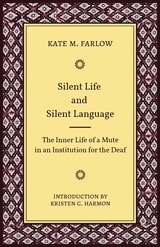
Silent Life and Silent Language
The Inner Life of a Mute in an Institution for the DeafKate M. Farlow
Gallaudet University Press, 2018
Kate M. Farlow wrote this book with the goal of giving hearing parents hope that their deaf children would be able to lead happy and productive lives. She sought to raise awareness of the benefits of deaf schools and was an early advocate for the use of American Sign Language and of bilingual education. The Christian influence on the school and on the author is strongly present in her writing and reflects an important component of deaf education at the time. Descriptions of specific signs, games, ASL story nights, and other aspects of the signing community during the 1870s will be of interest to modern students and researchers in linguistics, deaf education, Deaf studies, and Deaf history. Farlow’s work reveals a sophisticated, early understanding of the importance of access to language, education, and community for deaf individuals.
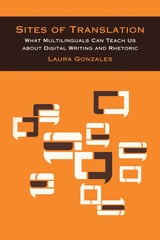
Sites of Translation
What Multilinguals Can Teach Us about Digital Writing and RhetoricLaura Gonzales
University of Michigan Press, 2018
Winner of the 2016 Sweetland Digital Rhetoric Collaborative Book Prize
Sites of Translation illustrates the intricate rhetorical work that multilingual communicators engage in as they translate information for their communities. Blending ethnographic and empirical methods from multiple disciplines, Laura Gonzales provides methodological examples of how linguistic diversity can be studied in practice, both in and outside the classroom, and provides insights into the rhetorical labor that is often unacknowledged and made invisible in multilingual communication. Sites of Translation is relevant to researchers and teachers of writing as well as technology designers interested in creating systems, pedagogies, and platforms that will be more accessible and useful to multilingual audiences. Gonzales presents multilingual communication as intellectual labor that should be further valued in both academic and professional spaces, and supported by multilingual technologies and pedagogies that center the expertise of linguistically diverse communicators.
Social Controversy and Public Address in the 1960s and Early 1970s
A Rhetorical History of the United States, Volume IXRichard J. Jensen
Michigan State University Press, 2017
Social Functions of Language in a Mexican-American Community
George Carpenter Barker
University of Arizona Press, 1972
Data were drawn from observational studies of individuals and families; observation of group activities; and observation of, supplemented by questionnaires on, the cultural interests of Mexican children and their families. Some conclusions of the study were that Spanish came to be identified in the Mexican community as the language of intimate and family relations, while English came to be identified as the language of formal social relations and of all relations with Anglos. It was also found that the younger American-born group reject both Spanish and English in favor of their own language, Pachuco. Tables depicting the characteristics of 20 families, the language usage of families, and the language usage in personal relationships of English and Spanish are included. Suggestions for further research are made.
Social Practices as Biological Niche Construction
Joseph Rouse
University of Chicago Press, 2023
In this book, Joseph Rouse takes his innovative work to the next level by articulating an integrated philosophy of society as part of nature. He shows how and why we ought to unite our biological conception of human beings as animals with our sociocultural and psychological conceptions of human beings as persons and acculturated agents. Rouse’s philosophy engages with biological understandings of human bodies and their environments as well as the diverse practices and institutions through which people live and engage with one another. Familiar conceptual separations of natural, social, and mental “worlds” did not arise by happenstance, he argues, but often for principled reasons that have left those divisions deeply entrenched in contemporary intellectual life. Those reasons are eroding in light of new developments across the disciplines, but that erosion has not been sufficient to produce more adequately integrated conceptual alternatives until now.
Social Practices and Biological Niche Construction shows how the characteristic plasticity, plurality, and critical contestation of human ways of life can best be understood as evolved and evolving relations among human organisms and their distinctive biological environments. It also highlights the constitutive interdependence of those ways of life with many other organisms, from microbial populations to certain plants and animals, and explores the consequences of this in-depth, noting, for instance, how the integration of the natural and social also provides new insights on central issues in social theory, such as the body, language, normativity, and power.

Sovereign Selves
American Indian Autobiography and the LawDavid J. Carlson
University of Illinois Press, 2005
Carlson argues that by drawing on the conventions of early colonial treaty-making, nineteenth- and early twentieth-century Indian autobiographers sought to adapt and redefine the terms of Indian law as a way to assert specific property-based and civil rights. Focusing primarily on the autobiographical careers of two major writers (William Apess and Charles Eastman), Sovereign Selves traces the way that their sustained engagement with colonial legal institutions gradually enabled them to produce a new rhetoric of "Indianness."
Speaking Chicana
Voice, Power, and IdentityD. Letticia Galindo
University of Arizona Press, 1999
Part 1. Reconstruction: Language Varieties, Language Use, and Language Attitudes
1. Crossing Social and Cultural Borders: The Road to Language Hybridity, María Dolores Gonzales
2. Fighting Words: Latina Girls, Gangs, and Language Attitudes, Norma Mendoza-Denton
Part 2. Reflection: Testimonios
3. Speaking as a Chicana: Tracing Cultural Heritage through Silence and Betrayal, Jacqueline M. Martínez
4. The Power of Language: From the Back of the Bus to the Ivory Tower, Christine Marín
5. Challenging Tradition: Opening the Headgate, Ida M. Luján
6. Mexican Blood Runs through My Veins, Aurora E. Orozco
Part 3. Innovation: Speaking Creatively/Creatively Speaking
7. Searching for a Voice: Ambiguities and Possibilities, Erlinda Gonzales-Berry
8. Sacred Cults, Subversive Icons: Chicanas and the Pictorial Language of Catholicism, Charlene Villaseñor Black
9. Caló and Taboo Language Use among Chicanas: A Description of Linguistic Appropriation and Innovation, D. Letticia Galindo
10. Máscaras, Trenzas, y Greñas: Un/Masking the Self While Un/Braiding Latina Stories and Legal Discourse, Margaret E. Montoya
Speaking in Queer Tongues
GLOBALIZATION AND GAY LANGUAGEEdited by William L. Leap and Tom Boellstorff
University of Illinois Press, 2003
Western constructions of gay culture are now circulating widely beyond the boundaries of Western nations due to influences as diverse as Internet communication, global dissemination of entertainment and other media, increased travel and tourism, migration, displacement, and transnational citizenship. The authority claimed by these constructions, and by the linguistic codes embedded in them, is causing them to have a profound impact on public and private expressions of homosexuality in locations as diverse as sub-Saharan Africa, New Zealand, Indonesia and Israel.
Examining a wide range of global cultures, Speaking in Queer Tongues presents essays on topics that include old versus new sexual vocabularies, the rhetoric of gay-oriented magazines and news media, verbal and nonverbalized sexual imagery in poetry and popular culture, and the linguistic consequences of the globalized gay rights movement.
Speaking in Shakespeare's Voice
A Guide for American ActorsLinda Gates
Northwestern University Press, 2019
Speaking in Shakespeare's Voice: A Guide for American Actors is a book for undergraduate and graduate students of acting as well as for the professional who would like to perform Shakespeare with the skill of a classical actor. It is also valuable for European actors interested in performing Shakespeare in American English and British actors who would like to explore Shakespeare from an American perspective.
This guide focuses on the technical elements of voice and speech, including breathing, resonance, and diction, as well as providing an introduction to verse speaking and scansion and to Shakespeare’s rhetorical devices, such as antithesis, alliteration, onomatopoeia, irony, metaphor, and wordplay. These topics are annotated with examples from Shakespeare’s plays to demonstrate how an actor can apply the lessons to actual performance. The book also explores the history of Shakespearean performance in the United States and provides guidance on current editions of Shakespeare’s text from the Folio to online Open Source Shakespeare. A helpful appendix offers examples of two-person scenes and contextualized monologues.
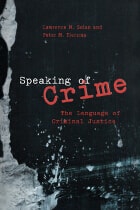
Speaking of Crime
The Language of Criminal JusticeLawrence M. Solan and Peter M. Tiersma
University of Chicago Press, 2004
Speaking of Crime answers these questions and examines the complex role of language within our criminal justice system. Lawrence M. Solan and Peter M. Tiersma compile numerous cases, ranging from the Lindbergh kidnapping to the impeachment trial of Bill Clinton to the JonBenét Ramsey case, that provide real-life examples of how language functions in arrests, investigations, interrogations, confessions, and trials. In a clear and accessible style, Solan and Tiersma show how recent advances in the study of language can aid in understanding how legal problems arise and how they might be solved.
With compelling discussions current issues and controversies, this book is a provocative state-of-the-art survey that will be of enormous value to legal scholars and professionals throughout the criminal justice system.
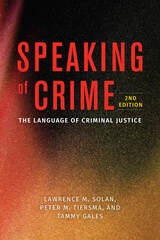
Speaking of Crime
The Language of Criminal JusticeLawrence M. Solan, Peter M. Tiersma, and Tammy Gales
University of Chicago Press, 2025
An essential introduction to the use and misuse of language within the criminal justice system, updated for a new generation.
Does everyone understand the Miranda warning? Why do people confess to a crime they did not commit? Can linguistic experts identify who wrote an anonymous threatening letter? Since its first publication, Speaking of Crime has been answering these questions. Introducing major topics and controversies at the intersection of language and law, Lawrence M. Solan, Peter M. Tiersma, and Tammy Gales apply multidisciplinary insights to examine the complex role of language within the US justice system.
The second edition features in-depth discussions of recent cases, new legislation, and innovative research advances, and includes a new chapter on who interprets the laws governing linguistic contexts. Thoroughly updated and approachable, Speaking of Crime is a state-of-the-art survey that will be useful to scholars, students, and practitioners throughout the criminal justice system.
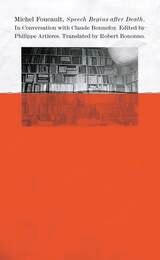
Speech Begins after Death
Michel Foucault
University of Minnesota Press, 2016
In 1968, Michel Foucault agreed to a series of interviews with critic Claude Bonnefoy, which were to be published in book form. Bonnefoy wanted a dialogue with Foucault about his relationship to writing rather than about the content of his books. The project was abandoned, but a transcript of the initial interview survived and is now being published for the first time in English. In this brief and lively exchange, Foucault reflects on how he approached the written word throughout his life, from his school days to his discovery of the pleasure of writing.
Wide ranging, characteristically insightful, and unexpectedly autobiographical, the discussion is revelatory of Foucault’s intellectual development, his aims as a writer, his clinical methodology (“let’s say I’m a diagnostician”), and his interest in other authors, including Raymond Roussel and Antonin Artaud. Foucault discloses, in ways he never had previously, details about his home life, his family history, and the profound sense of obligation he feels to the act of writing. In his Introduction, Philippe Artières investigates Foucault’s engagement in various forms of oral discourse—lectures, speeches, debates, press conferences, and interviews—and their place in his work.
Speech Begins after Death shows Foucault adopting a new language, an innovative autobiographical communication that is neither conversation nor monologue, and is one of his most personal statements about his life and writing.
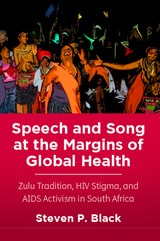
Speech and Song at the Margins of Global Health
Zulu Tradition, HIV Stigma, and AIDS Activism in South AfricaSteven P. Black
Rutgers University Press, 2019

State of Translation
Turkey in Interlingual RelationsEinar Wigen
University of Michigan Press, 2018
International politics often requires two or more languages. The resulting interlingual relations mean translation, either by interpreters who are quite literally in the middle of conversations, or by bilingual statesmen who negotiate internationally in one language and then legitimize domestically in another. Since no two languages are the same, what can be argued in one language may be impossible in another. Political concepts can thus be significantly reformulated in the translation process. State of Translation examines this phenomenon using the case of how 19th-century Ottoman and later Turkish statesmen struggled to reconcile their arguments in external languages (French, then English) with those in their internal language (Ottoman, later Turkish), and in the process further entangled them. Einar Wigen shows how this process structured social relations between the Ottoman state and its interlocutors, both domestically and internationally, and shaped the dynamics of Turkish relations with Europe.
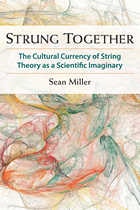
Strung Together
The Cultural Currency of String Theory as a Scientific ImaginarySean Miller
University of Michigan Press, 2013
In Strung Together: The Cultural Currency of String Theory as a Scientific Imaginary, Sean Miller examines the cultural currency of string theory, both as part of scientific discourse and beyond it. He demonstrates that the imaginative component of string theory is both integral and indispensable to it as a scientific discourse. While mathematical arguments provide precise prompts for physical intervention in the world, the imaginary that supplements mathematical argument within string theory technical discourse allows theorists to imagine themselves interacting with the cosmos as an abstract space in such a way that strings and branes as phenomena become substantiated and legitimized. And it is precisely this sort of imaginary—which Miller calls a scientific imaginary—duly substantiated and acculturated, that survives the move from string theory technical discourse to popularizations and ultimately to popular and literary discourses. In effect, a string theory imaginary legitimizes the science itself and helps to facilitate a virtual domestication of a cosmos that was heretofore remote, alien, and incomprehensible.
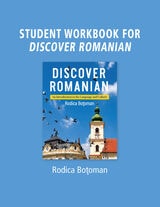
Student Workbook for Discover Romanian
An Introduction to the Language and CultureRodica Bo?oman
The Ohio State University Press, 1995
Student Workbook for Discover Romanian: An Introduction to the Language and Culture by Rodica Bot?oman

Studies in Language and Information
John Perry
CSLI, 2019
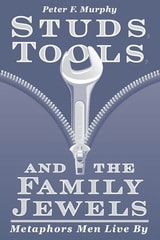
Studs, Tools, and the Family Jewels
Metaphors Men Live ByPeter F. Murphy
University of Wisconsin Press, 2001
Peter F. Murphy's purpose in this book is not to shock but rather to educate, provoke discussion, and engender change. Looking at the sexual metaphors that are so pervasive in American culture—jock, tool, shooting blanks, gang bang, and others even more explicit—he argues that men are trapped and damaged by language that constantly intertwines sexuality and friendship with images of war, machinery, sports, and work.
These metaphors men live by, Murphy contends, reinforce the view that relationships are tactical encounters that must be won, because the alternative is the loss of manhood. The macho language with which men cover their fear of weakness is a way of bonding with other men. The implicit or explicit attacks on women and gay men that underlie this language translate, in their most extreme forms, into actual violence. Murphy also believes, however, that awareness of these metaphorical power plays is the basis for behavioral change: "How we talk about ourselves as men can alter the way we live as men."
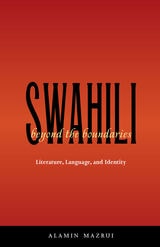
Swahili Beyond the Boundaries
Literature, Language, and IdentityAlamin Mazrui
Ohio University Press, 2007
Swahili literature is a hybrid that is being reconfigured by a conjuncture of global and local forces. As the interweaving of elements of the colonizer and the colonized, this hybrid formation provides a representation of cultural difference that is said to constitute a “third space,” blurring existing boundaries and calling into question established identitarian categorizations. This cultural dialectic is clearly evident in the Swahili literary experience as it has evolved in the crucible of the politics of African cultural production.
However, Swahili Beyond the Boundaries demonstrates that, from the point of view of Swahili literature, while hybridity evokes endless openness on questions of home and identity, it can simultaneously put closure on specific forms of subjectivity. In the process of this contestation, a new synthesis may be emerging that is poised to subject Swahili literature to new kinds of challenges in the politics of identity, compounded by the dynamics and counterdynamics of post–Cold War globalization.