98 books match the query 'Law enforcement' and 7 start with s
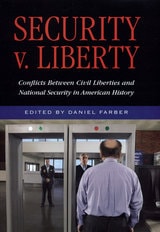
cover of Security V. Liberty: Conflicts Between National Security and Civil Liberties in American History

Security V. Liberty

Conflicts Between National Security and Civil Liberties in American History

Daniel Farber

Russell Sage Foundation, 2008
In the weeks following 9/11, the Bush administration launched the Patriot Act, rejected key provisions of the Geneva Convention, and inaugurated a sweeping electronic surveillance program for intelligence purposes—all in the name of protecting national security. But the current administration is hardly unique in pursuing such measures. In Security v. Liberty, Daniel Farber leads a group of prominent historians and legal experts in exploring the varied ways in which threats to national security have affected civil liberties throughout American history. Has the government's response to such threats led to a gradual loss of freedoms once taken for granted, or has the nation learned how to restore civil liberties after threats subside and how to put protections in place for the future? Security v. Liberty focuses on periods of national emergency in the twentieth century—from World War I through the Vietnam War—to explore how past episodes might bear upon today's dilemma. Distinguished historian Alan Brinkley shows that during World War I the government targeted vulnerable groups—including socialists, anarchists, and labor leaders—not because of a real threat to the nation, but because it was politically expedient to scapegoat unpopular groups. Nonetheless, within ten years the Supreme Court had rolled back the most egregious of the World War I restrictions on civil liberties. Legal scholar John Yoo argues for the legitimacy of the Bush administration's War on Terror policies—such as the detainment and trials of suspected al Qaeda members—by citing historical precedent in the Roosevelt administration's prosecution of World War II. Yoo contends that, compared to Roosevelt's sweeping use of executive orders, Bush has exercised relative restraint in curtailing civil liberties. Law professor Geoffrey Stone describes how J. Edgar Hoover used domestic surveillance to harass anti-war protestors and civil rights groups throughout the 1960s and early 1970s. Congress later enacted legislation to prevent a recurrence of the Hoover era excesses, but Stone notes that the Bush administration has argued for the right to circumvent some of these restrictions in its campaign against terrorism. Historian Jan Ellen Lewis looks at early U.S. history to show how an individual's civil liberties often depended on the extent to which he or she fit the definition of "American" as the country's borders expanded. Legal experts Paul Schwartz and Ronald Lee examine the national security implications of rapid advances in information technology, which is increasingly driven by a highly globalized private sector, rather than by the U.S. government. Security v. Liberty shows that civil liberties are a not an immutable right, but the historically shifting result of a continuous struggle that has extended over two centuries. This important new volume provides a penetrating historical and legal analysis of the trade-offs between security and liberty that have shaped our national history—trade-offs that we confront with renewed urgency in a post-9/11 world.
[more]
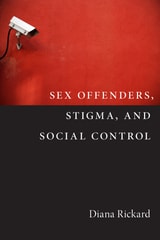
cover of Sex Offenders, Stigma, and Social Control

Sex Offenders, Stigma, and Social Control

Rickard, Diana

Rutgers University Press, 2016
The 1990s witnessed a flurry of legislative initiatives—most notably, “Megan’s Law”—designed to control a population of sex offenders (child abusers) widely reviled as sick, evil, and incurable. In Sex Offenders, Stigma, and Social Control, Diana Rickard provides the reader with an in-depth view of six such men, exploring how they manage to cope with their highly stigmatized role as social outcasts. 
 
The six men discussed in the book are typical convicted sex offenders—neither serial pedophiles nor individuals convicted of the type of brutal act that looms large in public perceptions about sex crimes. Sex Offenders, Stigma, and Social Control explores how these individuals, who have been cast as social pariahs, construct their sense of self. How does being labeled in this way and controlled by measures such as Megan’s Law affect one’s identity and sense of social being?  Unlike traditional criminological and psychological studies of this population, this book frames their experiences in concepts of both deviance and identity, asking how men so highly stigmatized cope with the most extreme form of social marginality. Placing their stories within the context of the current culture of mass incarceration and zero-tolerance, Rickard provides a deeper understanding of the complex relationship between public policy and lived experience, as well as an understanding of the social challenges faced by this population, whose re-integration into society is far from simple or assured.  
 
Sex Offenders, Stigma, and Social Control makes a significant contribution to our understanding of sex offenders, offering a unique window into how individuals make meaning out of their experiences and present a viable—not monstrous—social self to themselves and others. 
 
[more]
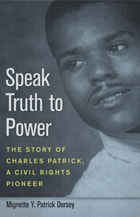
cover of Speak Truth to Power: The Story of Charles Patrick, a Civil Rights Pioneer

Speak Truth to Power

The Story of Charles Patrick, a Civil Rights Pioneer

Mignette Y. Patrick Dorsey

University of Alabama Press, 2010

"Patrick did not intend to become a civil rights pioneer, but a minor dispute over a parking spot led to his arrest, beating while in custody, and eventual legal tribulations. His daughter's account of his ordeal is well researched, beautifully narrated, and extremely informative." —Journal of Southern History

On December 11, 1954, Charles Patrick drove to downtown Birmingham to buy a Boy Scout uniform for his son. Christmas traffic around the downtown department stores was heavy, and Patrick circled unsuccessfully until at last a streetside spot opened up and he began to pull in. As he did so, he was cut off by a woman who ordered him out of the way, as she was the wife of a city police officer. Patrick pulled away, remarking, "Ma’am, he doesn’t own the streets of Birmingham."

Normal low-level urban hassle? Not in 1954 Birmingham, when the woman was white and Patrick black. The woman reported to her husband that a black man had sassed her, and Patrick was summarily arrested, charged with disorderly conduct, and placed in a cell where he was beaten by the husband and another police officer.

Usually that would have been the end of it, but Patrick was not the sort of man to meekly endure an injustice. He found an attorney, went to court to fight the charges, and brought his assailants to justice--as whites, blacks, politicians and the press offered public support.

This book tells the story of Patrick’s quest for justice in segregated Alabama on the eve of the civil rights movement and represents a telling instance of the growing determination of African Americans to be treated fairly, part of the broadening and deepening stream of resolve that led to the widespread activism of the civil rights movement.

  
[more]
cover of State Violence, Collusion and the Troubles: Counter Insurgency, Government Deviance and Northern Ireland

State Violence, Collusion and the Troubles

Counter Insurgency, Government Deviance and Northern Ireland

Maurice Punch

Pluto Press, 2012

The period in Northern Ireland known as 'the Troubles' (1968-98) seemed to have been conclusively ended by the official peace process. But recent violence from dissident Republicans shows that tensions from the past remain unresolved.

State Violence, Collusion and the Troubles reveals disturbing unanswered questions about the use of state violence during this period. Maurice Punch documents in chilling detail how the British government turned to desperate, illegal measures in a time of crisis, disregarding domestic and international law. He broadens out his analysis to consider other cases of state violence against ‘insurgent groups’ in Spain and South Africa.

This is the story of how the British state collaborated with violent groups and directly participated in illegal violence. It also raises urgent questions about why states around the world continue to deploy such violence rather than seeking durable political settlements.
[more]
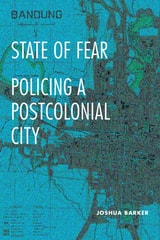
cover of State of Fear: Policing a Postcolonial City

State of Fear

Policing a Postcolonial City

Joshua Barker

Duke University Press, 2024
In State of Fear, Joshua Barker reckons with how fear and violence are produced and reproduced through everyday practices of rule and control. Examining the ethnographic and historical genealogies of Indonesian policing, Barker focuses on the city of Bandung, which is permeated by anxieties about security, in spite of the fact that it’s a relatively safe city according to the data. Drawing from his fieldwork there during the latter years of the authoritarian New Order regime, Barker traces the complex relationship between the state and vigilante groups like neighborhood watch patrols and street gangs. Through interviews with police officers, vigilantes, and street-level toughs, he uncovers a struggle between two visions of social control that continues to animate policing in Indonesia: the modern, bureaucratic approach favored by the state, and a territorial approach that divides the city into fiefdoms overseen by charismatic individuals of authority. Synthesizing insights from in-depth ethnographic, historical, and theoretical work, Barker reveals how authoritarianism can take root not just from the top down but also from the bottom up.
[more]
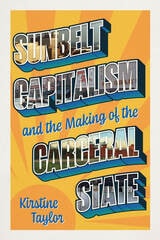
cover of Sunbelt Capitalism and the Making of the Carceral State

Sunbelt Capitalism and the Making of the Carceral State

Kirstine Taylor

University of Chicago Press, 2025

The story of how the American South became the most incarcerated region in the world’s most incarcerated nation.

Sunbelt Capitalism and the Making of the Carceral State examines the evolution of southern criminal punishment from Jim Crow to the dawn of mass incarceration, charting this definitive era of carceral transformation and expansion in the southern United States. The demise of the county chain gang, the professionalization of police, and the construction of large-scale prisons were among the sweeping changes that forever altered the southern landscape and bolstered the region’s capacity to punish. What prompted this southern revolution in criminal punishment?

Kirstine Taylor argues that the crisis in the cotton fields and the arrival of Sunbelt capitalism in the south’s rising metropolises prompted lawmakers to build expansive, modern criminal punishment systems in response to Brown v. Board of Education and the Black freedom movements of the 1960s and ‘70s. Taking us inside industry-hunting expeditions, school desegregation battles, the sit-in movement, prisoners’ labor unions, and policy commissions, Taylor tells the story of how a modernizing south became the most incarcerated region in the globe’s most incarcerated nation.

[more]
cover of Surveillance, Volume 23

Surveillance, Volume 23

Richard Maxwell

Duke University Press, 0

Since the 1960s, and increasingly since September 11, 2001, “surveillance studies” has become a rapidly expanding field, devised to examine the ways in which information about people’s personal lives is obtained, stored, and shared and how these details are used to influence and manage populations. This special issue of Social Text takes on surveillance in its domestic and international forms, exploring the impact that it has on labor, technology, and privacy.

One article looks at the emergence of the biometrics industries and its effect on surveillance systems and businesses. Another addresses the labor of surveillance and how surveillance work and policy affect the homeland security workforce. Various geographic areas are highlighted in several essays, including those on sex workers in Bengal, local surveillance in Turkey, and welfare surveillance and resistance in Appalachian Ohio. Additional themes include historical modes of surveillance, processes of legitimation for intensifying surveillance, and cultural representations of surveillance.

Contributors. Kelly A. Gates, Swati Ghosh, John Gilliom, Margaret Morganroth Gullette, Richard Maxwell, Laikwan Pang, David J. Phillips, Michael J. Shapiro, Çagatay Topal

[more]