Results by title
59 books match the query 'Lawyers & Judges' and 4 start with s
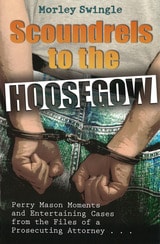
Scoundrels to the Hoosegow
Perry Mason Moments and Entertaining Cases from the Files of a Prosecuting AttorneyMorley Swingle
University of Missouri Press, 2007
I closed my direct examination of narcotics officer Bill Bohnert by asking, "Detective Bohnert, do you see in the courtroom today the man we just saw on the tape, selling the crack cocaine to Darren Bullard?"
Bohnert pointed to Robert Funt.
"He's right there. . . ."
I heard laughter in the courtroom. I glanced at the defendant, who had dutifully raised his hand.
The prisoners seated behind him were laughing. They recognized a Perry Mason moment when they saw one.
Bohnert continued, "He's the one with his hand raised in the air."
It has been said that the public prosecutor has more power over life, liberty, and reputation than any other person—a daunting proposition, but perhaps less intimidating when that official’s perspective is tempered by humor and compassion.
In Scoundrels to the Hoosegow, a veteran prosecutor who is also a consummate storyteller shares more than thirty entertaining legal stories drawn from real life, re-creating, with verve and wit, villains, heroes, and ordinary citizens. In cases both tragic and hilarious, Morley Swingle offers a behind-the-scenes look at the justice system, taking readers from the scene of the crime to the courtroom as he explores the worlds of judges, attorneys, police officers, and criminals.
Informed by a deep appreciation of Mark Twain, Swingle aims to do for his profession what Clemens did for riverboat piloting. He leads readers on an enjoyable romp through crime and punishment, while offering a clear exposition of legal points—from the subtleties of cross-examination to the role of plea bargaining.
In cases ranging from indecent exposure to conspiracy to commit murder, Swingle considers the fine line between pornography and obscenity and discusses sensitive issues surrounding first-degree murder and the death penalty. Whether describing a drunken but well-meaning probationer who frees the dogs on “death row” or the woman who tries to hire a reluctant hit man to dispose of her husband, he combines true crime and legal analysis with a healthy dose of humor—and shares the occasional “Perry Mason moment” in which a trial dramatically shifts direction.
Not since the author of Anatomy of a Murder, Robert Traver, wrote Small Town D.A. fifty years ago has an American prosecutor penned such a candid, revealing, and funny account of the job—an altogether satisfying book that sentences the reader to many hours of enjoyment.
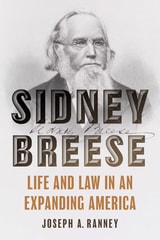
Sidney Breese
Life and Law in an Expanding AmericaJoseph A. Ranney
University of Illinois Press, 2026
Born in New York, Breese moved to Illinois in 1818. An ambitious personality combined with acumen in law, politics, and business boosted Breese into the state’s frontier elite and involved him in the political controversies that roiled the Jacksonian Era. First a circuit court judge, Breese rose to the state Supreme Court before his election to the US Senate in 1842. Breese focused his senatorial energies on westward expansion and transforming the nation into a world power—ambitions symbolized by his pivotal role in the creation of the Illinois Central Railroad. After returning to the state Supreme Court, Breese ruled on essential cases that enshrined expansionist jurisprudence in American law and regulated the growing power of corporations in post–Civil War America.
A first full-length biography, Sidney Breese places the life of an overlooked figure within legal and Illinois history.
Strong Advocate
The Life of a Trial LawyerThomas Strong
University of Missouri Press, 2012
In Strong Advocate, Thomas Strong, one of the most successful trial lawyers in Missouri’s history, chronicles his adventures as a contemporary personal injury attorney. Though the profession is held in low esteem by the general public, Strong entered the field with the right motives: to help victims who have been injured by defective products or the negligence of others.
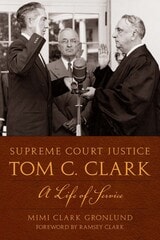
Supreme Court Justice Tom C. Clark
A Life of ServiceBy Mimi Clark Gronlund
University of Texas Press, 2010
An associate justice on the renowned Warren Court whose landmark ruling in Brown v. Board of Education overturned racial segregation in schools and other public facilities, Tom C. Clark was a crusader for justice throughout his long legal career. Among many tributes Clark received, Supreme Court Chief Justice Warren Burger opined that "no man in the past thirty years has contributed more to the improvement of justice than Tom Clark."
Supreme Court Justice Tom C. Clark is the first biography of this important American jurist. Written by his daughter, Mimi Clark Gronlund, and based on interviews with many of Clark's judicial associates, friends, and family, as well as archival research, it offers a well-rounded portrait of a lawyer and judge who dealt with issues that remain in contention today—civil rights, the rights of the accused, school prayer, and censorship/pornography, among them. Gronlund explores the factors in her father's upbringing and education that helped form his judicial philosophy, then describes how that philosophy shaped his decisions on key issues and cases, including the internment of Japanese Americans during World War II, the investigation of war fraud, the Truman administration's loyalty program (an anti-communist effort), the Brown decision, Mapp v. Ohio (protections against unreasonable search and seizure), and Abington v. Schempp (which overturned a state law that required reading from the Bible each day in public schools).