Results by title
320 books match the query 'Legal status, laws, etc' and 15 start with s
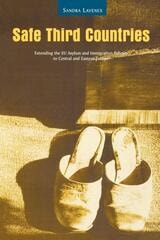
Safe Third Countries
Extending the EU Asylum and Immigration Policies to Central and Eastern EuropeSandra Lavenex
Central European University Press, 1999
The refugee issue has always been controversial and Lavenex's analyses add fuel to an already heated debate. She analyses the various bi- and multilateral processes by which the countries of Central and Eastern Europe (CEECs) are being gradually incorporated into a restrictive refugee regime established among the EU member states, in which the CEECs serve as "gate-keepers" for refugees and immigrants heading towards Western Europe.
At a time when many transition countries are trying to enter the EU, Lavenex highlights the CEECs consent to adapt to Western European policies aimed at fighting illegal immigration and reducing the numbers of asylum seekers as a political bargaining tool in exchange for future membership in the EU. She also argues that the regime undermines the values of international refugee protection and diffuses states' responsibilities by establishing a system of negative redistribution for the handling of asylum claims.
Safe Third Countries is the first comprehensive study on the extension of the emergent European refugee regime and highlights, in an innovative manner, the complex entanglement of domestic policies, European integration and international relations.
Second Wounds
Victims’ Rights and the Media in the U.S.Carrie A. Rentschler
Duke University Press, 2011
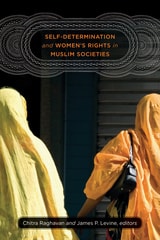
Self-Determination and Women’s Rights in Muslim Societies
Edited by Chitra Raghavan and James P. Levine
Brandeis University Press, 2012
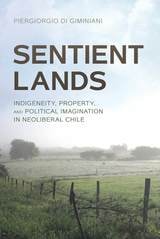
Sentient Lands
Indigeneity, Property, and Political Imagination in Neoliberal ChilePiergiorgio Di Giminiani
University of Arizona Press, 2018
Sentient Lands is a historically grounded ethnography of the Mapuche people’s engagement with state-run reconciliation and land-restitution efforts. Piergiorgio Di Giminiani analyzes environmental relations, property, state power, market forces, and indigeneity to illustrate how land connections are articulated, in both landscape experiences and land claims. Rather than viewing land claims as simply bureaucratic procedures imposed on local understandings and experiences of land connections, Di Giminiani reveals these processes to be disputed practices of world making.
Ancestral land formation is set in motion by the entangled principles of Indigenous and legal land ontologies, two very different and sometimes conflicting processes. Indigenous land ontologies are based on a relation between two subjects—land and people—both endowed with sentient abilities. By contrast, legal land ontologies are founded on the principles of property theory, wherein land is an object of possession that can be standardized within a regime of value. Governments also use land claims to domesticate Indigenous geographies into spatial constructs consistent with political and market configurations.
Exploring the unexpected effects on political activism and state reparation policies caused by this entanglement of Indigenous and legal land ontologies, Di Giminiani offers a new analytical angle on Indigenous land politics.
Sexual Exploitation of Teenagers
Adolescent Development, Discrimination, and Consent LawJennifer Ann Drobac
University of Chicago Press, 2016
When it comes to sexual relationships, adolescents pose a particular problem. Few teenagers possess all of the emotional and intellectual tools needed to navigate these threats, including the all too real advances made by supervisors, teachers, and mentors. In Sexual Exploitation of Teenagers, Jennifer Drobac explores the shockingly common problem of maturing adolescents who are harassed and exploited by adults in their lives. Reviewing the neuroscience and psychosocial evidence of adolescent development, she explains why teens are so vulnerable to adult harassers. Even today, in an age of increasing public awareness, criminal and civil law regarding the sexual abuse of minors remains tragically inept and irregular from state to state. Drobac uses six recent cases of teens suffering sexual harassment to illuminate the flaws and contradictions of this system, skillfully showing how our current laws fail to protect youths, and offering an array of imaginative legal reforms that could achieve increased justice for adolescent victims of sexual coercion.
Shaming the Constitution
The Detrimental Results of Sexual Violent Predator LegislationMichael L. Perlin
Temple University Press, 2017
Convicted sexually violent predators are more vilified, more subject to media misrepresentation, and more likely to be denied basic human rights than any other population. Shaming the Constitution authors Michael Perlin and Heather Cucolo question the intentions of sex offender laws, offering new approaches to this most complex (and controversial) area of law and social policy.
The authors assert that sex offender laws and policies are unconstitutional and counter-productive. The legislation largely fails to add to public safety—even ruining lives for what are, in some cases, trivial infractions. Shaming the Constitution draws on law, behavioral sciences, and other disciplines to show that many of the “solutions” to penalizing sexually violent predators are “wrong,” as they create the most repressive and useless laws.
In addition to tracing the history of sex offender laws, the authors address the case of Jesse Timmendequas, whose crime begat “Megan’s Law;” the media’s role in creating a “moral panic;” recidivism statistics and treatments, as well as international human rights laws. Ultimately, they call attention to the flaws in the system so we can find solutions that contribute to public safety in ways that do not mock Constitutional principles.
Since Time Immemorial
Native Custom and Law in Colonial MexicoYanna Yannakakis
Duke University Press, 2023
Slavery and Abolition in Pennsylvania
Beverly C. Tomek
Temple University Press, 2021
In her concise history Slavery and Abolition in Pennsylvania, Beverly Tomek corrects the long-held notion that slavery in the North was “not so bad” as, or somehow “more humane” than, in the South due to the presence of abolitionists. While the Quaker presence focused on moral and practical opposition to bondage, slavery was ubiquitous. Nevertheless, Pennsylvania was the first state to pass an abolition law in the United States.
Slavery and Abolition in Pennsylvania traces this movement from its beginning to the years immediately following the American Civil War. Discussions of the complexities of the state’s antislavery movement illustrate how different groups of Pennsylvanians followed different paths in an effort to achieve their goal. Tomek also examines the backlash abolitionists and Black Americans faced. In addition, she considers the civil rights movement from the period of state reconstruction through the national reconstruction that occurred after the Civil War.
While the past few decades have shed light on enslavement and slavery in the South, much of the story of northern slavery remains hidden. Slavery and Abolition in Pennsylvania tells the full and inclusive story of this history, bringing the realities of slavery, abolition, and Pennsylvania's attempt to reconstruct its post-emancipation society.
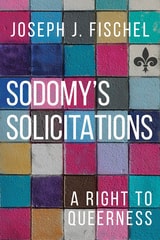
Sodomy's Solicitations
A Right to QueernessJoseph J. Fischel
Temple University Press, 2025
The political stories narrated in Sodomy’s Solicitations are undoubtedly stories of racism, sexism, homophobia, and transphobia, but they are also stories of other political problems—and political possibilities. Fischel indicts U.S. sex offender regulatory regimes as state-sponsored sexual violence; offers a qualified defense for sexual expression in public; and argues that animal sexual abuse laws, with their exemptions for industrial agricultural practices, authorize the suffering they were enacted to deter. He also makes the case that laws criminalizing the exchange of sex for money are unconstitutional, and proposes that the best way to protect trans and queer children might just be to enfranchise them.
Sodomy’s Solicitations champions a right to queerness across rather than within identity formations—a right to relatively unpoliced gender, sexual, and intimate pluralism.
In the series Sexuality Studies
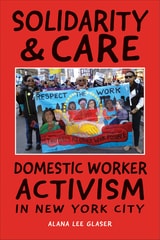
Solidarity & Care
Domestic Worker Activism in New York CityAlana Lee Glaser
Temple University Press, 2023
Solidarity & Care examines the political mobilization of diverse care workers who joined together and supported one another through education, protests, lobbying, and storytelling. Domestic work activists used narrative and emotional appeals to build a coalition of religious communities, employers of domestic workers, labor union members, and politicians to first pass and then to enforce the new law.
Through oral history interviews, as well as ethnographic observation during DWU meetings and protest actions, Glaser chronicles how these women fought (and continue to fight) to improve working conditions. She also illustrates how they endure racism, punitive immigration laws, on-the-job indignities, and unemployment that can result in eviction and food insecurity.
The lessons from Solidarity & Care along with the DWU’s precedent-setting legislative success have applications to workers across industries.
All royalties will go directly to the Domestic Workers United

Sovereign Selves
American Indian Autobiography and the LawDavid J. Carlson
University of Illinois Press, 2005
Carlson argues that by drawing on the conventions of early colonial treaty-making, nineteenth- and early twentieth-century Indian autobiographers sought to adapt and redefine the terms of Indian law as a way to assert specific property-based and civil rights. Focusing primarily on the autobiographical careers of two major writers (William Apess and Charles Eastman), Sovereign Selves traces the way that their sustained engagement with colonial legal institutions gradually enabled them to produce a new rhetoric of "Indianness."

Spirit and Folk
Jewish Mysticism and the Struggle for German NationhoodAmir Engel
University of Chicago Press, 2027
A study of the twentieth-century construction of a Jewish mystical tradition by German Jewish intellectuals.
For most of European history, the notion of Jewish spirituality was unthinkable—buried beneath a pervasive desire to understand Judaism as uniquely material and Christianity as uniquely spiritual. In Spirit and Folk, Amir Engel tells the story of how a group of Jewish intellectuals, seeking greater involvement in political life, worked to invent a mystical tradition for Judaism amid the existential crises of twentieth-century Germany.
Beginning with Martin Buber in 1900 and ending with Gershom Scholem in 1942, Engel traces the rich debate among thinkers both well-known and forgotten about the need to imagine and construct a uniquely Jewish mystical tradition from historical religious sources. This quest and the tradition that emerged, Engel argues, developed in response to one of the most volatile questions of the last century: can Jews be Germans? The invention of Jewish spirituality, Engel shows, was not only a religious innovation but also a political gambit—a demand to be accepted as equal contributors to the German national project.
States And Strangers
Refugees And Displacements Of StatecraftNevzat Soguk
University of Minnesota Press, 1999
Looks at the role of refugees in international relations.
Refugees may flee their country, but can they escape the confining, defining logic of all the voices that speak for them? As refugees multiply in our troubled world, more and more scholars, studies, and pundits focus on their plight. Most of these analyses, says Nevzat Soguk, start from a model that shares the assumptions manifested in traditional definitions of citizen, nation, and state. Within this hierarchy, he argues, a refugee has no place to go. States and Strangers questions this paradigm, particularly its vision of the territoriality of life.
A radical retheorization of the refugee from a Foucauldian perspective, the book views the international refugee regime not as a simple tertiary response, arising from the practice of states regarding refugee problems, but as itself an aspect of the regimentation of statecraft. The attendant discourse negates the multiplicity of refugee events and experience; by assigning the refugee an identity-someone without the citizen’s grounding within a territorial space-the state renders him voiceless and deprives him of representation and protection. States and Strangers asks how this happens and how it can be avoided.Using historical, archival research and interpretive strategies drawn from a genealogical approach, Soguk considers the role of the refugee in the emergence and maintenance of the sovereign territorial state from the late seventeenth century to contemporary times. ISBN 0-8166-3166-2 Cloth/jacket £00.00 $62.95x340 Pages 5 7/8 x 9 MarchBorderlines Series, volume 11Translation inquiries: University of Minnesota Press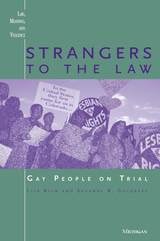
Strangers to the Law
Gay People on TrialLisa Keen and Suzanne B. Goldberg
University of Michigan Press, 2000
Starting with the background of the initiative, the authors tell us about the debates over strategy, the court proceedings, and the impact of each stage of the litigation on the parties involved. The authors explore the meaning of legal protection for gay people and the arguments for and against the Colorado initiative.
This book is essential reading for anyone interested in the development of civil rights protections for gay people and the evolution of what it means to be gay in contemporary American society and politics. In addition, it is a rich story well told, and will be of interest to the general reader and scholars working on issues of civil rights, majority-minority relations, and the meaning of equal rights in a democratic society.
Suzanne Goldberg is an attorney with the Lambda Legal Defense and Education Fund. Lisa Keen is Senior Editor at the Washington Blade newspaper.
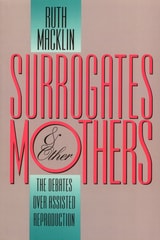
Surrogates and Other Mothers
The Debates over Assisted ReproductionRuth Macklin
Temple University Press, 1994
Developments in new reproductive technologies have confounded public policy and created legal and ethical quandaries for professionals and ordinary citizens alike. Drawing from the most current medical, psychiatric, legal, and bioethical literature, Ruth Macklin, noted author and philosopher, presents the arguments surrounding these advances through the voices of fictional characters. The episodes she narrates are based on real-life situations, both from her personal experience as a hospital ethicist and from the public arena, where such controversial court cases as that of Baby M have sparked a multitude of disparate opinions on surrogacy, in vitro fertilization, and egg and sperm donor program.
Macklin's hypoethical tale centers on Bonnie and Larry, an infertile couple longing for a child. As the couple's quest to become parents begins, they discover that Bonnie is physically incapable of carrying a pregnancy to term. Desperate to explore their options, Bonnie and Larry attempt adoption but are rejected by the agency without explanation. Finally, they contemplate surrogacy as their last chance to have a child. Seeking advice and answers, they consult health professionals, lawyers, pastoral counselors, and a bioethicist. In the course of this complicated and often painful decision-making process, they attend meetings of a government task force on reproduction where they hear both radical and liberal feminist positions.
Their experiences with friends, family members, two surrogates, hospital ethics committees, and special interest groups underscore the difficulty of coming to a consensus on such issues as AIDS, the right to privacy, premenstrual syndrome, the violation of surrogate contracts, and the responsibilities of therapists and physicians to their patients and to the community at large.