Results by title
458 books match the query 'Literature' and 20 start with s
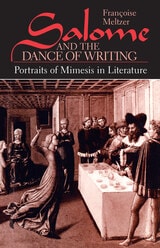
Salome and the Dance of Writing
Portraits of Mimesis in LiteratureFrançoise Meltzer
University of Chicago Press, 1987
Meltzer's readings of textual portraits—in the Gospel writers and Huysmans, Virgil and Stendhal, the Old Testament and Apuleius, Hawthorne and Poe, Kafka and Rousseau, Walter Scott and Mme de Lafayette—reveal an interplay of control and subversion: writing attempts to veil the visual and to erase the sensual in favor of "meaning," while portraiture, with its claims to bringing the natural object to "life," resists and eludes such control. Meltzer shows how this tension is indicative of a politics of repression and subversion intrinsic to the very act of representation. Throughout, she raises and illuminates fascinating issues: about the relation of flattery to caricature, the nature of the uncanny, the relation of representation to memory and history, the narcissistic character of representation, and the interdependency of representation and power.
Writing, thinking, speaking, dreaming, acting—the extent to which these are all controlled by representation must, Meltzer concludes, become "consciously unconscious." In the textual portrait, she locates the moment when this essential process is both revealed and repressed.

Scribit Mater
Marey and the Language Arts in the Literature of Medieval EnglandGeorgiana Donavin
Catholic University of America Press, 2012
Selective Affinities
Literature and New Critical TheoryRita Felski
University of Chicago Press, 2026
Rita Felski’s new work brings literary studies into conversation with more affirmative and democratic forms of critical theory.
Literary critics associate the phrase “Frankfurt School” with early twentieth-century thinkers like Adorno or Benjamin, but contemporary German critical theory remains largely unknown. In this new book, Rita Felski draws on the work of a group of important philosophers and social theorists to offer fresh readings of literary texts by Robert Walser, Didier Eribon, Zadie Smith, Magda Szabo, John Williams, and Dionne Brand.
Through five key concepts derived from her reading of German theory—disclosure, recognition, self-realization, lifeworld, and resonance—Felski asks how these literary texts articulate the relationship between intellectuals and others. Contrary to critical theories that discount everyday experience, new German thought reveals the ethical, existential, and political richness of such experience. Through this framework, Felski shows that literature, theory, and experience are not opposed but mutually constitutive.

Shakespeare and the Nature of Love
Literature, Culture, EvolutionMarcus Nordlund
Northwestern University Press, 2007
After addressing critical issues about love, biology, and culture raised by his method, Nordlund considers four specific forms of love in seven of Shakespeare’s plays. Examining the vicissitudes of parental love in Titus Andronicus and Coriolanus, he argues that Shakespeare makes a sustained inquiry into the impact of culture and society upon the natural human affections. King Lear offers insight into the conflicted relationship between love and duty. In two problem plays about romantic love, Troilus and Cressida and All’s Well that Ends Well, the tension between individual idiosyncrasies and social consensus becomes especially salient. And finally, in Othello and The Winter’s Tale, Nordlund asks what Shakespeare can tell us about the dark avatar of jealousy.
Shouting Softly
Lines on Law, Literature, and CultureAllen Mendenhall
St. Augustine's Press, 2020
The work is given in three parts. The first section on law explores legal minds, rules and commentary on seminal jurisprudence. The second part explores literature and the influence of the writer and the disconcerting truths stories often seek to convey. Thirdly, Mendenhall delves into culture and the more obvious situations wherein we gain insight into our manner of living, and here Mendenhall exudes a Southern accent that in no way compromises his universal bearings. One of the highlights is his echo of Larry Seidentop’s question: “If we in the West do not understand the moral depth of our own tradition, how can we hope to shape the conversation of mankind?” This is all the more meaningful given that Mendenhall is a member of the Millennial generation, and part of the intellectual minority who sees the urgency of “a studied appreciation for nuanced story and linguistic narrative.”
Single Lives
Modern Women in Literature, Culture, and FilmKatherine Fama
Rutgers University Press, 2022
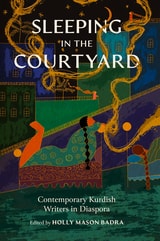
Sleeping in the Courtyard
Contemporary Kurdish Writers in DiasporaHolly Mason Badra
University of Arkansas Press, 2025
Sleeping in the Courtyard brings together historically isolated writers in community—and invites readers to join them around the table to share in their memories, secrets, tears, and joys. Featuring poetry, fiction, nonfiction, and graphic work by emerging and well-established writers, this collection shines a light on works by a diverse group of contemporary Kurdish women and nonbinary writers living in Kurdistan and in diaspora.
Recognizing the complex web of physical and lingual displacement of the Kurdish people and celebrating the diverse tapestry of their stories, this collection presents work originally written in English and work translated from Kurdish dialects as well as from Arabic, Turkish, Persian, and Swedish. A few works in Kurdish dialects appear alongside their translations, both in recognition of the experience of linguicide and to push against oppressive attempts to strip away Kurdish language.
Several works here explore the impact of the countless forms of militarized displacement, cultural destruction, and mass genocide that Kurds have endured. Other pieces illuminate Kurdish experiences of desire, friendship, empowerment, familial intricacies, and other topics spanning across universal human conditions. The writers in these pages take risks both in craft and content—and in some cases, just by daring to write and publish. What emerges in Sleeping in the Courtyard is the antithesis of erasure.

Solidarity with the Other Beings on the Planet
Alice Walker, Ecofeminism, and Animals in LiteraturePamela B. June
Northwestern University Press, 2020
Grounded in ecofeminist theory, this literary analysis examines Walker’s evolving views on animals in relation to her discussions of other oppressed groups. Pamela B. June argues that Walker’s fiction can help readers understand and perhaps challenge American culture’s mistreatment of nonhuman animals. Walker has withstood criticism for her decision to abandon vegetarianism, and this book also problematizes the slippery territory of viewing writers as moral guides. Solidarity with the Other Beings on the Planet will appeal to readers in literary studies, ecofeminist studies, African American studies, and critical animal studies.

Songbooks
The Literature of American Popular MusicEric Weisbard
Duke University Press, 2021

Sourcebook on the Environment
A Guide to the LiteratureKenneth A. Hammond, George Macinko, and Wilma B. Fairchild
University of Chicago Press, 1978
Beginning with an introduction to various philosophies and perspectives, the Sourcebook examines major elements of the environment and selected case studies of human alteration of our surroundings. The essential references in each field are carefully presented, and directions are given for examining more advanced and specialized works. Appendixes on selected periodicals, the latest relevant federal legislation, and environmental organizations point to further areas of investigation. To maintain its value in this volatile area, this indispensable work will be periodically revised and updated.

Space as Storyteller
Spatial Jumps in Architecture, Critical Theory, and LiteratureLaura Chiesa
Northwestern University Press, 2016
Speculative Formalism
Literature, Theory, and the Critical PresentTom Eyers
Northwestern University Press, 2017
Through a combination of philosophical reflection and close rhetorical readings, Eyers explores the possibilities and limits of deconstructive approaches to the literary, the impact of the “digital humanities” on theory, and the prospects for a formalist approach to “world literature.” The book includes sustained close readings of Baudelaire, Mallarmé, Yeats, and Wallace Stevens, as well as Alain Badiou, Paul de Man, and Fredric Jameson.
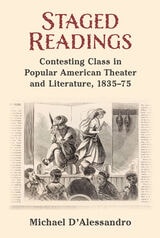
Staged Readings
Contesting Class in Popular American Theater and Literature, 1835-75Michael D’Alessandro
University of Michigan Press, 2022
Based in the historical archive, Staged Readings presents a panoramic display of mid-century leisure and entertainment. It examines best-selling novels, such as Harriet Beecher Stowe’s Uncle Tom’s Cabin and George Lippard’s The Quaker City. But it also analyzes a series of sensational melodramas, parlor theatricals, doomsday speeches, tableaux vivant displays, curiosity museum exhibits, and fake volcano explosions. These oft-overlooked spectacles capitalized on consumers’ previous cultural encounters and directed their social identifications. The book will be particularly appealing to those interested in histories of popular theater, literature and reading, social class, and mass culture.
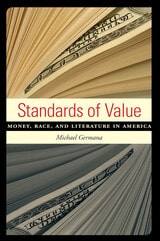
Standards of Value
Money, Race, and Literature in AmericaGermana, Michael
University of Iowa Press, 2010
In Standards of Value, Michael Germana reveals how tectonic shifts in U.S. monetary policy—from the Coinage Act of 1834 to the abolition of the domestic gold standard in 1933–34—correspond to strategic changes by American writers who renegotiated the value of racial difference. Populating the pages of this bold and innovative study are authors as varied as Harriet Beecher Stowe, George Washington Cable, Charles Chesnutt, James Weldon Johnson, Nella Larsen, Jessie Redmon Fauset, and Ralph Ellison—all of whom drew analogies between the form Americans thought the nation's money should take and the form they thought race relations and the nation should take.
A cultural history of race organized around and enmeshed within the theories of literary and monetary value, Standards of Value also recovers a rhetorical tradition in American culture whose echoes can be found in the visual and lyrical grammars of hip hop, the paintings of John W. Jones and Michael Ray Charles, the cinematography of Spike Lee, and many other contemporary forms and texts.
This reconsideration of American literature and cultural history has implications for how we value literary texts and how we read shifting standards of value. In vivid prose, Germana explains why dollars and cents appear where black and white bodies meet in American novels, how U.S. monetary policy gave these symbols their cultural currency, and why it matters for scholars of literary and cultural studies.

Stanley Cavell and Literary Skepticism
Michael Fischer
University of Chicago Press, 1989
Throughout his study, Fischer focuses on skepticism, a central concern of Cavell's multifaceted work. Cavell, following J. L. Austin and Wittgenstein, does not refute the radical epistemological questioning of Descartes, Hume, and others, but rather characterizes skepticism as a significant human possibility or temptation. As presented by Fischer, Cavell's accounts of both external-world and other-minds skepticism share significant affinities with deconstruction, a connection overlooked by contemporary literary theorists.
Fischer follows Cavell's lead in examining how different genres address the problems raised by skepticism and goes on to show how Cavell draws on American and English romanticism in fashioning a response to it. He concludes by analyzing Cavell's remarks about current critical theory, focusing on Cavell's uneasiness with some of the conclusions reached by its practitioners. Fischer shows that Cavell's insights, grounded in powerful analyses of Descartes, Hume, and Wittgenstein, permit a fresh view of Derrida, Miller, de Man, and Fish. The result is not only a revealing characterization of deconstruction but a much-needed and insightful introduction to Cavell's rich but difficult oeuvre.
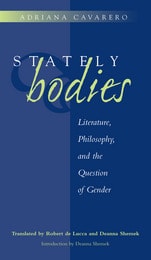
Stately Bodies
Literature, Philosophy, and the Question of GenderAdriana Cavarero
University of Michigan Press, 2002
She examines bodily metaphor in political discourse and in fictional depictions of politics, including Sophocles' Antigone, Plato's Timaeus, Livy, John of Salisbury, Shakespeare's Hamlet, and Hobbes' Leviathan. An appendix explores two texts by women that disrupt these notions: Maria Zambrano's Tomb of Antigone and Ingeborg Bachmann's Undine Goes.
Cavarero exposes the problematic nature of the mind/body dualism that has been essential in Western thought. Her insight that the expelled, depoliticized body is a female one becomes an instrument for decoding many paradoxical tropes of the political body. For instance, Cavarero revisits Antigone as the tragedy in which a body that is displaced, bleeding, and matrilinear allows the construction of a political order where misogynous rationality rules. Throughout the book, Cavarero argues that women have been cast by male thinkers into the realm of the corporeal as nonpolitical, and also suggests that this nonpolitical position is also a source of knowledge and power, that politics is a masculine pursuit that should not be admired or envied.
Adriana Cavarero is Professor of Philosophy, University of Verona, and frequently is Visiting Professor. New York University. Her books Relating Narratives: Storytelling and Selfhood and In Spite of Plato: A Feminist Rewriting of Ancient Philosophy were published by Routledge.
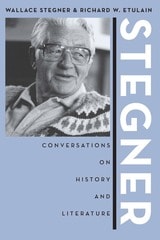
Stegner
Conversations On History And LiteratureWallace Stegner
University of Nevada Press, 1996
Stories of Oka
Land, Film, and LiteratureIsabelle St-Amand
University of Manitoba Press, 2018
Street Smarts and Critical Theory
Listening to the VernacularThomas McLaughlin
University of Wisconsin Press, 1996
Everybody’s got a theory . . . or do they?
Thomas McLaughlin argues that critical theory—raising serious, sustained questions about cultural practice and ideology—is practiced not only by an academic elite but also by savvy viewers of sitcoms and TV news, by Elvis fans and Trekkies, by labor organizers and school teachers, by the average person in the street.
Like academic theorists, who are trained in a tradition of philosophical and political skepticism that challenges all orthodoxies, the vernacular theorists McLaughlin identifies display a lively and healthy alertness to contradiction and propaganda. They are not passive victims of ideology but active questioners of the belief systems that have power over their lives. Their theoretical work arises from the circumstances they confront on the job, in the family, in popular culture. And their questioning of established institutions, McLaughlin contends, is essential and healthy, for it energizes other theorists who clarify the purpose and strategies of institutions and justify the existence of cultural practices.
Street Smarts and Critical Theory leads us through eye-opening explorations of social activism in the Southern Christian anti-pornography movement, fan critiques in the ‘zine scene, New Age narratives of healing and transformation, the methodical manipulations of the advertising profession, and vernacular theory in the whole-language movement. Emphasizing that theory is itself a pervasive cultural practice, McLaughlin calls on academic institutions to recognize and develop the theoretical strategies that students bring into the classroom.
“This book demystifies the idea of theory, taking it out of the hands of a priestly caste and showing it as the democratic endowment of the people.”—Daniel T. O’Hara, Temple University, author of Radical Parody: American Culture and Critical Agency after Foucault and Lionel Trilling: The Work of Liberation.
“McLaughlin takes seriously the critical and theoretical activity of everyday people and does so in a way that will empower these very populations to take seriously their own activities as theorists. . . . A manifesto that is sure to be heard by the younger generation of thinkers in American cultural studies.”—Henry Jenkins, MIT, author of Textual Poachers: Television Fans and Participatory Culture
Swahili Beyond the Boundaries
Literature, Language, and IdentityAlamin Mazrui
Ohio University Press, 2007
Swahili literature is a hybrid that is being reconfigured by a conjuncture of global and local forces. As the interweaving of elements of the colonizer and the colonized, this hybrid formation provides a representation of cultural difference that is said to constitute a “third space,” blurring existing boundaries and calling into question established identitarian categorizations. This cultural dialectic is clearly evident in the Swahili literary experience as it has evolved in the crucible of the politics of African cultural production.
However, Swahili Beyond the Boundaries demonstrates that, from the point of view of Swahili literature, while hybridity evokes endless openness on questions of home and identity, it can simultaneously put closure on specific forms of subjectivity. In the process of this contestation, a new synthesis may be emerging that is poised to subject Swahili literature to new kinds of challenges in the politics of identity, compounded by the dynamics and counterdynamics of post–Cold War globalization.