Results by title
138 books match the query 'Logic' and 13 start with s
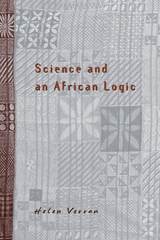
Science and an African Logic
Helen Verran
University of Chicago Press, 2001
In this captivating book, Helen Verran addresses precisely that question by looking at how science, mathematics, and logic come to life in Yoruba primary schools. Drawing on her experience as a teacher in Nigeria, Verran describes how she went from the radical conclusion that logic and math are culturally relative, to determining what Westerners find so disconcerting about Yoruba logic, to a new understanding of all generalizing logic. She reveals that in contrast to the one-to-many model found in Western number systems, Yoruba thinking operates by figuring things as wholes and their parts. Quantity is not absolute but always relational. Certainty is derived not from abstract logic, but from cultural practices and associations.
A powerful story of how one woman's investigation in this everday situation led to extraordinary conclusions about the nature of numbers, generalization, and certainty, this book will be a signal contribution to philosophy, anthropology of science, and education.
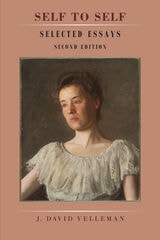
Self to Self
Selected Essays: Second EditionJ. David Velleman
Michigan Publishing Services, 2020
Self to Self brings together essays on personal identity, autonomy, and moral emotions by the philosopher J. David Velleman. Although the essays were written independently, they are unified by an overarching thesis – that there is no single entity denoted by “the self ” – as well as by themes from Kantian ethics, psychoanalytic theory, social psychology, and Velleman’s work in the philosophy of action. Two of the essays were selected by the editors of Philosophers’ Annual as being among the ten best papers in their year of publication.
Self to Self will be of interest to philosophers, psychologists, and others who theorize about the self.
Self-Reference
Thomas Bolander, Vincent F. Hendricks, and Stig Andur Pedersen
CSLI, 2006
Situation Theory and Its Applications, Volume 1
Edited by Robin Cooper, Kuniaki Mukai, and John Perry
CSLI, 1990
Situation Theory and Its Applications, Volume 2
Edited by Jon Barwise, Jean Mark Gawron, Gordon Plotkin, and Syun Tutiya
CSLI, 1991
Situation Theory and Its Applications, Volume 3
Edited by Peter Aczel, David Israel, Stanley Peters, and Yasuhiro Katagiri
CSLI, 1993
Situations and Attitudes
Jon Barwise and John Perry
CSLI, 1983
Socratic Logic 2e paper
Peter Kreeft
St. Augustine's Press, 2005
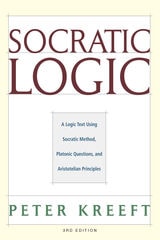
Socratic Logic 3e pbk
A Logic Text Using Socratic Method, Platonic Questions, and Aristotelian PrinciplesPeter Kreeft
St. Augustine's Press, 2008
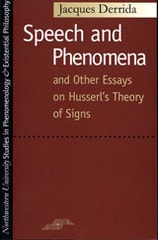
Speech and Phenomena
And Other Essays on Husserl's Theory of SignsJacques Derrida
Northwestern University Press, 1973
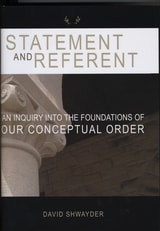
Statement and Referent
An Inquiry into the Foundations of our Conceptual OrderDavid Shwayder
CSLI, 2008
Plato’s Parmenides and Aristotle’s Metaphysics initiated the discussion of the “First Philosophy” in the Western canon. Here, David Shwayder continues this debate by considering statements as the fundamental bearers of truth-values. Systematically moving from action to utterance, Shwayder argues that the category of “bodies” is fundamental to the human scheme of conceptualization and that if we had no capacity to refer to bodies then we would be unable to address referents from other categories.
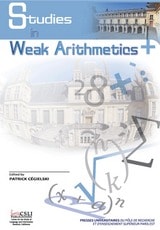
Studies in Weak Arithmetics, Volume 1
Edited by Patrick Cégielski
CSLI, 2009
The field of weak arithmetics is an application of logical methods to number theory that was developed by mathematicians, philosophers, and theoretical computer scientists. In this volume, after a general presentation of weak arithmetics, the following topics are studied: the properties of integers of a real closed field equipped with exponentiation; conservation results for the induction schema restricted to first-order formulas with a finite number of alternations of quantifiers; a survey on a class of tools called pebble games; the fact that the reals e and pi have approximations expressed by first-order formulas using bounded quantifiers; properties of infinite pictures depending on the universe of sets used; a language that simulates in a sufficiently nice manner all algorithms of a certain restricted class; the logical complexity of the axiom of infinity in some variants of set theory without the axiom of foundation; and the complexity to determine whether a trace is included in another one.
Studies in Weak Arithmetics, Volume 3
Edited by Patrick Cegielski, Ali Enayat, and Roman Kossak
CSLI, 2013