50 books match the query 'Marine Biology' and 8 start with s
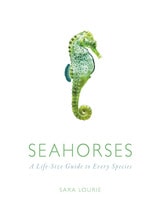
cover of Seahorses: A Life-Size Guide to Every Species

Seahorses

A Life-Size Guide to Every Species

Sara A. Lourie

University of Chicago Press, 2016

Absolutely captivating creatures, seahorses seem like a product of myth and imagination rather than of nature. They are small, elusive, and are named for their heads, which are shaped like miniature ponies with tiny snouts. They swim slowly upright by rapidly fanning their delicate dorsal fin, coil their tails to anchor themselves in a drift, and spend days in a dancing courtship. Afterward, it is the male who carries the female’s eggs in his pouch and hatches the young. Seahorses are found worldwide, and they are highly sensitive to environmental destruction and disturbance, making them the flagship species for shallow-water habitat conservation. They are as ecologically important as they are beautiful.

Seahorses celebrates the remarkable variety of seahorse species as well as their exquisiteness. 57 species, including seadragons and pipefish, are presented in lush, life-size photographs alongside descriptive drawings, and each entry includes detailed and up-to-date information on natural history and conservation. Sara Lourie, a foremost expert on seahorse taxonomy, presents captivating stories of species that range from less than an inch to over a foot in height, while highlighting recent discoveries and ecological concerns. Accessibly written, but comprehensive in scope, this book will be a stunning and invaluable reference on seahorse evolution, biology, habitat, and behavior.

Masters of camouflage and rarely seen, seahorses continue to be a fascinating subject of active research. This visually rich and informative book is certain to become the authoritative guide to these charming and unusual wonders of the sea, beloved at aquariums the world over.
[more]
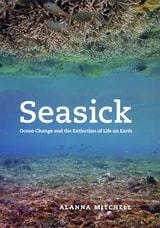
cover of Seasick: Ocean Change and the Extinction of Life on Earth

Seasick

Ocean Change and the Extinction of Life on Earth

Alanna Mitchell

University of Chicago Press, 2009

We have long lorded over the ocean. But only recently have we become aware of the myriad life-forms beneath its waves. We now know that this delicate ecosystem is our life-support system; it regulates the earth’s temperatures and climate and comprises 99 percent of living space on earth. So when we change the chemistry of the whole ocean system, as we are now, life as we know it is threatened.

In Seasick, veteran science journalist Alanna Mitchell dives beneath the surface of the world’s oceans to give readers a sense of how this watery realm can be managed and preserved, and with it life on earth. Each chapter features a different group of researchers who introduce readers to the importance of ocean currents, the building of coral structures, or the effects of acidification. With Mitchell at the helm, readers submerge 3,000 feet to gather sea sponges that may contribute to cancer care, see firsthand the lava lamp–like dead zone covering 17,000 square kilometers in the Gulf of Mexico, and witness the simultaneous spawning of corals under a full moon in Panama.

The first book to look at the planetary environmental crisis through the lens of the global ocean, Seasick takes the reader on an emotional journey through a hidden realm of the planet and urges conservation and reverence for the fount from which all life on earth sprang.
[more]
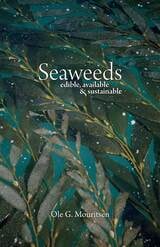
cover of Seaweeds: Edible, Available, and Sustainable

Seaweeds

Edible, Available, and Sustainable

Ole G. Mouritsen

University of Chicago Press, 2013
Until recently, seaweed for most Americans was nothing but a nuisance, clinging to us as we swim in the ocean and stinking up the beach as it rots in the sun. With the ever-growing popularity of sushi restaurants across the country, however, seaweed is becoming a substantial part of our total food intake. And even as we dine with delight on maki, miso soup, and seaweed salads, very few of us have any idea of the nutritional value of seaweed. Here celebrated scientist Ole G. Mouritsen, drawing on his fascination with and enthusiasm for Japanese cuisine, champions seaweed as a staple food while simultaneously explaining its biology, ecology, cultural history, and gastronomy.
           
Mouritsen takes readers on a comprehensive tour of seaweed, describing what seaweeds actually are (algae, not plants) and how people of different cultures have utilized them since prehistoric times for a whole array of purposes—as food and fodder, for the production of salt, in medicine and cosmetics, as fertilizer, in construction, and for a number of industrial end uses, to name just a few. He reveals the vast abundance of minerals, trace elements, proteins, vitamins, dietary fiber, and precious polyunsaturated fatty acids found in seaweeds, and provides instructions and recipes on how to prepare a variety of dishes that incorporate raw and processed seaweeds. Approaching the subject from not only a gastronomic but also a scientific point of view, Mouritsen sets out to examine the past and present uses of this sustainable resource, keeping in mind how it could be exploited for the future. Because seaweeds can be cultivated in large quantities in the ocean in highly sustainable ways, they are ideal for battling hunger and obesity alike.  
           
With hundreds of delectable illustrations depicting the wealth of species, colors, and shapes of seaweed, Seaweeds: Edible, Available, and Sustainable makes a strong case for granting these “vegetables from the sea” a prominent place in our kitchens.
[more]
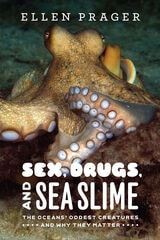
cover of Sex, Drugs, and Sea Slime: The Oceans' Oddest Creatures and Why They Matter

Sex, Drugs, and Sea Slime

The Oceans' Oddest Creatures and Why They Matter

Ellen Prager

University of Chicago Press, 2011

When viewed from a quiet beach, the ocean, with its rolling waves and vast expanse, can seem calm, even serene. But hidden beneath the sea’s waves are a staggering abundance and variety of active creatures, engaged in the never-ending struggles of life—to reproduce, to eat, and to avoid being eaten.

With Sex, Drugs, and Sea Slime, marine scientist Ellen Prager takes us deep into the sea to introduce an astonishing cast of fascinating and bizarre creatures that make the salty depths their home. From the tiny but voracious arrow worms whose rapacious ways may lead to death by overeating, to the lobsters that battle rivals or seduce mates with their urine, to the sea’s masters of disguise, the octopuses, Prager not only brings to life the ocean’s strange creatures, but also reveals the ways they interact as predators, prey, or potential mates. And while these animals make for some jaw-dropping stories—witness the sea cucumber, which ejects its own intestines to confuse predators, or the hagfish that ties itself into a knot to keep from suffocating in its own slime—there’s far more to Prager’s account than her ever-entertaining anecdotes: again and again, she illustrates the crucial connections between life in the ocean and humankind, in everything from our food supply to our economy, and in drug discovery, biomedical research, and popular culture.

Written with a diver’s love of the ocean, a novelist’s skill at storytelling, and a scientist’s deep knowledge, Sex, Drugs, and Sea Slime enchants as it educates, enthralling us with the wealth of life in the sea—and reminding us of the need to protect it.
[more]
cover of Sharks and People: Exploring Our Relationship with the Most Feared Fish in the Sea

Sharks and People

Exploring Our Relationship with the Most Feared Fish in the Sea

Thomas P. Peschak

University of Chicago Press, 2008

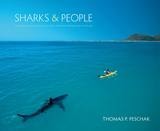
At once feared and revered, sharks have captivated people since our earliest human encounters. Children and adults alike stand awed before aquarium shark tanks, fascinated by the giant teeth and unnerving eyes. And no swim in the ocean is undertaken without a slight shiver of anxiety about the very real—and very cinematic—dangers of shark bites. But our interactions with sharks are not entirely one-sided: the threats we pose to sharks through fisheries, organized hunts, and gill nets on coastlines are more deadly and far-reaching than any bite. In Sharks and People acclaimed wildlife photographer Thomas Peschak presents stunning photographs that capture the relationship between people and sharks around the globe.

A contributing photographer to National Geographic, Peschak is best known for his unusual photographs of sharks—his iconic image of a great white shark following a researcher in a small yellow kayak is one of the most recognizable shark photographs in the world. The other images gathered here are no less riveting, bringing us as close as possible to sharks in the wild. Alongside the photographs, Sharks and People tells the compelling story of the natural history of sharks. Sharks have roamed the oceans for more than four hundred million years, and in this time they have never stopped adapting to the ever-changing world—their unique cartilage skeletons and array of super-senses mark them as one of the most evolved groups of animals. Scientists have recently discovered that sharks play an important role in balancing the ocean, including maintaining the health of coral reefs. Yet, tens of millions of sharks are killed every year just to fill the demand for shark fin soup alone. Today more than sixty species of sharks, including hammerhead, mako, and oceanic white-tip sharks, are listed as vulnerable or in danger of extinction.

The need to understand the significant part sharks play in the oceanic ecosystem has never been so urgent, and Peschak’s photographs bear witness to the thrilling strength and unique attraction of sharks. They are certain to enthrall and inspire.
 

[more]
cover of Squid Empire: The Rise and Fall of the Cephalopods

Squid Empire

The Rise and Fall of the Cephalopods

Danna Staaf

University Press of New England, 2017
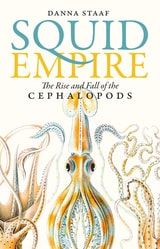
Before there were mammals on land, there were dinosaurs. And before there were fish in the sea, there were cephalopods—the ancestors of modern squid and Earth’s first truly substantial animals. Cephalopods became the first creatures to rise from the seafloor, essentially inventing the act of swimming. With dozens of tentacles and formidable shells, they presided over an undersea empire for millions of years. But when fish evolved jaws, the ocean’s former top predator became its most delicious snack. Cephalopods had to step up their game. Many species streamlined their shells and added defensive spines, but these enhancements only provided a brief advantage. Some cephalopods then abandoned the shell entirely, which opened the gates to a flood of evolutionary innovations: masterful camouflage, fin-supplemented jet propulsion, perhaps even dolphin-like intelligence. Squid Empire is an epic adventure spanning hundreds of millions of years, from the marine life of the primordial ocean to the calamari on tonight’s menu. Anyone who enjoys the undersea world—along with all those obsessed with things prehistoric—will be interested in the sometimes enormous, often bizarre creatures that ruled the seas long before the first dinosaurs.
[more]
cover of Stung!: On Jellyfish Blooms and the Future of the Ocean

Stung!

On Jellyfish Blooms and the Future of the Ocean

Lisa-ann Gershwin

University of Chicago Press, 2013
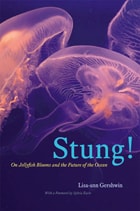
Our oceans are becoming increasingly inhospitable to life—growing toxicity and rising temperatures coupled with overfishing have led many marine species to the brink of collapse. And yet there is one creature that is thriving in this seasick environment: the beautiful, dangerous, and now incredibly numerous jellyfish. As foremost jellyfish expert Lisa-ann Gershwin describes in Stung!, the jellyfish population bloom is highly indicative of the tragic state of the world’s ocean waters, while also revealing the incredible tenacity of these remarkable creatures.
 
Recent documentaries about swarms of giant jellyfish invading Japanese fishing grounds and summertime headlines about armadas of stinging jellyfish in the Mediterranean and Chesapeake are only the beginning—jellyfish are truly taking over the oceans. Despite their often dazzling appearance, jellyfish are simple creatures with simple needs: namely, fewer predators and competitors, warmer waters to encourage rapid growth, and more places for their larvae to settle and grow. In general, oceans that are less favorable to fish are more favorable to jellyfish, and these are the very conditions that we are creating through mechanized trawling, habitat degradation, coastal construction, pollution, and climate change.
 
Despite their role as harbingers of marine destruction, jellyfish are truly enthralling creatures in their own right, and in Stung!, Gershwin tells stories of jellyfish both attractive and deadly while illuminating many interesting and unusual facts about their behaviors and environmental adaptations. She takes readers back to the Proterozoic era, when jellyfish were the top predator in the marine ecosystem—at a time when there were no fish, no mammals, and no turtles; and she explores the role jellies have as middlemen of destruction, moving swiftly into vulnerable ecosystems. The story of the jellyfish, as Gershwin makes clear, is also the story of the world’s oceans, and Stung! provides a unique and urgent look at their inseparable histories—and future.

[more]
cover of Swordfish: A Biography of the Ocean Gladiator

Swordfish

A Biography of the Ocean Gladiator

Richard Ellis

University of Chicago Press, 2013

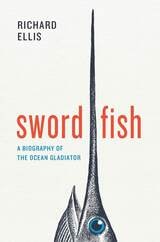
A perfect fish in the evolutionary sense, the broadbill swordfish derives its name from its distinctive bill—much longer and wider than the bill of any other billfish—which is flattened into the sword we all recognize. And though the majesty and allure of this warrior fish has commanded much attention—from adventurous sportfishers eager to land one to ravenous diners eager to taste one—no one has yet been bold enough to truly take on the swordfish as a biographer. Who better to do so than Richard Ellis, a master of marine natural history? Swordfish: A Biography of the Ocean Gladiator is his masterly ode to this mighty fighter.

The swordfish, whose scientific name means “gladiator,” can take on anyone and anything, including ships, boats, sharks, submarines, divers, and whales, and in this book Ellis regales us with tales of its vitality and strength. Ellis makes it easy to understand why it has inspired so many to take up the challenge of epic sportfishing battles as well as the longline fishing expeditions recounted by writers such as Linda Greenlaw and Sebastian Junger. Ellis shows us how the bill is used for defense—contrary to popular opinion it is not used to spear prey, but to slash and debilitate, like a skillful saber fencer. Swordfish, he explains, hunt at the surface as well as thousands of feet down in the depths, and like tuna and some sharks, have an unusual circulatory system that gives them a significant advantage over their prey, no matter the depth in which they hunt. Their adaptability enables them to swim in waters the world over—tropical, temperate, and sometimes cold—and the largest ever caught on rod and reel was landed in Chile in 1953, weighing in at 1,182 pounds (and this heavyweight fighter, like all the largest swordfish, was a female).

Ellis’s detailed and fascinating, fact-filled biography takes us behind the swordfish’s huge, cornflower-blue eyes and provides a complete history of the fish from prehistoric fossils to its present-day endangerment, as our taste for swordfish has had a drastic effect on their population the world over. Throughout, the book is graced with many of Ellis’s own drawings and paintings, which capture the allure of the fish and bring its splendor and power to life for armchair fishermen and landlocked readers alike.

[more]