Results by title
204 books match the query 'Massachusetts' and 8 start with s
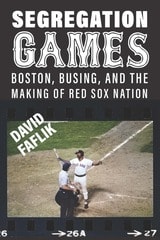
Segregation Games
Boston, Busing, and the Making of Red Sox NationDavid Faflik
University of Massachusetts Press, 2026
A cultural history of race, resistance, and representation in a city divided by politics and play
When outfielder Bernie Carbo joined the Red Sox in 1974, he brought with him a toy gorilla named Mighty Joe Young that became the team’s unofficial mascot for several players and many in the local press. This seemingly innocent stuffed animal was introduced within a baseball team notorious for its stubborn discrimination, and during a particularly fraught era of racial discord in Boston. That June, after years of activism from the city’s Black community, Judge W. Arthur Garrity Jr. ruled that Boston must address the segregation of its schools through redistricting and busing. The ensuing racial animus to these policies led some of the city’s white residents to throw bananas and chant monkey sounds at African American students as they integrated the predominantly white South Boston High School. In this agitated atmosphere, cultural symbols like the Red Sox’s Mighty Joe Young mirrored and amplified the heightened racial tensions of Boston’s busing crisis.
Situated at the intersection of US cultural and social history, Segregation Games examines the surprising ties in 1970s Boston between the racial segregation of the city’s schools and the racial controversies expressed on and off the field of “Red Sox Nation.” “I found out in the black community why they don’t come out [to Fenway Park],” explained Black player Reggie Smith of his experiences with the Red Sox and the city during this period. “The team was the last to get Black players, and some of the things I hear out in the stands make me sick.” To understand these connections, Faflik erases the lines between politics and sport, which routinely blurred in a city suffused with an anti-Black racism that was both deceptively subtle and fiercely overt.
Drawing upon deep archival research from sources that have largely been ignored, such as the Black press of the time, Faflik offers a carefully nuanced portrait of Boston’s cultural life at a pivotal moment in the city’s history.
Sex in Middlesex
Popular Mores in a Massachusetts County, 1649-1699Roger Thompson
University of Massachusetts Press, 1986
Drawing on an extraordinary wealth of court records from Middlesex County of the Colony and Province of Massachusetts Bay, Sex in Middlesex offers a richly revisionist account of social and moral life in seventeenth-century New England. Social historian Roger Thompson brings to life the forgotten men and women of colonial Massachusetts to challenge some of the most entrenched assumptions about Puritan society. Examining cases of fornication, adultery, breach of promise, premarital pregnancy, and sexual deviance recorded between 1649 and 1699, Thompson argues that the Puritan social system was far less rigid, and the relations between the sexes far less coercively regulated, than the dominant historiographical tradition, shaped by scholars such as Perry Miller and Lawrence Stone, has suggested.
Rather than a community defined by patriarchal tyranny and punitive moral control, Thompson discovers in the Middlesex records a society characterized by a striking degree of tolerance, mutual regard, and practical common sense, animated by a genuinely popular Puritan piety. The goal of the courts was not punishment and exclusion, but confession, reform, and the reintegration of offenders into the community. Structured with methodological rigor and written with narrative verve, Sex in Middlesex is at once a work of quantitative social history and a gallery of vivid individual portraits.
Shakespeare Behind Bars
One Teacher's Story of the Power of Drama in a Women's PrisonJean Trounstine
University of Michigan Press, 2004
Originally published in cloth in 2001, the paperback includes a new foreword that will inspire all teachers who work with students others have deemed unteachable. A new afterword updates readers on the prison art's program -- and the author herself -- since 2001.
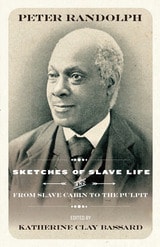
Sketches of Slave Life and From and From Slave Cabin to the Pulpit
Peter Randolph
West Virginia University Press, 2016
This book is the first anthology of the autobiographical writings of Peter Randolph, a prominent nineteenth-century former slave who became a black abolitionist, pastor, and community leader.
Randolph’s story is unique because he was freed and relocated from Virginia to Boston, along with his entire plantation cohort. A lawsuit launched by Randolph against his former master’s estate left legal documents that corroborate his autobiographies.
Randolph's writings give us a window into a different experience of slavery and freedom than other narratives currently available and will be of interest to students and scholars of African American literature, history, and religious studies, as well as those with an interest in Virginia history and mid-Atlantic slavery.
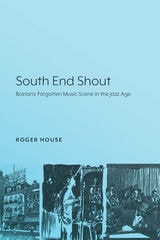
South End Shout
Boston’s Forgotten Music Scene in the Jazz AgeRoger House
Lever Press, 2023
South End Shout: Boston’s Forgotten Music Scene in the Jazz Age details the power of music in the city’s African American community, spotlighting the era of ragtime culture in the early 1900s to the rise of big band orchestras in the 1930s. This story is deeply embedded in the larger social condition of Black Bostonians and the account is brought to life by the addition of 20 illustrations of musicians, theaters, dance halls, phonographs, and radios used to enjoy the music.
South End Shout is part of an emerging field of studies that examines jazz culture outside of the major centers of music production. In extensive detail, author Roger R. House covers the activities of jazz musicians, jazz bands, the places they played, the relationships between Black and white musicians, the segregated local branches of the American Federation of Musicians (AFL-CIO), and the economics of Boston’s music industry. Readers will be captivated by the inclusion of vintage local newspaper reports, classified advertisements, and details of hard-to-access oral history accounts by musicians and residents. These precious documentary materials help to understand how jazz culture evolved as a Boston art form and contributed to the national art form between the world wars.
With this book, House makes an important contribution to American studies and jazz history. Scholars and general readers alike who are interested in jazz and jazz culture, the history of Boston and its Black culture, and 20th century American and urban studies will be enlightened and delighted by this book.
Speaking of Race and Class
The Student Experience at an Elite CollegeElizabeth Aries
Temple University Press, 2012
In Speaking of Race and Class, the follow-up volume to her groundbreaking Race and Class Matters at an Elite College, Elizabeth Aries completes her four-year study of diversity at a prestigious liberal arts college. Here, the 58 students—affluent, lower-income, black, and white—that Aries has interviewed since they were Amherst freshmen provide a complete picture of what and how each group learned about issues of race and class.
Aries presents the students’ personal perceptions of their experiences. She reveals the extent to which learning from diversity takes place on campus, and examines the distinct challenges that arise for students living in this heterogeneous community. Aries also looks more broadly at how colleges and universities across the country are addressing the challenges surrounding diversity. Speaking of Race and Class testifies to the programming and practices that have proven successful.
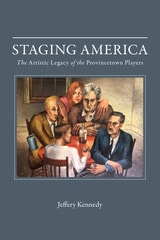
Staging America
The Artistic Legacy of the Provincetown PlayersJeffery Kennedy
University of Alabama Press, 2023
A comprehensive history of the Provincetown Players and their influence on modern American theatre
The Provincetown Players created a revolution in American theatre, making room for truly modern approaches to playwriting, stage production, and performance unlike anything that characterized the commercial theatre of the early twentieth century. In Staging America: The Artistic Legacy of the Provincetown Players, Jeffery Kennedy gives readers the unabridged story in a meticulously researched and comprehensive narrative that sheds new light on the history of the Provincetown Players. This study draws on many new sources that have only become available in the last three decades; this new material modifies, refutes, and enhances many aspects of previous studies.
At the center of the study is an extensive account of the career of George Cram Cook, the Players’ leader and artistic conscience, as well as one of the most significant facilitators of modernist writing in early twentieth-century American literature and theatre. It traces Cook’s mission of “cultural patriotism,” which drove him toward creating a uniquely American identity in theatre. Kennedy also focuses on the group of friends he calls the “Regulars,” perhaps the most radical collection of minds in America at the time; they encouraged Cook to launch the Players in Provincetown in the summer of 1915 and instigated the move to New York City in fall 1916.
Kennedy has paid particular attention to the many legends connected to the group (such as the “discovery” of Eugene O’Neill), and also adds to the biographical record of the Players’ forty-seven playwrights, including Susan Glaspell, Neith Boyce, Edna St. Vincent Millay, Floyd Dell, Rita Wellman, Mike Gold, Djuna Barnes, and John Reed. Kennedy also examines other fascinating artistic, literary, and historical personalities who crossed the Players’ paths, including Emma Goldman, Charles Demuth, Berenice Abbott, Sophie Treadwell, Theodore Dreiser, Claudette Colbert, and Charlie Chaplin. Kennedy highlights the revolutionary nature of those living in bohemian Greenwich Village who were at the heart of the Players and the America they were responding to in their plays.
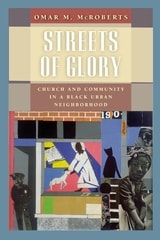
Streets of Glory
Church and Community in a Black Urban NeighborhoodOmar M. McRoberts
University of Chicago Press, 2003
McRoberts finds, for example, that most of the churches in Four Corners are attended and run by people who do not live in the neighborhood but who worship there because of the low overhead. These churches, McRoberts argues, are communities in and of themselves, with little or no attachment to the surrounding area. This disconnect makes the churches less inclined to cooperate with neighborhood revitalization campaigns and less likely to respond to the immediate needs of neighborhood residents. Thus, the faith invested in inner-city churches as beacons of local renewal might be misplaced, and the decision to count on them to administer welfare definitely should be revisited.
As the federal government increasingly moves toward delivering social services through faith-based organizations, Streets of Glory must be read for its trenchant revisionist view of how churches actually work in depressed urban areas.