Results by title
273 books match the query 'Memoir' and 17 start with s
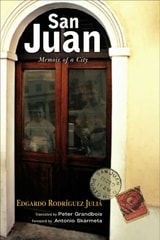
San Juan
Memoir of a CityEdgardo Rodriguez Julia; Translated by Peter Grandbois
University of Wisconsin Press, 2007
In the allusive cityscape he recreates, Rodríguez Juliá invokes the ghosts of his childhood, of San Juan's elder literati, and of characters from his own novels. On the most tangible level, the city is a place of cabarets and cockfighting clubs, flâneurs and beach bums, smoke-filled bars and honking automobiles. Poised between a colonial past and a commercial future, the San Juan he portrays feels at times perilously close to the pitfalls of modernization. Tenement houses and fading mansions yield to strip malls and Tastee Freezes; asphalt hems in jacarandas and palm trees. "In Puerto Rico," he muses, "life is not simply cruel, it is also busy erasing our tracks." Through this book—available here in English for the first time—Rodríguez Juliá resists that erasure, thoughtfully etching a palimpsest that preserves images of the city where he grew up and rejoicing in the one where he still lives.
Scenes of Instruction
A MemoirMichael Awkward
Duke University Press, 1999
With a recurring focus on how his mother’s tragic weaknesses and her compelling strengths affected his development, Awkward intersperses the chronologically arranged autobiographical sections with ruminations on his own interests in literary and cultural criticism. As a male scholar who has come under fire for describing himself as a feminist critic, he reflects on such issues as identity politics and the politics of academia, affirmative action, and the Million Man March.
By connecting his personal experiences with larger political, cultural, and professional questions, Awkward uses his life as a palette on which to blend equations of race and reading, urbanity and mutilation, alcoholism, pain, gender, learning, sex, literature, and love.
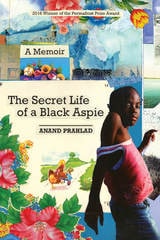
Secret Life of a Black Aspie
A MemoirAnand Prahlad
University of Alaska Press, 2017
For the first four years of his life, Prahlad didn’t speak. But his silence didn’t stop him from communicating—or communing—with the strange, numinous world he found around him. Ordinary household objects came to life; the spirits of long-dead slave children were his best friends. In his magical interior world, sensory experiences blurred, time disappeared, and memory was fluid. Ever so slowly, he emerged, learning to talk and evolving into an artist and educator. His journey takes readers across the United States during one of its most turbulent moments, and Prahlad experiences it all, from the heights of the Civil Rights Movement to West Coast hippie enclaves to a college town that continues to struggle with racism and its border state legacy.
Rooted in black folklore and cultural ambience, and offering new perspectives on autism and more, The Secret Life of a Black Aspie will inspire and delight readers and deepen our understanding of the marginal spaces of human existence.
Secrets of the Sun
A MemoirMako Yoshikawa
The Ohio State University Press, 2024
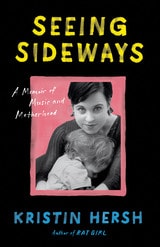
Seeing Sideways
A Memoir of Music and MotherhoodBy Kristin Hersh
University of Texas Press, 2021
Doony, Ryder, Wyatt, Bodhi. The names of Kristin Hersh’s sons are the only ones included in her new memoir, Seeing Sideways. As the book unfolds and her sons’ voices rise from its pages, it becomes clear why: these names tell the story of her life.
This story begins in 1990, when Hersh is the leader of the indie rock group Throwing Muses, touring steadily, and the mother of a young son, Doony. The chapters that follow reveal a woman and mother whose life and career grow and change with each of her sons: the story of a custody battle for Doony is told alongside that of Hersh’s struggles with her record company and the resulting PTSD; the tale of breaking free from her record label stands in counterpoint to her recounting of her pregnancy with Ryder; a period of writer’s block coincides with the development of Wyatt as an artist and the family’s loss of their home; and finally, soon after Bodhi’s arrival, Hersh and her boys face crises from which only strange angels can save them. Punctuated with her own song lyrics, Seeing Sideways is a memoir about a life strange enough to be fiction, but so raw and moving that it can only be real.
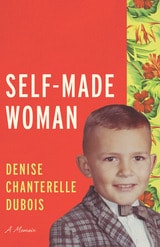
Self-Made Woman
A MemoirDenise Chanterelle DuBois
University of Wisconsin Press, 2017
Defying all expectations, DuBois didn't crash and burn. Embracing her identity as a woman, she remade herself. Writing with resolute honesty and humor, she confronts both her past and her present to tell an American story of self-discovery.
Sex Talks to Girls
A MemoirMaureen Seaton
University of Wisconsin Press, 2008
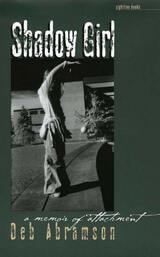
Shadow Girl
A Memoir Of AttachmentDeb Abramson
University of Iowa Press, 2002
In this psychological portrait of a family bound together by the uneasy permutations of love, Abramson relies not on sensationalist narrative but on a collection of the many small moments that glitter along the bumpy path of her life. Now and then she provides a broader, connecting perspective by stepping out of her story to reflect on the meaning of it all from the standpoint of the insightful, healed person she has managed—against all odds—to become.
Rich in metaphor and intimate detail, this is a lyrical story about moving from isolation toward connection, about seeing childhood not as a crippling refuge but as a point of departure, about discovering that it is possible to “have your shadows as well as your light.”
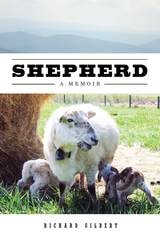
Shepherd
A MemoirRichard Gilbert
Michigan State University Press, 2014
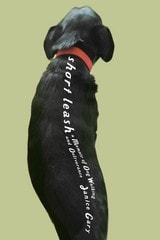
Short Leash
A Memoir of Dog Walking and DeliveranceJanice Gary
Michigan State University Press, 2013
Janice Gary never walked alone without a dog - a big dog. Once, she was an adventurer, a girl who ran off to California with big dreams and hopes of leaving her past behind. But after a brutal rape, her youthful bravado vanished, replaced by a crippling need for safety. When she rescues a gangly Lab-Rottweiler pup,Gary is sure she’s found her biggest protector yet. But after Barney is attacked by a vicious dog, he becomes a clone of his attacker, trying to kill any dog that comes near him. Walking with Barney is impossible. Yet walking without him is unthinkable.
After years of being exiled by her terror and Barney’s defensiveness, Janice risks taking her dog to a park near the Chesapeake Bay. There, she begins the messy, lurching process of walking into her greatest fears. As the leash of the past unravels, Barney sheds the defensive behaviors that once shackled him and Gary steps out of the self-imposed isolation that held her captive for three decades. Beautifully written, Short Leash is much more than a “dog story” or a book about recovering from trauma. It is a moving tale of love and loss, the journey of a broken soul finding itsway toward wholeness.

Silas
The Antarctic Diaries and Memoir of Charles S. WrightColin Bull and Pat F. Wright
The Ohio State University Press, 1900
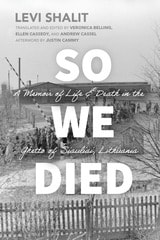
So We Died
A Memoir of Life and Death in the Ghetto of Šiauliai, LithuaniaLevi Shalit, translated and edited by Veronica Belling, Ellen Cassedy, and Andrew Cassel, introduction by Veronica Belling, afterword by Justin Cammy
University of Alabama Press, 2025
In the shadow of death, Levi Shalit wrote to remember—so we would never forget.
So We Died: A Memoir of Life and Death in the Ghetto of Šiauliai, Lithuania (Azoy zaynen mir geshtorbn) is a powerful eyewitness account of the Shavl ghetto during the Nazi occupation of Lithuania. Written in Yiddish by Levi Shalit and available now for the first time in English, the work fills a stark void in historical records.
Shalit divided his work into four sections. In the first, he describes the German invasion of Šiauliai, the murder of thousands of Jews in the city and surrounding countryside, and the forced relocation of the surviving Jews into the Shavl ghetto. In the second, he describes daily life in the ghetto in engrossing detail. In the third, titled “The Masada Book,” Shalit describes ghetto residents’ attempt to organize a resistance group of which he himself was a member. In the fourth, he narrates the transformation of the ghetto into a concentration camp and the seizure and deportation of the community’s children.
Few accounts of the Shavl ghetto survived the war. Shalit’s work offers English-language readers a rare insight into a vital chapter of history. The translators artfully reveal Shalit’s literary prowess and the ways he illuminated the Shavl ghetto’s daily struggles, false hopes, and atrocities.
More than an account of a previously overlooked episode in Holocaust history, So We Died is a testament to the enduring power of the human spirit in the face of unspeakable tragedy. It offers keen insight into a time of war, fascism, and resistance. A must-read for anyone seeking understanding and remembrance.
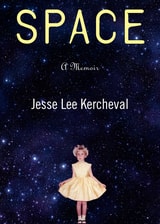
Space
A MemoirJesse Lee Kercheval
University of Wisconsin Press, 2014
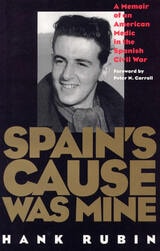
Spain's Cause was Mine
A Memoir of an American Medic in the Spanish WarHank Rubin
Southern Illinois University Press, 1999
“No man ever entered earth more honorably than those who died in Spain.”—Ernest Hemingway
In 1937, Hank Rubin, a twenty-year-old Jewish pre-med student at UCLA, volunteered for service in the International Brigades combating fascists in the Spanish Civil War. In his illustrated memoir, Rubin reflects on those events, making no apologies for his youthful impulsiveness, bravado, and ideology, but recalling the heroics and sufferings he witnessed and experienced in Spain, as well as the disappointing treatment he received upon his return.
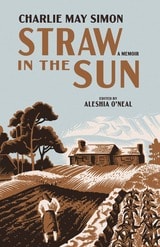
Straw in the Sun
A MemoirCharlie May Simon
University of Arkansas Press, 2025
These opening lines of Charlie May Simon’s Straw in the Sun invite readers on a personal journey of remembrance as Simon recounts her homesteading experiment in Depression-era Arkansas. Years before she established herself as a regional author of national renown, she chose a spot near Cove Creek, now part of Ouachita National Forest, to forge a home from rugged land, meeting both a backbreaking series of challenges and a vivid cast of characters in the process.
Nationally popular upon its release in 1945, Simon’s lyrical memoir was praised from the outset for its warmth and charm. At once an ethnographic narrative of a hill community and an accessible portrait of Ozarks memories at their most idyllic, Straw in the Sun, offered here with a robust introduction from Simon scholar Aleshia O’Neal, is a classic ready for rediscovery by a new generation of readers.
Supremely Tiny Acts
A Memoir of a DaySonya Huber
The Ohio State University Press, 2021
“I think we have to get to the real, to catch the facts we have, to hold on to what we see. . . .in this time where lies are currency,” Sonya Huber writes in her book-length essay Supremely Tiny Acts: A Memoir of a Day. On the theory that naming the truths of quotidian experience can counter the dangerous power of lies, she carefully recounts two anxiety-fueled days one fall. On the first, she is arrested as part of a climate protest in Times Square. On the other, she must make it to her court appearance while also finding time to take her son to get his learner's permit. Paying equal attention to minor details, passing thoughts, and larger political concerns around activism and parenting in the Trump-era United States, Huber asks: How can one simultaneously be a good mother, a good worker, and a good citizen? As she reflects on the meaning of protest and on whiteness and other forms of privilege within political activism, Huber offers a wry, self-aware, and stirring testament to the everyday as a seedbed for meaningful change.
Swooning Beauty
A Memoir Of PleasureJoanna Frueh
University of Nevada Press, 2006
When her parents died and her marriage disintegrated within the span of a few months, art historian and performance artist Joanna Frueh entered a painful period of grief and mourning. This book is about how she healed herself and in the process explored the range of her potential as a woman.Swooning Beauty is an intimate memoir of discovery and healing. Frueh’s path to recovery lay through a profound examination of her intuitions, desires, fantasies, dreams, and emotions, her capacity for pleasure—visual, sensual, intellectual, gastronomic, and erotic—and her sense of her own heroic female identity. Hers is the passionate voice of a creative, intelligent woman scrutinizing the nature of love in all its forms and the ways of being that make us free, flexible, more fully real and more fully human. The result is an engaging view into the rich and colorful inner life of a woman at the threshold of middle age, of the blossoming of mind and spirit that comes after suffering and self-realization. Pleasure, she concludes, “is the absence of lack. Self-love is a necessary plenitude. Vigilance in love brings us freedom. Freedom is not an absolute whose attainment is humanly impossible. Yogis say that the self that is not ego is free. That self is the spacious heart, the spacious mind.” Frueh offers us wisdom and comfort for the journey into middle age, and the deep pleasure of encountering a generous, lively spirit and a remarkably spacious mind.