140 books match the query 'Mental Health' and 6 start with s

cover of Secret Life of a Black Aspie: A Memoir

Secret Life of a Black Aspie

A Memoir

Anand Prahlad

University of Alaska Press, 2017

Anand Prahlad was born on a former plantation in Virginia in 1954. This memoir, vividly internal, powerfully lyric, and brilliantly impressionistic, is his story.
 
For the first four years of his life, Prahlad didn’t speak. But his silence didn’t stop him from communicating—or communing—with the strange, numinous world he found around him. Ordinary household objects came to life; the spirits of long-dead slave children were his best friends. In his magical interior world, sensory experiences blurred, time disappeared, and memory was fluid. Ever so slowly, he emerged, learning to talk and evolving into an artist and educator. His journey takes readers across the United States during one of its most turbulent moments, and Prahlad experiences it all, from the heights of the Civil Rights Movement to West Coast hippie enclaves to a college town that continues to struggle with racism and its border state legacy.
 
Rooted in black folklore and cultural ambience, and offering new perspectives on autism and more, The Secret Life of a Black Aspie will inspire and delight readers and deepen our understanding of the marginal spaces of human existence.
[more]
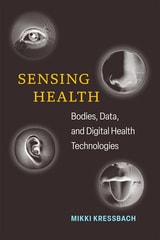
cover of Sensing Health: Bodies, Data, and Digital Health Technologies

Sensing Health

Bodies, Data, and Digital Health Technologies

Mikki Kressbach

University of Michigan Press, 2024

In the age of Apple Watches and Fitbits, the concept of “health” emerges through an embodied experience of a digital health device or platform, not simply through the biomedical data it provides. Sensing Health: Bodies, Data, and Digital Health Technologies analyzes popular digital health technologies as aesthetic experiences to understand how these devices and platforms have impacted the way individuals perceive their bodies, behaviors, health, and well-being. By tracing design alongside embodied experiences of digital health, Kressbach shows how these technologies aim to quantify, track and regulate the body, while at the same time producing moments that bring the body’s affordances and relationship to the fore. This mediated experience of “health” may offer an alternative to biomedical definitions that define health against illness.

To capture and analyze digital health experiences, Kressbach develops a method that combines descriptive practices from Film and Media Studies and Phenomenology. After examining the design and feedback structures of digital health platforms and devices, the author uses her own first-person accounts to analyze the impact of the technology on her body, behaviors, and perception of health. Across five chapters focused on different categories of digital health—menstrual trackers, sexual wellness technologies, fitness trackers, meditation and breathing technologies, and posture and running wearables—Sensing Health demonstrates a method of analysis that acknowledges and critiques the biomedical structures of digital health technology while remaining attentive to the lived experiences of users. Through a focus on the intersection of technological design and experience, this method can be used by researchers, scholars, designers, and developers alike. 

[more]
cover of Sex Offenders, Stigma, and Social Control

Sex Offenders, Stigma, and Social Control

Rickard, Diana

Rutgers University Press, 2016

The 1990s witnessed a flurry of legislative initiatives—most notably, “Megan’s Law”—designed to control a population of sex offenders (child abusers) widely reviled as sick, evil, and incurable. In Sex Offenders, Stigma, and Social Control, Diana Rickard provides the reader with an in-depth view of six such men, exploring how they manage to cope with their highly stigmatized role as social outcasts. 
 
The six men discussed in the book are typical convicted sex offenders—neither serial pedophiles nor individuals convicted of the type of brutal act that looms large in public perceptions about sex crimes. Sex Offenders, Stigma, and Social Control explores how these individuals, who have been cast as social pariahs, construct their sense of self. How does being labeled in this way and controlled by measures such as Megan’s Law affect one’s identity and sense of social being?  Unlike traditional criminological and psychological studies of this population, this book frames their experiences in concepts of both deviance and identity, asking how men so highly stigmatized cope with the most extreme form of social marginality. Placing their stories within the context of the current culture of mass incarceration and zero-tolerance, Rickard provides a deeper understanding of the complex relationship between public policy and lived experience, as well as an understanding of the social challenges faced by this population, whose re-integration into society is far from simple or assured.  
 
Sex Offenders, Stigma, and Social Control makes a significant contribution to our understanding of sex offenders, offering a unique window into how individuals make meaning out of their experiences and present a viable—not monstrous—social self to themselves and others. 
 
[more]
cover of Slow Fuse of the Possible: A Memoir of Poetry and Psychoanalysis

Slow Fuse of the Possible

A Memoir of Poetry and Psychoanalysis

Kate Daniels

West Virginia University Press, 2022

Slow Fuse of the Possible is a poet’s narrative of a troubled psychoanalysis. It is also a commanding meditation on the powers of language, for good and for ill.

From the beginning of their time together, it is clear that the enigmatic analyst and Daniels are not a good match, yet both are determined to continue their work—the former in nearly complete silence, and the latter as best she can with the tools at her disposal: careful attention to language, deep reading, and literary imagination. Throughout, the story is filtered through the mind of Emily Dickinson, whose poetry Daniels uses as a fulcrum for the interpretation of her own experience. The book is saturated with Dickinson’s verse, and Dickinson is an increasingly haunting presence as crises emerge and the author unravels.

This compelling lyric memoir, so richly steeped in all facets of language and the literary, allows readers a glimpse into the mind of a renowned poet, revealing the dazzling and anguished connections between poetry and psychoanalysis.
[more]
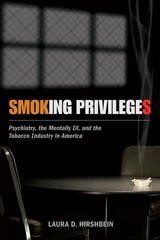
cover of Smoking Privileges: Psychiatry, the Mentally Ill, and the Tobacco Industry in America

Smoking Privileges

Psychiatry, the Mentally Ill, and the Tobacco Industry in America

Hirshbein, Laura D

Rutgers University Press, 2015
Current public health literature suggests that the mentally ill may represent as much as half of the smokers in America. In Smoking Privileges, Laura D. Hirshbein highlights the complex problem of mentally ill smokers, placing it in the context of changes in psychiatry, in the tobacco and pharmaceutical industries, and in the experience of mental illness over the last century.
Hirshbein, a medical historian and clinical psychiatrist, first shows how cigarettes functioned in the old system of psychiatric care, revealing that mental health providers long ago noted the important role of cigarettes within treatment settings and the strong attachment of many mentally ill individuals to their cigarettes. Hirshbein also relates how, as the sale of cigarettes dwindled, the tobacco industry quietly researched alternative markets, including those who smoked for psychological reasons, ultimately discovering connections between mental states and smoking, and the addictive properties of nicotine. However, Smoking Privileges warns that to see smoking among the mentally ill only in terms of addiction misses how this behavior fits into the broader context of their lives. Cigarettes not only helped structure their relationships with other people, but also have been important objects of attachment. Indeed, even after psychiatric hospitals belatedly instituted smoking bans in the late twentieth century, smoking remained an integral part of life for many seriously ill patients, with implications not only for public health but for the ongoing treatment of psychiatric disorders. Making matters worse, well-meaning tobacco-control policies have had the unintended consequence of further stigmatizing the mentally ill.
A groundbreaking look at a little-known public health problem, Smoking Privileges illuminates the intersection of smoking and mental illness, and offers a new perspective on public policy regarding cigarettes.
[more]
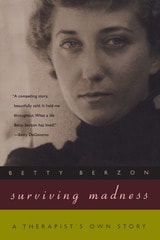
cover of Surviving Madness: A Therapist's Own Story

Surviving Madness

A Therapist's Own Story

Betty Berzon

University of Wisconsin Press, 2002

    Betty Berzon, renowned psychotherapist and author of the bestselling book Permanent Partners, tells her own incredible story here. Berzon’s journey from psychiatric patient on suicide watch—her wrists tethered to the bed rails in a locked hospital ward—to her present role as a groundbreaking therapist and gay pioneer makes for purely compelling reading.
    Berzon is recognized today as a trailblazing co-founder of a number of important lesbian and gay organizations and one of the first therapists to focus on means of developing healthy gay relationships and overcoming homophobia. Her sometimes bumpy road to success never fails to fascinate. Along the way she encounters such luminaries as Anaïs Nin, Eleanor Roosevelt, the Sitwells, Evelyn Hooker, and Paul Monette. Her recollections here provide a collective portrait of her fellow pioneers and a stirring lesson in twentieth-century history.
    It is, however, the intimate story of Berzon’s own private passage toward self-discovery—from mental breakdown and suicide attempts, through hospitalization, eventual triumphant recovery, and her own coming out as an open lesbian at the age of forty—that makes this memoir an urgent, insightful, and deeply emotional testament to human survival.

[more]